CREATE YOUR LEGEND | 2026-2028 dates available | SECURE YOUR PLACE WITH JUST £100 DEPOSIT

OVERVIEW
The Serengeti calving season peaks in February around Ndutu, when hundreds of thousands of wildebeest calves are born in a few weeks. Here is when to go, where to stay, what it costs and how El Niño could change the picture in 2027.
Published by
Jack Fleckney
Picture the short-grass plains around Lake Ndutu at first light in February. The ground is green from the rains, the horizon is dark with wildebeest, and somewhere in that herd a calf that did not exist ten minutes ago is already on its feet, wobbling after its mother. A few hundred metres away, a cheetah is watching too.
That is the Serengeti calving season, and the answer to the question everyone asks is simple. Go in February, base yourself around Ndutu in the southern Serengeti, and book early. The births run from late January into March and peak in February, when up to 8,000 calves can be born in a single day. The small seasonal camps closest to the action can sell out a year ahead, which is why this is the conversation I’m having with clients in November.
When is the calving season in the Serengeti?
The calving season runs from roughly late January to March, with the peak in February. Most of the births are packed into a window of two to three weeks, and estimates for the season range from around 300,000 to 500,000 calves.
That tight timing is the whole strategy. A lion or a hyena can only eat so much, so when the plains are suddenly full of newborns, the predators are overwhelmed and most calves survive. Biologists call it predator swamping, and it works. The location matters too. The southern plains sit on volcanic soils blown in from the Ngorongoro highlands, and after the short rains the grass there is widely regarded as some of the most nutritious in the ecosystem, exactly what a nursing mother needs.
Right now the herds are on the move. Through October they were spread between the northern Serengeti and Kenya’s Masai Mara, and the short rains of November pull them south through the eastern Serengeti. By December they are flowing towards the southern plains, and by the time you land in late January they have settled in to give birth.
Where is the best place to see the calving?
The best place to see the calving is Ndutu, in the south-eastern corner of the Serengeti ecosystem. Lake Ndutu straddles the boundary between Serengeti National Park and the Ngorongoro Conservation Area, and most camps and the Ndutu airstrip sit on the Ngorongoro side.
Ecologically it is the Serengeti; administratively it is Ngorongoro. That matters. Your quote may include Ngorongoro Conservation Area fees of about £55 ($70.80) per person per 24 hours, plus Serengeti fees of about £60 ($82.60) on days you cross into the national park, so check that both are itemised. It also tends to change how your guide can drive, because the rules on the Ngorongoro side are generally more flexible than inside the national park [CHECK: confirm current off-road rules in the Ndutu area of the NCA]. When a cheetah moves off the track to stalk, that difference can decide whether you see the hunt or not.
Getting there is straightforward. A light aircraft from Arusha to the Ndutu airstrip takes about 50 minutes to an hour. By road it is around six hours over the Ngorongoro highlands, which lets you drop into the Ngorongoro Crater on the way (the Crater service fee is about £220 ($295) per vehicle per descent).
What will you actually see on a calving safari?
You will see more wildebeest than you thought existed, alongside the zebra that travel with them, and you will almost certainly see predators at work. Lion, cheetah and spotted hyena are the constants around Ndutu at this time of year. Serval, caracal and African wildcat turn up at the woodland edges, and wild dog make occasional appearances.
I want to be honest about what that means. A calving safari is not a gentle nature documentary with the difficult bits edited out. A newborn wildebeest can stand within minutes and keep up with the herd soon after, but the first hours are the most dangerous of its life, and the predators know it. Some of the most extraordinary sightings of the season are hunts. A good guide reads the herd, positions the vehicle quietly and lets the scene play out without crowding it. If you have children with you, it is worth talking about that before you go.
The flip side is the sheer life of the place. The plains are green, the birdlife is busy, and the low, constant grunting of a herd that size carries for miles in the evening.
What is the weather like in February, and will El Niño change it?
February around Ndutu is warm, with daytime highs in the high 20s °C and afternoon showers that usually pass quickly. It is green season, so the landscape looks its best and the dust of the dry months is gone.
2027 has an extra variable. In August, the Tanzania Meteorological Authority warned of a strong El Niño, with above-normal to normal short rains across much of northern Tanzania, intensifying in November and continuing into January 2027. Heavier rain is likely to spread the herds more widely and could keep them on the southern plains later into March. The births themselves are timed by biology rather than the weather, so the February peak should hold [CHECK: worth reconfirming with our Ndutu guides in January].
In practice, that means building in flexibility. My time in the Royal Marines taught me to plan for the conditions you will get, not the ones you want. Stay three or four nights rather than two, choose a camp that can follow the herd, and travel with a guide who goes out looking every morning rather than relying on last week’s news. I wrote more about what El Niño means for travellers in our honest El Niño guide for 2026–27.
Where should you stay, and what does it cost?
The best calving camps are small seasonal tented camps that open from around December to March, usually with between six and ten tents. They are expensive and they fill early, which is exactly why they are worth planning around.
To give you a sense of the range for 2027, Lemala Ndutu Tented Camp is listed from about £615 ($825) per person per night from late December, with park fees, game drives and the vehicle extra. At the top end, Olakira Migration Camp reaches up to about £1,100 ($1,490) per person per night at peak, with game drives included [CHECK: confirm current 2027 rates with suppliers before quoting]. Permanent lodges such as Ndutu Safari Lodge stay open all year and offer a more accessible way in.
At Legend Expeditions we build calving safaris from simple and comfortable through to properly luxurious, and the advice is the same at every level. Decide your dates first, then secure the camp, because the best weeks go first. If you want a starting point, our Ndutu Calving Season Safari shows how we usually put it together.
Can you climb Kilimanjaro and see the calving on the same trip?
Yes, and it is one of my favourite combinations. January and February is one of Kilimanjaro’s two main climbing windows (you can see the full picture in our month-by-month guide to the best time to climb), and Moshi, where we are based, is a short drive from Arusha, the gateway to the northern safari circuit.
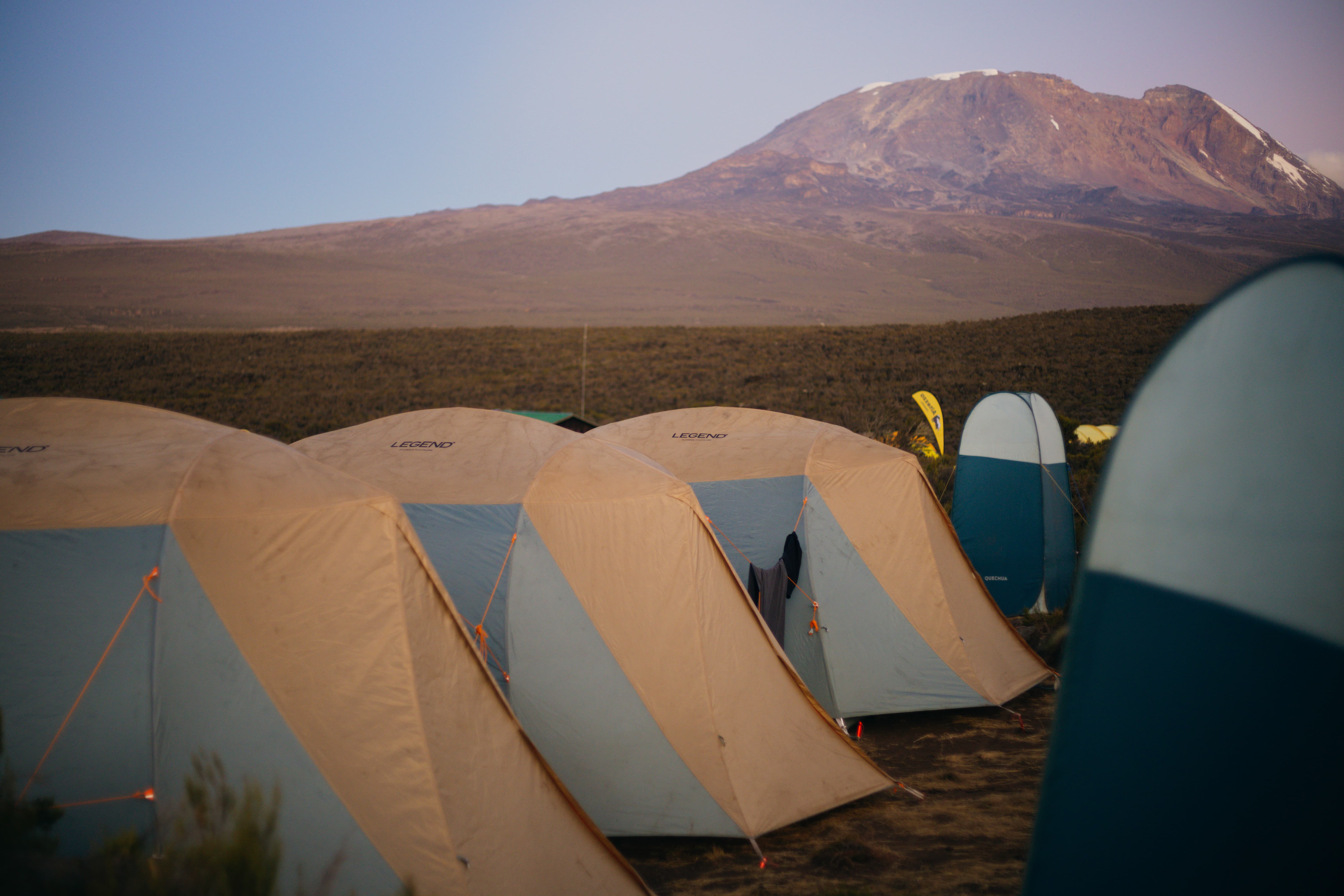
Always climb first. Summit night on Kilimanjaro is hard, and a few days of sitting in a safari vehicle watching newborn wildebeest is the best recovery I know. A typical shape looks like this:
Days 1 to 8: the Lemosho Route on Mount Kilimanjaro, with a Uhuru Peak summit on day 7
Day 9: a rest night and a hot shower in Arusha
Days 10 to 13: three or four nights around Ndutu for the calving
Day 14: the Ngorongoro Crater on the drive back, then home or onwards to Zanzibar
Our 98.9% summit success rate comes from giving people enough days on the mountain to acclimatise, and the same thinking applies on safari. Give the herds time to show up. There is more detail on stitching the two together in our guide to planning a safari after Kilimanjaro.
The short answer
The Serengeti calving season peaks in February around Ndutu, on the border of the Serengeti and the Ngorongoro Conservation Area. Plan for three or four nights, expect warm days with afternoon showers (possibly wetter than usual in 2027), and book your camp now, because the best ones are small and fill fast.
If you are thinking about the calving season, or about pairing it with a Kilimanjaro climb, I would love to help you plan it. Book a call with the team and we will talk through dates, camps and budget honestly, or check our group dates if you would like to climb first and finish on the plains.
Frequently asked questions
What month is the calving season in the Serengeti?
The calving season runs from late January to March, and February is the peak month. Most births happen within a concentrated two to three week window, with up to 8,000 calves born in a single day at the height of it. Late January and early March can still be excellent, but February gives you the best odds.
Is Ndutu in the Serengeti or the Ngorongoro Conservation Area?
Both. Lake Ndutu sits on the boundary between Serengeti National Park and the Ngorongoro Conservation Area, and most camps and the airstrip are on the Ngorongoro side. That is why calving safari quotes often include fees for both areas, depending on where you sleep and drive each day.
Is the calving season better than the river crossings?
They are different experiences rather than better or worse. The river crossings in the northern Serengeti, usually from around July to October, are dramatic but unpredictable, and you can wait hours for a crossing. The calving season is about concentration and predator action on open plains, with green landscapes and newborn animals everywhere you look.
Can you see the Great Migration in December?
Yes. In December the herds are moving south through the Serengeti towards the southern plains and Ndutu, and some early births can happen. It is a good option if you want to see the migration before the February peak, though the herds are more spread out and more on the move.
How many days do you need for a calving safari?
Plan on three or four nights around Ndutu, which gives your guide time to find the herds and gives you a realistic chance of seeing predators at work. Most people combine that with Tarangire or the Ngorongoro Crater for a safari of six to eight days, or add it to the end of a Kilimanjaro climb.