CREATE YOUR LEGEND IN 2026 | SECURE YOUR PLACE WITH JUST £100 DEPOSIT | PAYMENT PLANS AVAILABLE

VIEW DATES

Plains Zebra

Open and lightly wooded savannah and short grass plains

Habitat

Year round

Best Viewing Season

Near Threatened

Conservation Status

Introduction

Quarter-million plains zebras migrate across the Serengeti alongside wildebeest, each individual recognisable by its distinctive stripe pattern. These powerful grazers clear the way for herds behind them, creating cascading ecological effects across Tanzania's grasslands. Their presence drives the dry season feeding ecology of the northern circuit parks.

Behaviour & Facts

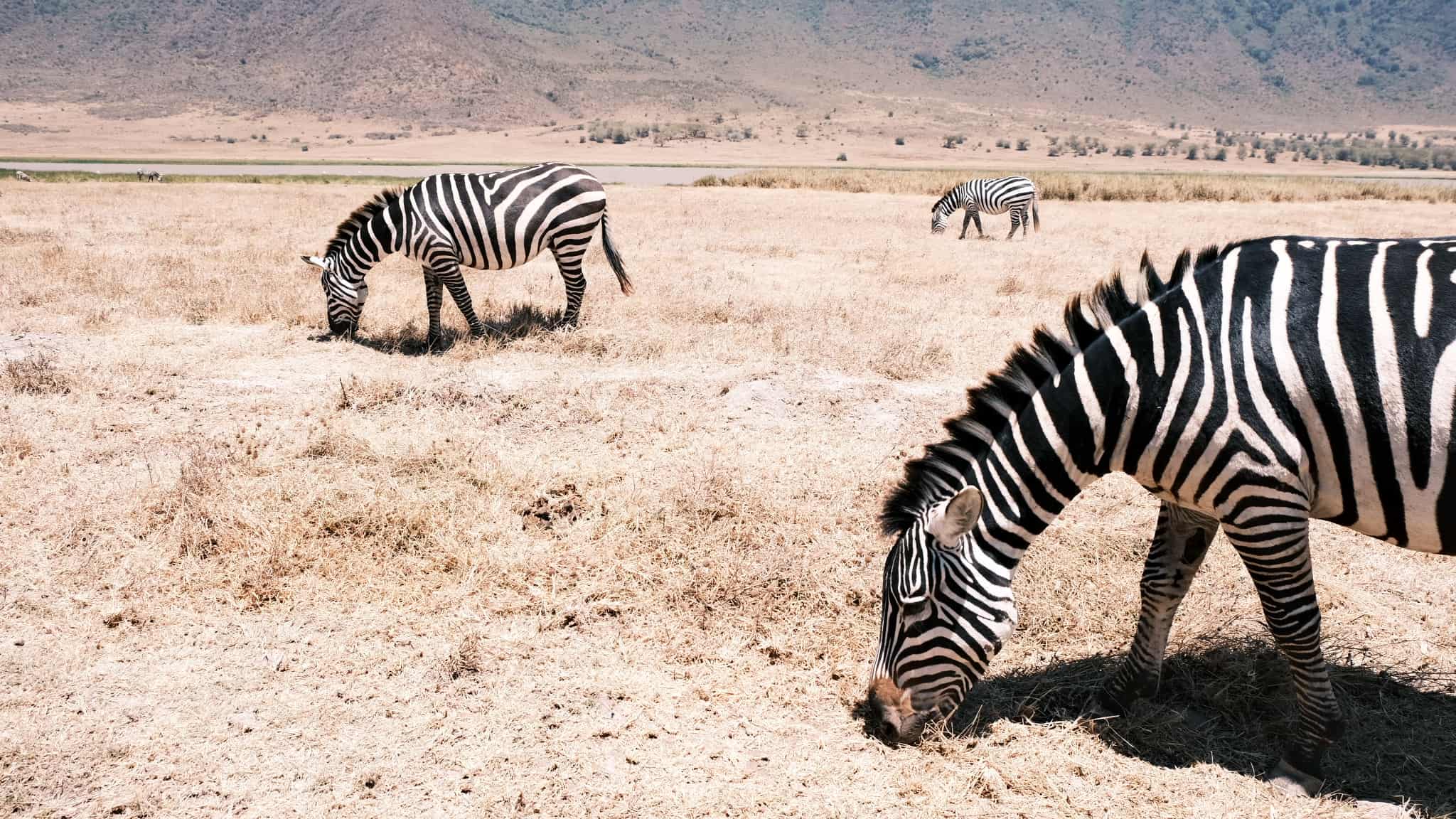
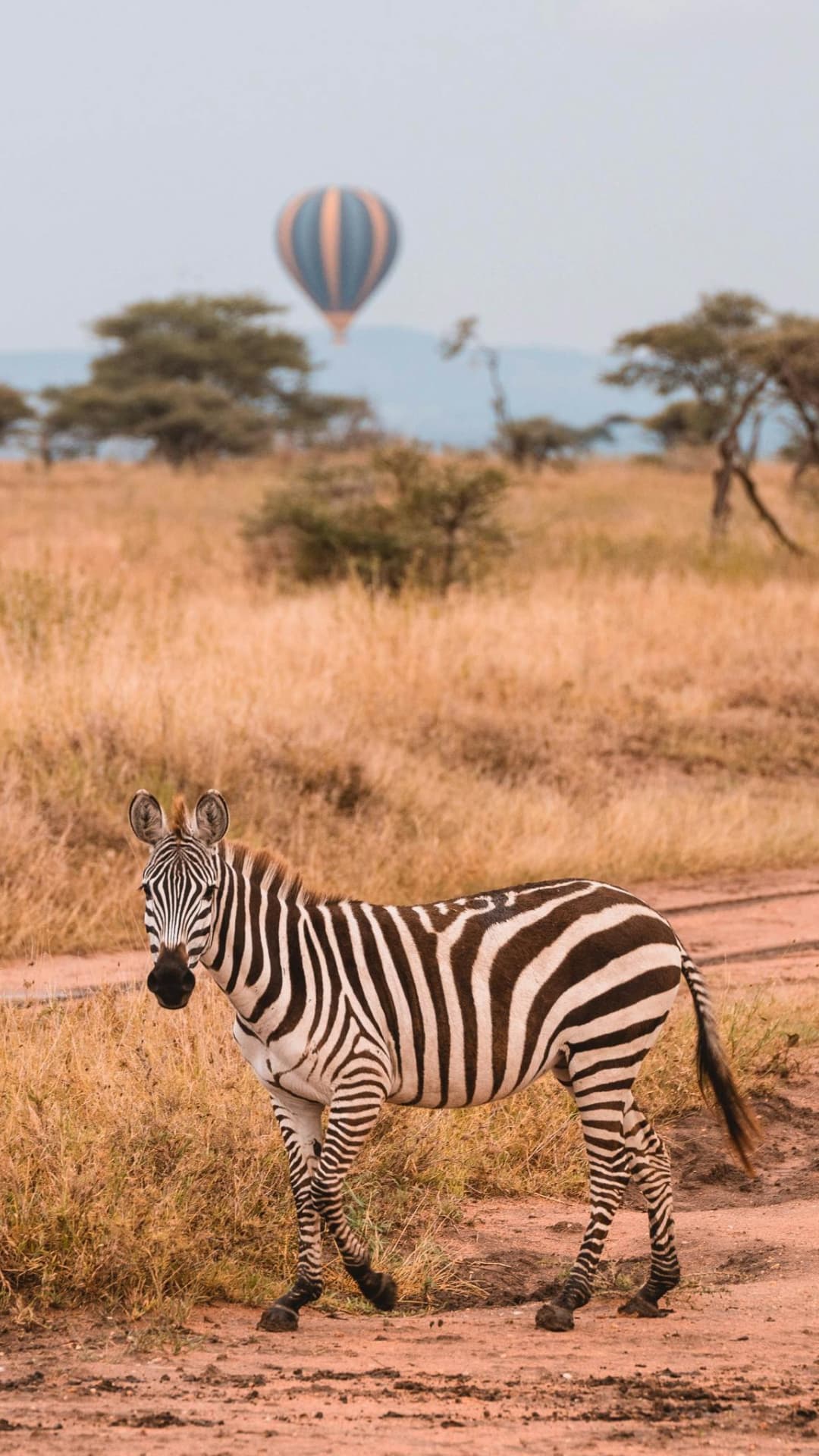
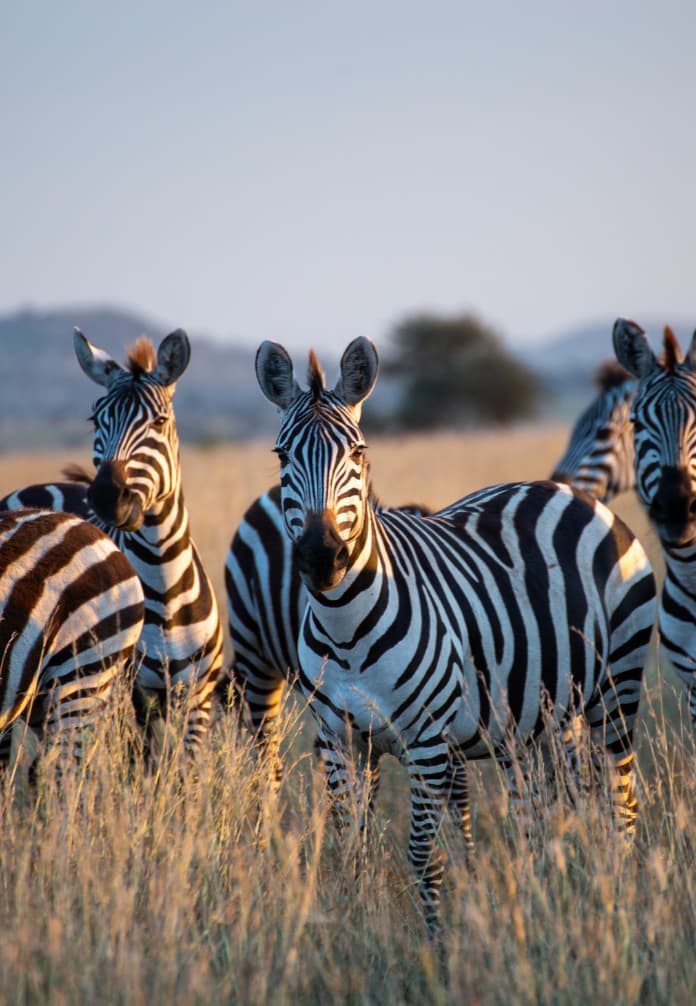
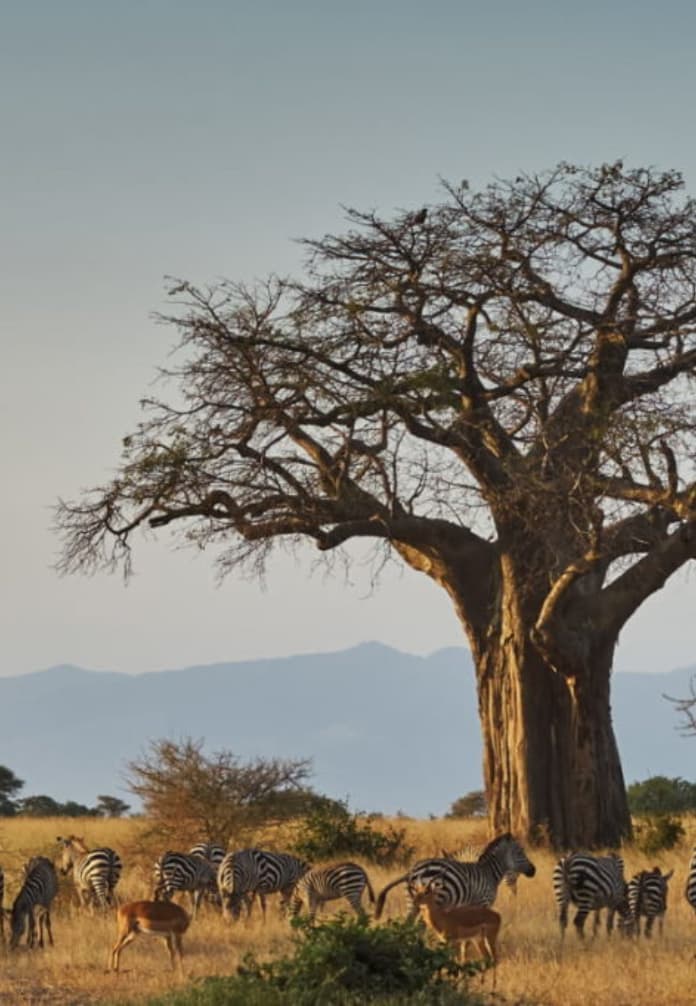
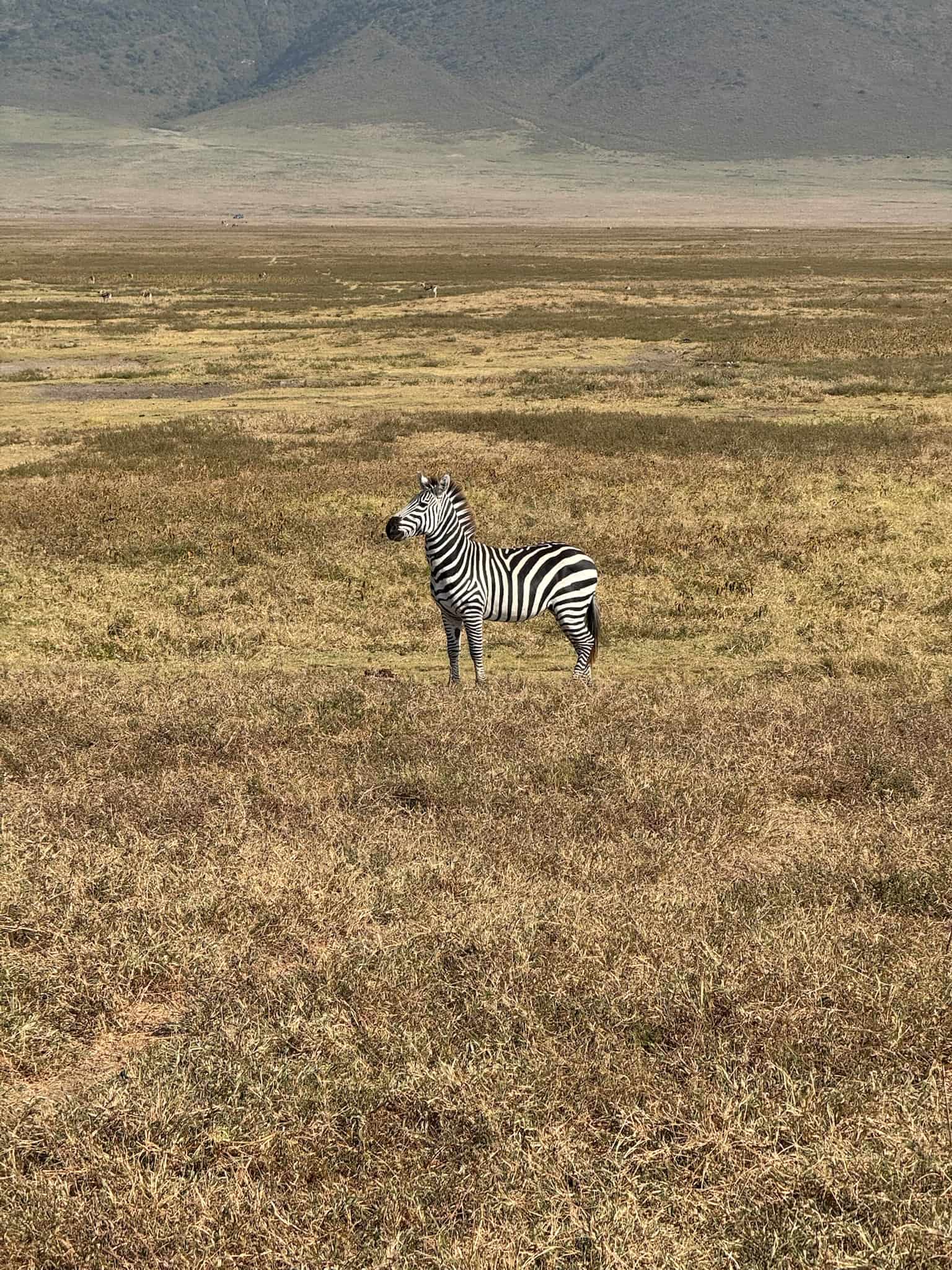
Up close, no two zebras have the same stripes, and after a few days on the Serengeti you start to notice the differences. A herd of two thousand on the move is a single optical illusion, a wall of black and white that flickers and reorders itself as it walks. Watch one alone at a waterhole and the pattern becomes a face you could pick out again. The plains zebra is the most numerous of the three zebra species and the only one most safari travellers will ever see. It is also the engine, alongside the wildebeest, of the Serengeti migration: roughly 250,000 zebras travel the same annual circuit, often a few days ahead of the wildebeest because they prefer slightly longer grass. The partnership benefits both species: zebras have better hearing and eyesight, wildebeest have a sharper sense of smell. Their social structure is built around small stable family groups called harems, each consisting of a single stallion, several mares, and their foals. These harems stay together for years, often for life. The mares within a harem have a strict hierarchy, and the lead mare walks at the front of the group on the move. The stallion brings up the rear, defending against predators and rival males.

You stop seeing a herd and you start seeing individuals. Once you notice the stripes are a fingerprint, a stallion you watched last year can walk past the vehicle and you know him instantly.

You stop seeing a herd and you start seeing individuals. Once you notice the stripes are a fingerprint, a stallion you watched last year can walk past the vehicle and you know him instantly.

Jack Fleckney - Legend Head Guide

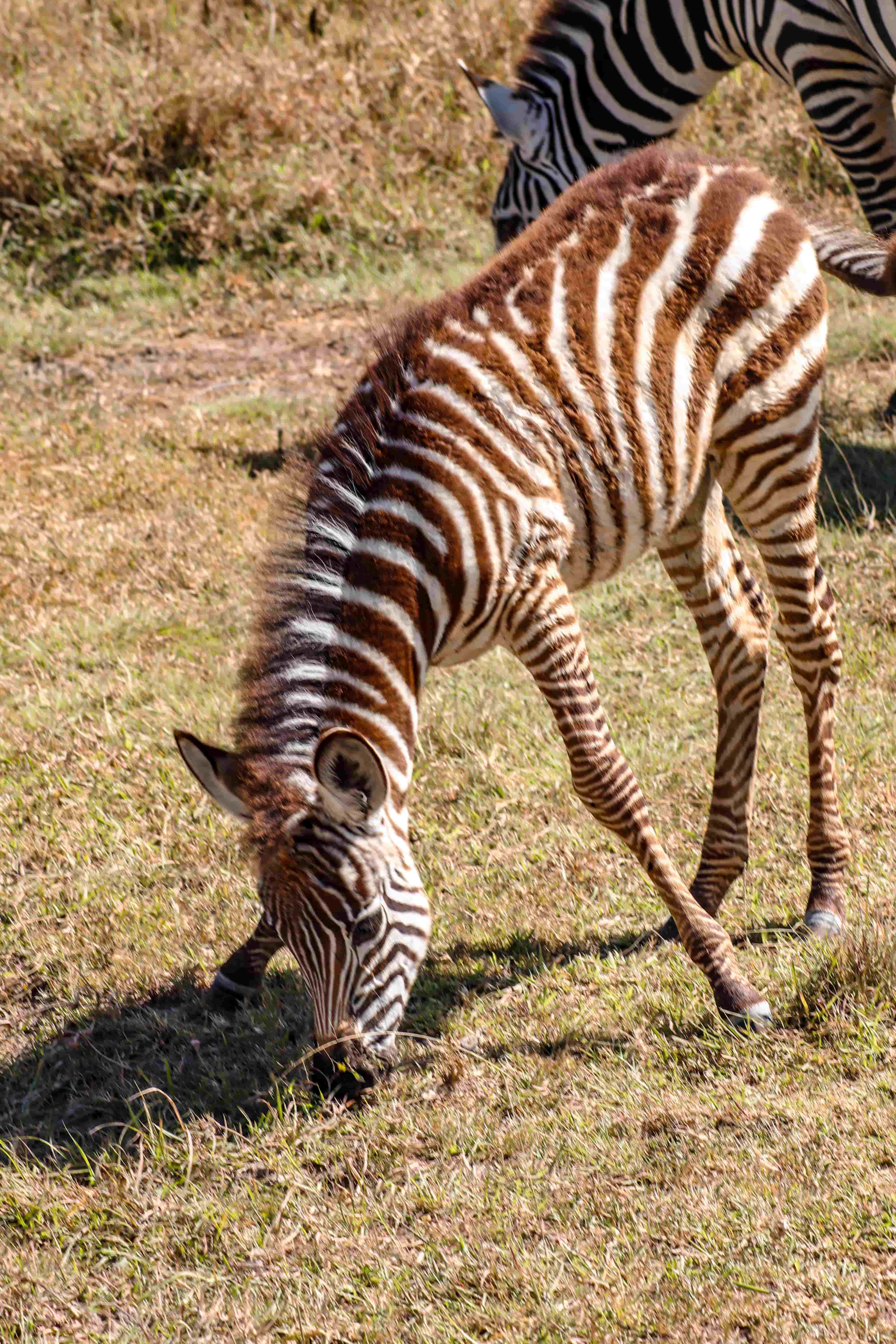
Stripes are the question every safari traveller asks, and the answer is more interesting than you might expect. Decades of research have ruled out the obvious theories: they are not camouflage on the open savannah, they do not confuse predators in chase, and they do not regulate body temperature in any meaningful way. The current best evidence is that stripes deter biting flies, particularly tsetses and horseflies, which struggle to land on the high contrast pattern. Foals are born with brown and white stripes that darken to black over their first few months. A new born zebra is on its feet within minutes and running with the herd within an hour. The mare keeps the foal away from other zebras for the first few days so it can imprint on her stripe pattern, scent and call. This is how foals find their mothers in a herd of thousands. Tanzania's plains zebra population is one of the largest in Africa and is closely tied to the wildebeest migration. Numbers have fallen continent wide by roughly 25 percent in the past two decades due to habitat fragmentation outside protected areas, which is why the species was reclassified as Near Threatened in 2016. Inside the Serengeti ecosystem the population is stable and central to the entire predator prey web.

Where to see

Plains Zebra

in Tanzania

Serengeti National Park

Serengeti National Park

Serengeti National Park

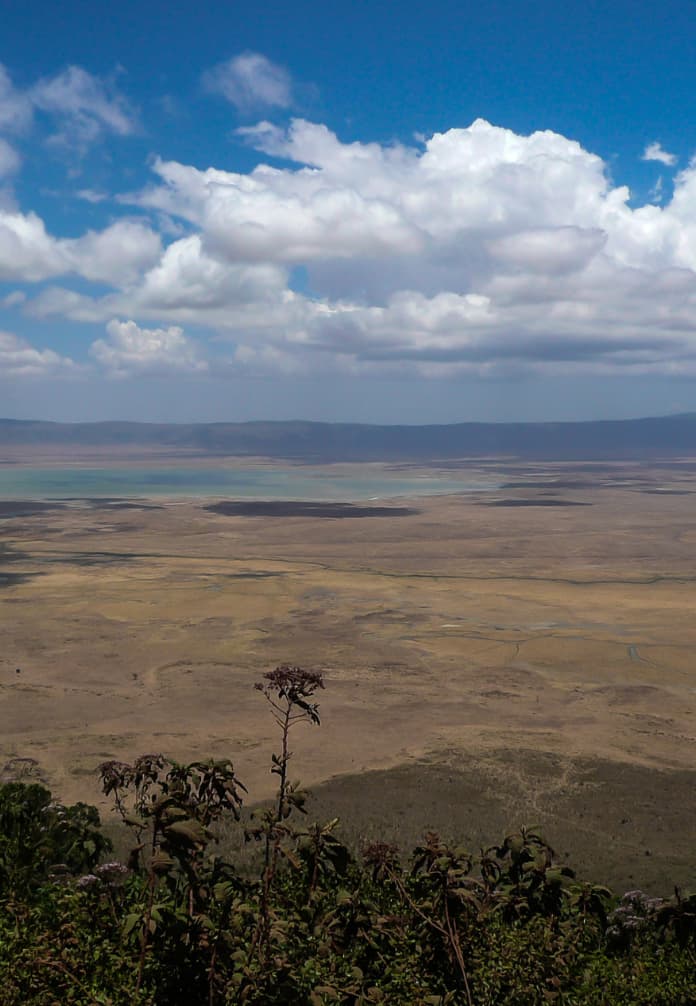
Ngorongoro Crater

Ngorongoro Crater

Ngorongoro Crater

Tarangire National Park

Tarangire National Park

Tarangire National Park

Where to see zebras in Tanzania?

The Serengeti is the single best park for zebra sightings, with the southern plains and Ndutu region holding the highest densities during the calving and rainy seasons. The Ngorongoro Crater also offers reliable year round viewing. Legend Expeditions includes both on our northern circuit itineraries.

Why do zebras have stripes?

The current best scientific evidence is that stripes deter biting flies. Tsetses and horseflies struggle to land on the high contrast pattern, which protects zebras from disease carrying insect bites. Older theories about camouflage and predator confusion have not held up to field testing.

Are zebras part of the migration?

Yes, roughly 250,000 plains zebras migrate alongside the 1.5 million wildebeest in the Serengeti Mara ecosystem. They typically lead the way, grazing the longer grass first and clearing it for the wildebeest behind. You will see large mixed herds of both species throughout your migration safari.

How dangerous are zebras?

Plains zebras are large powerful animals. Adult stallions can weigh over 350 kilograms and have a kick strong enough to break a lion's jaw. They are not aggressive toward safari vehicles and there is no risk inside a guided drive. The danger only arises if a person attempts to approach one on foot.

Can you tell zebras apart individually?

Yes. Every zebra has a unique stripe pattern, especially around the rump and shoulders, and researchers use these patterns to identify individual animals over years. With practice you can pick out individuals in a familiar herd, and your guide will sometimes recognise specific stallions by a scar or a torn ear.

Are there other zebra species in Tanzania?

Tanzania is home only to the plains zebra. The mountain zebra lives in southern Africa and Grevy's zebra lives in northern Kenya and Ethiopia. All the zebras you see in the Serengeti, Ngorongoro and Tarangire are the plains subspecies, and they are the most numerous of the three.

Our clients

Our clients

Photos

Photos

Photography Tips

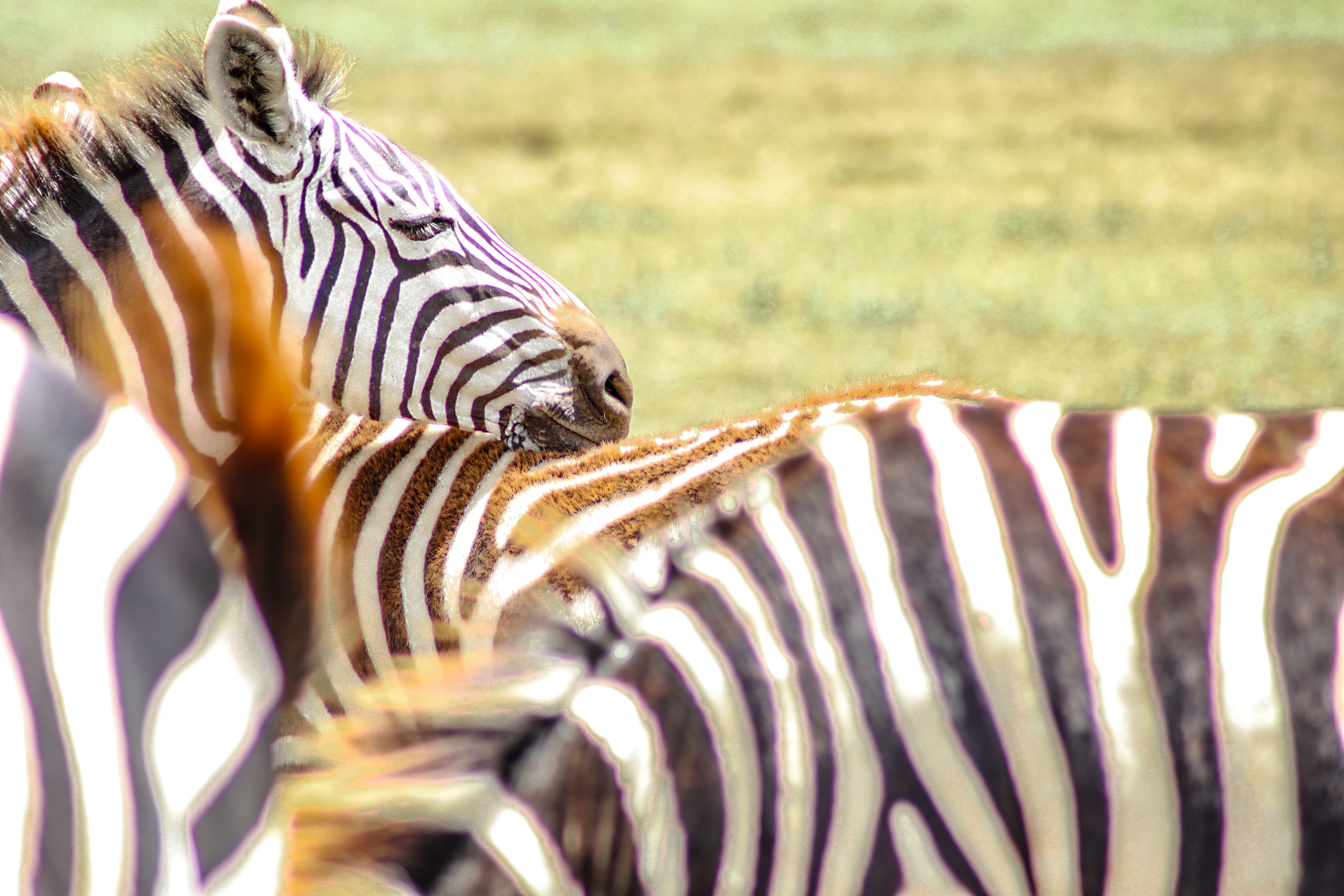
Shoot the pattern. A tight crop of overlapping zebras at a waterhole, with stripes flowing in different directions, makes a near abstract image that almost no other animal allows. Get in close with a long lens. Use the dust. Zebras kick up huge clouds of dust at waterholes, especially in the dry season. Position so the sun is behind the herd and the dust glows golden. Watch for the mutual grooming. Pairs of zebras will stand head to tail, gently nibbling at each other's necks. It is a quiet intimate behaviour and the resulting image, two faces close together, is far better than a standard portrait. Catch the foals. New born zebras have brown stripes and clumsy legs and they stick close to their mothers' flanks. A mare and foal walking through tall grass with the foal half hidden against her side is a story rich frame. Unique to plains zebra: photograph the herd at the river crossing. During the migration months, zebras and wildebeest cross the Mara River together, and the contrast of the striped bodies among the dark wildebeest gives the chaotic crossing scene visual structure.

Start planning your safari

We reply within 24 hours. No hard sell, ever.

I have spent years guiding expeditions across Tanzania and personally design every Legend safari itinerary.


If you have questions about what you will see, when to go, or how to make the most of your time in the field, just ask. No hard sell. Just honest advice from someone who loves this place.

Jack Fleckney

Head Guide & Founder

We reply within 24 hours. No hard sell, ever.

Start planning your safari