CREATE YOUR LEGEND | 2026-2028 dates available | SECURE YOUR PLACE WITH JUST £100 DEPOSIT
OVERVIEW
Last updated: May 2026
There is no single best month to climb Kilimanjaro. The right window depends on what you are willing to trade: warmer days against quieter trails, peak-season certainty against shoulder-season solitude, or summit-night visibility against the risk of wind. This guide gives you the honest answer for each month of the year, the temperatures you will actually face at each altitude, and how Kilimanjaro's weather interacts with the two main routes Legend runs.
Published by
Jack Fleckney
Quick Summary: The Best Time to Climb Kilimanjaro
Long dry season (June–October): the most reliable weather and the highest summit success rates. July and August are the standout months.
Short dry season (January–early March): clear skies, colder nights at altitude, noticeably quieter trails. An excellent alternative to peak season.
Long rains (April–May): wet, muddy, low visibility. Not recommended for most climbers.
Short rains (November): unpredictable. Expect mixed conditions and pack accordingly.
Shoulder months (October, early March, early December): generally good conditions with smaller crowds.
Best summit-night odds: dry-season climbs combined with a longer itinerary for proper acclimatisation. Weather matters, but altitude is the bigger factor.
Kilimanjaro’s Climate Zones: What to Expect at Each Altitude
Kilimanjaro is the only place on earth where you can walk from the equator to the arctic in under a week. You pass through five distinct climate zones on the way up, and each behaves differently regardless of the season. The mountain itself is managed by the Tanzania National Parks Authority, which sets route access, camp infrastructure, and trail standards across all five zones.
Cultivation Zone (800–1,800m)
This is the farmland belt around Moshi and the lower park boundary. It is warm and tropical, typically 21–27°C during the day, with banana plantations and coffee farms on the lower slopes of the mountain. You spend very little time here on the climb itself, most of it on the drive in.
Rainforest Zone (1,800–2,800m)
The first proper day of walking takes you through dense montane rainforest. It is humid, often misty, and you can expect afternoon showers even in the dry season. Temperatures sit around 12–20°C. The trail underfoot is usually damp, and a light waterproof shell is sensible no matter when you climb.
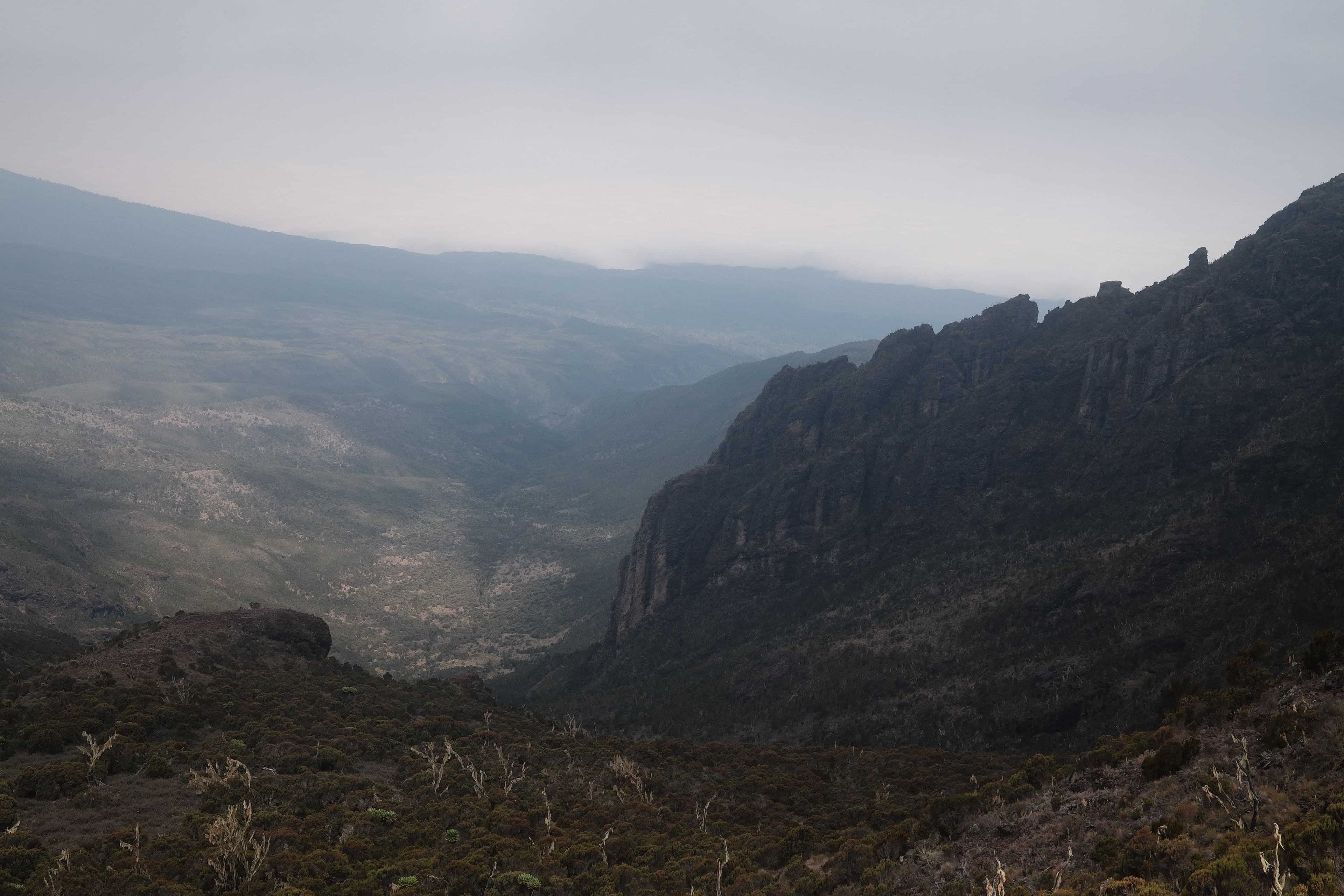
Heath and Moorland (2,800–4,000m)
The forest thins out into open moorland of giant lobelias, heather, and exposed ridges. Days are cooler at around 5–15°C, nights drop close to freezing, and the sun feels sharper because of the thinner air and reduced canopy. This is the zone where most climbers first notice the altitude.
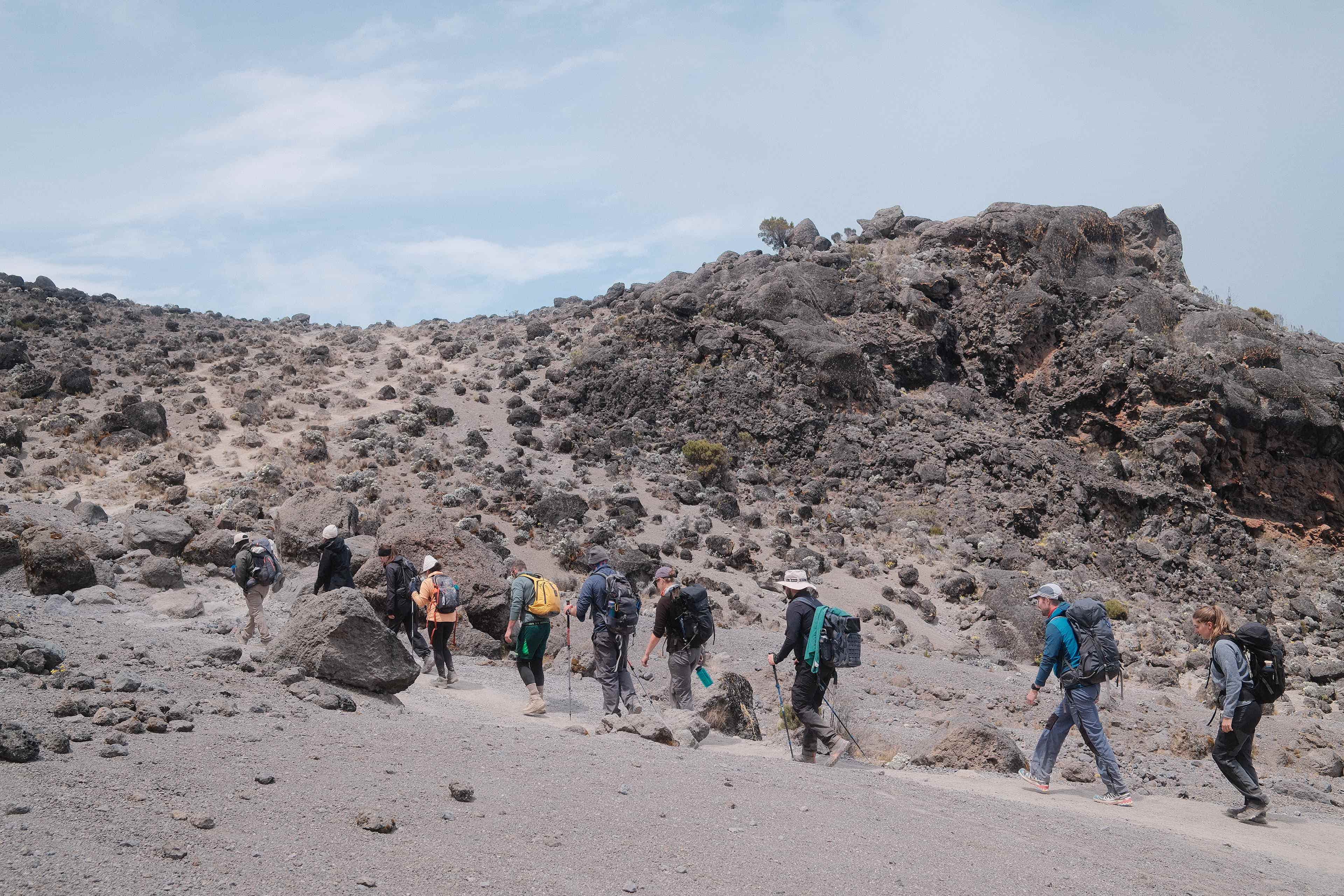
Alpine Desert (4,000–5,000m)
Above the moorland the landscape turns lunar. Vegetation almost disappears, the days are intense under direct sun, and nights are properly cold, often -5°C to -10°C. Hydration becomes harder and acclimatisation becomes the priority. This is the zone where pacing matters more than fitness.
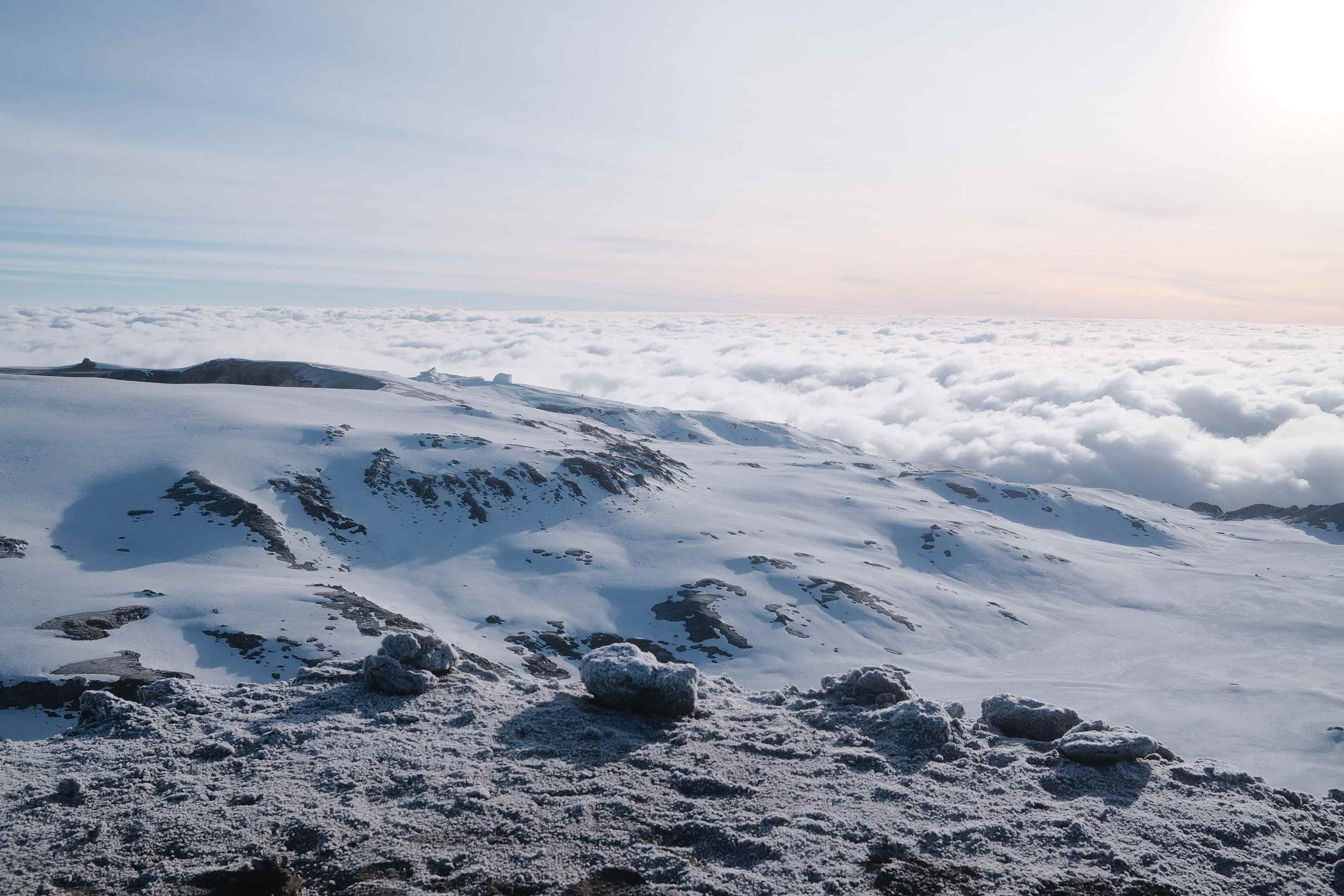
Arctic Summit Zone (5,000–5,895m)
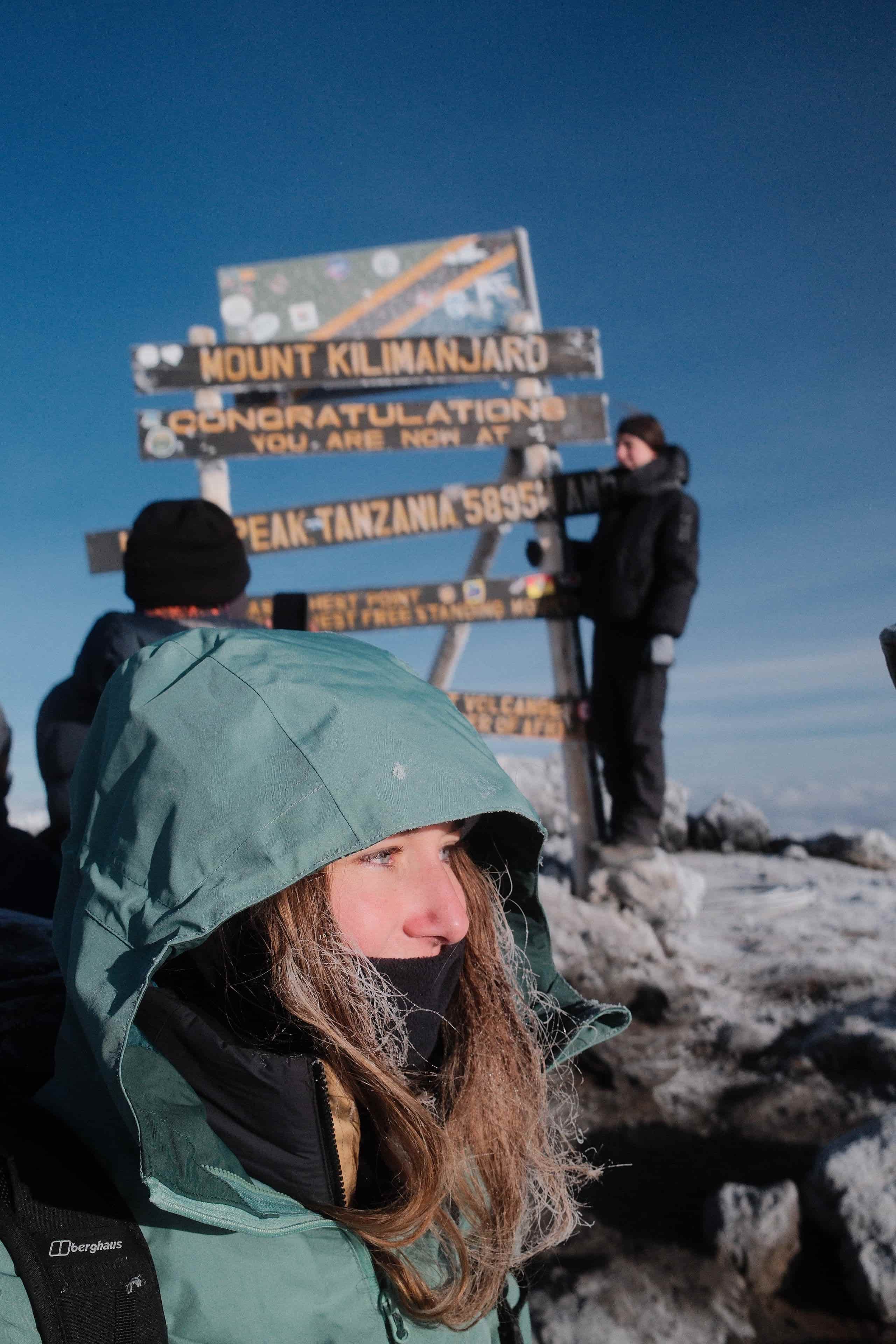
The final push to Uhuru Peak. Night-time temperatures sit between -10°C and -20°C, with wind chill capable of dragging the felt temperature down to -30°C on a bad night. Glaciers still cling to the crater rim. The air holds roughly half the oxygen of sea level. Everything is harder, slower, and colder than the thermometer suggests. Your kit choices for this zone are not optional; see our full Kilimanjaro packing list for what we recommend layer by layer.
Kilimanjaro’s Two Climbing Seasons
Kilimanjaro has two dry seasons and two wet seasons, driven by the equatorial monsoon pattern rather than the northern-hemisphere calendar most climbers are used to.
The long dry season runs from late June through October. This is peak climbing season. Stable weather, clear summit views, and the busiest trails of the year. The short dry season runs from mid-December through to the start of March, with January and February the most settled months. The long rains fall in April and May, and the short rains arrive in November. The wet seasons are not absolute. Climbing is possible, but they bring real challenges that most climbers would rather avoid.
Best Time to Climb Kilimanjaro: Month by Month
January and February: Cold, Clear, and Quiet
January and February sit firmly in the short dry season. Skies are usually clear, the rainforest is at its greenest after the November rains, and the mountain itself is noticeably colder than in July. February can bring stronger winds at the upper camps, particularly on summit night. Crowd levels are moderate, busier than October, quieter than August. Verdict: an excellent climbing window if you want good weather without the peak-season crowds. Bring an extra layer.
March: A Month of Two Halves
Early March often holds onto the short dry season, settled mornings, manageable afternoon cloud build-up, and good summit conditions. By the second half of the month, the long rains start to push in. Forest sections become muddy, and visibility drops on the upper mountain. Verdict: Climb in the first two weeks of March if you can. After that, the risk-to-reward ratio shifts the wrong way.
April and May: The Long Rains
These are the wettest months on the mountain. Heavy rain falls in the rainforest and moorland zones, trails turn into mud channels, and snowfall is common above 4,500 metres. Cloud cover often sits on the mountain for days at a time, robbing you of the views that make Kilimanjaro what it is. Verdict: not recommended unless you specifically want solitude and have the kit and mindset for sustained wet-weather walking.
June: The Season Opens
By mid-June the long rains have cleared, and the mountain dries out. The first half of the month can still hold pockets of cloud and damp ground, but conditions improve quickly. Trails are quieter than July and August, and prices for accommodation in Moshi tend to be lower. Verdict: a strong shoulder choice for climbers who want peak-season weather without peak-season numbers.
July and August: The Peak
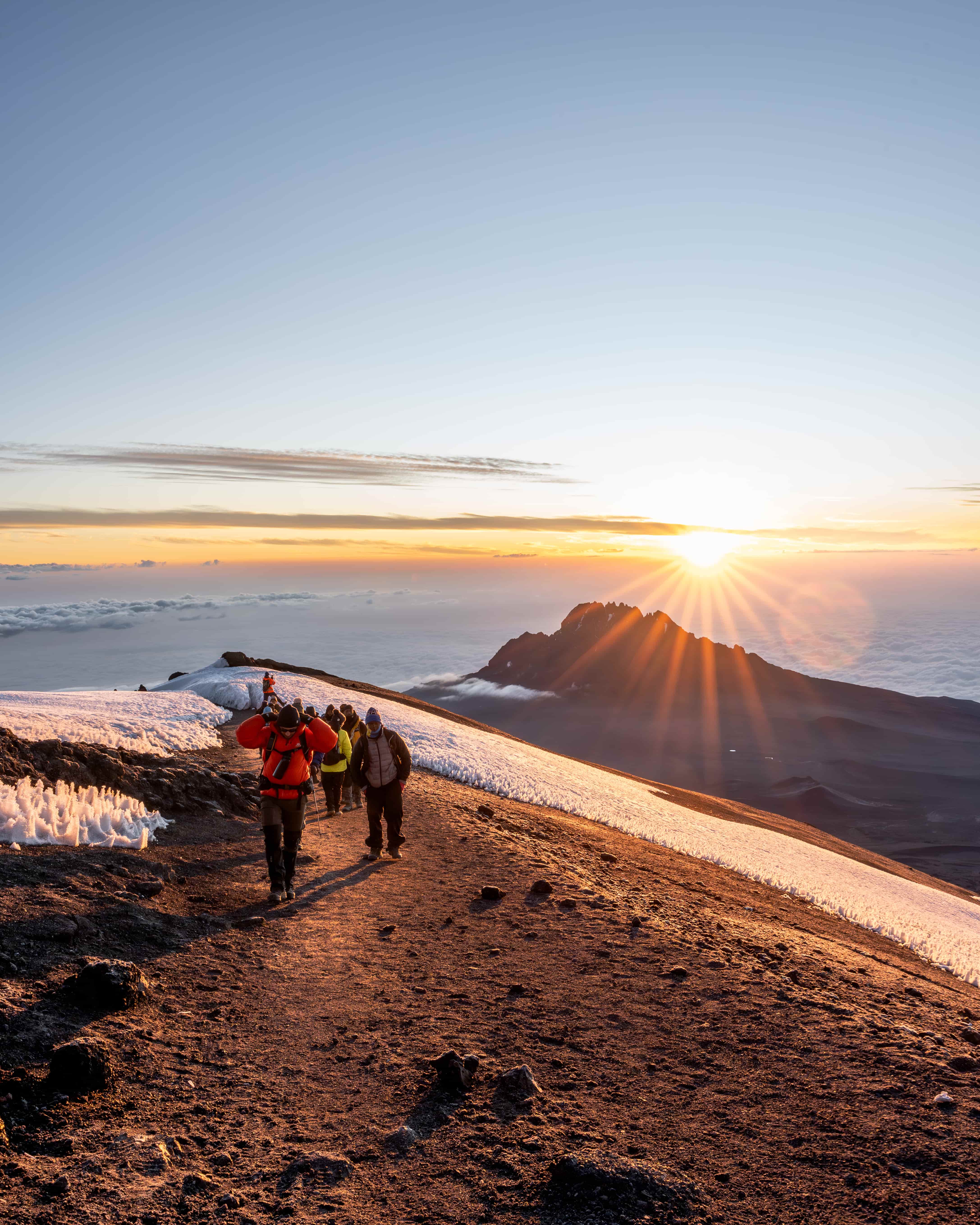
These two months offer the most reliable weather of the year. Days are dry, skies are clear, and the summit is at its most photogenic with the glaciers catching the morning light. They are also the busiest months - Lemosho and Machame in particular see significant traffic, though spacing between Legend groups and others is rarely an issue on the trail itself. Verdict: the optimal climbing window. Book well in advance, particularly for August.
September: The Sweet Spot for Many Climbers
In my experience, September is the month I quietly recommend to anyone who asks. The weather is almost identical to July and August, but the trails noticeably empty out from mid-month onwards. Summit night still feels remote, and the photography is exceptional. Verdict: arguably the best month overall if you want peak conditions with fewer people on the path.
October: Quietest of the Dry Months
October offers the last of the long dry season. Conditions are generally good, the mountain is at its quietest, and the southern routes hold up well. The short rains can occasionally arrive early at the end of the month, but this is rare. Verdict: a fantastic month for climbers who prioritise solitude over weather certainty. If you climb in October, this is also the ideal month to add a post-climb safari - the dry season concentrates wildlife around the remaining water sources.
November: The Short Rains
November is the most variable month of the year. The short rains can be light and inconsistent, or they can be persistent. Cloud cover sits on the mountain more often than not, and afternoon rainfall in the forest sections is the norm rather than the exception. Verdict: climb only if you can be flexible and accept that summit-night visibility is a coin toss.
December: Improving, but Cold
The first half of December often remains wet on the tail of the short rains. From mid-month onwards, the weather settles, and the Christmas and New Year windows are popular. Expect busier summit nights around the 25th and 31st. Temperatures are colder than in September or October. Verdict: a viable festive climb, but pack warm and accept the holiday crowds at altitude.
How Altitude Changes the Cold: What Most Guides Won’t Tell You
A thermometer reading of -15°C on Kilimanjaro does not feel like -15°C in the Alps or the Rockies. There are three reasons for this, and understanding them changes how you pack.
First, air pressure at 5,895 metres is roughly half what it is at sea level. Your body works harder to circulate oxygen, your extremities receive less of it, and your tolerance for cold drops accordingly. Second, the equatorial sun is intense by day, which means significant temperature swings. You can be in a t-shirt at lunchtime and three layers two hours later. Third, wind chill on summit night is rarely reflected in standard forecasts. A 30km/h wind at -15°C produces a felt temperature closer to -28°C, and Kilimanjaro’s exposed ridges above Barafu and Kibo see those winds regularly.
The practical takeaway: layer for the felt temperature, not the forecast. A good down jacket, a properly rated sleeping bag, and quality gloves are not optional kit. They are the difference between a strong summit night and a miserable one. One small detail that makes a bigger difference than most climbers expect: warmth at camp. Climbers who can properly warm up and dry out between days recover faster and acclimatise better, which is exactly why we offer hot showers throughout the climb; it is not a luxury, it is a recovery tool.
Which Season Suits Each Route?
The two routes Legend runs each have a slightly different weather profile, even when the season is the same.
Lemosho approaches from the west and is more exposed to weather systems pushing in from Lake Victoria. It is the best route in dry conditions and our recommended option for an 8-day itinerary, but it can be wetter in shoulder months than other approaches. Legend has a 98.5% summit success rate on Lemosho, which is the strongest case for choosing it regardless of season. If you want the full case for choosing this route, we cover it in detail in why we recommend the Lemosho Route.
Machame runs up the southern flank and shares much of Lemosho’s weather pattern. It catches afternoon cloud build-up readily in the rainforest section, but the summit night profile is essentially identical to Lemosho. Machame is the better choice if you have fewer days available. The 7-day variant is well-established and still gives strong acclimatisation if you are fit and have some altitude experience.
For any climb in shoulder months, the route matters less than the itinerary length. An 8-day Lemosho in early March will outperform a 6-day Machame in July almost every time.
Best Time vs Best Success Rate: Are They the Same?
Not quite. Weather affects comfort, visibility, and summit-night conditions, but it is rarely the reason climbers turn back. The real driver of summit success is altitude acclimatisation, which depends on three things: your itinerary length, your pacing on the mountain, and the quality of your guiding team. If you want the deeper science of what altitude actually does to your body, we cover it in Altitude 101: what altitude is and what to expect.
This is why Legend runs an 8-day Lemosho itinerary rather than the more common 6 or 7 days. The extra night allows your body to adjust more gradually to the thinning air, and it is the single biggest reason our summit success rate sits at 98.9%. Climbing in July does not automatically mean you will summit. Climbing on a well-paced itinerary with experienced guides almost always does.
Weather and success are correlated, not causally linked. Pick your month, then pick your operator carefully.
Our Recommendation
If you have full flexibility, climb in September. The weather is as good as July and August, the trails are markedly quieter from mid-month, and the photography is exceptional.
If September does not work, July or early August is the safest choice for peak-season certainty. For climbers who want quieter trails and do not mind the cold, late January or early February is the strongest alternative.
Avoid April, May, and the back half of November unless you have a specific reason to climb then and you are properly kitted for sustained wet-weather walking.
Whichever month you choose, the route and the itinerary length will influence your summit chances more than the calendar.
Kilimanjaro Weather - Frequently Asked Questions
What is the best month to climb Kilimanjaro?
July and August are the most reliable months - dry weather, good visibility, and stable trail conditions. If you want quieter trails with similar conditions, January and February are an excellent alternative. Both sit within Kilimanjaro’s two dry seasons and offer the best overall chance of a clear summit.
What is the weather like on Kilimanjaro in January?
January is part of Kilimanjaro’s short dry season and one of the better months to climb. Conditions are generally clear and dry, though temperatures at altitude are colder than during the June to September season. You may encounter stronger winds on the upper mountain in February in particular, but overall the weather is favourable, and the trails are noticeably quieter.
Can you climb Kilimanjaro in the rainy season?
It is possible, but not recommended for most climbers. The long rains in April and May bring heavy rainfall, muddy trails, and reduced visibility, particularly on the lower slopes. The short rains in November are less severe but still unpredictable. If you do climb during the shoulder months, go in with realistic expectations and the right waterproof kit.
How cold does it get on Kilimanjaro at night?
It depends on your altitude. In the lower camps, nights are cool but manageable at around 5 to 10°C. Higher up, above 4,000 metres, temperatures drop well below freezing. On summit night, the thermometer typically reads between -10°C and -20°C at Uhuru Peak, and wind chill can push the felt temperature to -25°C or lower. A quality sleeping bag and a proper layering system are essential.
Is the weather different on each route?
Broadly, the same seasons apply across all routes, but there are real differences in exposure. The southern-facing routes, Machame and Lemosho, tend to receive more rainfall during the wet seasons. Lemosho’s western starting point can also be wetter in shoulder months due to its more exposed approach. During the main dry season, route choice makes little difference to overall weather conditions.
Does the weather affect summit success rates?
Weather is a factor, but it is rarely the main reason climbers turn back. Altitude sickness, which is not directly caused by weather, is by far the most common reason for a failed summit. That said, poor weather on summit night, high winds or fresh snow can make an already demanding ascent significantly harder and increase the risk of hypothermia. Climbing in the dry season removes one variable from a climb where every advantage counts.
I have climbed Kilimanjaro in every season the mountain offers, and the honest truth is that the right month is the one that fits your life. If you have flexibility, climb in September. If you do not, pick a dry-season window and commit to a properly paced itinerary. That is what gets people to the summit.
If you want to talk through dates, routes, or whether a particular month suits your fitness and experience, drop me an email at jack@legendexpeditions.com, book a call here, or message me on WhatsApp. I answer every enquiry personally.
Thanks,
Jack Fleckney