CREATE YOUR LEGEND | 2026-2028 dates available | SECURE YOUR PLACE WITH JUST £100 DEPOSIT

KILIMANJARO
How Much Does It Cost to Climb Kilimanjaro in 2026/2027? An Honest Price Guide
10
MINS
OVERVIEW
A reputable Kilimanjaro climb booked from the UK costs roughly £1,700 to £3,800 per person, depending on the route, the number of days, your group size and the operator you trust with your life on summit night. Our 8-day Lemosho climb at Legend is £3,295 per person, all in. Anything advertised under about £1,500 should make you stop and ask what has been cut, because the mountain's fixed costs do not move for anyone.
That is the honest headline number, and ours is genuinely all in. The rest of this guide explains how the cost to climb Kilimanjaro actually breaks down, the extras a cheap quote leaves out and bills you for later, and why the lowest price on the page is almost always the most expensive decision you can make.
I am Jack Fleckney. I founded Legend, I live in Moshi at the foot of the mountain, and I would rather give you the real economics in plain English than the polished version every agency hands you.
Published by
Jack Fleckney
What actually drives the price
Five things move the number more than anything else. Understand these and you can read any quote on the market and spot where the corners have been cut.
Route and number of days
The single biggest lever on price is how many days you spend on the mountain. Every extra day means another night of park fees, another day of wages for your crew, and another round of food carried up and prepared at altitude. A 5-day climb is cheaper than an 8-day climb for one simple reason: you are buying less time. The problem is that less time is exactly what gets people sent home before the summit, and occasionally what gets them hurt.
Group climb or private climb
Costs spread across a group. A scheduled departure with eight climbers shares the fixed overheads of guiding, transport and camp infrastructure, so the per-person price drops. A private climb for two costs more per head because you are carrying those overheads between you. Neither is better. It depends on whether you want your own dates and pace or you are happy to join a set departure.
Crew size and fair wages
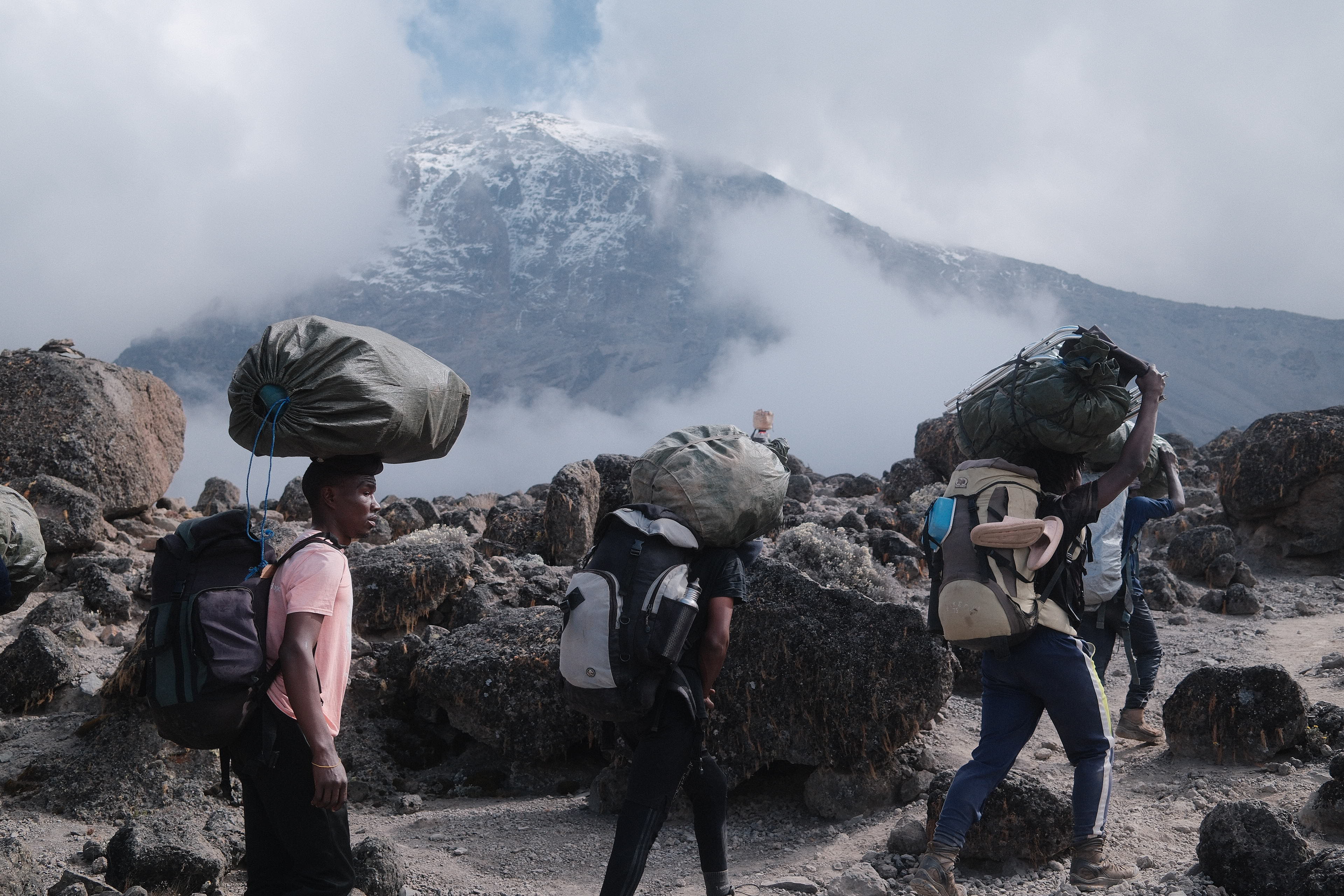
A safe Kilimanjaro climb runs on people. For a typical group you are looking at three to five crew members per climber: guides, an assistant guide, a chef, and the porters who carry tents, food, water and your kit bag. The honest operators pay these people properly and follow the wage and welfare standards set by the Kilimanjaro Porters Assistance Project. The cheap operators make their savings here, on the backs of the men carrying your equipment. More on that below, because it matters.
Park fees, the largest fixed cost you cannot avoid
Park fees are the part most price comparisons quietly leave out. They are set by the Tanzania National Parks Authority, they are the same for every operator, and they are roughly half the real cost of a properly run climb.
Here is the breakdown for an international climber:
Conservation fee: around $70 per person, per day, plus 18% VAT, which takes it to roughly $82 a day.
Camping fee: around $50 per person, per night.
Rescue fee: a one-off charge of around $20 per person.
Forest and crew entry fees: smaller charges that apply on routes passing through the rainforest zone, including Lemosho.
On an 8-day Lemosho climb, park fees alone come to roughly £950 to £1,050 per person once VAT and crew charges are added. That figure is not optional and it does not change between operators. So when one quote is hundreds of pounds cheaper than another, the difference is rarely the mountain. It is the wages, the food, the safety equipment, or the VAT that a thinner quote has hidden. These fees are reviewed by the park authority periodically, so treat the numbers here as current at the time of writing and confirm the live figure with us before you book.
Dollar figures converted at roughly £1 = $1.32, June 2026.
Season
Peak season on Kilimanjaro runs through the dry months of January to March and June to October. Demand is higher, the mountain is busier, and prices firm up. The shoulder periods can be quieter and occasionally cheaper, though the weather carries more risk. Season moves the price at the margins. It does not change the fundamentals above.
Want a straight answer on price for your exact dates? Book a planning call and I will give you a real number, not a brochure range.
Cost by route
Route cost is mostly a function of days on the mountain and which zones you pass through. The table below gives indicative UK market starting prices so you can place any quote in context. Our own flagship is the 8-day Lemosho, set out in the first row at our actual price.
Route | Typical days | Indicative UK price (from) | Notes |
|---|---|---|---|
Lemosho (our flagship) | 8 | £3,295 (Legend, all in) | Best acclimatisation profile. 98.9% summit success with us. The route we recommend to almost everyone. |
Lemosho (shorter, other operators) | 6–7 | from ~£2,000 | Same route, fewer acclimatisation days, lower success. |
6–7 | from ~£1,700 | Scenic and popular, which also means busier. | |
5–6 | from ~£1,500 | The only hut route. The shortest options carry the lowest summit success on the mountain, and I will say that plainly. | |
Rongai | 6–7 | from ~£1,800 | Quieter northern approach, drier underfoot. |
Northern Circuit | 8–9 | from ~£2,500 | The longest route and the highest acclimatisation, priced accordingly. |
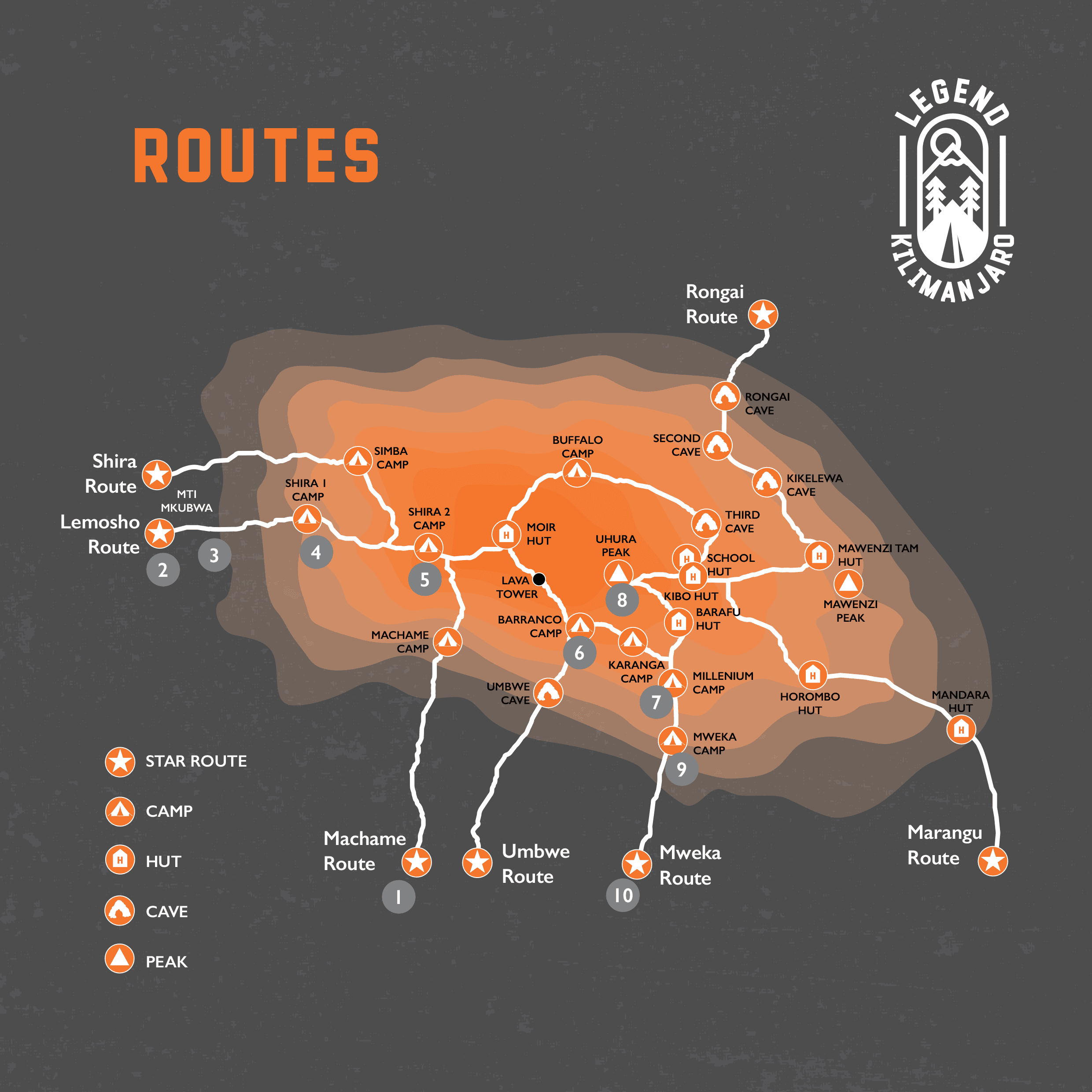
The pattern is consistent. More days cost more and, on a mountain where altitude is the thing that turns people back, more days are usually what buys you the summit. The 5-day Marangu climb is the cheapest line on most operators' menus and it has the worst success rate on Kilimanjaro. That is not a coincidence, and it is not a bargain.
What's included, and the extras others charge for
Here is where the real difference in price hides, and it is almost never on the headline. A budget quote often looks cheaper because it prices the climb itself and then bills you, item by item, for the things you will actually need once you land.
These are the extras other operators commonly charge on top:
Airport pickup and transfers
A single supplement if you are travelling solo
A private toilet tent
A larger stand-up tent
Hot showers on the mountain
An extra acclimatisation day
Pre and post-climb hotel nights
Sometimes park VAT itself, added after the headline price
Add the ones you will genuinely want back onto a cheap quote and the gap closes fast. In my experience, it often closes completely. Once everything is loaded back on, we come out competitive against operators who looked cheaper at first glance, and you carry none of the uncertainty.
With us there is nothing to bolt on, because every one of those items is already in the £3,295.
Included as standard, with nothing to add:
All Kilimanjaro National Park fees, including 18% VAT
All airport and park gate transfers
Professional guiding, with a one-to-one guide-to-client ratio on summit night
WFR-certified lead guides and supplementary oxygen carried throughout
The full mountain crew, paid fairly under KPAP welfare standards
All meals on the mountain, prepared fresh at camp
Stand-up tents, cot beds, proper mattresses, private toilet tents and hot showers
Two nights at the Maridadi Hotel, one before the climb and one after
Solo travellers are looked after too, with no surprise single supplement sprung at the end.
Genuinely not included, budget separately:
International flights from the UK, typically £500 to £900 return
Tanzania visa, around $50, arranged online before you travel
Travel insurance that explicitly covers trekking above 4,000 metres and emergency evacuation. This is non-negotiable.
Crew tips, which we recommend at around $300 (roughly £230) per climber for the full team
Drinks and any meals at the hotel outside the climb itinerary
With a cheap operator you discover the real price in instalments. With us you know it before you book, and all you have to do is get on the plane.
Why the cheapest climb costs the most
I will be straight with you about where the cheap operators make their savings, because it is rarely where the marketing suggests.
The park fees are fixed. The food has to be bought and carried. So when a climb is advertised at a price that undercuts the competition by hundreds of pounds, the money has come out of three places: porter wages, safety provision, and the number of days you spend acclimatising. Each one of those is a problem you only discover when it is too late to fix.
Underpaid and under equipped porters are the quiet scandal of this mountain. The men carrying your gear sometimes do it in inadequate clothing, on too little food, for wages that would shame the people booking the climb if they ever saw the figure. We work to KPAP standards because the alternative is unconscionable, and because a crew that is looked after is a crew that looks after you.
Then there is the summit itself. A short, cheap itinerary gives your body too little time to adjust to altitude, which is the single largest reason climbers fail to reach Uhuru Peak. When something goes wrong high on the mountain, the gap between a well-run operation and a cheap one becomes the gap between a controlled descent and an emergency. Oxygen, a trained medic, a proper guide ratio and a sensible acclimatisation profile are not luxuries you are being upsold. They are the reason people come home.
The cheapest climb saves you a few hundred pounds and bills you the difference in risk. That is the trade, stated honestly.
Getting there from the UK: flights, money and booking direct
There are no direct flights from the UK to Kilimanjaro, whatever a booking engine's headline might imply. Every route runs through one connection, and the good news is you have plenty of them. KLM via Amsterdam is the quickest and can be done in a single day. Qatar Airways via Doha, Kenya Airways via Nairobi, Ethiopian via Addis Ababa and Turkish via Istanbul all serve Kilimanjaro International Airport from multiple UK departure points, including Gatwick, Heathrow and Manchester. Return fares typically land between £500 and £900 depending on season, with September often the cheapest month to fly.
On money, the climb is priced and paid in pounds, so you carry no currency risk on the trip itself. You will want some US dollars in cash for your visa and crew tips. Beyond that, the advantage of booking a pound-priced climb is that the number you agree is the number you pay.
There is also a structural reason to book direct. Many UK climbs are sold by agencies that subcontract the actual mountain operation to a Tanzanian company, then add their margin on top. We do not work that way. We are the operator. Our office sits at the foot of Kilimanjaro in Moshi, and we deliver every part of your trip ourselves, from the airport pickup to the summit to the safari afterwards. Nothing is outsourced and no third party touches your climb. That strips out the agency markup, and it means the person you email is the person responsible for getting you up the mountain. On financial protection, your payment sits in a client holding account and we do not draw on it until your trip runs. That is an honest commitment rather than a formal bonding scheme, and I would rather tell you exactly how it works than dress it up as something it is not.
What £3,295 actually buys you with Legend
You are paying for the parts of a climb that do not show up in a price comparison until the moment they matter.
A 98.9% summit success rate on our 8-day Lemosho route, built on a genuine acclimatisation profile rather than a rushed one. Lead guides certified as Wilderness First Responders through Munro Medical, supplementary oxygen carried as standard, and a one-to-one guide ratio on the night that decides whether you stand on the roof of Africa. A camp with stand-up tents, real beds, private toilets and hot showers, because eight days is a long time to be uncomfortable. A crew paid and treated properly under KPAP. And an operation that is rated five stars on TripAdvisor, nominated at the 2026 World Travel Awards, and has guided more than 150 climbers this year alone.
It also buys you everything around the climb. From the moment you book you get your own Legend travel app, with your itinerary, kit list and countdown in one place, and continuous support from me personally in the months before you fly. There is a welcome pack waiting for you, and a few surprises along the way that I will not spoil here. The trip starts the day you book, not the day you land.
That is the climb. Not the cheapest on the page, and deliberately so.
Frequently asked questions
How much does it cost to climb Kilimanjaro?
A reputable guided climb from the UK costs roughly £1,700 to £3,800 per person, depending on route, length and group size. Our 8-day Lemosho climb is £3,295 all in. About half of any honest price is fixed park fees, which are the same for every operator, so prices much below that range usually mean wages or safety have been cut.
Why are some Kilimanjaro climbs so cheap?
Because park fees and food cannot be reduced, the savings come from porter wages, safety provision and acclimatisation days. A climb advertised hundreds of pounds below the market is buying you fewer days on the mountain and a crew that is paid less than it should be. You feel the consequences on summit night, not at the point of booking.
Are park fees included in the price?
In a properly quoted climb, yes, including the 18% VAT. Always confirm this, because a common trick is to quote a price that looks low and then add park fees or VAT later. Our £3,295 includes every national park charge with nothing to top up at the gate.
How much should I tip on Kilimanjaro?
We recommend around $300 (roughly £230) per climber for the full crew. Tipping is standard and culturally expected, and it goes to the guides, chef and porters who carry your climb. Bring it in US dollars cash, as it is not part of the package price.
What is the cheapest safe route up Kilimanjaro?
The cheapest routes are the shortest ones, usually 5-day Marangu, and they carry the lowest summit success rate on the mountain. Safe and cheap rarely sit on the same itinerary here. If budget is tight, a 6-day route is a more sensible floor than a 5-day one, but the 8-day Lemosho remains the best balance of cost, comfort and the odds of actually summiting.
Is it cheaper to book Kilimanjaro direct?
Usually, yes. Many UK climbs are sold by agencies that subcontract the operation to a Tanzanian company and add a markup. Booking direct with the operator who runs the mountain removes that layer, and it means the person answering your questions is the person accountable for your climb.
Are there any hidden costs when climbing Kilimanjaro?
With many operators, yes. Airport transfers, a private toilet, a single supplement, hot showers and pre-climb hotel nights are often billed on top of the headline price. With Legend every one of those is already in the £3,295, so the only things you budget separately are flights, visa, insurance and crew tips. You know the full cost before you book, with nothing to add at the gate.
I have climbed this mountain more times than I can usefully count, and the question of price is the one I most want people to get right, because getting it wrong has consequences that money cannot fix afterwards. A fair price buys you a safe climb and a real shot at the summit. A cheap one borrows against both.
If you want a straight answer on cost for your dates, email me directly at jack@legendexpeditions.com or book a call and we will talk it through. You can also read more about the route I recommend on our 8-day Lemosho page, and I will happily send you my free Kilimanjaro book to help you plan.
Jack


