CREATE YOUR LEGEND | 2026-2028 dates available | SECURE YOUR PLACE WITH JUST £100 DEPOSIT

KILIMANJARO
The Ultimate Kilimanjaro Training Plan: 12-Week Guide
8
MINS
OVERVIEW
Most people who fail to summit Kilimanjaro are not unfit. They have simply trained for the wrong thing. A good Kilimanjaro training plan does not turn you into a sprinter or a gym athlete. It builds the one quality the mountain actually rewards: the ability to keep moving slowly, for hours, on tired legs and thinner air.
This guide covers what 12 weeks of preparation should look like, why the stairclimber and the long weekend hike matter more than anything else you do, and how to build a plan around the time and equipment you genuinely have. It is written for anyone with a climb booked, or seriously considering one, who wants to arrive at the gate ready rather than hopeful.
Published by
Jack Fleckney
Why fitness alone will not get you up Kilimanjaro
Altitude is the real test on Kilimanjaro, not gradient. You can be a strong runner at sea level and still struggle above 4,000 metres, because your body is working harder for less oxygen with every step. Training does not make you immune to altitude. What it does is free up capacity, so your body is not fighting fatigue and altitude at the same time.
Then there is summit night. On our 8-day Lemosho route, you leave high camp around midnight, climb for six to eight hours to reach Uhuru Peak near dawn, and then turn around and descend for most of the rest of the day. That is a twelve to fifteen hour effort at the thin end of the air you are used to. The climb up tests your lungs. The descent tests your legs, and it is the descent that wrecks people who have not trained for it.
So this is an endurance event, not a power event. Train accordingly.
The "pole pole" principle, and why slow training wins
"Pole pole" means "slowly, slowly" in Swahili, and it is the most repeated phrase on the mountain for good reason. Our guides set a deliberately gentle pace, slower than feels natural, because that pace is what gets people to the top. The climbers who summit are rarely the fittest in the group. They are the ones who can stay comfortable at a slow effort for a very long time.
This changes how you should train. Most people, left to their own devices, train too hard for too short a time. They are building the wrong engine. The bulk of your sessions should sit at around 6 out of 10 on effort, the pace at which you could hold a conversation and keep going almost indefinitely.
Get comfortable being slow. That is the skill.
What a 12-week Kilimanjaro training plan looks like
Twelve weeks is enough time for most reasonably active people to go from a solid base to genuinely ready. The plan moves through three phases. Weeks one to four build a foundation. Weeks five to eight add load and duration. Weeks nine to twelve push you to your peak, then taper so you arrive fresh.
Across all twelve weeks, the work rests on three pillars: cardio endurance, leg and core strength, and time on your feet. Here is what each one is doing for you.
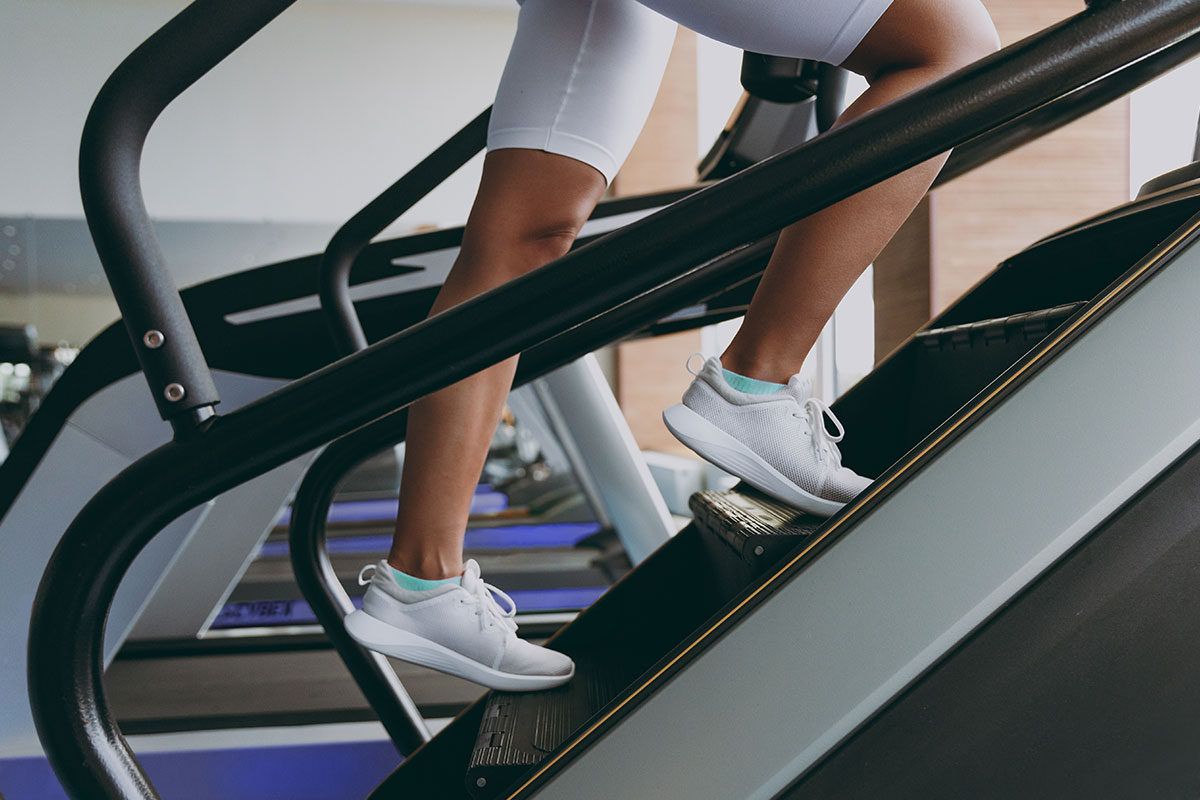
Endurance: the stairclimber is your best friend
Nothing in a gym replicates Kilimanjaro better than a stairclimber. It loads the exact muscles you climb with, it builds the lungs, and it lets you control effort precisely. In our plan, steady climbs start at 30 minutes in week one and build to 90 minutes by week twelve, all at that "pole pole" pace. Interval sessions sit alongside them to develop a harder gear for the steep sections.
No stairclimber? You are not stuck. Hills, an inclined treadmill, or a real set of stairs will all do the job. The principle is the same: time spent climbing under control.
Strength: legs and core that hold up on the descent
Strength work is insurance, mostly for the way down. Goblet squats, Romanian deadlifts, step-ups, Bulgarian split squats and calf raises build legs that can absorb hour after hour of downhill without giving out. Core work through planks and anti-rotation holds keeps you stable on uneven, rocky ground.
You do not need to lift heavy. You need to build legs that still work in hour ten.
Time on feet: the outdoor hike is the most important session
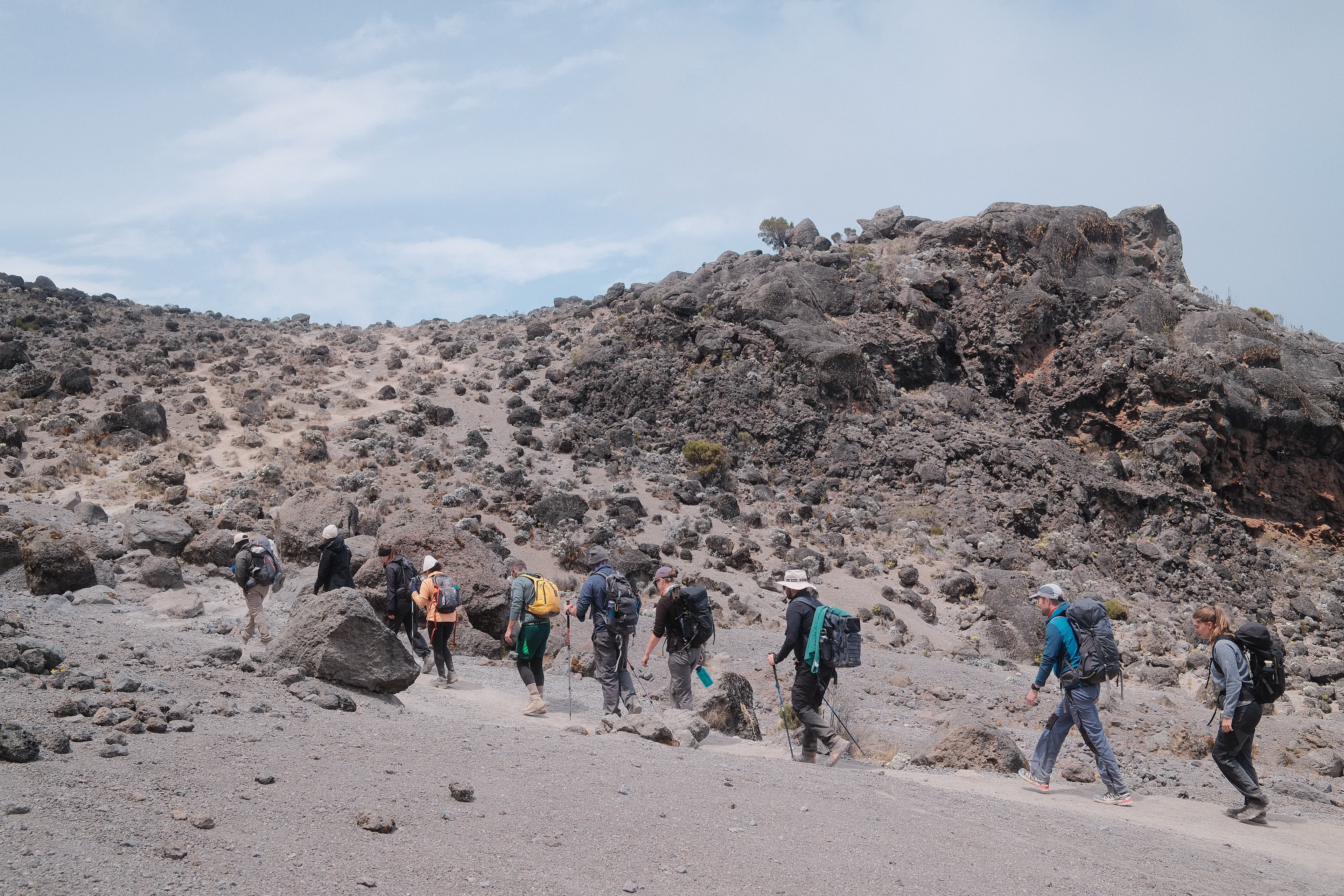
Treat your weekend hike as the single most important session of the week. It is the one that rehearses the real thing. Our plan builds these from 90 minutes in week one to four hours by the end, always on hilly ground, always carrying a light pack.
Use these hikes to practise everything at once. Walk with poles. Drink every 15 to 20 minutes. Eat on the move. Wear the boots and the daypack you intend to take. By the time you reach Tanzania, none of it should feel new.
One plan does not fit everyone
A plan you cannot actually follow is worse than no plan at all. That is why our training tool asks four straightforward questions before it builds anything for you. Do you have access to a gym? A stairclimber? Can you get to any hills? And how many sessions can you realistically commit to each week, one to two, or three to five?
Your answers shape the plan. Someone with a full gym and five free evenings gets a different programme to someone training from home twice a week with a local hill. Both can summit. The plan simply meets you where you are. You can build your personalised Kilimanjaro training plan here and have it ready in a couple of minutes.
One honest note on frequency. Two consistent sessions a week, done for twelve weeks, will beat a perfect five-day programme you abandon after a fortnight. Consistency is the whole game.
The small things that decide summit day
A few details outside the training itself decide more climbs than people realise. Sort them early.
Break in your boots. Blisters end summit attempts. Do your long hikes in the exact boots you will climb in, well before you fly.
Learn to use poles. Used properly, trekking poles take meaningful load off your knees on the descent. Practise until the rhythm is automatic.
Practise fuelling. Train your stomach to take on water and snacks while moving. Summit night is no time to discover you cannot eat on the go.
Carry your real daypack. Train with the weight you will actually carry, so your shoulders and back are used to it.
Train the mind, not just the legs
Summit night is won in the head as much as the legs. It is cold, dark, and slow, and at some point your body will make a fairly persuasive case for stopping. The reason training matters here has nothing to do with muscle. Every long hike and every 90-minute stairclimber session is evidence, banked, that you can keep going when you would rather not.
When I guide clients through that final push, the ones who stay calm are almost always the ones who trained consistently. They have been tired before. They know it passes.
That is the quiet benefit of twelve weeks of honest work. You stop hoping you can do it and start knowing.
When you climb with us, the mountain side of the equation is covered. Our 8-day Lemosho route gives your body the time it needs to acclimatise, we run a one-to-one guide ratio on summit day, and we carry supplementary oxygen as standard. It is a large part of why we summit 98.9% of the climbers we take. Your job between now and then is the training. Ours is everything above the gate.
Frequently asked questions
How long does it take to train for Kilimanjaro?
Twelve weeks is the right window for most people who already do some regular exercise. If you are starting from a low base or carrying an injury, give yourself longer, perhaps four to six months, and build slowly. The goal is consistent, progressive training rather than a last-minute scramble. Rushing fitness is how people arrive tired before they have even started.
How fit do you need to be to climb Kilimanjaro?
You do not need to be an athlete. If you can comfortably walk for several hours on hilly ground while carrying a light pack, you have the right base to build on. Kilimanjaro is a long, slow trek rather than a technical climb, so endurance matters far more than speed or strength. The training closes whatever gap remains.
Can you climb Kilimanjaro without training?
People do, and some get lucky, but it stacks the odds against you and makes the whole week harder than it needs to be. Without conditioning, the long days drain you and the descent in particular becomes punishing on untrained legs. Training will not guarantee a summit, since altitude has the final say, but it dramatically improves both your chances and your enjoyment. There is no good reason to skip it.
What is the best exercise to train for Kilimanjaro?
A stairclimber paired with long outdoor hikes. The stairclimber builds climbing-specific endurance under controlled conditions, and the hikes rehearse the real demands of time on your feet, uneven ground and a loaded pack. If you only did those two things consistently, you would be most of the way there. Everything else supports them.
Do I need a gym to train for Kilimanjaro?
No. Hills, stairs, an inclined treadmill, bodyweight strength work and hikes with a loaded pack will prepare you well. A gym and a stairclimber make things more convenient and precise, but they are not essential. Our training tool builds your plan around whatever you actually have access to.
How many times a week should I train for Kilimanjaro?
Three to five sessions a week is ideal and gives you room for endurance, strength and a long hike. One to two sessions still works, provided you stay consistent across the full twelve weeks and protect the weekend hike. Pick a frequency you can sustain rather than the one that looks most impressive on paper. Consistency beats intensity every time.
I built this plan from the same principles I use preparing clients for real expeditions, and I have watched it work on the mountain more times than I can count. If you have a climb in the diary, start now and train steadily. If you are still weighing it up, the training is a fair test of how serious the idea is.
Either way, I am happy to talk it through. Email me directly at jack@legendexpeditions.com, or book a call with me here and we can map out your route and your preparation together. See you on the mountain.
Jack

