Best seller
Lemosho Route
Often considered the most beautiful route on the mountain. Starts on the quiet western slopes through lush rainforest and moorland, then joins the Machame trail near Lava Tower and Barranco.
View Lemosho itinerary

Everything you need to plan Africa's highest peak: routes, seasons, training, altitude, kit and summit night. A first-timer's field guide from the Legend team in Moshi.
Chapter 01
Mount Kilimanjaro is the highest peak in Africa and the tallest free-standing mountain on Earth. Its summit, Uhuru Peak, sits on the rim of the Kibo volcanic cone at 5,895 metres (19,341 ft). It is one of the Seven Summits and, uniquely, a trek rather than a technical climb.
The name Kilimanjaro is most commonly traced to the Chagga people who live on the mountain's southern slopes. Kilima is thought to mean "mountain" (from Swahili), and Njaro may refer to "whiteness" or "shining", a description of the iconic snow-capped summit. European tongues reshaped the pronunciation over time, but the meaning runs far deeper than language alone. Originally feared by locals as a place of spirits and bad luck, Kilimanjaro is today a source of pride and life. Its glacial runoff feeds fresh water into the valleys, its slopes grow rich farmland, and its visitors sustain one of the region's biggest economies. In many ways, the mountain has shaped the destiny of the people who live in its shadow.
Just miles from Kilimanjaro lies Olduvai Gorge, one of the most important archaeological sites in the world. In the 1930s, Louis and Mary Leakey discovered early human fossils there dating back more than 1.9 million years. When you climb Kilimanjaro, you are not just walking through a landscape. You are walking through the birthplace of humanity.
In 1848, German missionary Johann Rebmann became the first European to report seeing Kilimanjaro. His claim of a snow-capped mountain on the equator was dismissed by Europeans as impossible. In 1889, German geographer Hans Meyer, Austrian mountaineer Ludwig Purtscheller and an 18-year-old local guide named Yohane Lauwo became the first recorded people to stand on Uhuru Peak. There were no routes, no maps and no gear. Just bush, jungle and willpower. Yohane Lauwo became a national hero, and his descendants still live in the region today.
The moment I first arrived in Tanzania, the country immediately stole my heart. I feel lucky to be able to give others the opportunity to understand and experience this amazing place. Thank you for showing interest in coming to climb Kilimanjaro. Enjoy this page and all the info I have written to help you build a plan.
Chapter 02
One of the most important decisions you will make when planning your Kilimanjaro climb is choosing the right route. Each offers a different balance of scenery, acclimatisation, difficulty and crowd levels. Here is every route compared side by side.
Often considered the most beautiful route on the mountain. Starts on the quiet western slopes through lush rainforest and moorland, then joins the Machame trail near Lava Tower and Barranco.
Known as the 'Whiskey Route', Machame is popular for its stunning scenery and varied terrain. More physically demanding than Marangu with steeper climbs and the famous Barranco Wall scramble.
The 'Coca-Cola Route', Kilimanjaro's oldest trail and the only one where you sleep in huts rather than tents. Often marketed as the easiest route, but its rapid ascent profile actually gives it the lowest summit success rate.
The only route that starts from the north, the quietest and driest side of the mountain. Wilderness trails, a night beneath Mawenzi's jagged peaks, then down the Marangu side in the south.
Drag to orbit, scroll to zoom. Switch routes to compare.
Chapter 03
Kilimanjaro has two main dry seasons each year. These are your best bet for stable weather and a smoother summit attempt.
The two dry seasons
Warm mornings, clear skies and quieter trails than the northern summer. A beautiful time to climb with temperate conditions in the lower zones.
The most stable, most popular window. Also the busiest on the mountain. Cold but dry summit nights with excellent visibility.
Average precipitation in millimetres. Climbing months highlighted in orange.
You can climb outside the dry seasons. We have done climbs in driving rain, snowstorms and high winds. It is not impossible. But you'll likely spend a lot of time drying gear, dodging downpours and staying warm, and that affects morale. If you have the flexibility, don't.
If your dates are fixed in the wetter months, choose the Rongai route. It climbs the northern side of the mountain, which is the driest, making it our pick for April, May and November.
Weather top tip
Avoid the edges of the dry seasons. These shoulder windows have become more unpredictable in recent years: mid March, early June, and mid to late October.
If you want to take the experience up a notch, plan for a full moon ascent. The extra moonlight makes summit night feel magical, and genuinely easier, because you can actually see where you're going without total reliance on your head torch. Nights on the Shira Plateau are also among the best Milky Way viewing in East Africa.
Chapter 04
One of the biggest misconceptions about Kilimanjaro is that you need to be an ultra-fit athlete. You don't. What you need is baseline fitness, the ability to be on your feet for long hours, and a healthy dose of mental resilience.
Can you walk for 6 to 8 hours a day at a slow pace? Can you manage being a bit tired, cold or uncomfortable without giving in to frustration? If yes, you're most of the way there. Your daypack will be light (around 5 kg / 11 lb). Your porters carry the rest.
We recommend a minimum of 3 months of structured training before your climb, longer if you're starting from a lower fitness base. Consistency is more important than intensity.
The three basics
The best preparation is walking. Build your distances gradually over time. Aim for at least one long trek per week, ideally outdoors on uneven ground, to simulate continuous time on your feet.
If you don't have hills nearby, the stair climber is the best gym alternative. Build up to 1 hour of non-stop climbing at a "pole pole" (slow) pace. Avoid the handrails.
Lunges, squats, step-ups, RDLs and calf raises build the leg strength you'll rely on up and down. Stronger legs reduce knee stress on the descent. Focus on higher reps (10 to 15), not max lifts.
When pressure builds on summit night, your mind is what carries you. We teach clients to recognise three types of pressure.
Weather, logistics, delays. You can't control them. That's our job.
Doubt, fear, impatience. Reframe: "We're only halfway" becomes "We're already halfway."
Sore legs, altitude fatigue. Manage your pace. Break the day into tiny goals. We've counted every 10 steps on summit night before. That's okay.
The Legend approach
Everyone has a personal shield of resilience. Like any strength, it gets stronger when you apply manageable pressure in training, and weaker when it's untested. Consistent preparation, familiarity with your gear, and time outdoors in challenging conditions all build the shield. The stronger your shield, and the fewer surprises you face, the more calmly you'll handle whatever the mountain throws at you.
Answer these five questions honestly. No sales pitch at the end, just where you are and what to focus on next.
0 of 5 answered
Chapter 05
Altitude is the single most important factor in a successful Kilimanjaro climb, and the most misunderstood. Feeling it is completely normal. Managing it is what determines whether you summit.
The percentage of oxygen in the air stays at about 21% whether you're at sea level or on Kilimanjaro's summit. What changes is air pressure. As pressure drops, oxygen molecules spread further apart. At Uhuru Peak each breath delivers roughly 50% less usable oxygen than at sea level. Your body responds by working harder to absorb and deliver that oxygen. That adaptation is what we call acclimatisation, and it takes time.
The same at sea level and on the summit.
Lower air pressure means less oxygen in every breath.
Know the signs
These are very common and can almost always be managed on the mountain with hydration, pacing and rest. They are simply signs your body is adjusting, not signs something is wrong.
Persistent vomiting, shortness of breath at rest, confusion, slurred speech, loss of coordination, or a sense that "something's really wrong". These can be signs of HAPE (fluid in the lungs) or HACE (swelling in the brain).
Immediate descent is essential.
How Legend manages altitude
Every Legend guide is trained as a Wilderness First Responder (WFR). If anyone shows signs of serious altitude sickness we respond immediately: providing oxygen, monitoring closely, calling our doctors by satellite phone, and arranging stretcher, vehicle or helicopter evacuation from designated landing zones. That peace of mind is part of the package.
Our guides carry

Every guide holds a Wilderness First Responder qualification, so expert first response is with you at every camp.

Through our partnership with Endura Medical, a doctor is on call around the clock, reachable from anywhere on the mountain.

We partner with a number of helicopter operators, including Kili Med Air and Tropic Air, for rapid evacuation when it's needed.
Walk slowly. Always.
Routes like Lemosho build this in naturally at Lava Tower and Shira Cathedral.
3 to 5 litres (100 to 170 fl oz) a day. Keep electrolytes topped up.
Even when your appetite drops. Carbs are your friend.
All three interfere with acclimatisation.
Acetazolamide (Diamox) acidifies the blood, slightly increases your breathing rate and helps expel bicarbonate, which can ease altitude symptoms. Around 40% of our clients use it at some point on the mountain. It is not a miracle drug and does not prevent altitude sickness entirely.
Chapter 06
The mountain takes you from hot humid rainforest to icy alpine desert in the space of a week. Your gear has to handle every environment in between.
Clothing: the layering system

Moisture-wicking tops and bottoms in merino wool or synthetic. Never cotton: it stays wet.
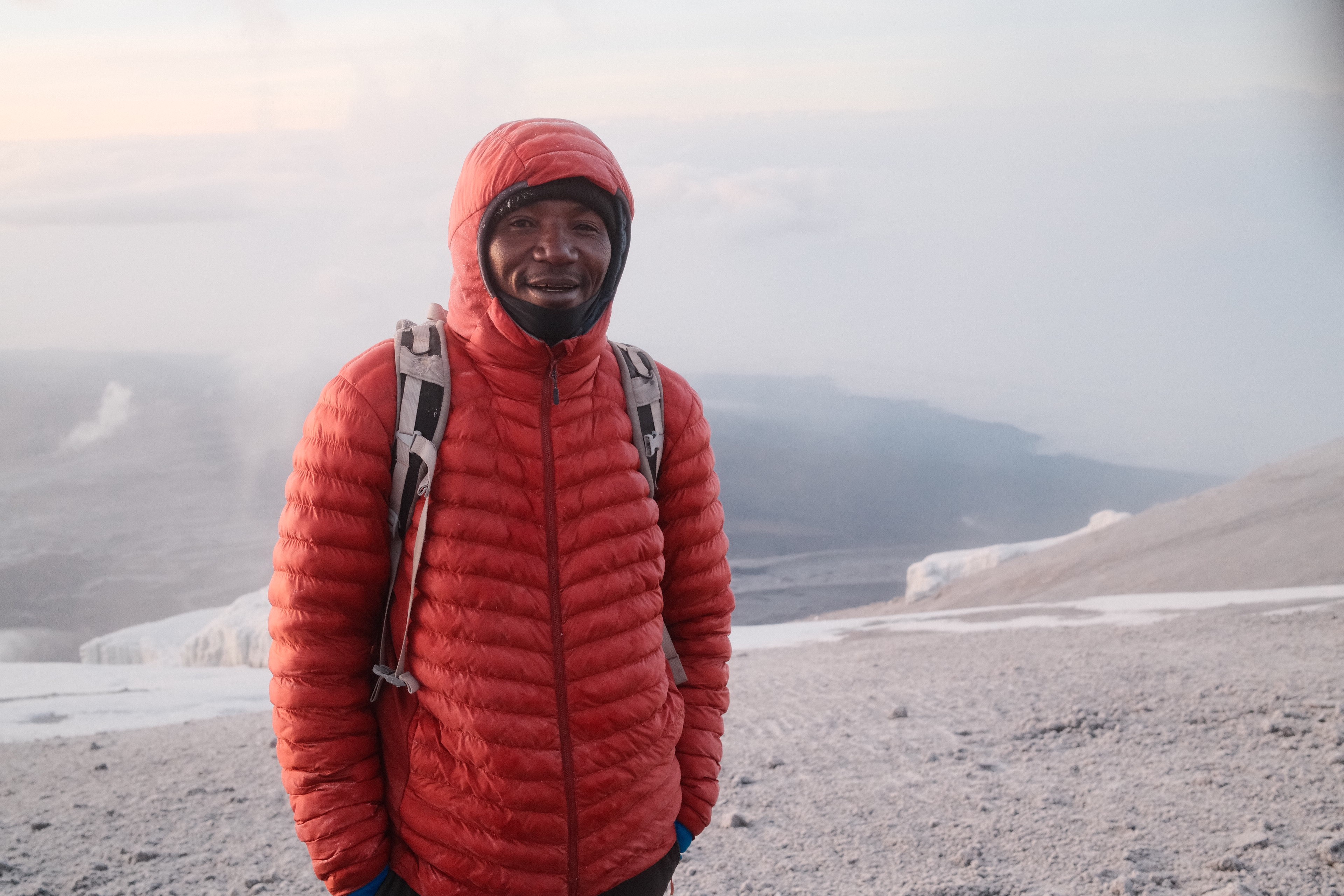
A warm fleece plus a lightweight insulated jacket, down or synthetic, for camp and summit night.

A waterproof, windproof hardshell jacket and trousers over everything else.
Accessories matter too: glove liner plus insulated pair, thermal hat covering the ears, and a buff or neck gaiter for wind and sun.
Tick items off as you pack. Missing something? Rent it from our store, delivered free to your hotel.
Clothing
Footwear
Packs & sleep
Tech & sun
Health, food & documents
We run our own rental store. Whether you're climbing with Legend or with another company, contact us to order any items you need and we'll deliver them to your hotel free of charge.
Chapter 07
Kilimanjaro climbs through five dramatically different ecological zones, from dense tropical rainforest at the base to glacier and alpine desert at the top. Each zone has its own wildlife.
5,000 m+ · 16,400 ft+
Above the scree fields lies permanent snow, ice and the famous summit glaciers. Almost no life survives here, but the landscape feels otherworldly. In 1926 a frozen leopard was famously found near the summit, immortalised in Hemingway's The Snows of Kilimanjaro.
Lichens, everlasting flowers.
Effectively none.
4,000 – 5,000 m · 13,100 – 16,400 ft
Stark, dry, baking by day, freezing by night. Life is harsh here but not absent. The white-necked raven has been spotted as high as 5,500 m.
Helichrysum, tussock grass.
White-necked raven, mice.
1,800 – 2,800 m · 5,900 – 9,200 ft
The most biologically rich zone on the mountain. Lush forest, humidity and plentiful food make it a paradise for mammals, birds and insects.
Camphorwood, Impatiens kilimanjari, ferns.
Black-and-white colobus, blue monkey, bush baby, Abbott's duiker, tree hyrax.
800 – 1,800 m · 2,600 – 5,900 ft
Where the climb begins. Banana groves, coffee, Chagga villages. This is the landscape you leave behind on day one.
Banana, coffee, maize.
Chagga farmland wildlife.
Across all zones, keep an eye out for malachite sunbird, Hartlaub's turaco, silvery-cheeked hornbill, scarlet-tufted malachite sunbird, and augur buzzard. Birders will find plenty even above the treeline.
Yes, leopards and elephants still exist on Kilimanjaro, but sightings are very rare. Elephants have been spotted on the northern slopes (Rongai route). In 2022 climbers reported fresh elephant dung just off the Rongai route.
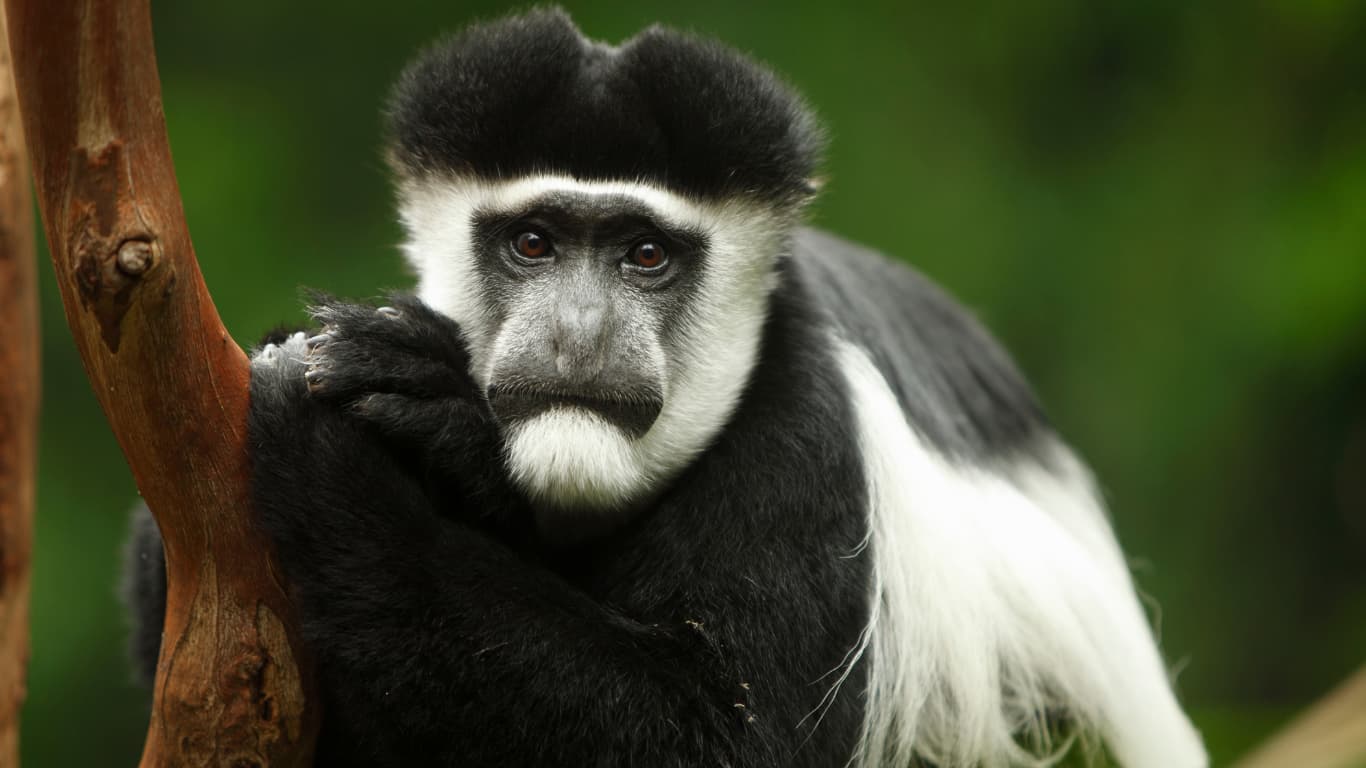
The only thumbless primate in Africa and one of the most visually striking. Black-and-white colobus are specialist leaf eaters with a ruminant-like stomach, found in the montane forests of Arusha and Lake Manyara. Their long white mantle and pure white newborns make them impossible to confuse with any other monkey.
Learn more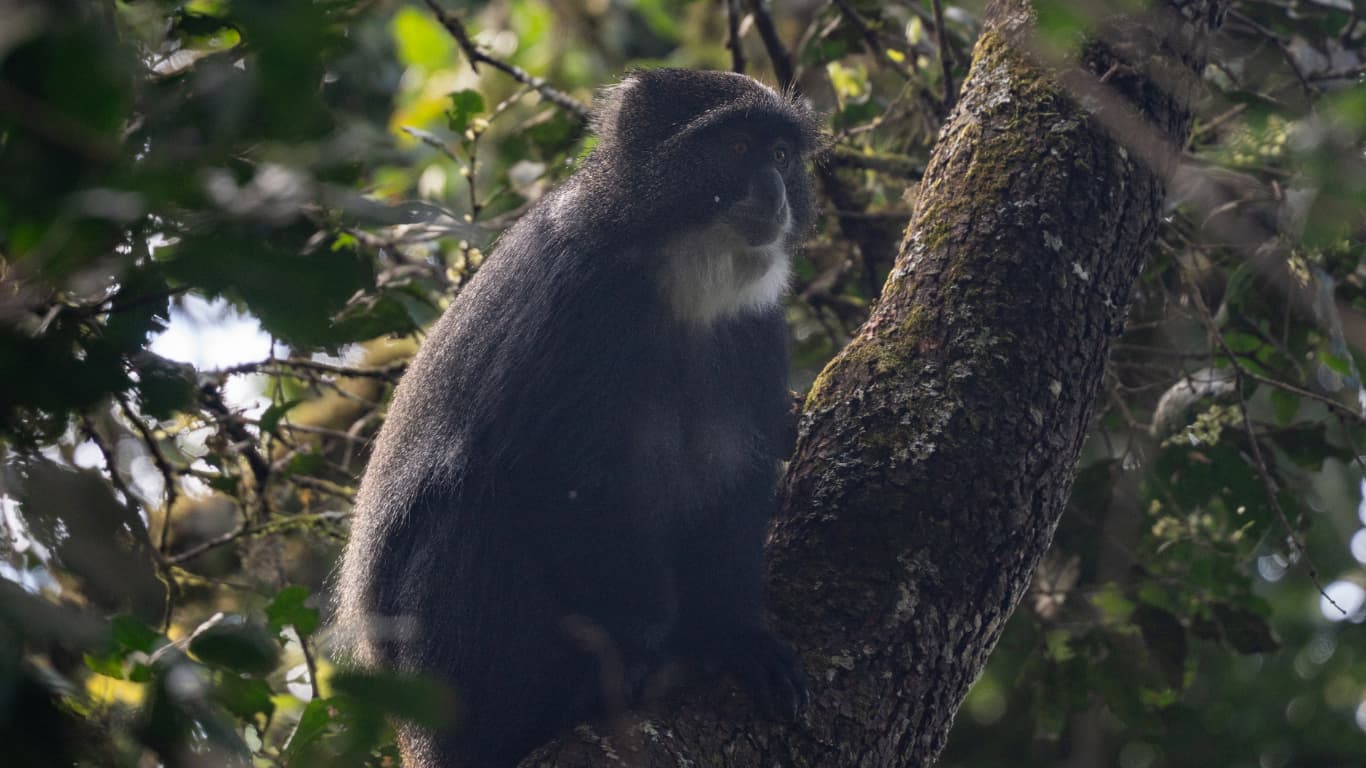
Blue monkeys are dark grey-olive, not blue. The name likely comes from the bluish sheen on short facial hair. They live in female-led troops of up to 40 in montane forest, and Lake Manyara's groundwater forest is one of the best places in Tanzania to watch them at close range.
Learn more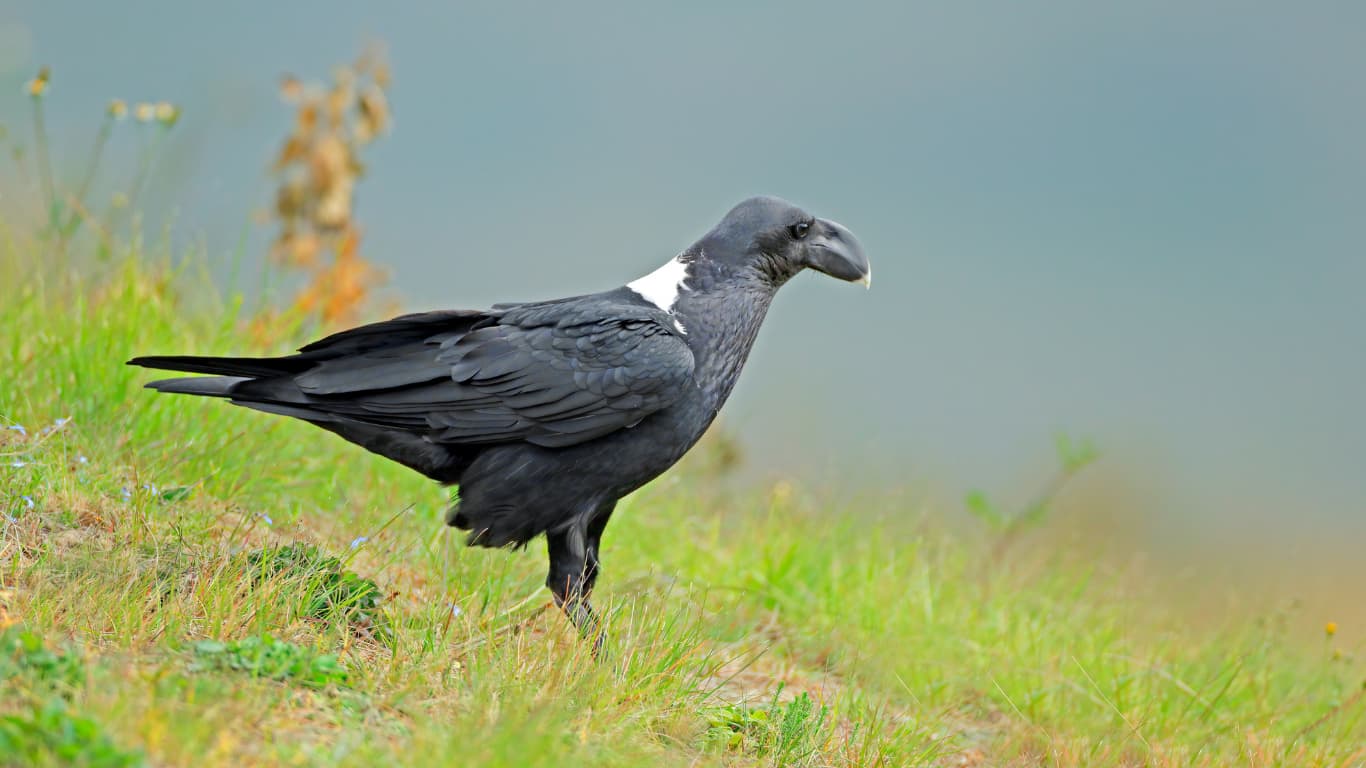
The white-necked raven is the largest corvid in East Africa and one of the most intelligent birds you will encounter on safari. Resident along the Ngorongoro Crater rim, they are tool users, problem solvers, and will figure out how to open bags and containers at lodge lunch stops.
Learn more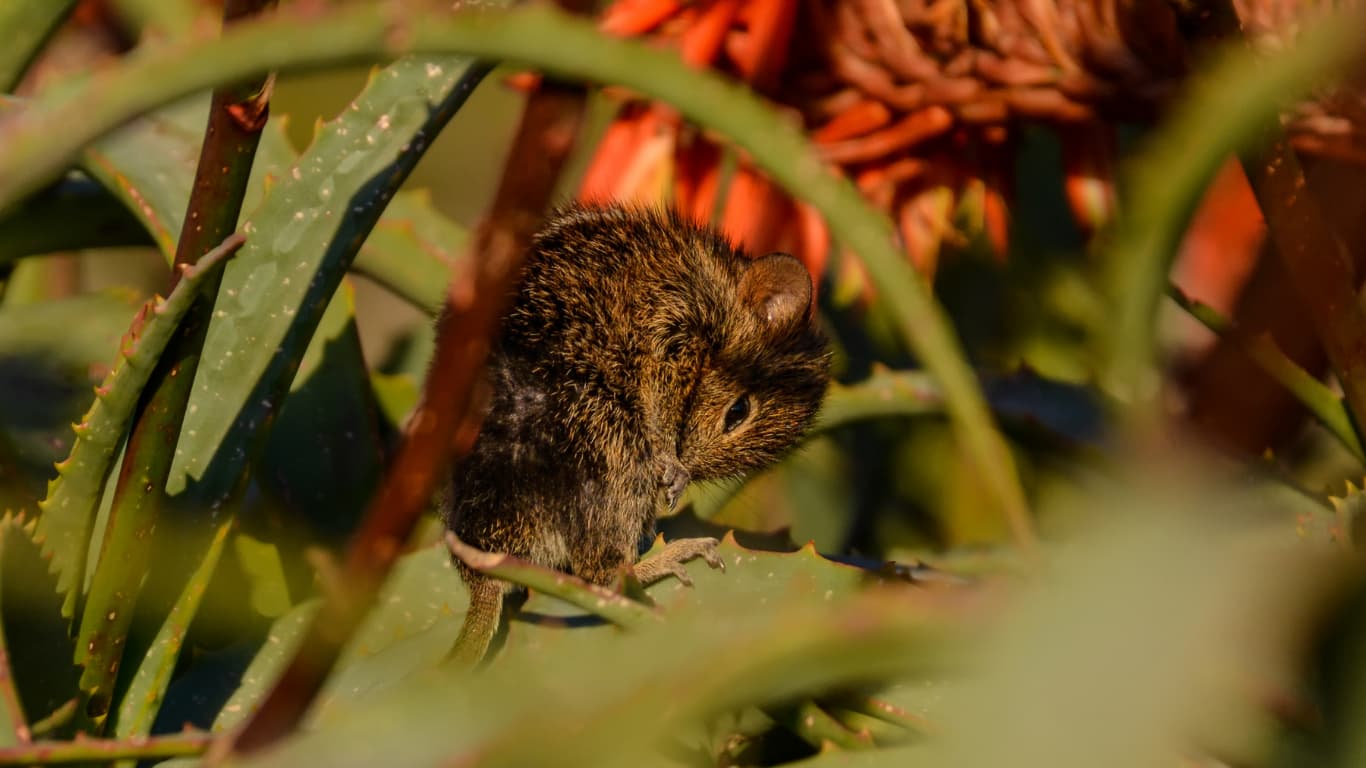
This is the small mammal you are most likely to see on any Tanzania safari. Four-striped grass mice are diurnal, which is unusual for rodents, and they forage openly around lodges and campsites. They are a foundational prey species for everything from owls to jackals to snakes.
Learn more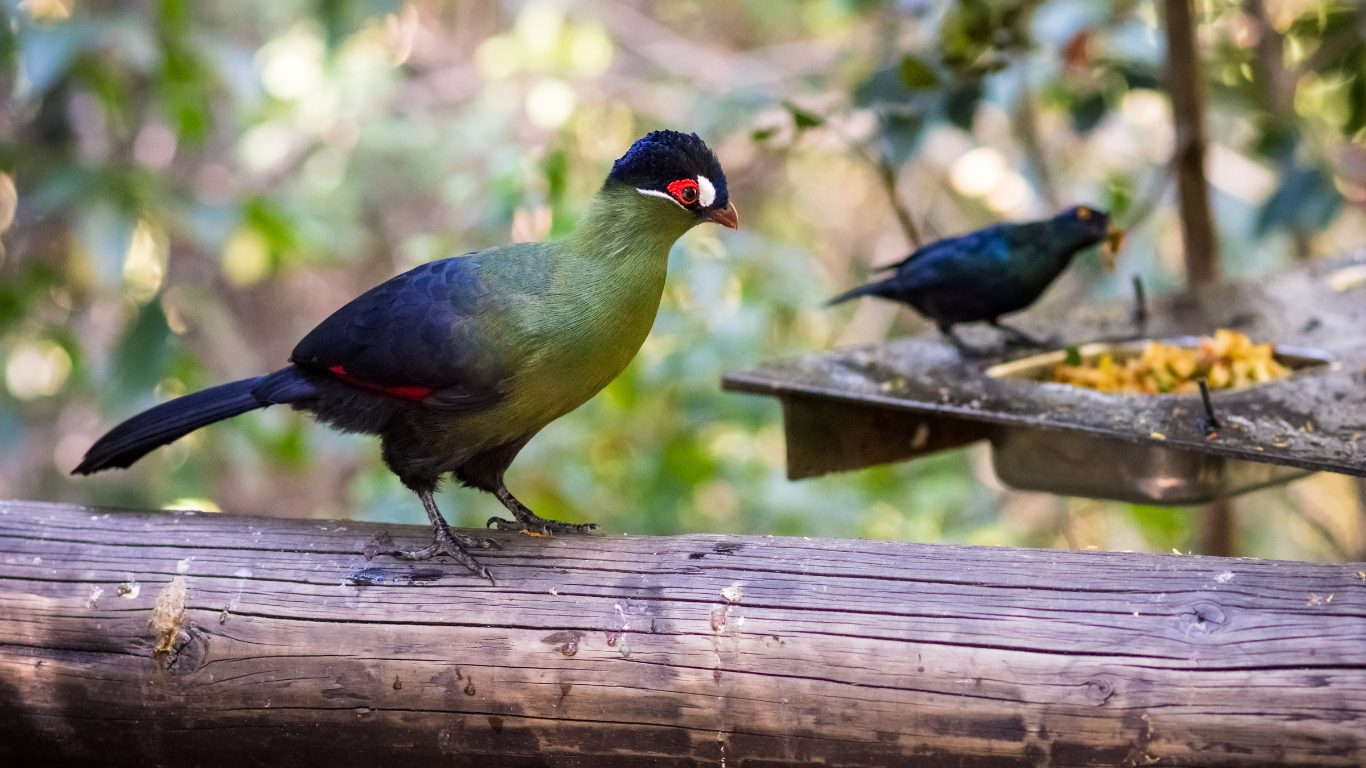
Turacos are the only birds on earth with true red and green pigments in their feathers. Most bird colours are structural, but turaco red comes from turacin, a copper-based pigment found nowhere else in the animal kingdom. Hartlaub's turaco is the species you will find in Arusha's montane forest.
Learn more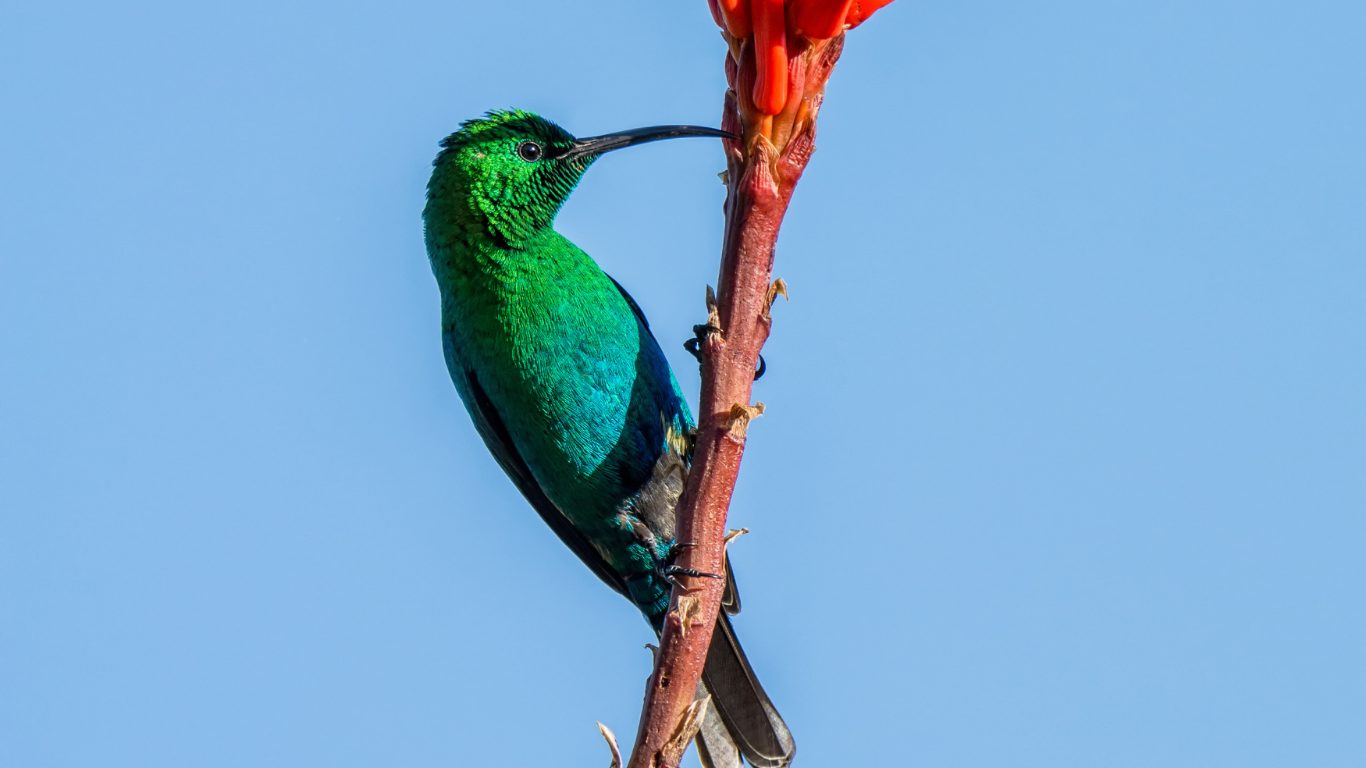
Breeding male malachite sunbirds are pure metallic green with tail streamers that double their body length. They dominate the flowering aloes and proteas along the Ngorongoro Crater rim. Outside breeding season, males moult to brown and become almost unrecognisable.
Learn moreChapter 08
Climbing Kilimanjaro with Legend is not just about summit night. It is about the whole rhythm of life on the mountain. Here is what to expect from each day.
A typical day
One of our team will gently wake you with a hot drink: tea, coffee, or ginger tea. No alarms needed. Sunrise is between 7:00 and 7:30 am and worth being up for. Breakfast is served in our heated central Mess Tent: porridge, toast, eggs, bacon, sausages, fruit, and plenty of tea and coffee. While you eat we run a daily health check (resting heart rate and SpO2) and brief the day ahead.
We set off at a slow, steady pole pole pace. You'll carry just a light daypack. Porters handle everything else. We take frequent breaks, not just for rest but to soak up the scenery.
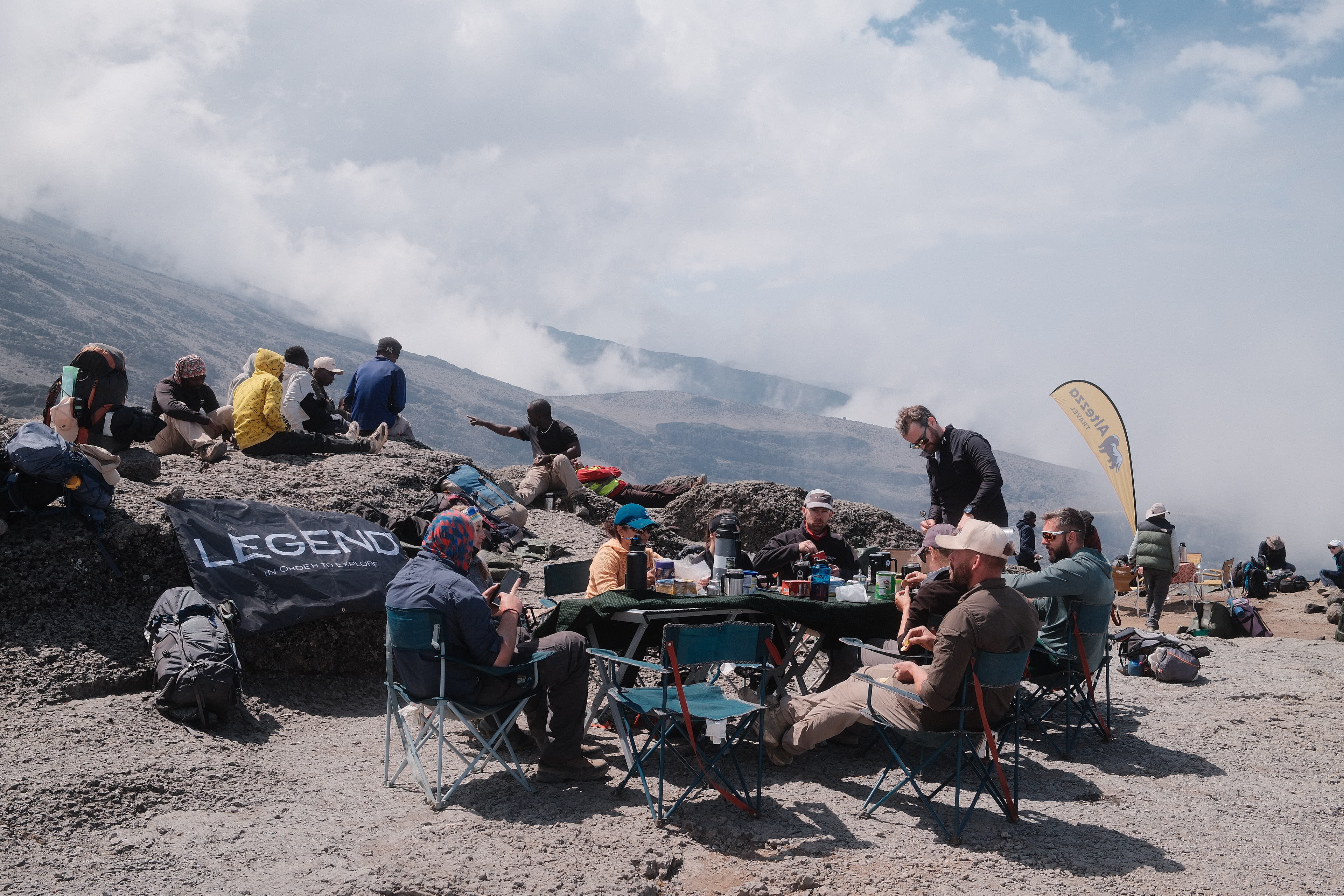
On harder days you'll spot a Legend Coffee Stop, a mini oasis we set up at the top of the big climbs with flasks, chairs and a view. When you see the Legend flag flying, you've earned a proper rest.
Most days we aim to reach camp by around 2:00 pm. A snack or hot drink greets you on arrival, then free time to rest, stretch or explore. On Lava Tower day lunch is served mid-trek at Lava Tower before descending to Barranco.
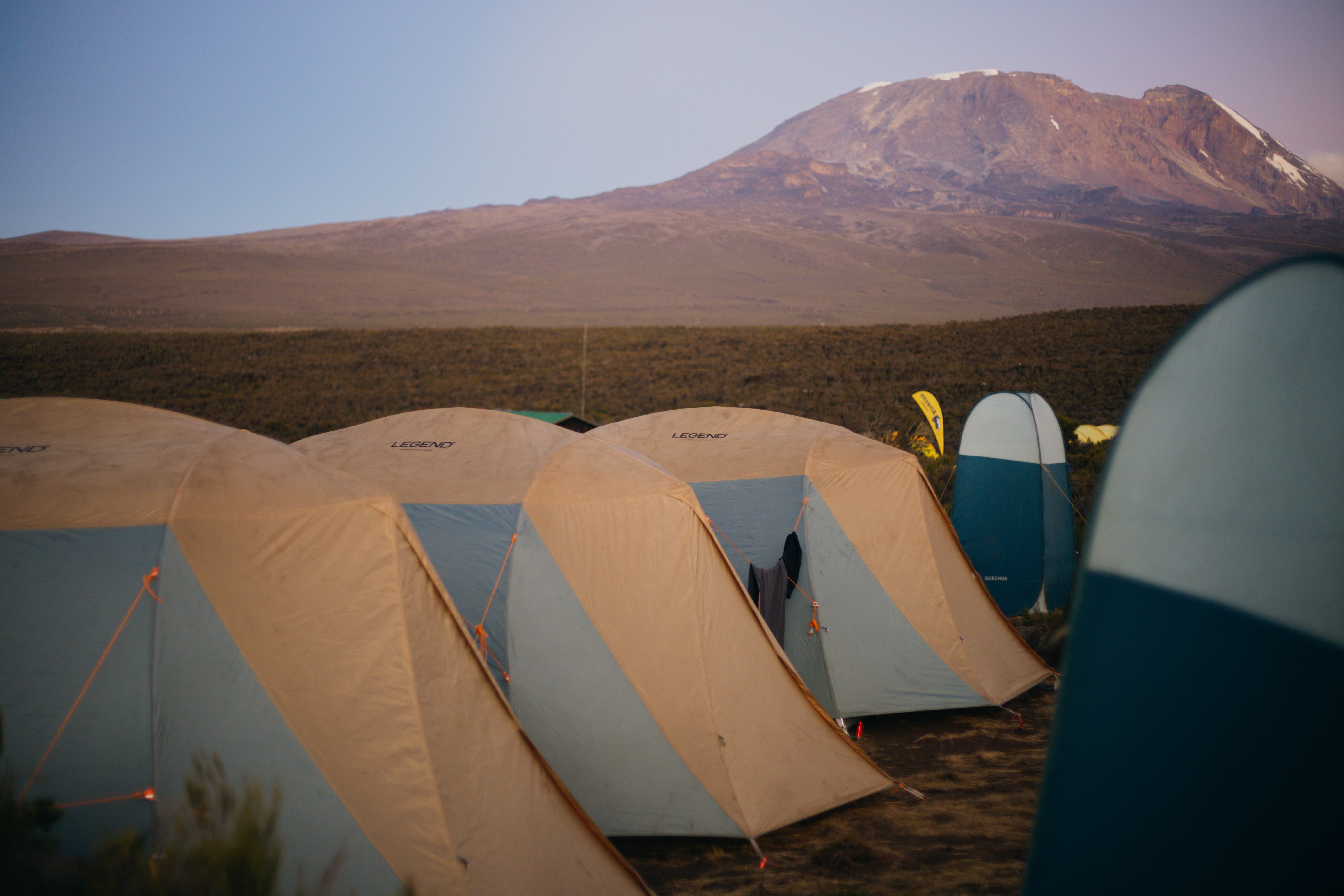
We send a runner ahead 24 hours in advance to secure the best campsite spots before the crowds. At the centre of camp is our heated Mess Tent, where we eat and gather. Surrounding it are your private sleeping tents (tall enough to stand up in), the toilet tents and hot showers, and, set slightly further out, our kitchen and staff tents, so your sleep isn't disturbed.

Our chef Kennedy has over 8 years of mountain cooking experience. Expect hearty breakfasts, homemade soups as hydration-boosting starters twice a day, and Western-style mains (pasta, rice, chicken, pizza, even chips). Midway through the climb our support team makes a fresh food replenishment run.
Nights · five things for a better sleep
If you feel the cold. We fill these at camp.
For light sleepers.
The moment the sun sets.
Watch · The Lemosho Route, day by day
Ten short films following the Legend 8-day Lemosho route, from arrival in Moshi to Uhuru Peak and home again.
 Day 1
Day 1 Day 2
Day 2 Day 3
Day 3 Day 4
Day 4 Day 5
Day 5 Day 6
Day 6 Day 7
Day 7 Day 8
Day 8 Day 9
Day 9 Day 10
Chapter 09
You'll remember this night for the rest of your life. Summit night is where everything comes together: your training, your preparation, your mindset and your story.
Cold beyond description. A single thin line of head torches winding up the scree in front of you. And then, right at the edge of exhaustion, the sun.
Arrive at Barafu (meaning "ice" in Swahili) earlier in the afternoon. Lunch is ready on arrival. You'll rest, lay out your summit kit, eat an early dinner and try to sleep. Before sleeping, put your warm layers on.
Your guides wake you with hot drinks and light snacks. You'll already be in most of your summit clothes after the early evening briefing. Slow, calm, warm. We don't rush this.
Out into the dark. Temperatures can be brutally cold when you first step out, often well below freezing, but you'll warm up quickly once moving. The trail is a well-defined single track zigzagging uphill. It's extremely safe: no major drops, no exposed edges.
Our guides call out your vertical progress every 100 metres of ascent. Small achievable wins to break up the long grind. "Only 400m to go. 300. 200." A lead guide sets the pace at the front, support crew walks at the back, and a head guide moves between checking everyone's condition.
From Stella it's another 45 to 60 minutes along the rim to Uhuru Peak, the true summit. Photos. Hugs. Then walk 20 metres away from the sign, find a quiet spot, sit down, and actually take it in. Many climbers later realise they remember very little from the summit. Give yourself the moment.
Back down to Stella, then down the scree slopes: loose, dusty and fast. Trekking poles and gaiters help enormously here. We radio ahead to Barafu HQ and a support team climbs up to meet you with water and morale. Back at Barafu for a short power nap, then straight down to Millennium or Mweka Camp for a proper night's sleep at much lower altitude.
From the guides
Water freezes from the top down. Store bottles upside down. If using a bladder, blow water back through the hose after every sip.
Gloves should fit well, not tight. Tight gloves restrict circulation.
Hand and foot warmers are a lifesaver. Put them on before setting off.
Push hard until you see the sun. That sunrise is the biggest energy hit of your life.
Music helps. Our guides carry small speakers.
Chapter 10
As a Tanzanian-born and based company, we offer exclusive safari extensions built specifically to follow your Kilimanjaro climb. Custom Legend safari vehicles with a maximum of 6 people per vehicle, expert guides, fully planned itineraries with everything included.
Our own safari vehicles, built for game viewing.
Everyone gets a window seat and a clear view.
Expert guides, fully planned, straight from your climb.
The National Parks
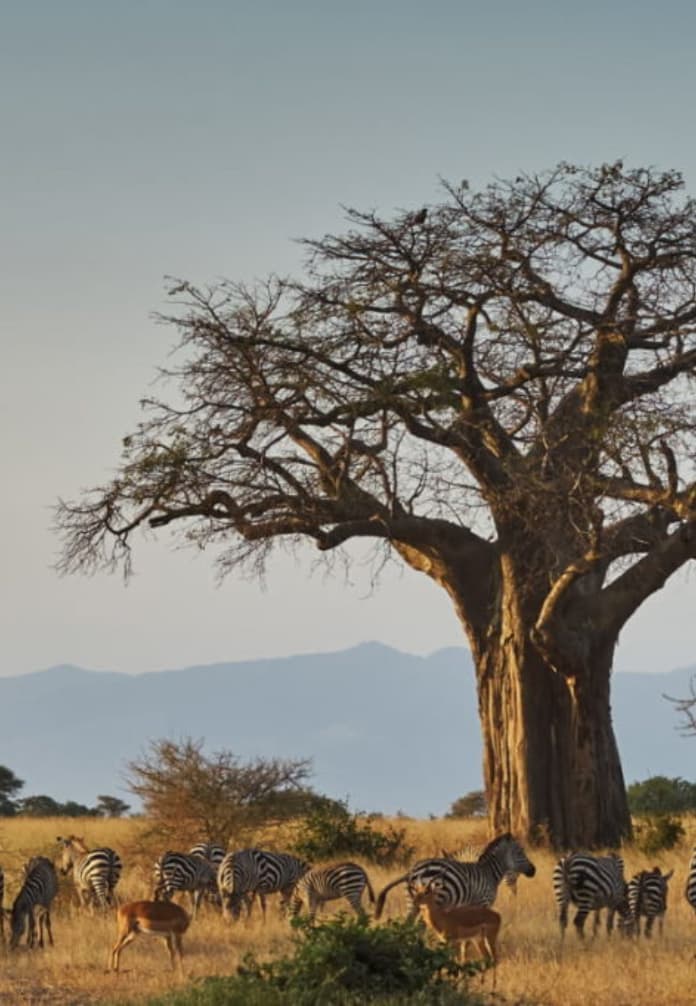
Elephants · Baobabs · Birding
2,850 km² of open savannah and ancient baobab trees along the Tarangire River. In the dry season, herds of up to 300 elephants. Over 500 bird species.
Visited on: 2-day and 3-day safaris
Explore Tarangire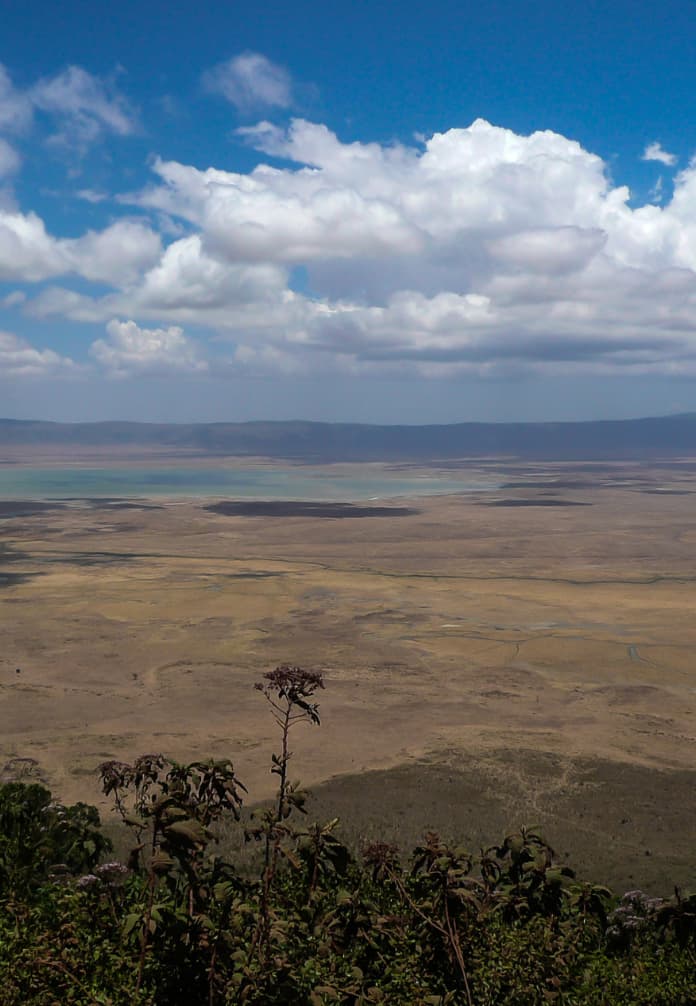
UNESCO · Big Five · Black Rhino
A UNESCO World Heritage Site and the world's largest intact volcanic caldera, 20 km across, 600 m deep. The best place in Tanzania to see the endangered black rhino.
Visited on: 3-day safari
Explore Ngorongoro Crater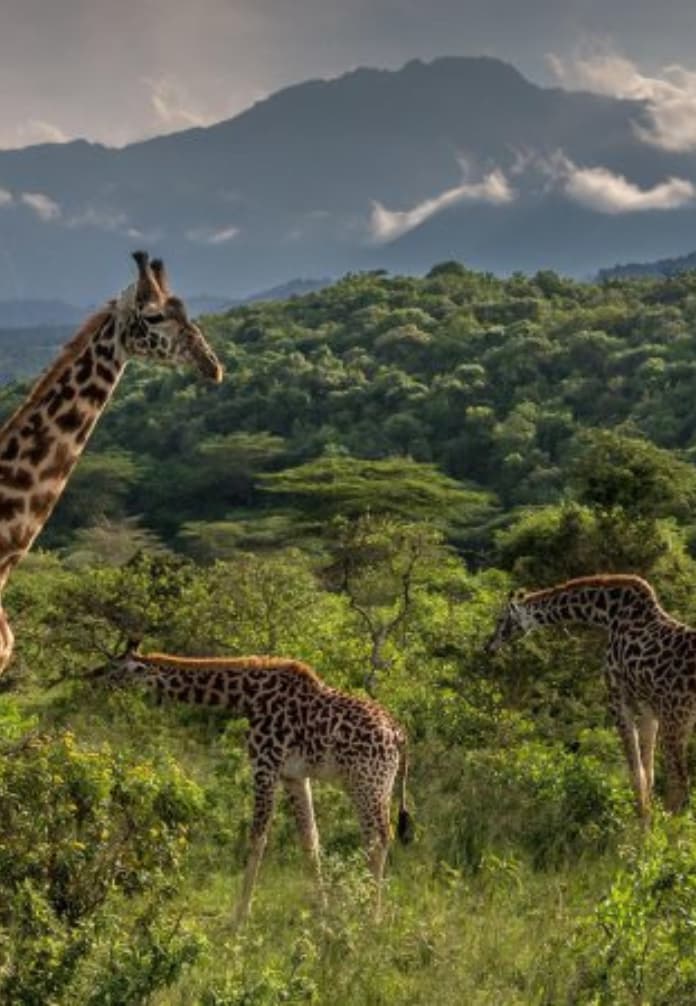
Close to Kili · Walking safari
At the base of Mt Meru, under an hour from Kilimanjaro Airport. Home to giraffes, zebras, buffalo, waterbuck, colobus monkeys and over 400 bird species.
Visited on: 1-day safari
Explore Arusha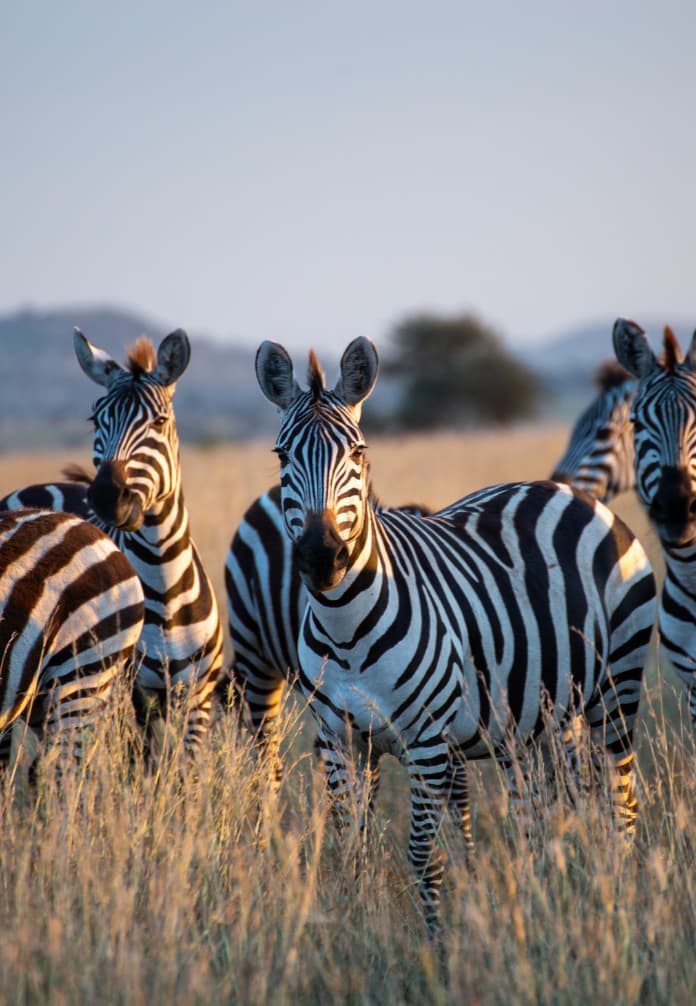
ICONIC · BIG FIVE
Tanzania's most famous ecosystem, home to the Great Migration. Endless plains with lions, leopards, cheetahs, elephants and over two million wildebeest and zebra on the move.
Visited on: bespoke packages
Explore SerengetiOur Safari Packages
1 Day
Arusha National Park walking safari plus game drive plus picnic lunch. Finishes at Kilimanjaro International Airport.
View the one day safari2 Day
Two full days inside Tarangire National Park. Overnight at Tarangire Greenland Lodge. Huge elephant herds, ancient baobabs, and tree-climbing lions.
View the two day safari3 Day
Two days inside Tarangire National Park, then a full day in the Ngorongoro Crater. Overnights at Tarangire Greenland Lodge and Manyara Escarpment. Big Five country.
View the three day safariChapter 11
A Legend Kilimanjaro climb starts from £2,599 (around $3,250 USD). Here is what that includes, what you'll spend on top, and how tipping works.
A Legend Kilimanjaro climb
A £100 deposit secures your place. Payment plans available.
Thanking your crew
Tipping is not mandatory but is a deeply embedded part of mountain culture. The crew relies on tips as a significant part of their income. At Legend we pay our teams fairly and well above local averages, but tips remain a powerful way to thank them.
Find out more about tippingRecommended per climber
Chapter 12
Your Kilimanjaro adventure begins before you step on the plane. Here is everything you need to sort before you travel: visas, vaccinations, money, phones and power.
Visas · UK · US · EU · AU · CA
Most international travellers need a tourist visa. Apply in advance at visa.immigration.go.tz or on arrival at JRO.
Apply for your VISA nowVisit a clinic 6-8 weeks out
We recommend checking the most current requirements and recommendations.
TZS - USD - GBP
Tanzanian Shilling is the local currency but US Dollars are widely accepted. Bring clean, newer USD notes (2009 or later).
Type G - 230v
Tanzania uses the UK-style 3-pin plugs (Type G).
ESIM - Local SIM
Tanzania supports eSIM, Airalo and Holafly, both work well. Local Vodacom and Airtel SIMs offer good coverage.
Other things to know
Stick to drinking bottled water when off the mountain.
Every Legend climber needs travel insurance that covers trekking to 6,000 m. Check your policy includes high-altitude trekking before you book your flights.
Speak like a local
Chapter 13
We exist to help you create your own epic adventure story — whether that's standing on Uhuru Peak or tracking lions across the Serengeti. We take care of the logistics so you can take on the journey.
Safety first
01Every element — comfort, care, expertise, itinerary design — is tuned to give you the best possible chance of reaching the top. Our 8-day Lemosho climbs average a 98.9% summit rate, one of the highest on the mountain.
Sleep better, recover faster
02Stand-up tents, proper cot beds, thick mattresses and pillowcases. Quality sleep is key to acclimatisation — your body adjusts more easily and performs better as you climb higher.
A Legend exclusive
03Hot showers and clean, flushable toilets throughout your climb. Small comforts that make a big difference at altitude — and better hygiene means a reduced risk of illness.
Fuel for the summit
04Our chefs prepare protein-rich, calorie-dense meals designed to sustain strength at altitude. Halfway through the climb our support team brings up fresh supplies so the food quality never drops.
People first
05Our crew are among the best paid and supported on Kilimanjaro. Fair wages, proper gear, spacious sleeping tents, and three hot meals a day. Exceptional journeys are made by exceptional people.
End-to-end care
06Personalised welcome packs, tailored training programs, pre-trip group calls, 24/7 support on the mountain, and a Family & Friends WhatsApp group so your loved ones get daily updates.
Chapter 14
Exceptional journeys are made by exceptional people. These are the humans who will be beside you from the airport arrivals gate to the summit sign and back again.

Founder · UK/Tanzania
Former Royal Marine Commando and expedition guide. Fluent in Swahili, Jack founded Legend after leading a rowing expedition across the Atlantic. World record in the 24-hour SkiErg, ran across the Sahara, kayaked the world's most dangerous swamp, raising over £400,000 for charity.

Co-Founder · Tanzania
Born in Singida, central Tanzania, Jackson has over 15 years of hands-on experience in mountain tourism. He began as a porter on Mount Kilimanjaro and rose through the ranks to camp manager, then professional mountain guide. Over 100 successful summits.

Kilimanjaro Guide · Tanzania
12+ years in the trekking industry. Started as a porter for 7 years, became a licensed mountain guide 5 years ago. Highly skilled and intimately familiar with all official routes on Kilimanjaro and Mount Meru.

Kilimanjaro Guide · Tanzania
Happy is known for her dedication, exceptional customer service and deep knowledge of Mount Kilimanjaro and Tanzania's national parks. At Legend, we're proud to champion women in an industry where they've long been underrepresented. From our female guides leading clients to the Roof of Africa, to our female porters carrying the expedition forward, we believe the mountain belongs to everyone.
Head Chef · Tanzania
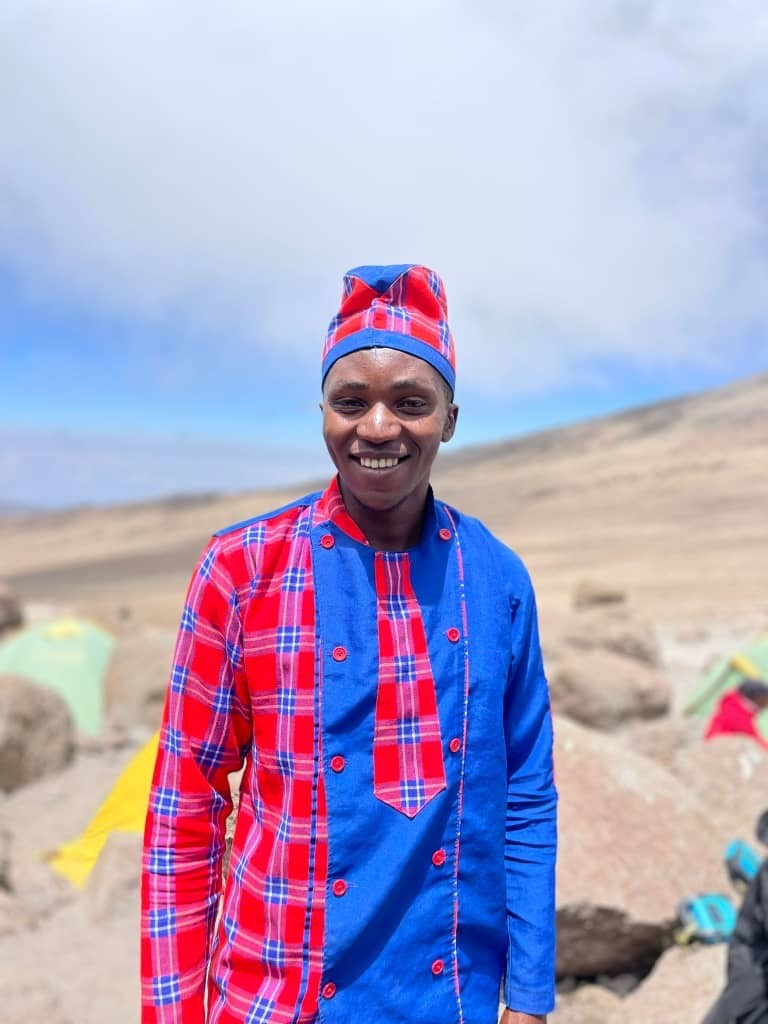
8+ years of mountain cooking experience with international clients. Designed a Western-style meal plan that suits a wide range of tastes while meeting the nutritional demands of altitude.

Operations & Marketing Manager
Jack's wife and mum to their son Leo. Manages operations at Legend, from lodge partnerships and trip logistics to the social channels that bring our expeditions to life.
Chapter 15
Every testimonial below is from a climber who stood on the summit with us. Each one is a real person who trained, travelled and climbed.
"I was slightly nervous to be embarking on this trip on my own but from the very start when I began communicating with Jack I felt confident and knew I would be safe travelling with the team. Every single member was so knowledgeable and experienced."
"One thing that really stood out was their ethical approach. Jack genuinely cares about his team and ensures his local staff are paid fairly and treated well. Knowing our trip was directly supporting people who are valued made the experience even more special."
"From start to finish I felt in safe hands. The professionalism and attention to detail was second to none. Everything was thought of in advance and all we had to do was climb the mountains. As hard as the challenge was, the Legend team made it as easy as possible."
"The campsites were like a travelling hotel with private showers, cot beds, mattresses, and pillows. The food was nutritious and enjoyable, incredible to see what the chefs could make 5,895m above sea level. These aren't luxuries, they're designed to get you to the top."
"The climb was the hardest thing I have ever done, both mentally and physically. There were moments I wanted to stop, moments I doubted everything. But the team kept me going. Their encouragement, patience, and constant reassurance made all the difference."
"To put it simply, everything was perfect. My partner and I joined the Legend team for the 8 day Lemosho route up Kili and then 3 days of Safari. The priorities of the Legend team are safety, enjoyment and then reaching the summit, and this extends to every single person on the mountain."
Chapter 16
Everything else you might be wondering, answered in one place. Click any question to expand the answer.
Mount Kilimanjaro stands at 5,895 metres (19,341 ft) above sea level. Uhuru Peak, on the Kibo volcanic cone, is the highest point in Africa and the tallest free-standing mountain on Earth, meaning it rises from flat plains rather than a mountain range. It is one of the Seven Summits and, uniquely, accessible to non-technical trekkers.
Kilimanjaro has two main dry seasons: January to February (warm, clear, quieter) and July to September (most stable, busiest). These are your best bet for good weather. Avoid the edges of the dry seasons, particularly mid March, early June and mid to late October, as these windows have become more unpredictable in recent years.
You do not need to be an elite athlete. If you can walk 6 to 8 hours a day at a slow pace on uneven ground, you have the baseline fitness. We recommend a minimum of 3 months of structured training: walking, stair climber, and basic lower-body strength work, before your climb. Consistency matters more than intensity.
For most climbers we recommend the 8-day Lemosho route. It has the highest summit success rate, the best acclimatisation profile, and the most varied scenery. The 7-day Machame is a great alternative. Marangu is the only hut-based route but its rapid ascent profile gives it the lowest success rates.
On Legend Expeditions' 8-day Lemosho climbs the summit success rate is 98.9%. Industry-wide: Lemosho around 95%, Machame around 87.5%, Rongai around 80%, Marangu around 75%, Umbwe around 60%.
Our climbs start from £2,599 (around $3,250 USD) for Marangu and go up to £3,295 (around $4,120 USD) for our 10-day Lemosho package. This includes all park fees, mountain crew, tents, meals, hotel nights in Moshi and airport transfers. Not included: international flights, travel insurance, Tanzania visa, and tips.
Tipping is not mandatory but is expected and deeply appreciated. We recommend $250 to $300 USD per climber for a 7 to 8 day climb, or $200 to $250 USD for 6 days or less. Tips are collected at the end of the trip with an independent adjudicator present and distributed fairly across the whole team.
Every Legend guide carries oxygen tanks, pulse oximeters, first aid kits and radios. We run daily health checks, follow the "climb high, sleep low" principle, and adjust pace in real time. If anyone shows signs of severe AMS, HAPE or HACE we descend immediately and can arrange stretcher, vehicle or helicopter evacuation.
Around 40% of our clients use acetazolamide (Diamox) at some point. It can reduce headaches and help with sleep at altitude but it is not a cure. Always consult your doctor before taking it. Common side effects: tingling fingers and toes, frequent urination.
No. Kilimanjaro is a trek, not a technical climb. No ropes, crampons, ice axes or mountaineering experience required. The Barranco Wall involves a short non-exposed scramble but the route is otherwise a well-defined walking trail.
Temperatures range from 25 to 30°C (77 to 86°F) in the rainforest to below −10°C (14°F) on summit night at Uhuru Peak. Wind chill on the summit can make it feel significantly colder. A sleeping bag rated to at least −10°C is essential.
Yes. Most UK, US, EU, Australian and Canadian visitors need a tourist visa. Apply online in advance at visa.immigration.go.tz or get a visa on arrival at Kilimanjaro International Airport. Cost: $50 USD (most), $100 USD (US citizens). Passport valid 6+ months with 2 blank pages.
Commonly recommended: tetanus, typhoid, hepatitis A and B, optionally rabies. Visit a travel clinic 6 to 8 weeks before departure. Yellow fever certificate only required if arriving from or transiting 12+ hours through a yellow fever risk country.
No guaranteed power on Kilimanjaro. Bring a 20,000 mAh power bank, good for 4 to 6 full phone charges. Aeroplane mode, reduced brightness and disabled background app refresh extend battery life significantly.
Travel insurance is mandatory. It must cover trekking to at least 6,000 m, emergency medical including helicopter evacuation, trip cancellation or curtailment, and lost or delayed baggage. UK: Global Rescue, World Nomads, True Traveller. US: Global Rescue, IMG Travel.
Yes. Our mountain teams receive fair wages well above local averages, sleep in spacious tents, eat three hot meals a day, and if anyone is missing kit we fully equip them before they go up. Exceptional journeys are made by exceptional people, respected and cared for.
Speak to someone who has stood on the summit. We aim to reply to every enquiry within 12 hours.
Keep reading
Go deeper into Kilimanjaro with our long-form guides on training, gear, weather, and the stories from the mountain.
Weather5 minute read
 Gear
Gear7 min read
 Language
2 min read
 Routes
4 min read
 Wildlife
8 min read
 News
News4 min read

Kilimanjaro is calling
Secure your spot on a Kilimanjaro climb with a £100 deposit. Payment plans available. A member of our team will be in touch within 24 hours to start planning your adventure.