CREATE YOUR LEGEND | 2026-2028 dates available | SECURE YOUR PLACE WITH JUST £100 DEPOSIT

VIEW DATES
Wildlife / White-necked Raven

Tanzania Wildlife

White-necked Raven

Habitat
Highland cliffs, crater rims, montane grassland and rocky escarpments above 1500 metres
Best Season
Year round
Conservation Status
Least Concern

The white-necked raven is the largest corvid in East Africa and one of the most intelligent birds you will encounter on safari. Resident along the Ngorongoro Crater rim, they are tool users, problem solvers, and will figure out how to open bags and containers at lodge lunch stops.

Behaviour & Facts

Life in the Wild

Problem Solver

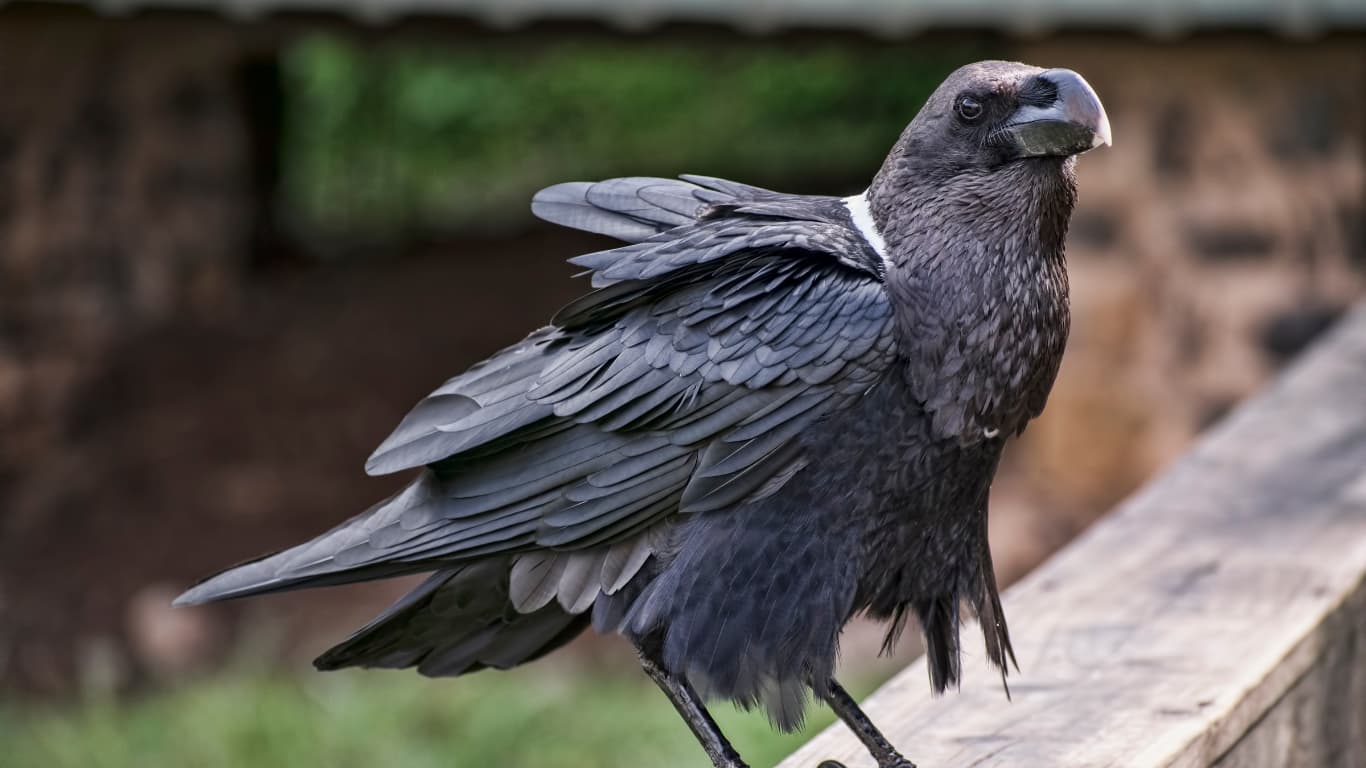
White-necked ravens are problem solvers. They drop bones from height to crack them on rocks below. They test bin lids systematically, working through different approaches until one gives. This is learned, flexible behaviour passed between individuals, not instinct. In controlled tests, corvid intelligence compares to great apes on certain tasks. Watch one work a problem at a lodge picnic site and you will see it firsthand.
Problem Solver
50
cm body length
2
birds per bonded pair (lifelong)
800
grams body weight
Crater Rim Resident

Crater Rim Resident

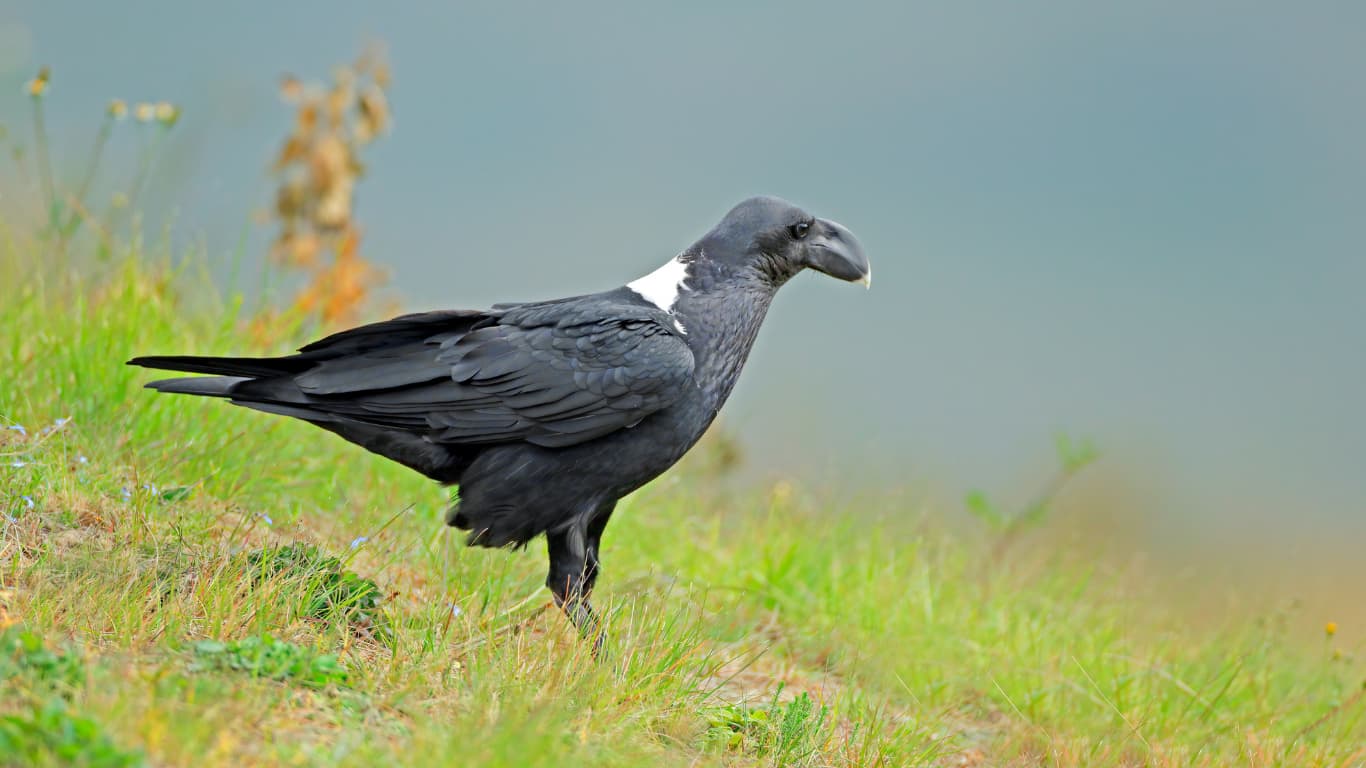
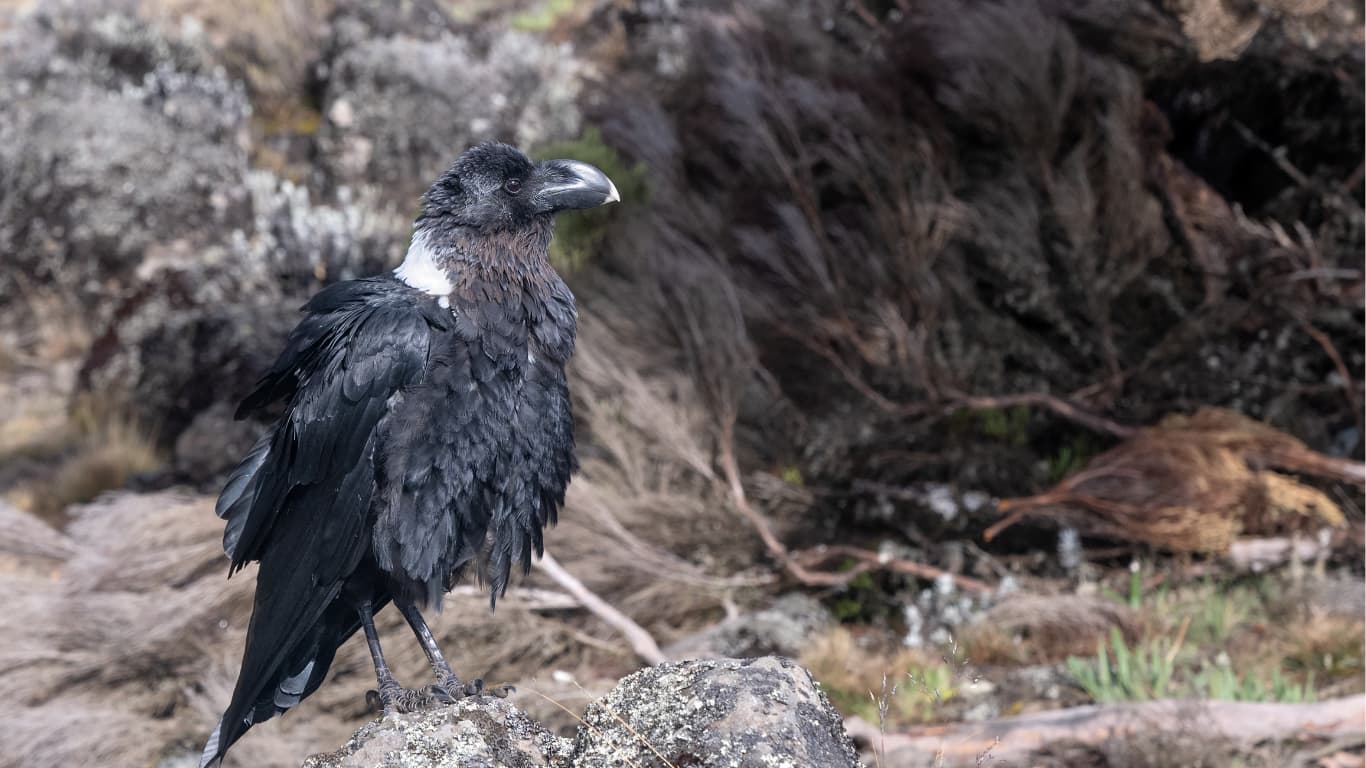
This is the largest corvid in East Africa. Fifty centimetres long, 800 grams, with a massive arched bill built for tearing and prying. A white patch on the nape shows when the wind lifts the neck feathers. Otherwise the bird appears solid black. Along the Ngorongoro Crater rim, white-necked ravens ride thermals with zero effort. They are bold at lodge picnic sites, working the tables with obvious confidence. They know exactly what they are doing.

Paired for Life

White-necked ravens mate for life. Pairs build a massive stick nest on a cliff ledge and reuse it year after year, adding material each season until the structure is enormous. Both parents build, incubate, and raise the chicks. They are territorial along the rim, defending a defined stretch from all other ravens. Bonded pairs call together, fly together, and hunt together. If you see one, look around. The partner is close.
Paired for Life

White-necked ravens drop bones and tortoise shells from height onto rocks to break them open, the same technique lammergeiers use. The massive arched bill generates enough force to crack most hard food items. They recognise individual vehicles and associate them with food opportunities.

Jack Fleckney

Lead Guide

Where to See

White-necked Raven in Tanzania
Ngorongoro Crater

Find Out More

Arusha National Park

Find Out More

Lake Manyara National Park

Find Out More

Common Questions

Frequently Asked

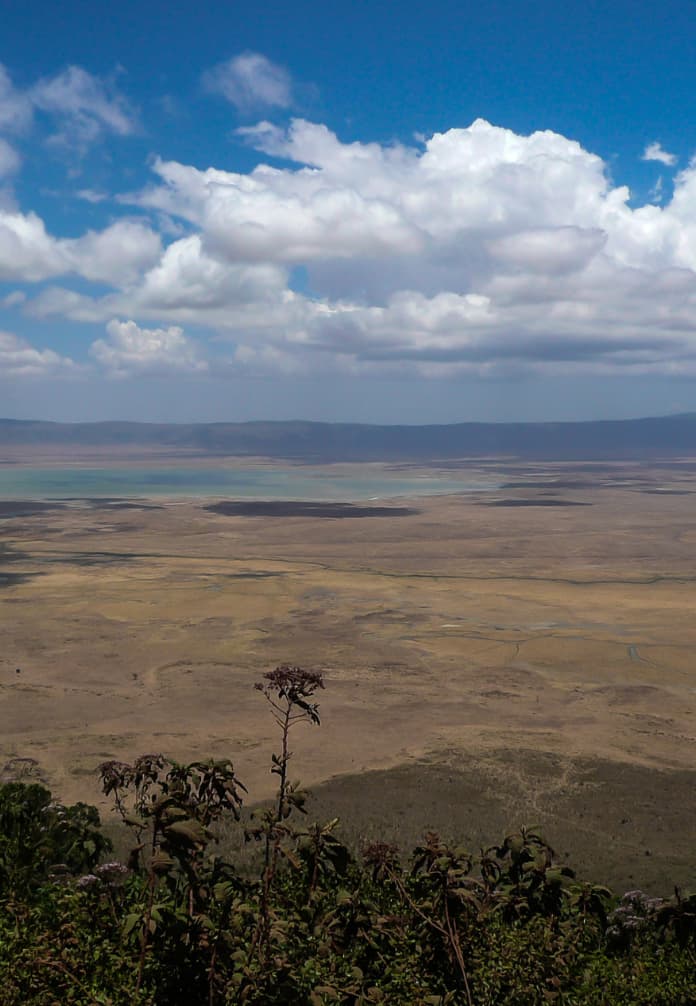
The Ngorongoro Crater rim is the single best location. Ravens are present at every viewpoint and picnic site along the rim road, soaring on updrafts or scavenging on the ground. Arusha National Park's higher elevations and the escarpment above Lake Manyara also hold resident pairs.

Corvids rank among the most intelligent bird families. White-necked ravens use tools, solve multi-step problems, cache food for future use and learn from observing other individuals. They have been documented dropping hard-shelled items from height to break them and systematically testing containers for food. Their problem-solving ability is comparable to great apes in some experimental contexts.

Almost anything. They are true omnivores that scavenge carrion, hunt insects and small vertebrates, eat fruit and grain, and exploit human food waste at lodges and picnic sites. Their dietary flexibility is a key reason they thrive in the relatively harsh highland environment.

Body length is roughly 50 to 54 centimetres with a wingspan over a metre. They weigh around 800 grams to 1 kilogram. They are the largest corvid in East Africa and noticeably bigger than the pied crow, which is the other common black-and-white corvid in the region.

Yes. Pairs bond for life and maintain year-round territories. Both birds build the nest, incubate eggs and raise chicks. The nest is a large stick platform on a cliff ledge that is reused and expanded each year. If one partner dies the survivor will eventually re-pair, but established pairs can stay together for many years.

No. They are classified as Least Concern by the IUCN. Their intelligence, dietary flexibility and tolerance of human activity make them highly adaptable. Populations are stable across their East and Southern African range. They are one of the few bird species that has likely benefited from the expansion of tourism infrastructure in highland areas.

In the Field

Photography Tips

01
Detail the Bill

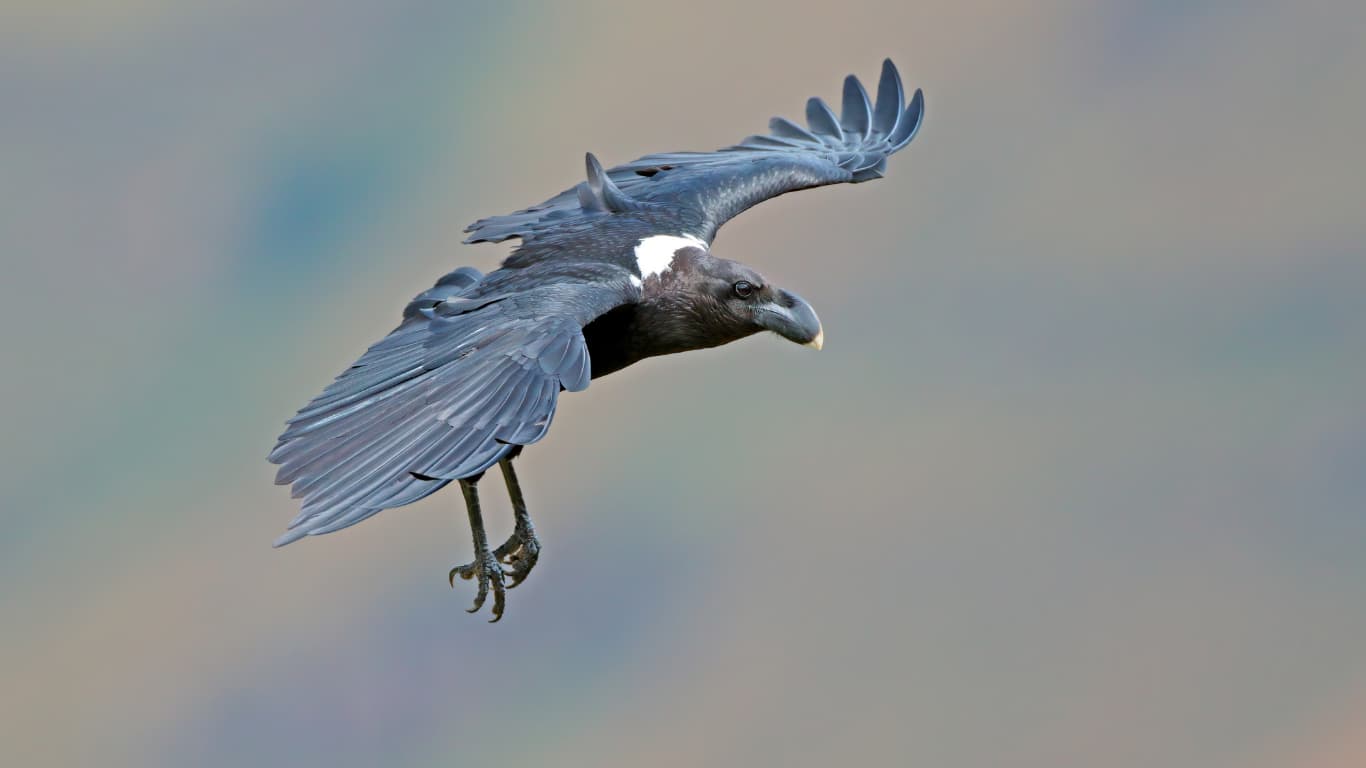
The heavy white-tipped bill is the standout feature. Get in close with a long lens and fill the frame with the head. Side light reveals the bill texture and the contrast between the white tip and dark base.

02
Pair in the Air

Ravens often soar in pairs, rolling and diving near cliff edges. Track both birds in the frame using a mid-telephoto and continuous autofocus. The interaction between them adds energy that a single bird cannot match.

03
Capture the Brains

White-necked ravens are problem-solvers and will manipulate objects, open containers, and steal food. Keep your camera ready around lodges and picnic sites - a behaviour shot of a raven working something out is worth more than any flight portrait.

04
Use the Crater Backdrop

Ravens riding updrafts along the Ngorongoro crater rim give you a chance to place a bird against a vast volcanic landscape. Expose for the background and let the dark raven anchor the composition in the foreground.

From Our Guests
Guest Photography

Ready?

Start Planning Your Safari

Speak directly with a guide who has spent years guiding expeditions across Tanzania's northern circuit. No hard sell, just honest advice from someone who knows the ground.

Jack Fleckney

Lead Trip Designer

★★★★★5.0 on TripAdvisor