CREATE YOUR LEGEND | 2026-2028 dates available | SECURE YOUR PLACE WITH JUST £100 DEPOSIT
Tanzania Wildlife
Blue Monkey
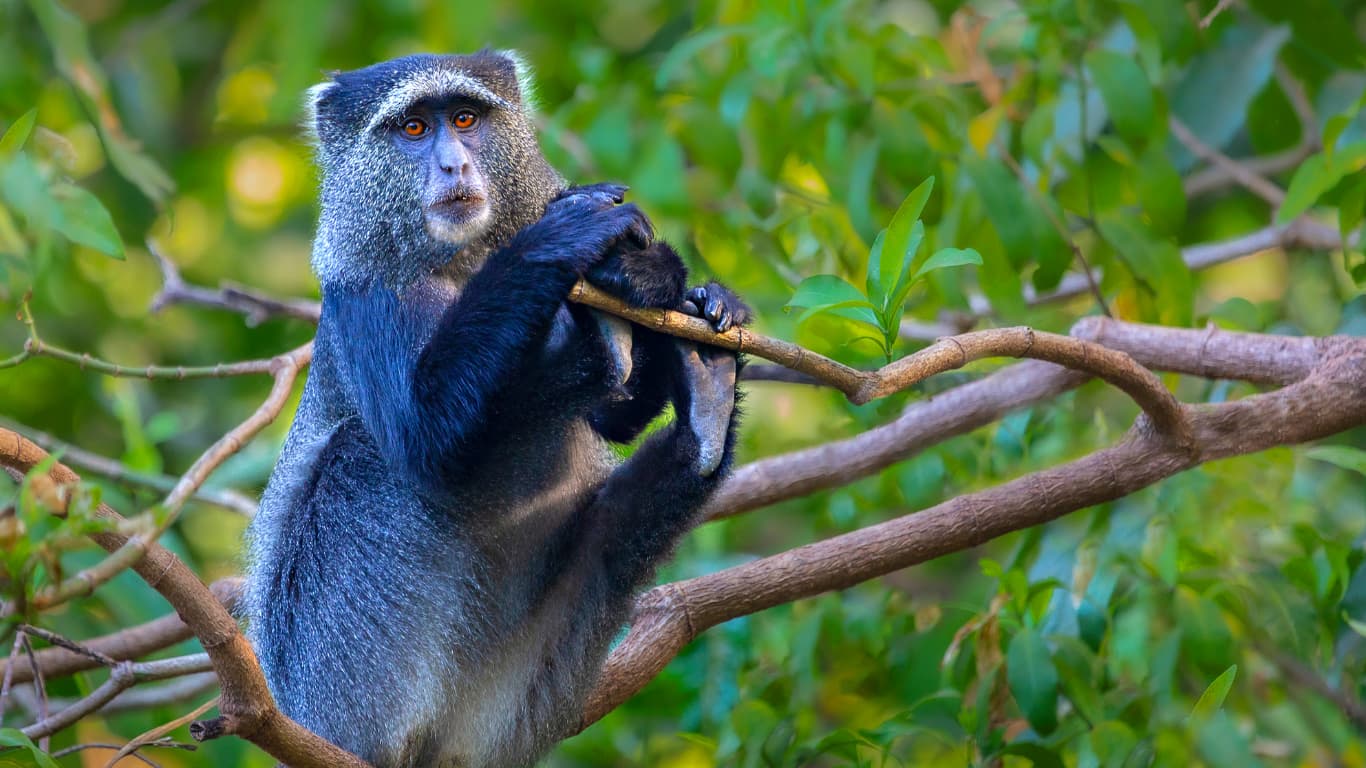
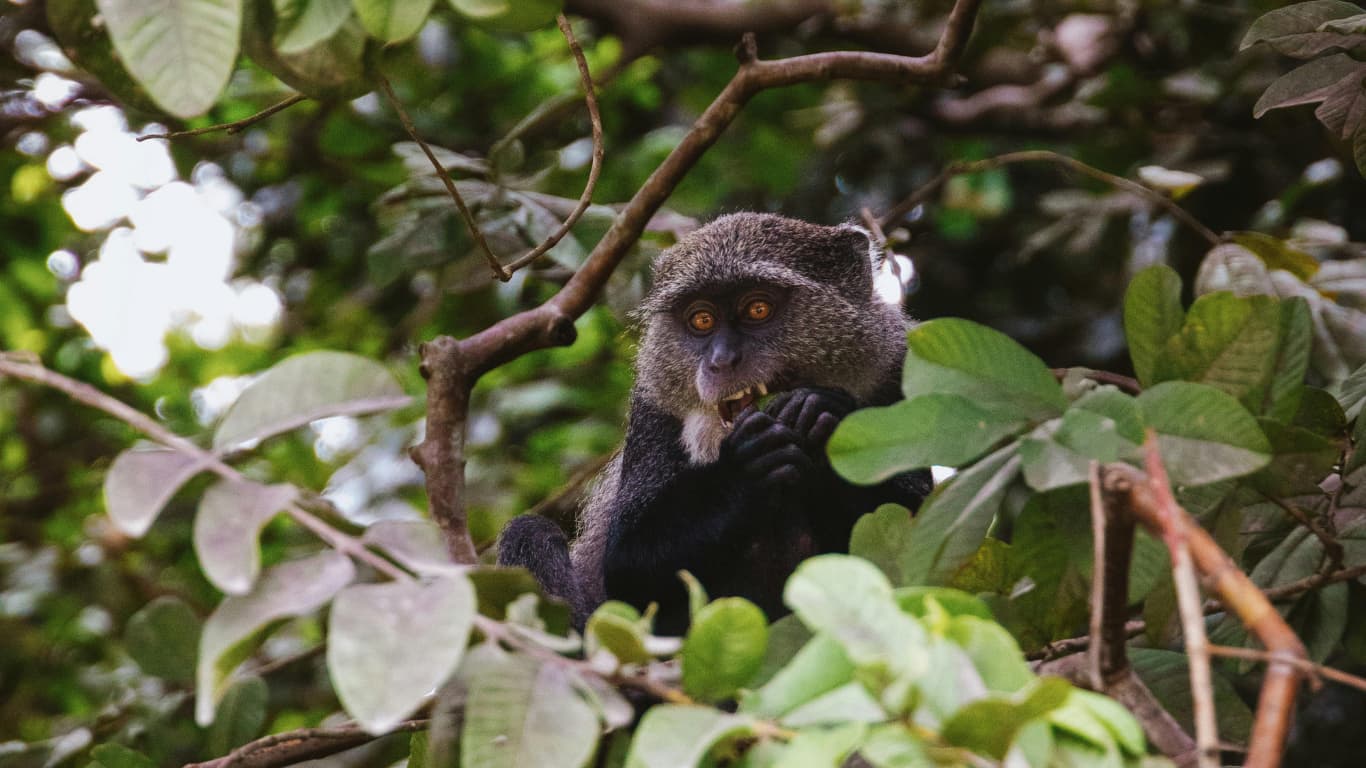
Blue monkeys are dark grey-olive, not blue. The name likely comes from the bluish sheen on short facial hair. They live in female-led troops of up to 40 in montane forest, and Lake Manyara's groundwater forest is one of the best places in Tanzania to watch them at close range.
Behaviour & Facts
Life in the Wild
Not Actually Blue
The blue monkey is not blue. The coat is dark grey-olive with a faint blue-grey sheen that shows only in certain light. A pale crescent marks the forehead. The face is dark. The name misleads almost everyone who hears it for the first time. What you actually see in the forest is a dark, medium-sized monkey moving deliberately through mid-canopy branches. Forget the name. Look for the pale forehead and the careful, measured movement.
Forest Troop Life
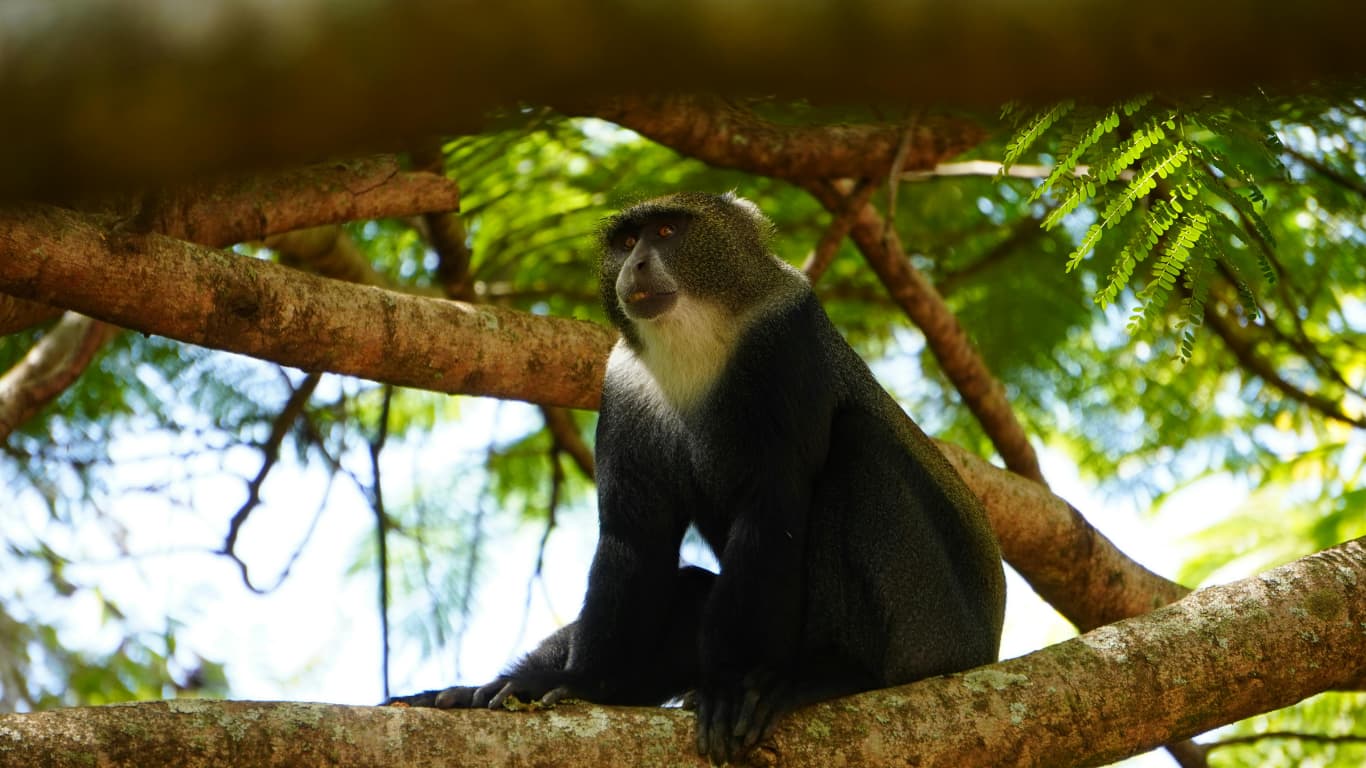
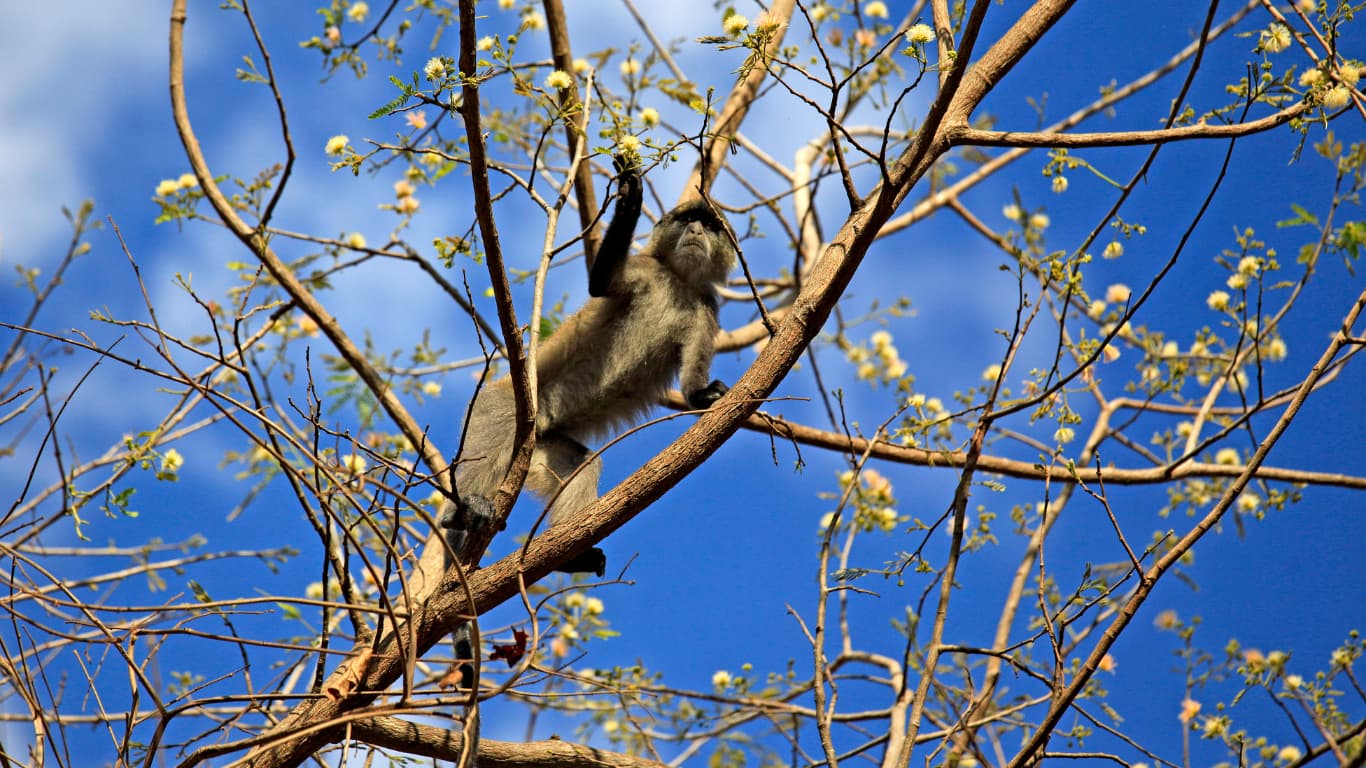
Troops number 15 to 40 individuals led by one dominant male. Females remain in their birth troop for life. Males leave at puberty and spend years on the periphery before challenging for dominance elsewhere. These are mid-canopy movers, deliberate and careful rather than fast and reckless. Communication is constant: chirps between foraging members, sharp alarm calls for predators, and a deep dawn boom from the dominant male that carries across the forest.
Seed Disperser
Fruit dominates the diet. Figs, seed pods, flowers, leaves, and insects all feature, but fruit is the core. Blue monkeys swallow seeds and deposit them intact across the forest, making them important dispersers for montane tree species. Lake Manyara's groundwater forest offers the best viewing. Troops move through the canopy above the access road and are comfortable with vehicles. Arusha National Park around the Momella Lakes is also reliable.
Where to See
Blue Monkey in Tanzania
Common Questions
Frequently Asked
In the Field
Photography Tips
Blue monkeys move fast through the canopy and rarely pause. Shoot at 1/1000s or faster to freeze leaps and branch grabs. Crank the ISO - motion blur will ruin more frames than noise ever will.
The dark face with pale brow patch is full of expression. Wait for the monkey to look toward you and focus on the eyes. A tight crop at wide aperture throws the forest into a smooth wash of green behind the face.
A wider shot showing several monkeys moving through groundwater forest gives context that a portrait cannot. Use a moderate zoom, keep depth of field deep enough to hold the group, and let the tangled branches frame them.
An infant clinging to its mother is compelling and gives the image emotional weight. These pairs move more slowly than solo adults, giving you a better window. Focus on the infant's face and let the mother's body provide the backdrop.
From Our Guests