CREATE YOUR LEGEND | 2026-2028 dates available | SECURE YOUR PLACE WITH JUST £100 DEPOSIT
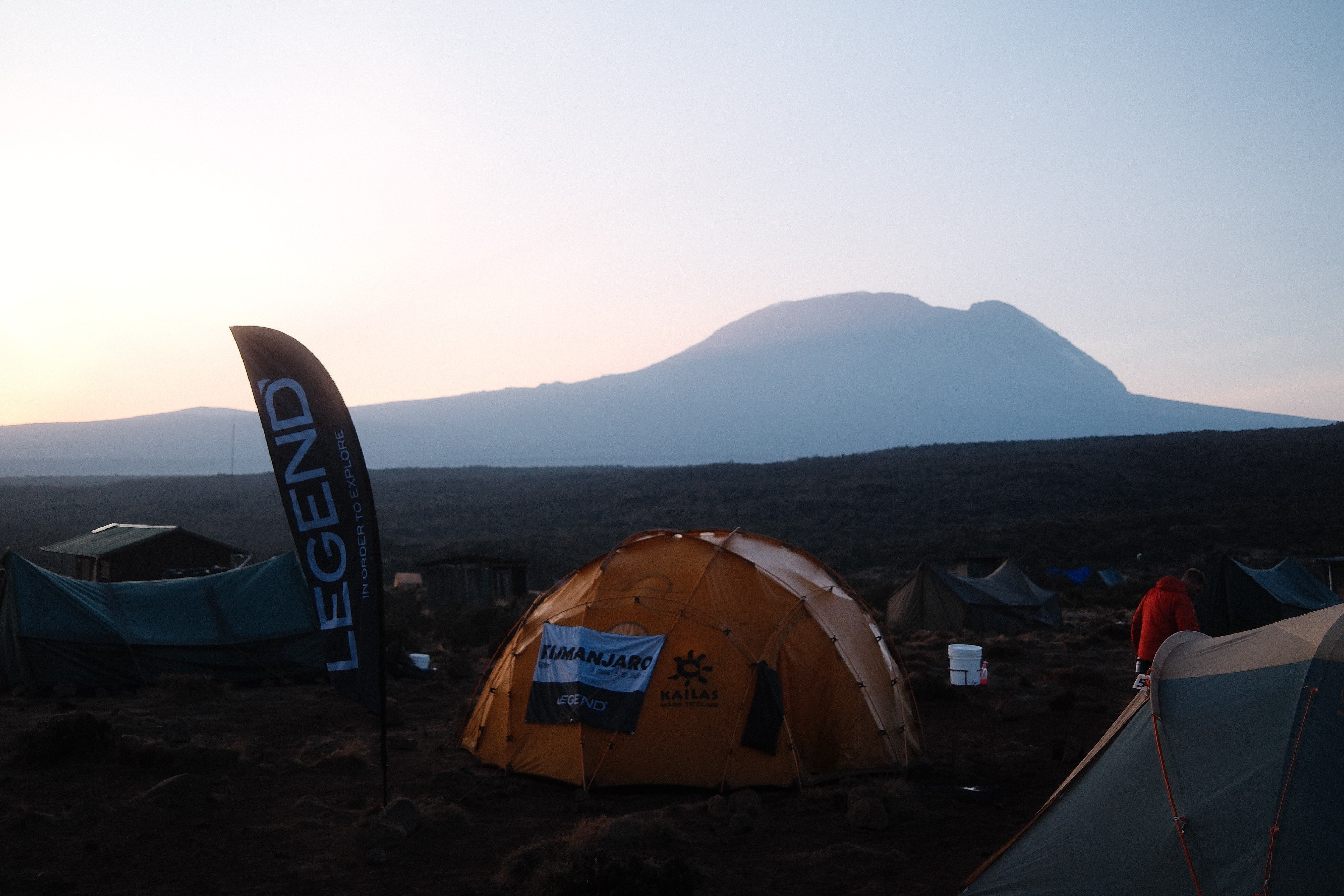
OVERVIEW
When clients ask me the single most important decision they will make before they set foot in Tanzania, my answer never changes. Choose the Lemosho route, and commit to the 8-day itinerary.
At Legend Expeditions, our 98.9% summit success rate on the Lemosho route is the highest of any route we run. That is not luck. It is the direct result of a slower, more strategic approach to altitude, and it is the reason I put almost every client on this route. Here is why the 8-day Lemosho is the smartest way to climb the roof of Africa, and how it compares to the Machame route you have probably also been reading about.
Published by
Jack Fleckney
Acclimatisation Is Non-Negotiable
Altitude sickness is the single biggest threat to your summit. Not fitness, not cold, not the steepness of the trail. Altitude. The Machame route, the Marangu route, and the shorter 6 and 7-day versions of Lemosho all share the same weakness: they ask your body to gain height faster than it comfortably adapts.
The 8-day Lemosho itinerary is built around the one thing acclimatisation actually needs, which is time. We give your body the days it needs to adjust, which lowers your risk of altitude sickness and gets you to Uhuru Peak in a state to enjoy it. If you want the detail on what altitude does to the body and how we manage it, I have written a full guide on altitude sickness on Kilimanjaro.
The Gentle Start: Rainforest and the Shira Plateau
Lemosho opens with a gradual climb. Day one takes you through quiet, remote rainforest, a soft introduction to the trail and an easy first day for your body. There is no shock to the system, which is exactly the point.
As you climb, you cross the Shira Plateau, a high-altitude desert that is one of the best natural acclimatisation grounds on the mountain. It is a vast, flat wilderness that still shows the occasional buffalo track and high-altitude birdlife. Centuries ago it was a meeting point and, at times, a battleground. Today it is open space and clean air, and a perfect place for your body to adjust before the gradients steepen.
The Power of Climb High, Sleep Low
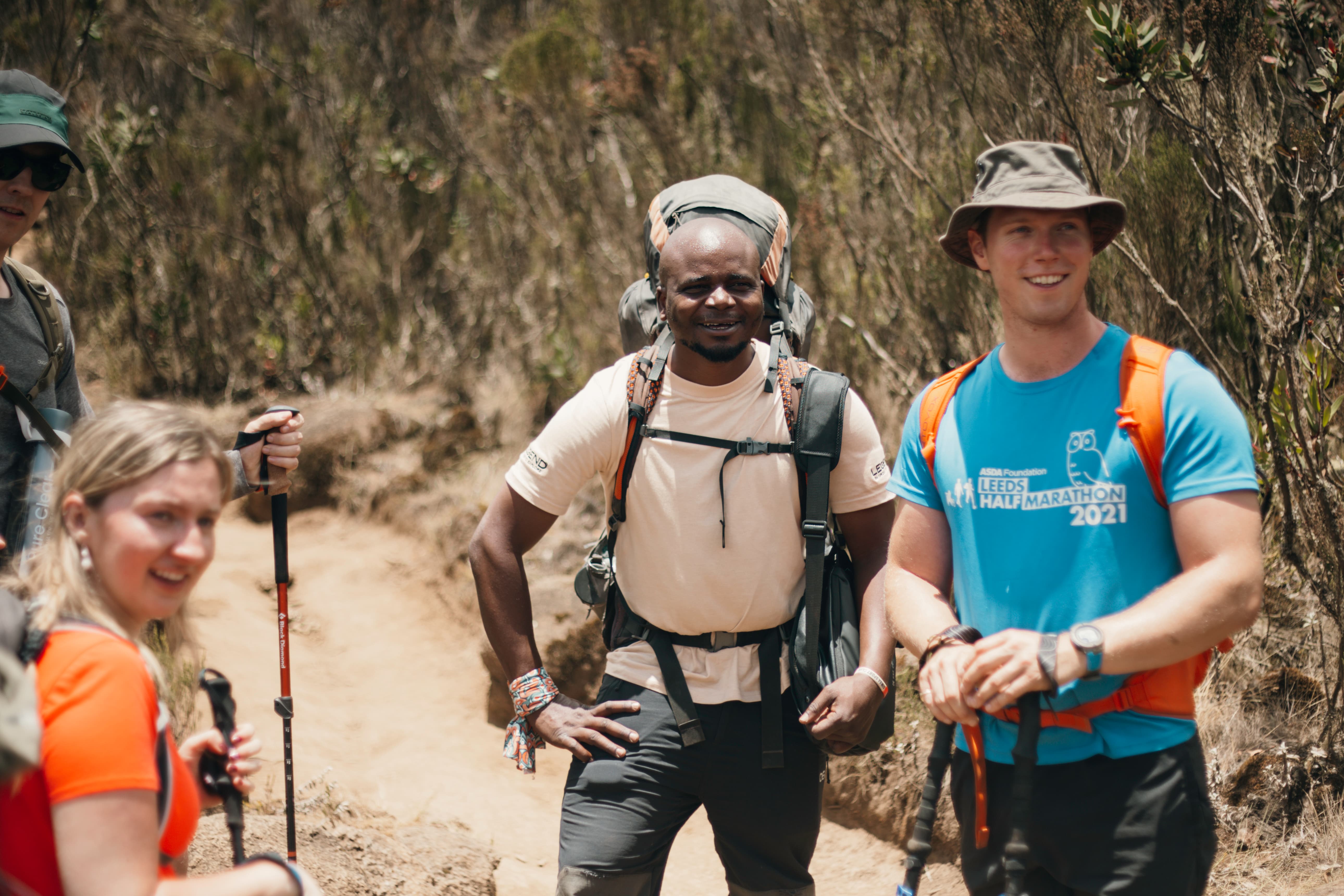
Our 8-day itinerary is engineered around the proven mountaineering principle of climb high, sleep low. You hike to a higher altitude during the day, which signals your body to adapt, then drop to a lower camp to sleep, where the thicker air lets you recover overnight. Lemosho builds this in three times.
Shira Cathedral and Extra Acclimatisation
Our guides often take an optional ascent up Shira Cathedral, a high point near camp. It is a deliberate move to bank extra altitude away from the crowds, giving your lungs a workout before you drop back down to Shira Camp to sleep.
Lunch at Lava Tower (4,630m)
This is the defining day of the route. We climb to Lava Tower at 4,630 metres and stop there for lunch, exposing you to serious altitude. Then we descend to Barranco Camp at around 3,960 metres to sleep. That difference of nearly 700 metres between where you ate and where you sleep is the single biggest acclimatisation gain of the whole climb.
Barranco to Karanga
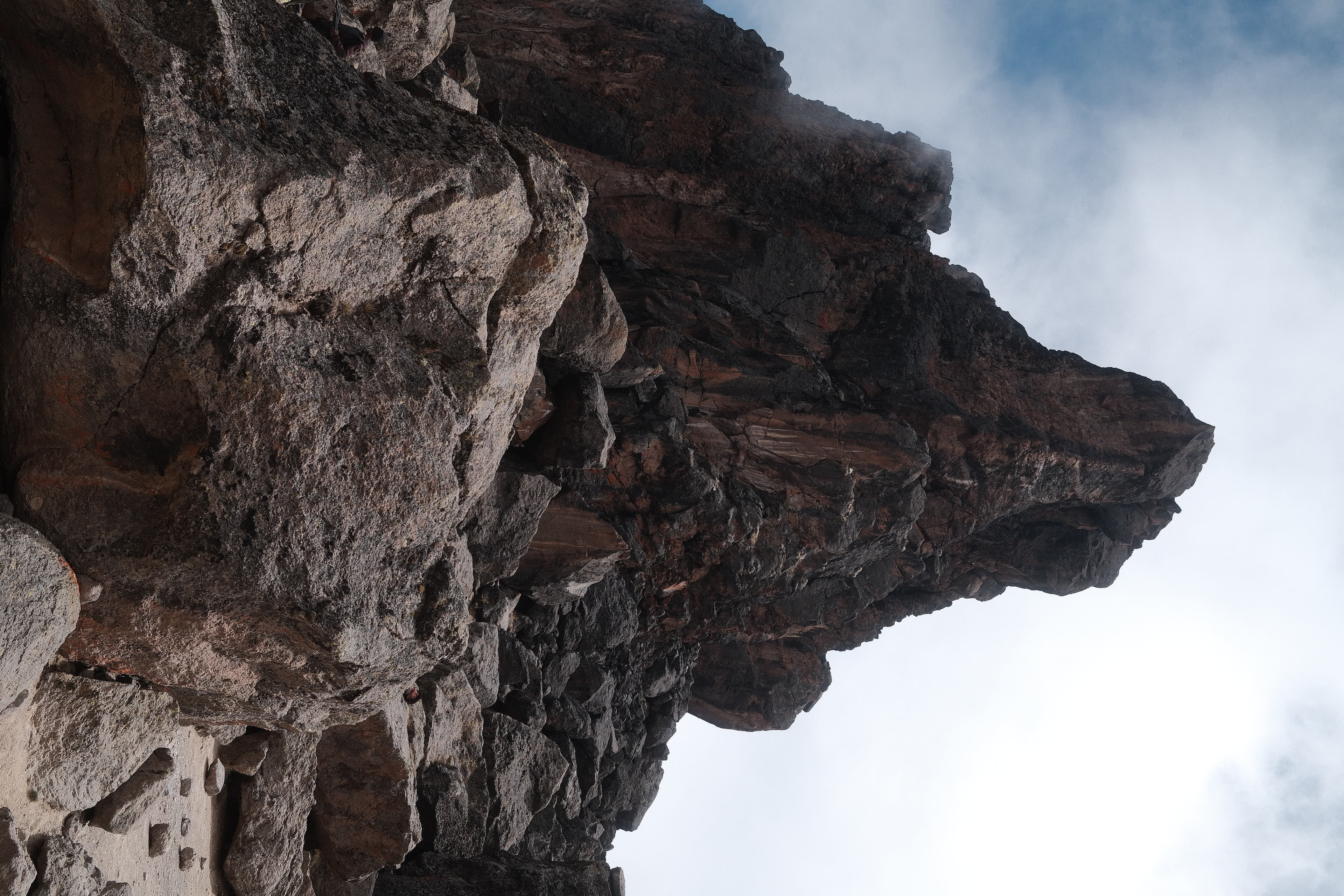
Even on the day between the Barranco Wall and Karanga Camp, the trail carries you higher than where you eventually pitch your tent. This constant up-and-down is precisely why the route works. By the time you face summit night, your body has rehearsed the pattern again and again.
A Short Day Before Summit Night
When you are facing a 12-hour summit push, the last thing you want is to arrive already emptied out by a 10-hour day. So we make the day before deliberately short.
The leg from Karanga to Barafu, the high camp, takes only three to four hours. You arrive early, with time to rest, hydrate, eat, and sort your gear before the midnight start. On summit night itself you climb on a one-to-one guide ratio, with supplementary oxygen carried as standard. That rest, and that support, is what your energy reserves are made of when it matters most.
Lemosho vs Machame: Which Route Should You Choose?
The honest answer: if you can spare the days, climb the 8-day Lemosho. Machame is a good route. Lemosho is a better one, and the reasons come down to how each approaches the mountain in the first three days.
Here is the part most operators will not say plainly. From Barranco Camp to the summit, Lemosho and Machame are the same trail. Identical. Barranco, Karanga, Barafu, then the midnight push to Uhuru. Every difference between the two routes happens before Barranco, in the opening days, and that is exactly where acclimatisation is won or lost.
Machame approaches from the south and climbs fast. The popular 6-day version gains altitude aggressively and skips a full acclimatisation day, which is why its success rate sits well below the longer options. The 7-day version is far better, but it still starts on a busier trail and gives your body less time on the critical middle section.
Lemosho approaches from the west, through quiet, remote rainforest at Londorossi, then crosses the Shira Plateau. Those first two days are gentler, quieter, and they add the acclimatisation time the 8-day profile is built around. You reach Barranco, where the two routes merge, already adjusted. The Machame climbers arriving alongside you have done it harder and faster.
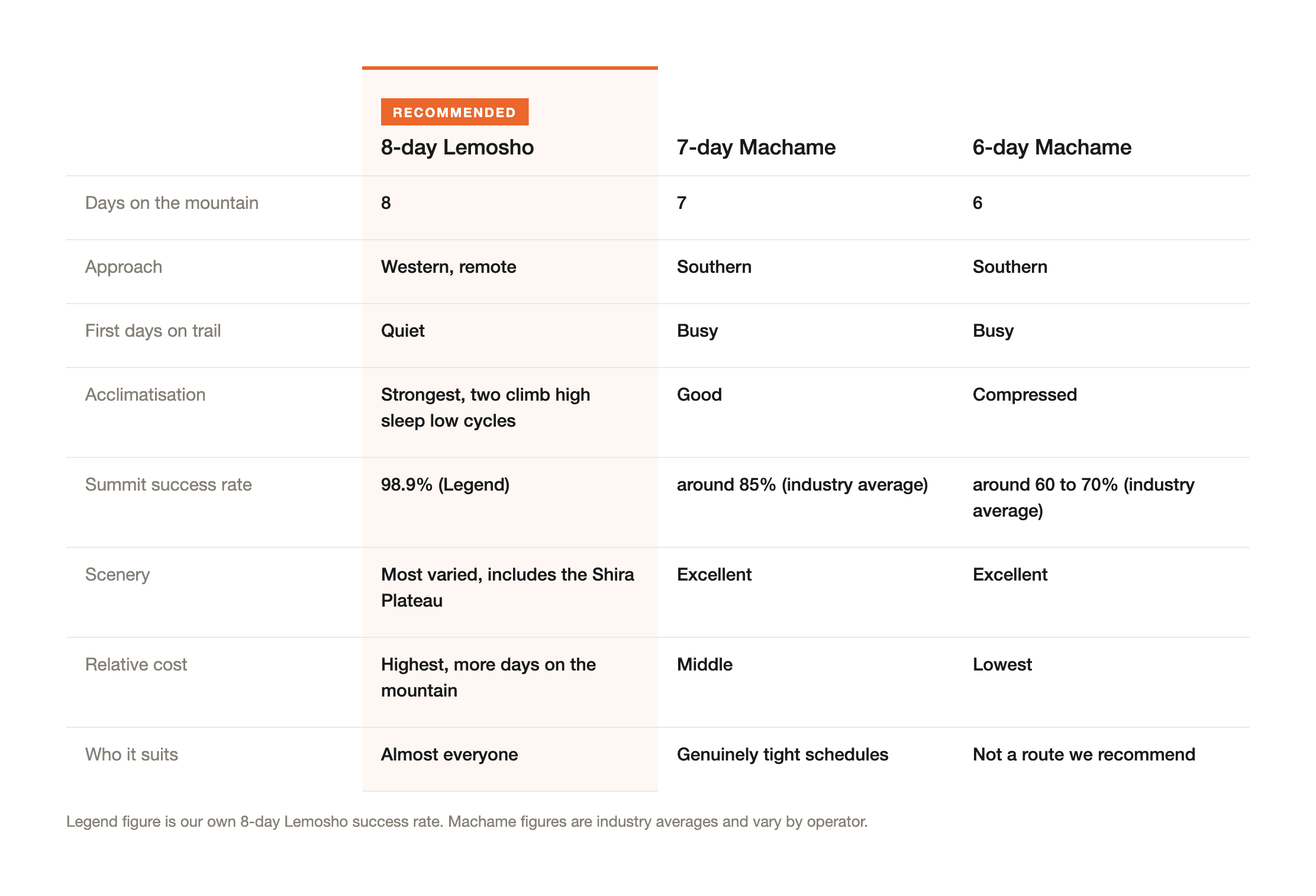
My recommendation, after hundreds of climbs, is the 8-day Lemosho. If your annual leave genuinely will not stretch, the 7-day Machame is the next best thing and I will tell you so honestly. What I will not recommend is the 6-day Machame. The numbers on it are not good enough, and the climb it gives you, rushed and short on rest, is not the one worth flying to Tanzania for.
You can see the full day-by-day breakdown on our 8-day Lemosho route page.
What You Get Climbing Lemosho with Legend
For a guide, safety and success are the same thing. The 8-day Lemosho is the most varied, the most strategic, and the most ethical way up the mountain. It respects your body, and it delivers our highest summit rates.
You also climb in genuine comfort. Stand-up tents, cot beds and thick mattresses, private toilets, and hot showers throughout the climb. A team trained as Wilderness First Responders, daily blood oxygen checks, and oxygen carried on every expedition. And a support crew paid fairly for the hard work they do, because getting everyone up and down safely, climber and porter alike, is the whole job. You can meet the people who run your climb on our team page.
If you are serious about standing on Uhuru Peak, choose the route built for it.
Frequently Asked Questions
Is Lemosho or Machame better for avoiding altitude sickness?
Lemosho, on the 8-day itinerary. It approaches more gradually and gives your body an extra night or two to adjust before the summit push. From Barranco upwards the two routes are identical, so the advantage is entirely in those early acclimatisation days.
How many days does the Lemosho route take?
Lemosho runs as a 7-day or an 8-day climb. We run the 8-day as standard because the extra acclimatisation day is the single biggest driver of our 98.9% summit success rate.
Is the Machame route harder than Lemosho?
The trail itself is no harder once the two routes meet at Barranco. Machame feels harder because the shorter versions ask your body to climb higher, faster, with less recovery. That is a pacing and acclimatisation difference, not a terrain one.
Why does Lemosho cost more than Machame?
More days on the mountain means more national park fees, more crew days, and more food and fuel. You are paying for acclimatisation time, and that time is what gets you to the top.
Which Kilimanjaro route has the highest summit success rate?
The longer the route, the higher the success rate, because the body gets more time to adjust. Our 8-day Lemosho sits at 98.9%, well above the industry average for shorter routes. Route length is the strongest predictor of whether you summit.
If you would like to talk it through, even if you have already booked with another company, drop me a line at jack@legendexpeditions.com, book a call, or message me on WhatsApp. I will give you a straight answer based on your dates and your experience, not a sales pitch.
Karibu Tanzania.
Jack


