CREATE YOUR LEGEND | 2026-2028 dates available | SECURE YOUR PLACE WITH JUST £100 DEPOSIT
OVERVIEW
Altitude sickness is your body's response to reduced oxygen at high elevation. It affects almost everyone above 2,500m to some degree.
Three conditions sit on a spectrum: Acute Mountain Sickness (AMS, common and manageable), High Altitude Cerebral Edema (HACE, serious), and High Altitude Pulmonary Edema (HAPE, serious).
The single biggest preventative is a longer itinerary. Legend's 8-day Lemosho route has a 98.9% summit success rate, significantly above the 50% rate of 5-day routes.
Symptoms to watch for: headache, nausea, fatigue, loss of appetite, disrupted sleep. Mild symptoms are normal. Worsening symptoms mean descent.
What Legend does: daily pulse oximeter checks, supplementary oxygen on every climb, WFR-trained medics, and immediate descent protocols.
Published by
Jack Fleckney
Overview
Altitude is the one variable on Kilimanjaro you cannot train your way around. You can be marathon-fit, perfectly equipped, and mentally prepared, and still struggle above 4,000 metres. Equally, recreational hikers with average fitness summit cleanly every week because they paced correctly and chose the right itinerary. This guide explains exactly what altitude does to your body, the three named conditions you should be able to recognise, the symptoms, the prevention protocol, and how route choice and pacing fundamentally change your risk profile.
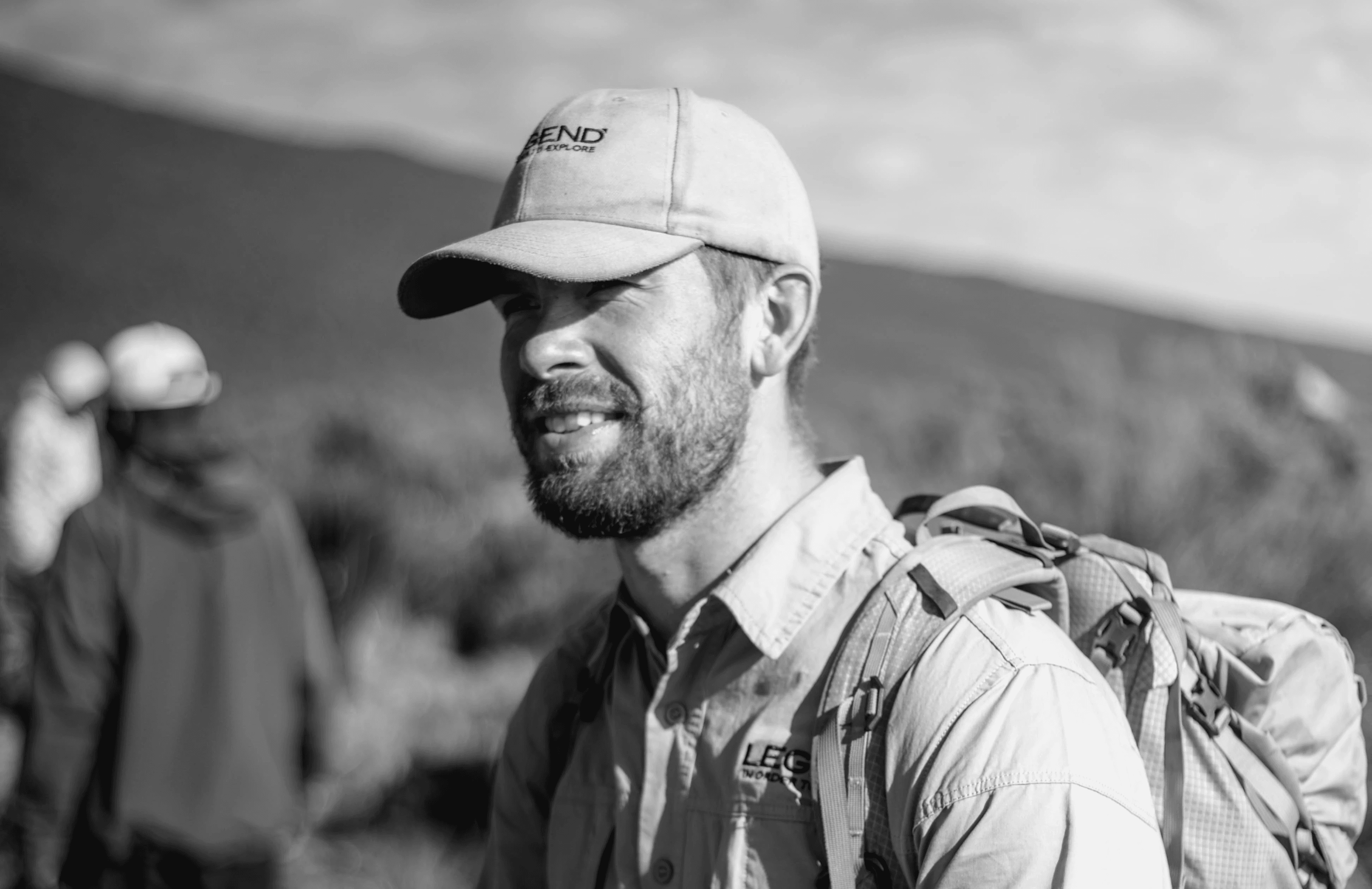
I am Jack. I run Legend Expeditions out of Moshi and I have guided hundreds of climbers up Kilimanjaro. Altitude management is the single most important part of what we do on the mountain. Get it right and you summit. Get it wrong and you do not. This is the article I send every Legend client before they start training.
What Is Altitude Sickness?
Altitude sickness is the umbrella term for a group of medical conditions caused by the reduced air pressure and lower oxygen availability at high elevation. The most common form is Acute Mountain Sickness, usually abbreviated to AMS. It can develop in anyone ascending above approximately 2,500 metres, and the higher you go, the more likely it becomes. Kilimanjaro’s summit at 5,895 metres puts every climber comfortably within the altitude band where the condition is expected, not exceptional.
The cause is not the altitude itself, but how your body responds to it. At sea level, every breath you take fills your lungs with air that is roughly 21% oxygen. The percentage does not change as you climb, but the air pressure does. At 5,895 metres, atmospheric pressure is about half of what it is at sea level, which means each breath delivers roughly half the oxygen molecules to your bloodstream. Your body has to work harder for less, and the chain reaction that follows is what produces altitude sickness.
How Altitude Affects the Body
The moment you arrive at meaningful altitude, your body begins compensating. Some of this is helpful, some of it is uncomfortable, and understanding the mechanism is the foundation of managing the rest of the climb.
Increased Breathing Rate and Depth
Your body’s first response to thinner air is to breathe more rapidly and more deeply. This is involuntary and starts within minutes of arriving at altitude. The goal is to increase the volume of oxygen reaching your lungs per minute, partially compensating for the lower oxygen density per breath. You will notice this most on the first day at higher camps, particularly when walking uphill or settling into your sleeping bag.
Higher Heart Rate
To move the available oxygen around your body, your heart pumps faster. Resting heart rate at 4,500 metres can sit 20 to 30 beats per minute higher than at sea level for the same person. This is normal and expected. It is not a sign of fitness failure. It is a sign that your cardiovascular system is doing its job.
Falling Blood Oxygen Saturation
Blood oxygen saturation, abbreviated to SpO2, is the percentage of red blood cells carrying oxygen. At sea level, healthy SpO2 sits at 97 to 99 percent. At 4,000 metres, the same person typically reads 85 to 92 percent. At 5,895 metres, readings of 75 to 85 percent are common. Your guide will check your SpO2 every evening at camp using a pulse oximeter, a small device that clips onto a fingertip. Trends matter more than single readings. A steady or improving SpO2 across consecutive nights is what your guide is looking for.
Disrupted Sleep
Above 3,500 metres, most climbers experience disrupted sleep. The pattern is called periodic breathing, where shallow and deep breaths alternate, and brief pauses in breathing can wake you. This is normal, and it improves with acclimatisation. The practical impact is that you should expect to sleep less well than at home for several nights. Energy levels remain workable. Mood can take a hit by night four or five if you are not prepared for it.
Fluid Shifts and Mild Dehydration
Altitude increases your urine output and accelerates fluid loss through faster breathing. The combined effect is mild dehydration, which compounds altitude symptoms. Three to four litres of water per day on Kilimanjaro is the working rule, regardless of how thirsty you feel. Hydration is the single most controllable variable in managing altitude well.
The Three Conditions: AMS, HACE, HAPE
Most discussion of altitude sickness lumps everything under one umbrella. Clinically, there are three distinct conditions you should recognise. They sit on a spectrum, and the distinction matters because the response is different for each.
Acute Mountain Sickness (AMS)
The mild and common form. AMS affects roughly 50 to 75 percent of climbers above 4,000 metres to some degree. Symptoms typically develop 6 to 24 hours after ascending to a new altitude and include headache, nausea, loss of appetite, fatigue, dizziness, and disrupted sleep. It is uncomfortable but not dangerous on its own, and it usually resolves with rest, hydration, and time at the current altitude. Mild AMS is so common on Kilimanjaro that experiencing it is not a reason to turn back. It is a reason to slow down and let your body catch up.
High Altitude Cerebral Edema (HACE)
The serious form of AMS. HACE is fluid accumulation in the brain, and it is medical emergency territory. The defining symptom is ataxia, which is a loss of coordination resembling drunkenness. Climbers with HACE struggle to walk in a straight line, become confused, or lose the ability to perform simple tasks. Severe headache that does not respond to pain relief, vomiting, and altered consciousness are other markers. HACE requires immediate descent. Every minute matters. Legend guides are trained to recognise the early signs and will end a climb the moment HACE is suspected.
High Altitude Pulmonary Edema (HAPE)
The other serious form. HAPE is fluid accumulation in the lungs. Symptoms include extreme breathlessness even at rest, a wet or gurgling cough, severe fatigue, blue or grey-tinged lips or fingernails, and chest tightness. Like HACE, HAPE requires immediate descent. Supplementary oxygen helps stabilise the climber during evacuation but does not replace the need to lose altitude.
The critical distinction: AMS is the warning. HACE and HAPE are the conditions you are trying to prevent by responding to that warning. The climbers who develop the serious forms are almost always the ones who pushed on with worsening AMS symptoms rather than descending or stopping to acclimatise.
Symptoms of Altitude Sickness to Watch For
Symptoms generally appear 6 to 24 hours after gaining altitude. On Kilimanjaro, this usually means the evening of the day you climbed, or the following morning. The full range:
Mild AMS symptoms: headache (the most common single symptom), nausea, loss of appetite, fatigue beyond what the day’s exertion would explain, light dizziness, mild shortness of breath at rest, and disrupted or fragmented sleep.
Moderate AMS symptoms: headache that does not respond to paracetamol or ibuprofen, persistent vomiting, marked fatigue or weakness, ataxia developing (you trip more than usual, your gait is unsteady), and difficulty completing normal tasks.
Severe symptoms requiring immediate descent: loss of coordination, confusion or altered consciousness, severe breathlessness at rest, wet cough or gurgling chest, blue tinge to lips or fingernails, chest pain.
The honest rule is this: mild symptoms are expected, moderate symptoms mean stop and reassess, severe symptoms mean descend immediately. The decision is medical, not commercial, and a good guide will make the call for you if you are slow to make it yourself.
How to Prevent Altitude Sickness on Kilimanjaro
There is no way to eliminate altitude sickness risk entirely. There are several ways to reduce it significantly, and the climbers who summit are the ones who get most of them right.
Choose a Long Enough Itinerary
This is the single most important decision and it sits well above every other variable. Acclimatisation needs time, and time on the mountain is the resource your body uses to adjust. The success rate data tells the story directly. The 5-day Marangu route has a summit success rate of approximately 50 percent. The industry average for 8-day routes is 85 to 95 percent. Legend’s 8-day Lemosho route sits at 98.9 percent. The difference is not luck. It is two to three extra nights of acclimatisation at strategic altitudes.
If you have to make one decision well, make it this one. Choose the longest itinerary your annual leave and budget allow.
Climb High, Sleep Low
The foundational principle of acclimatisation. Where possible, you ascend to a higher altitude during the day, then descend to a lower altitude to sleep. The body uses the higher exposure to trigger acclimatisation while the lower sleeping altitude reduces the stress on overnight recovery. Lemosho’s route profile builds this in twice. The Lava Tower day climbs to 4,630 metres before dropping to 3,960 metres at Barranco Camp. The Karanga day works the same way at slightly lower elevation. Both nights produce measurably better SpO2 readings the following morning.
Pace Pole Pole
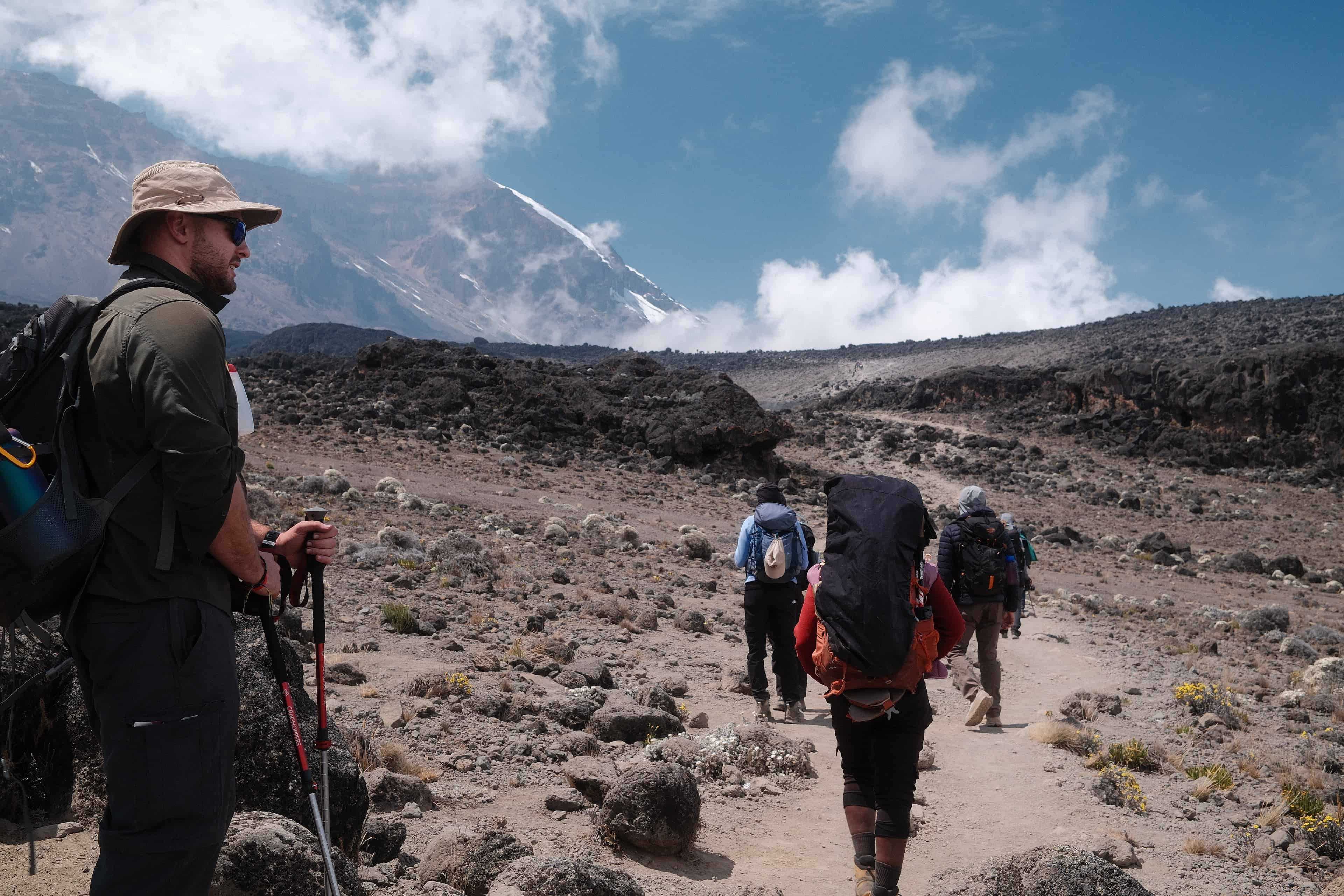
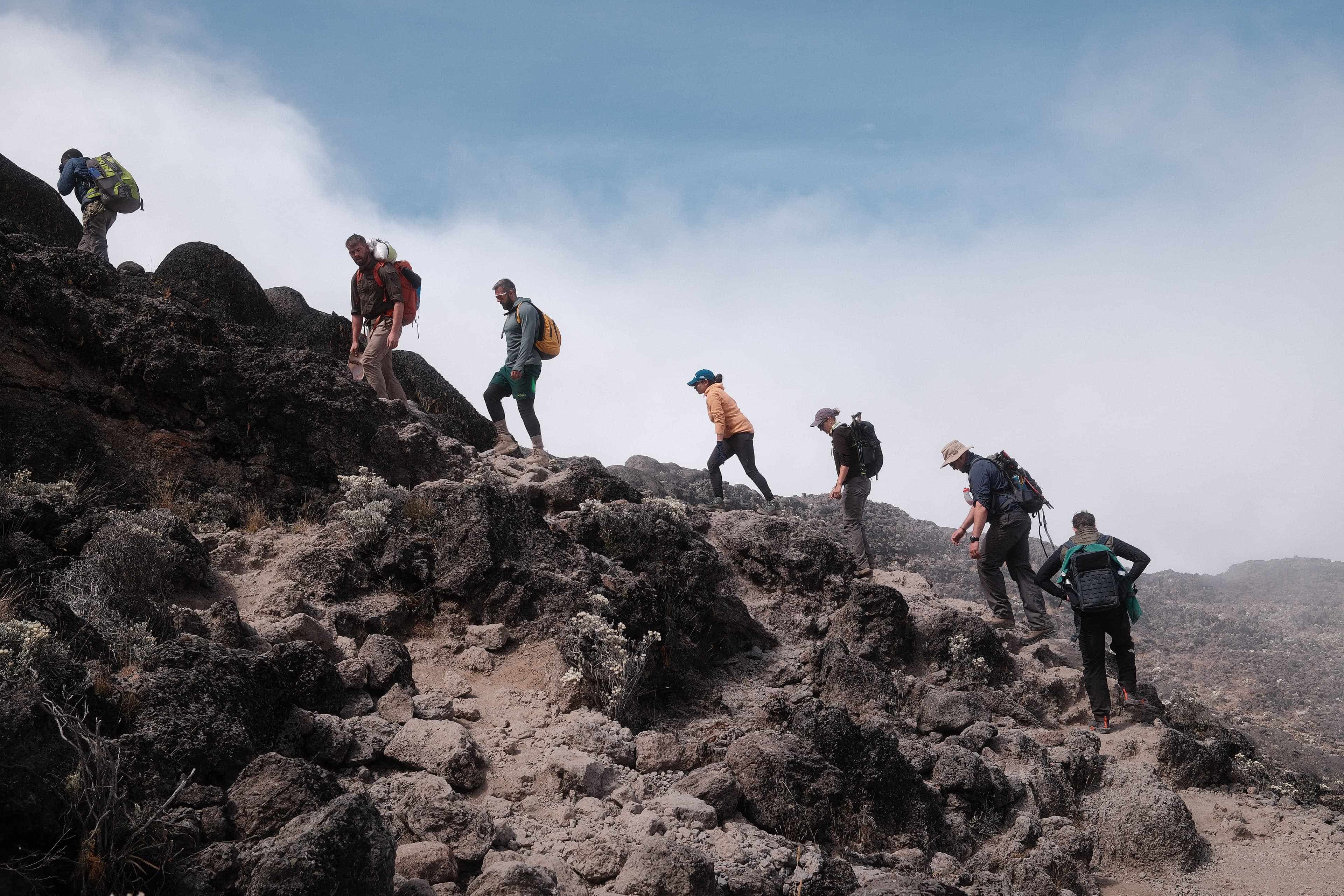
Pole pole is the Swahili phrase you will hear from your guides on day one. It means slowly slowly. On Kilimanjaro, this is not a friendly suggestion. It is the most important instruction your guide will ever give you. The climbers who summit are not the fittest in the group. They are the ones who walked at exactly the pace their guide set, did not push ahead, and trusted the process.
The pace will feel uncomfortably slow at first. Some clients fight it for the first day. By day three, every single one of them is grateful for it. Fast pace at altitude raises your heart rate, deepens your oxygen debt, and increases the load your acclimatisation system has to handle. Slow pace lets your body absorb the altitude and arrive at each camp in a state where recovery is possible.
Hydrate Properly
Three to four litres of water per day, every day, regardless of how thirsty you feel. The dry mountain air and the increased breathing rate accelerate fluid loss far beyond what thirst signals will tell you. Mild dehydration produces headaches and fatigue that are easy to misread as altitude sickness, and chronic dehydration compounds genuine altitude symptoms. Hydration is the single most controllable variable on the mountain.
Consider Diamox (Acetazolamide)
Diamox is the standard prophylactic medication for altitude sickness. It works by accelerating the body’s natural acclimatisation response. Most of our Legend clients take it. The typical regimen is 125 to 250 milligrams twice daily, starting the day before you begin ascending and continuing until you reach the highest planned altitude. Side effects are mild and include tingling fingertips and increased urination.
Diamox is prescription-only in the UK. Discuss it with your GP or travel clinic at least four weeks before your climb. The UK NHS travel resource TravelHealthPro covers the current medical guidance for travel to Tanzania.
Eat Properly Even When You Do Not Want To
Loss of appetite is one of the earliest and most reliable signs that altitude is affecting you. Eating becomes a task rather than a pleasure. Push through it. Carbohydrate-heavy meals are easier to digest at altitude than fatty or heavy protein, which is why our mountain chefs serve pasta, rice, porridge, and potatoes as the bulk of the climb diet. Eat what is in front of you, even when you do not feel hungry. Energy reserves are not optional above 4,000 metres.
Get Pre-Acclimatised at Home If Possible
For climbers who want every possible edge, simulated altitude training before the trip is a genuine advantage. Hypoxic chambers and altitude tents reduce the oxygen concentration in the air you breathe, exposing your body to the equivalent of altitude without leaving the UK. Legend partners with the Altitude Centre in London, which runs mountaineering consultations specifically designed for clients preparing for Kilimanjaro and similar climbs. The session tests how your body responds to simulated altitudes of 4,000 and 5,000 metres, then builds a tailored pre-acclimatisation plan. Not everyone needs it. Climbers who have struggled with altitude previously, or who want maximum confidence going into the trip, find it genuinely useful.
How Route and Pace Affect Your Altitude Risk
Two climbers can stand at the same altitude on the same day and have wildly different experiences depending on the route they took to get there and how fast they walked. Route choice and pace are the two biggest controllable inputs into your risk profile.
Why Route Length Matters
Acclimatisation is a time-dependent biological process. Your kidneys, your blood, and your breathing all adjust in response to sustained altitude exposure, and that adjustment takes hours and days rather than minutes. A 5-day route gives your body roughly half the time to adjust that an 8-day route does. The same altitude gain compressed into fewer days produces a higher rate of AMS, HACE, and HAPE.
The data is consistent across every operator that publishes it. Longer itineraries produce higher summit success rates not because the climbers are different, but because the bodies have more time to adjust. The 8-day Lemosho profile in particular is engineered around two acclimatisation cycles (Lava Tower and Karanga), which is why its success rate sits at the top of the industry.
Why Pace Matters as Much as Route
Even on the right route, walking too fast undermines the acclimatisation the route is designed to deliver. Climbers who push the pace on day one and day two arrive at higher camps with elevated heart rates, depleted glycogen, and SpO2 readings two to four points lower than they should be. Those small deficits compound over the week. By summit night they are walking with less reserve, fewer red blood cells carrying oxygen efficiently, and a higher chance of turning back.
This is why Legend guides set the pace from the first kilometre and hold it the whole way up. The pace is not arbitrary. It is calibrated to the altitude profile of the route and to how the average climber’s body acclimatises. Trust it, even when it feels too slow. Particularly when it feels too slow.
What Legend Does to Manage Altitude on the Mountain
Every operator claims to take altitude seriously. The practical question is what they actually do. Legend’s altitude protocol on every expedition:
Daily SpO2 monitoring. Your blood oxygen saturation is measured each evening at camp using a pulse oximeter. Trends are tracked across the climb. A guide who knows your numbers across all eight days can spot trouble before symptoms show.
Supplementary oxygen carried on every climb. Not available on request, not for hire - carried as standard. Oxygen is used to stabilise climbers showing symptoms while descending, and on rare occasions to support summit attempts where altitude is becoming a limiting factor. Operators who do not carry oxygen are making a budgetary choice that puts climbers at higher risk.
WFR-trained medics on the team. Wilderness First Responder qualification is the standard for remote-environment medical training. Our team is current on it.
Immediate descent protocols. If a climber shows symptoms of HACE or HAPE, the climb ends for them on the spot and they descend with a guide. There is no negotiation and no commercial pressure to continue. The decision is medical and it is non-negotiable.
Helicopter evacuation capability. Coordinated through the Kilimanjaro National Park rescue system. Most situations do not require helicopter evacuation because descent on foot resolves the condition. The capability exists for the rare serious case.
You can read more about our team and qualifications on the Legend team page.
What to Do If You Start Feeling Symptoms
The honest protocol, in order:
Tell your guide immediately. Do not push through symptoms in silence. The earlier altitude issues are identified, the easier they are to manage. Climbers who hide symptoms put themselves at much higher risk than climbers who report them. Your guide is not going to send you home for a headache. They are going to help you manage it.
Stop, rest, hydrate. Most mild AMS symptoms resolve with 30 to 60 minutes of rest and water. Sit down, eat something simple, drink, and reassess.
Take pain relief for headache. Paracetamol or ibuprofen. Standard doses. A headache that responds to pain relief is not a serious headache.
Stay at the current altitude rather than ascending. If symptoms persist, the rule is do not ascend further until they resolve. A rest day at the current camp is preferable to pushing on. Most acclimatisation issues resolve with an extra night at altitude.
Descend if symptoms worsen or do not improve. The classic medical phrase is if in doubt, go down. Even a few hundred metres of descent is usually enough to relieve symptoms quickly. Descending is not failure. Pushing on with worsening symptoms is the actual failure, and it is what produces the rare serious incidents on this mountain.
Altitude Sickness on Kilimanjaro: Frequently Asked Questions
What is altitude sickness?
Altitude sickness is your body’s response to reduced air pressure and oxygen at high elevation, typically affecting people above 2,500 metres. The most common form is Acute Mountain Sickness, which produces headache, nausea, fatigue, and disrupted sleep. More serious forms are High Altitude Cerebral Edema (HACE) and High Altitude Pulmonary Edema (HAPE), both of which require immediate descent.
At what altitude does altitude sickness start?
Altitude sickness can develop in anyone ascending above approximately 2,500 metres, though most climbers do not notice symptoms until 3,000 to 3,500 metres. By 4,000 metres, between 50 and 75 percent of climbers experience some degree of mild AMS. The risk rises with each additional 500 metres of elevation gain, particularly when gained quickly.
What are the first signs of altitude sickness?
The earliest and most reliable signs are headache, loss of appetite, mild nausea, fatigue beyond what the day’s effort explains, and disrupted sleep. Symptoms typically appear 6 to 24 hours after arriving at a new altitude. Mild symptoms are expected and manageable. Worsening or new symptoms such as ataxia, severe headache, or breathlessness at rest require immediate action.
How do you prevent altitude sickness on Kilimanjaro?
The most important preventative is a longer itinerary, which gives your body more time to acclimatise. The 8-day Lemosho route has a summit success rate of 98.9 percent at Legend, compared to roughly 50 percent on 5-day routes. Other key preventatives are slow pacing, three to four litres of water per day, eating properly even when not hungry, and considering Diamox prescribed by your doctor. Pre-acclimatisation at facilities like the Altitude Centre is a useful additional measure for climbers who want maximum confidence.
Should I take Diamox for Kilimanjaro?
Most Legend clients take Diamox as a prophylactic. The standard regimen is 125 to 250 milligrams twice daily, starting the day before ascending and continuing until you reach maximum altitude. It accelerates your natural acclimatisation response. Side effects are mild, typically tingling fingertips and increased urination. Diamox is prescription-only in the UK, so discuss it with your GP at least four weeks before your climb.
Can fitness prevent altitude sickness?
No. Fitness helps you perform under load but does not protect against altitude sickness. The body’s acclimatisation response is largely independent of cardiovascular fitness, which is why extremely fit people sometimes struggle and recreational hikers sometimes sail through. Fitness matters for endurance and recovery. Acclimatisation is what protects you from altitude sickness, and acclimatisation comes from time, pacing, and route choice.
What happens if you get serious altitude sickness on Kilimanjaro?
If you develop symptoms of HACE or HAPE, your climb ends and you descend immediately, accompanied by a guide. Descending even a few hundred metres usually relieves serious symptoms rapidly. Supplementary oxygen, which Legend carries on every climb, helps stabilise the climber during descent. Helicopter evacuation is available through the Kilimanjaro National Park rescue system for the rare situations where on-foot descent is not viable.
Is altitude sickness on Kilimanjaro dangerous?
Mild altitude sickness is uncomfortable but not dangerous. Serious altitude sickness can be life-threatening if ignored. The reason Kilimanjaro has a mortality rate of approximately 0.013 percent (roughly 10 deaths per year across 30,000 to 50,000 climbers) rather than the much higher rate of poorly run high-altitude expeditions is that the protocols for recognising and responding to altitude sickness are well established. With a reputable operator carrying oxygen, monitoring SpO2 daily, and willing to descend when needed, the risk is manageable.
The honest summary: altitude sickness is the single biggest factor in whether you summit Kilimanjaro, and it is largely manageable through a longer itinerary, slow pacing, and proper acclimatisation. Most climbers experience mild symptoms. Few develop anything serious. Almost nobody who follows the protocols above turns back, and almost nobody who ignores them summits cleanly.
If you have questions about altitude, Diamox, pre-acclimatisation, or how Legend manages risk on the mountain, drop me a line at jack@legendexpeditions.com, book a call, or message me on WhatsApp. I will give you a straight answer based on your medical history and your dates, not a sales pitch.
Karibu Tanzania.
Jack


