CREATE YOUR LEGEND | 2026-2028 dates available | SECURE YOUR PLACE WITH JUST £100 DEPOSIT
KILIMANJARO
Our Lead Guides Are Now Wilderness First Responders
6
MINS
OVERVIEW
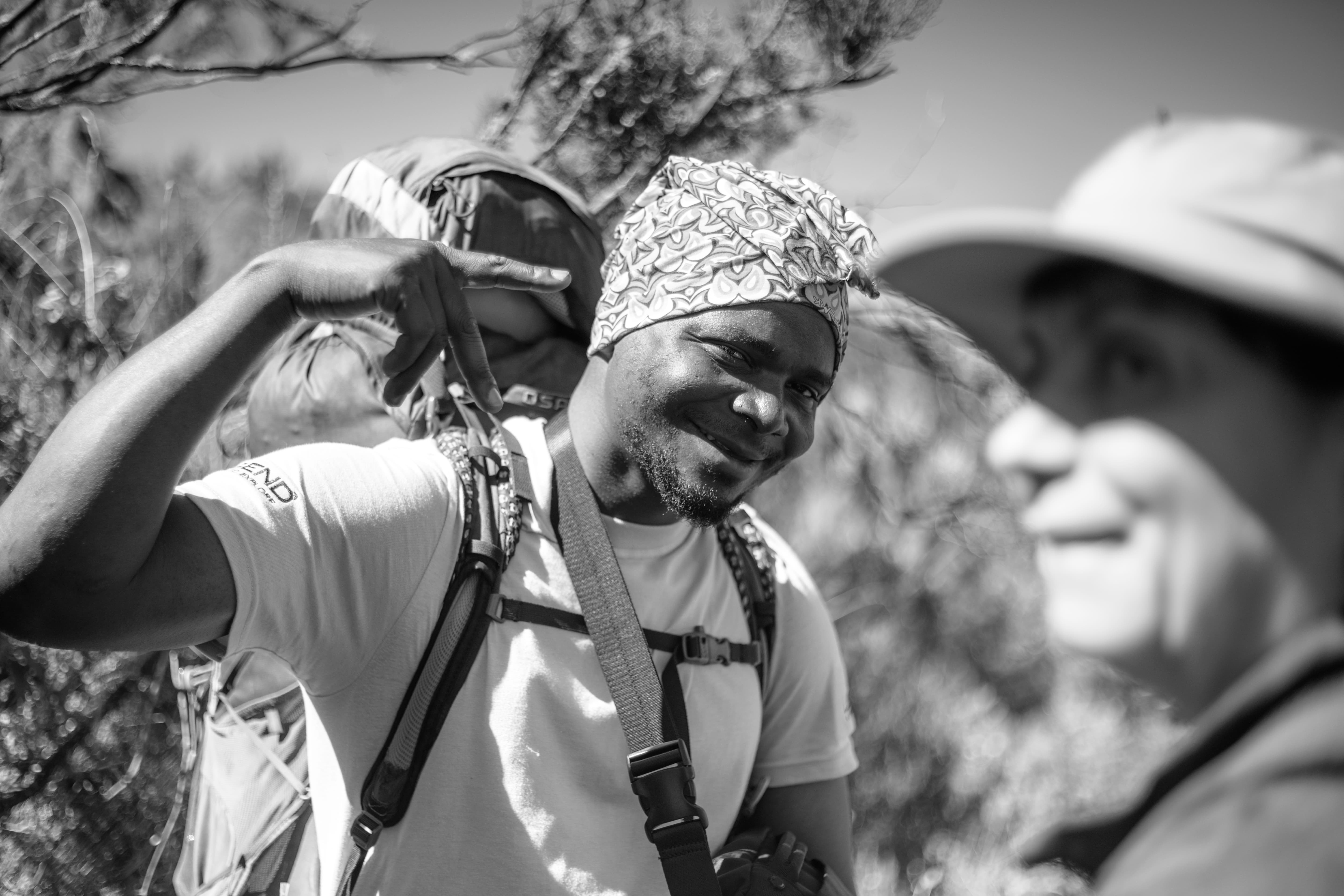
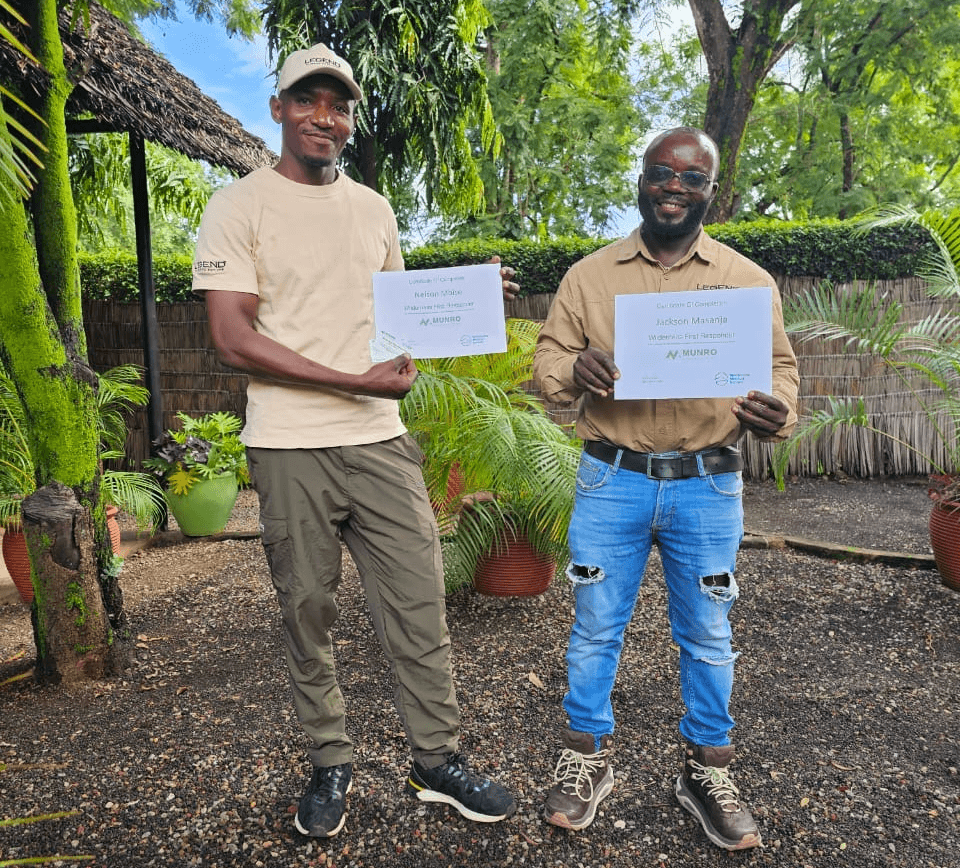
When you are at 5,600 metres on the rim of Kilimanjaro's crater, two hours from the summit and four hours from anything resembling a road, the person standing next to you matters more than any piece of kit in your pack. This month, our two lead guides, Jackson Masanja and Nelson Mbise, passed their Wilderness First Responder (WFR) certification with Munro Medical Solutions. It is the most demanding wilderness medicine qualification a mountain guide can hold, and it changes what we are able to do on the mountain when something goes wrong.
This article explains what the Wilderness First Responder Kilimanjaro guides standard actually involves, why we invested in it, and what it means for the safety of every client who walks with Legend.
Published by
Jack Fleckney
What a Wilderness First Responder Actually Is
A Wilderness First Responder is trained to manage medical emergencies in environments where definitive care is hours, or days, away. That is the operative phrase. Urban first aid assumes an ambulance is twelve minutes out. Wilderness medicine assumes nobody is coming, and the responder has to stabilise, treat, and make the evacuation call themselves.
The WFR standard is the benchmark for professional mountain guides, expedition leaders, and search and rescue teams worldwide. It is what the National Park Service requires of its backcountry rangers in the US. It is what the British Antarctic Survey expects of its field assistants. And from this month, it is what our two lead guides hold.
The Skills the Course Covers
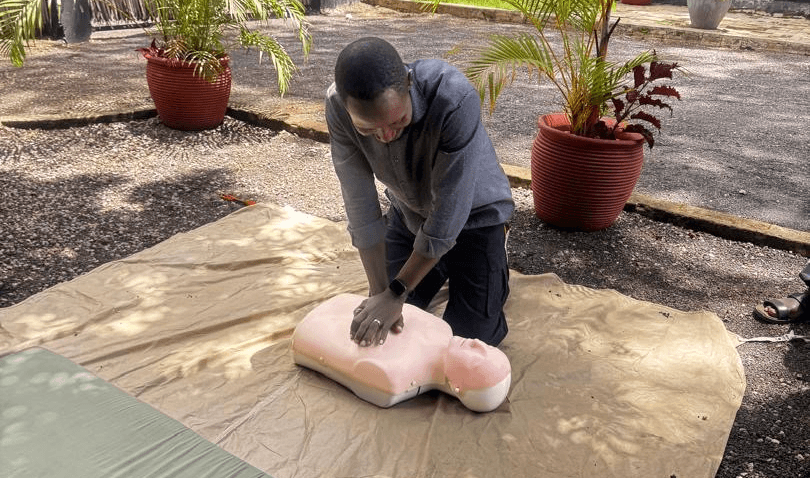
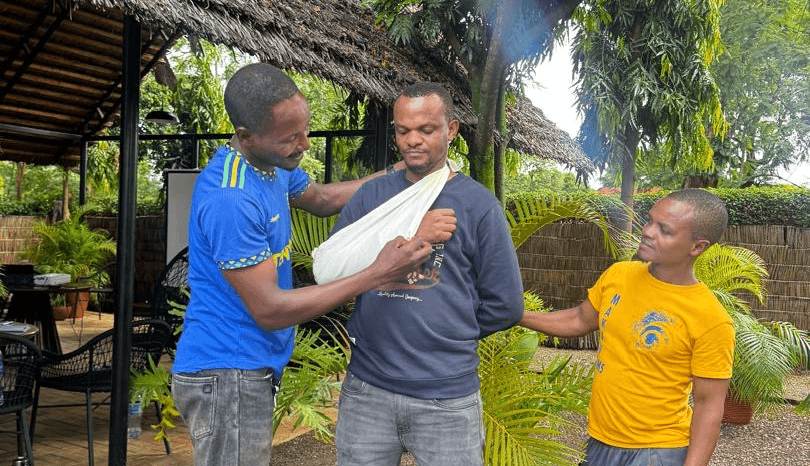
The course Jackson and Nelson completed runs over 80 hours of combined classroom theory, practical drills, and scenario testing. It covers:
Patient assessment in remote settings, including primary and secondary surveys
Airway, breathing and circulation management without hospital equipment
Recognition and treatment of High Altitude Cerebral Edema (HACE) and High Altitude Pulmonary Edema (HAPE)
Spinal injury management and improvised stabilisation
Wound care, fracture management, and dislocation reduction
Hypothermia, frostbite and heat illness protocols
Anaphylaxis, severe asthma and cardiac event response
Evacuation decision-making and helicopter coordination
The final assessment is not a written exam. Candidates are put through unannounced live scenarios, such as a casualty with a broken femur and altitude sickness, a cardiac event at camp, or a hypothermic climber who has fallen into a stream, and have to demonstrate they can run the situation under pressure.
Why We Chose Munro Medical Solutions
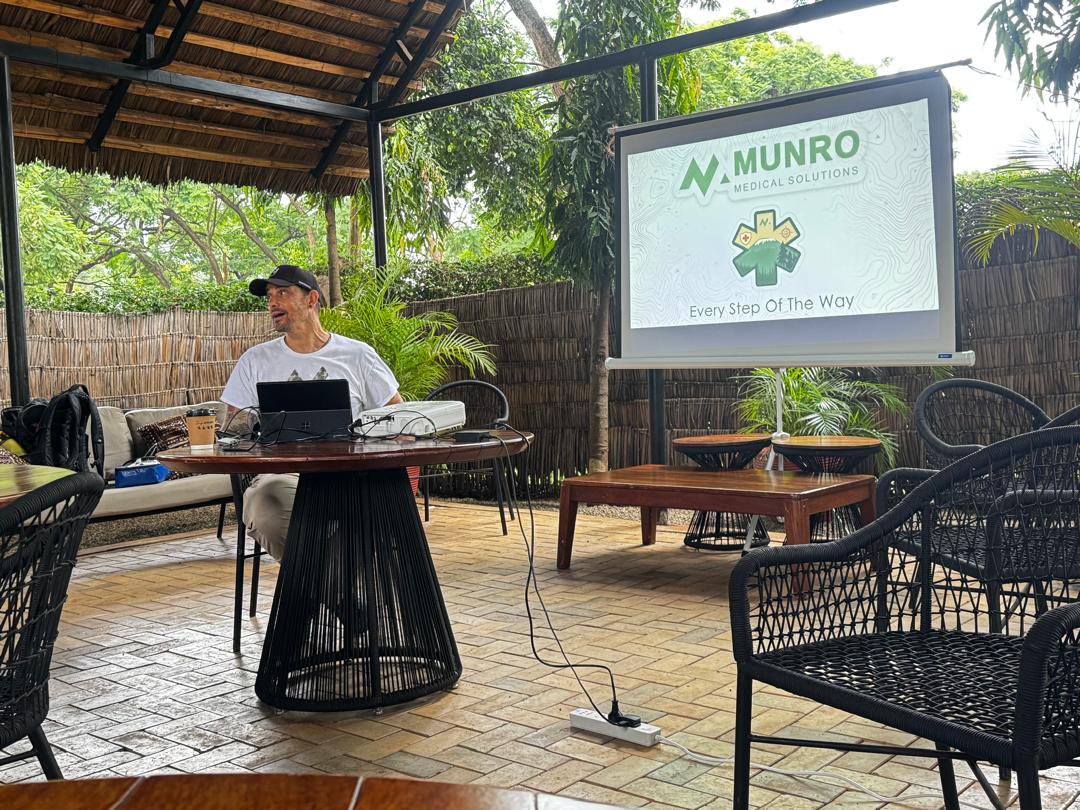
We trained with Munro Medical Solutions, run by Philip Swart, a wilderness medicine specialist who has spent years embedding professional medical training into the East African expedition industry. Philip is one of the few instructors on the continent delivering courses to international WFR standards, and his programme is recognised by Wilderness Medical Associates International.
What set Munro apart for us was the realism. The scenarios were built around the actual environments our guides work in, including Kilimanjaro, the Serengeti, and remote bush camps, not a generic curriculum imported from North America. When Jackson was asked to manage a simulated HAPE casualty, the brief included the real terrain between Barafu Camp and Mweka Gate. That is the level of specificity that makes the training stick.
You can see more of Philip's work on the Munro Medical Solutions Instagram and on their website.
What This Means for You on the Mountain
Here is the practical answer. If you climb Kilimanjaro with Legend, the lead guide on your team is now trained to a standard that exceeds what any Tanzanian park regulation requires, and that matches what international expedition companies on Everest, Denali and Aconcagua expect of their senior staff.
That has three direct consequences for your climb.
Earlier Recognition of Altitude Illness
Altitude sicknesss is the single largest medical risk on Kilimanjaro. The difference between a manageable case of Acute Mountain Sickness and a life-threatening HAPE or HACE event is usually how early it is caught. Jackson and Nelson are now trained to recognise the subtle early markers, such as gait instability, behavioural change, and a cough that sounds slightly wet, long before they would show up on a pulse oximeter.
In my experience guiding on Kilimanjaro, the climbers who summit successfully are not the strongest ones. They are the ones whose guides spotted something off at lunchtime on day four and acted on it.
Faster, Better Decisions in an Emergency
When something does happen on the mountain, whether a fall, a cardiac event, or a severe asthma attack, the first 20 minutes determine the outcome. A WFR-trained guide is not radioing back to camp asking what to do. They are running the situation. Assessment, stabilisation, evacuation call, handover to the helicopter team at the gate. That is the chain we now have on every expedition.
Confidence in the Quiet Moments
Most of what a Wilderness First Responder does on Kilimanjaro is invisible. It is the conversation at camp where the guide notices you have not eaten dinner and probes why. It is the morning pulse-ox check that catches a downward trend before you feel it. It is the route adjustment on summit day because the guide has read the weather and the team in front of them and made a call. That is the work this training enables, and most clients never see it happen.
How This Fits Our Broader Safety Programme
The WFR certification sits alongside the safety infrastructure we already run on every climb. Supplementary oxygen is carried on every expedition. Pulse oximetry checks happen twice daily from day three onwards. We run a one-to-one guide-to-climber ratio on summit night, which means even if Jackson is managing one casualty, every other climber in the group still has a guide with them.
Our 98.9% summit success rate on the Lemosho route is not a marketing number. It is the result of a system where the people, the kit, and the protocols all reinforce each other. Adding WFR-trained leads to that system is the next step, not the whole picture.
Frequently Asked Questions
Are Kilimanjaro guides legally required to have wilderness first aid training?
No. Tanzania National Park regulations require lead guides to hold a basic first aid certificate, but there is no requirement for wilderness-specific or extended training. The gap between the legal minimum and what is actually needed on a mountain of Kilimanjaro's scale is significant, which is why a small number of operators, Legend among them, invest in WFR certification voluntarily.
What is the difference between a First Aider and a Wilderness First Responder?
A standard First Aider is trained to manage an emergency for around 10 to 20 minutes until professional help arrives. A Wilderness First Responder is trained to manage the same emergency for up to 24 hours or longer in an environment where professional help cannot reach the casualty. The skill set is broader, the medication training is deeper, and the decision-making framework is built around isolation.
How often do Legend guides need to recertify?
The WFR qualification is valid for three years, after which guides must complete a recertification course covering updated protocols and a full scenario reassessment. Both Jackson and Nelson are now in that cycle, and we will be sending additional senior guides through the same course in 2026 and 2027.
Does Legend carry medical equipment on every climb?
Yes. Every expedition carries a comprehensive expedition medical kit, supplementary oxygen with masks and regulators, a portable pulse oximeter for each guide, and emergency communication equipment for evacuation coordination. The kit is reviewed and replenished before every climb, not just at the start of the season.
Can you evacuate someone from high on Kilimanjaro?
Yes, and this is where WFR training becomes decisive. Above 4,000 metres, evacuation is a combination of guide-led descent, stretcher assistance, and helicopter pickup from a lower altitude pad. The WFR is the person who makes the call on which method, how fast, and what stabilisation is needed before the casualty moves. We coordinate with Kilimanjaro SAR and Flying Medical Service for any serious evacuation.
Will having a WFR-trained guide change the cost of my climb?
No. Investing in this level of training is part of how we run the business. It is built into what we already charge, not added as a premium. Climbing with Legend gives you a WFR-trained lead at no additional cost.
A Quiet Standard
Jackson and Nelson have walked Kilimanjaro hundreds of times between them. What this course gives them is not new instinct, they already had that, but a formal framework for the decisions they were already making, and a deeper toolkit for the moments that have not happened yet but might.
That is the standard I want for every climber who books with us. If you want to talk about a climb, drop me a note at jack@legendexpeditions.com or book a call directly. Happy to answer anything that is not in the FAQ.
Jack


