CREATE YOUR LEGEND | 2026-2028 dates available | SECURE YOUR PLACE WITH JUST £100 DEPOSIT
KILIMANJARO
Hot Showers on Kilimanjaro: Why They Matter on the Climb
4
MINS
OVERVIEW
Most people don't think about showers when they sign up for Kilimanjaro. They think about the summit. Then they spend seven days covered in red volcanic dust, sleeping in the same base layers, and wonder why morale is dropping by day four.
Hot showers on Kilimanjaro change that. On every Legend climb, we set up a private shower tent at camp, with hot water heated and ready before you arrive. You hear the kettles boiling as you walk in. The sun is still up. You shower, change, eat, and sleep clean. It sounds small. On a seven or eight-day expedition, it's one of the biggest decisions we've ever made for client welfare and summit success.
Published by
Jack Fleckney
What a Climb Without Hot Showers Actually Looks Like
Kilimanjaro is dusty. Properly dusty. The trail through Shira and the Barranco approach kicks up fine volcanic grit that gets into everything: your hair, your collar, the inside of your sleeping bag. By day three on a standard climb, most trekkers have given up on staying clean. They use baby wipes. They sleep in dirty thermals. They start the next day already feeling worn down.
I’ve guided clients who came to us after climbing with cheaper operators, and the story is almost always the same. Cold sponge baths in a freezing tent. No privacy. Wet kit that never dries. By summit night, they were physically and mentally flat before they’d even started the ascent.
The mountain is hard enough without that.
How Our Shower Set-Up Works
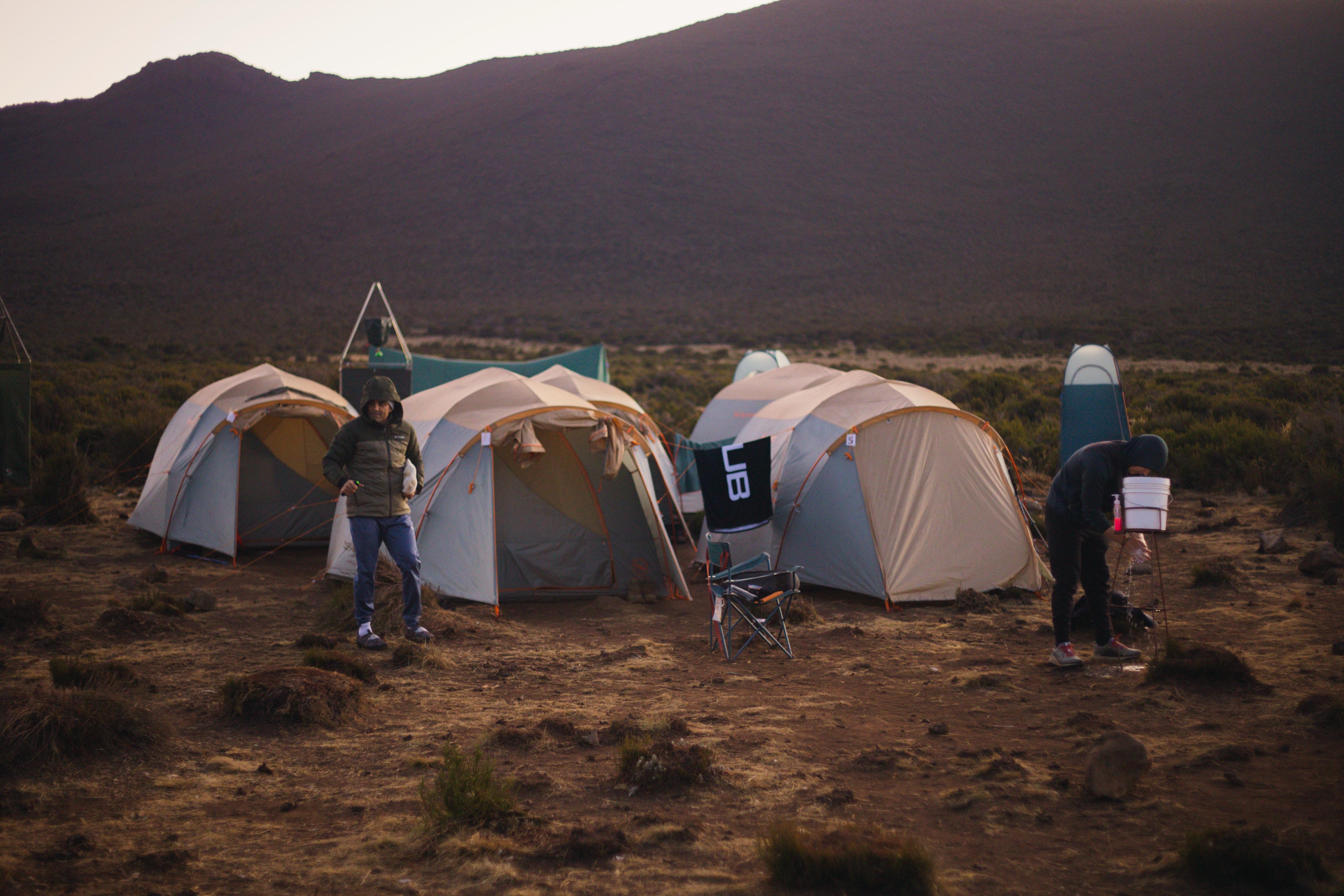
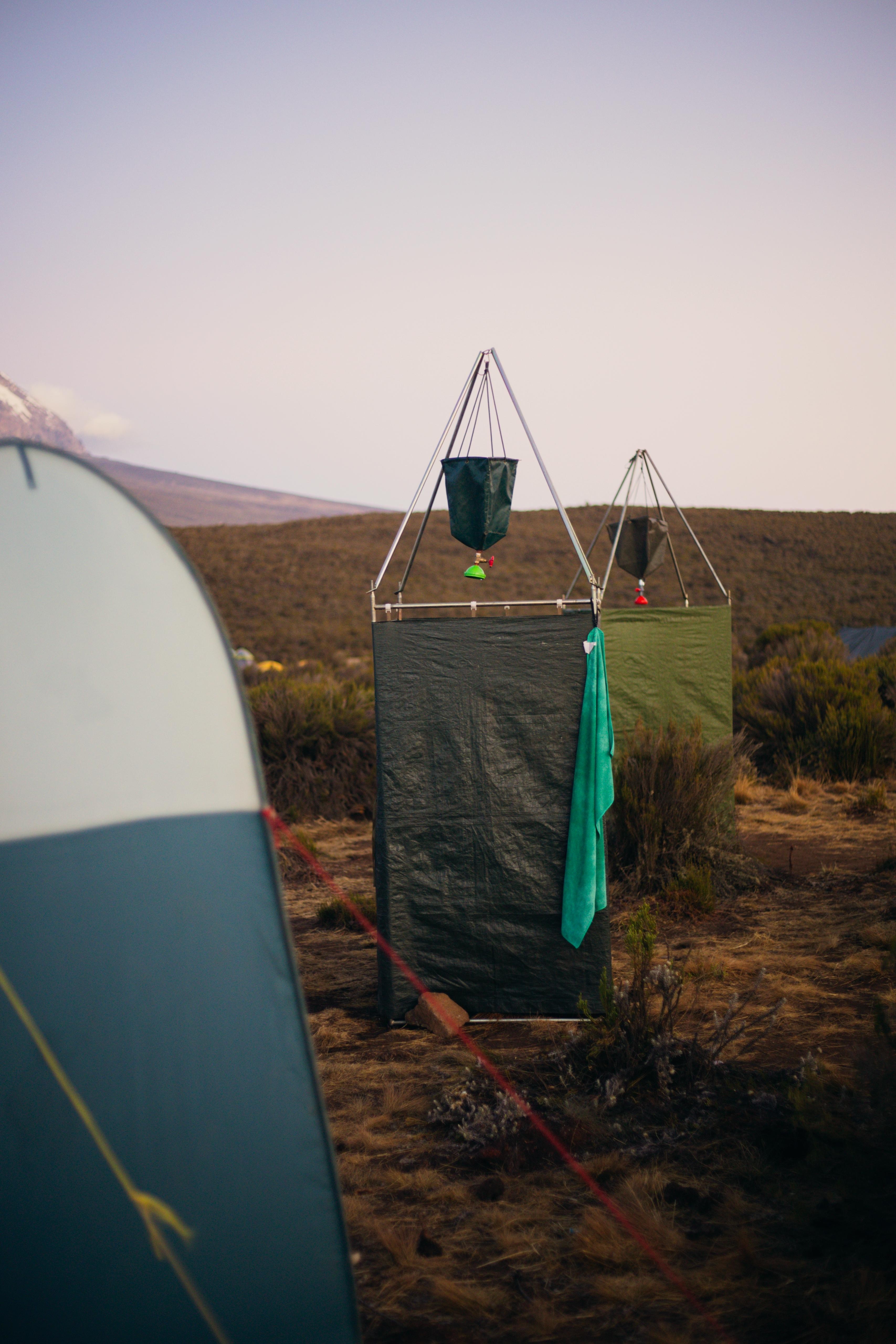
We carry a dedicated shower tent on every Legend climb. It’s tall enough to stand up in, fully enclosed, and pitched at every camp before clients arrive. While you’re still on the trail walking in, our crew is heating water over the stoves. By the time you reach camp, the water is hot, and the tent is ready.
You shower while the sun is still up, which matters more than people realise. The afternoon warmth means you don’t lose body heat the moment you step out. You change into clean base layers, eat a hot meal, and get into your sleeping bag dry and warm. That cycle, repeated every day, is the difference between arriving at Barafu Camp tired but ready, and arriving at Barafu Camp depleted.
Every Legend climb also includes stand-up tents, cot beds with thick mattresses, and private toilets. The shower is part of a wider set-up designed around one principle: recovery is performance.
The Hygiene Argument: It’s Not Just About Comfort
Stomach bugs and hygiene issues are two common reasons people fail to summit. Both are preventable, and both are made more likely by poor hygiene at altitude.
When you can’t wash properly, bacteria builds up. Hands stay grubby between meals. Cuts and blisters get infected. Sweat and dust mix into a layer on your skin that disrupts sleep and irritates your airways. At altitude, your immune system is already working harder than usual. Add poor hygiene on top, and you’re stacking the odds against yourself.
A daily hot shower resets all of that. Clean skin, clean kit, clean hands before eating. Simple, but on a multi-day climb, it compounds.
Why Clean Climbers Summit More Often
Our 98.9% summit success rate on the Lemosho route isn’t down to one thing. It’s the eight-day itinerary, the one-to-one guide ratio on summit night, the oxygen we carry, the food we serve. But the showers are part of it, and I’ll defend that.
Climbers who feel clean sleep better. Climbers who sleep better acclimatise better. Climbers who acclimatise better summit. It’s a chain, and hygiene is one of the early links. By the time you’re standing at Barafu the night before summit, every small thing you’ve done well over the previous six days is paying you back.
In my experience, the clients who arrive at the crater rim looking strong are almost always the ones who looked after themselves at camp. The shower is a big part of that ritual.
What to Expect on Your Legend Climb
You’ll get a hot shower every afternoon at camp, in a private tent, with the water heated fresh on arrival. You’ll have time to use it before dinner, while there’s still daylight and warmth. Your kit will dry on a line strung inside our mess tent overnight. You’ll start each morning in clean layers.
It’s not glamping. It’s a high-altitude expedition, and the mountain still asks plenty of you. But the small comforts we build in are deliberate, and they’re there because they work.
FAQ
Do all Kilimanjaro operators provide hot showers? No. The vast majority don’t. Most operators provide a small bowl of warm water for a sponge wash, if anything. A dedicated shower tent with hot water heated daily is rare on the mountain, and it’s one of the things that genuinely separates premium operators from budget ones. If hygiene matters to you, ask the question before you book.
Is it actually warm enough to shower on Kilimanjaro? Yes, if you time it right. We have water ready in the early afternoon when you arrive at camp and the sun is still up. The shower tent holds heat well, and the water is hot. You’ll be in and out in under ten minutes, dried off, and into clean kit before the temperature drops in the evening.
Where does the water come from for the showers? Our porters collect water from streams and water sources near each camp, and our cook crew heats it over the stoves while you’re walking in. Water is a precious resource on the mountain, so we use it carefully, enough for a proper wash, not a fifteen-minute soak.
Do hot showers really affect summit success? They contribute. Sleep, hygiene, morale and recovery all stack together over a seven or eight-day climb. Clients who feel clean and rested every evening are demonstrably better placed to handle summit night than those who’ve been damp and dusty for a week. We’ve built our entire camp set-up around that principle.
Can I shower every single day on the climb? Yes. A hot shower is available at every camp on every Legend itinerary, including the night before summit at Barafu. The only exception is summit night itself, where you’re climbing through the early hours and descending the same day to a lower camp where the shower is waiting.
If hygiene and recovery on the mountain matter to you, you’re already thinking about Kilimanjaro the right way. The summit gets the photos, but the camps are where the climb is won or lost.
If you’d like to talk through what a Legend climb looks like in detail - the kit, the camps, the routine - drop me an email at jack@legendexpeditions.com or book a call through our Calendly. Happy to answer anything.
Jack


