
OVERVIEW
Legend Expeditions got 98.9% of its climbers to Uhuru Peak in 2025. Jack Fleckney explains how that figure is counted, what really happens on summit night and what you can do before you book to give yourself the best chance.
Published by
Jack Fleckney
Every year I get asked the same question, usually in the first five minutes of a call: what are my chances of actually getting to the top? It’s the right question to ask. For Legend Expeditions in 2025, the answer was 98.9%. Ninety of our 91 climbers stood on Uhuru Peak, the true summit of Mount Kilimanjaro at 5,895 metres.
A number on its own doesn’t tell you much, though. Here’s how ours is counted, what happens on the one night that decides it, and what you can do before you book to put yourself on the right side of it.
What is a good Kilimanjaro summit success rate?
A good Kilimanjaro summit success rate counts Uhuru Peak, covers a full year of real climbs and gets updated every year. The headline percentage matters far less than whether the operator can show you where it came from.
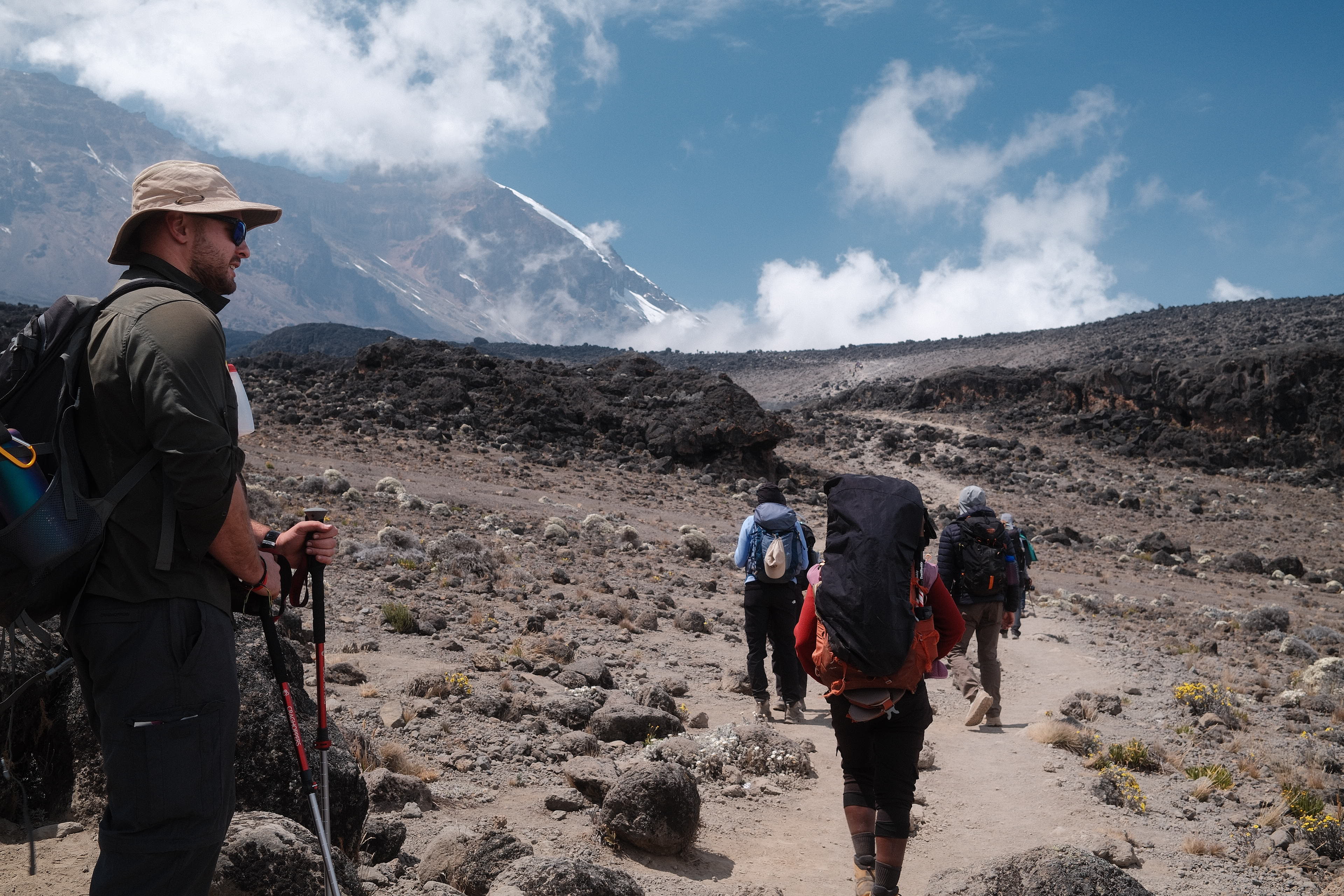
The figure repeated most often online is that around 65% of all climbers reach the top, with much lower numbers quoted for the shortest routes. There’s no official, published dataset behind most of those claims, and plenty of operators quote 95 to 98% without saying what they count. So before you compare numbers, ask one question: what counts as the summit?
Where does Legend’s 98.9% come from?
Our 98.9% is the share of climbers who reached Uhuru Peak in 2025: 90 out of 91. We count Uhuru, nothing lower.

That distinction matters. On Kilimanjaro you get a summit certificate if you reach Stella Point (5,756m), Gilman’s Point (5,685m) or Uhuru, because all three sit on the crater rim. Naturally, Uhuru is the highest point, so that’s the one we count. If an operator’s number includes Stella or Gilman’s, it will look better than ours and mean less.
| Point | Altitude | What it means |
|---|---|---|
| Barafu Camp | 4,673m | Where summit night starts |
| Gilman’s Point | 5,685m | Crater rim. Summit certificate |
| Stella Point | 5,756m | Crater rim. Summit certificate |
| Uhuru Peak | 5,895m | The true summit. What Legend counts |
Why should you trust it? Because we track every climb that happens: everyone who summits and everyone who doesn’t. Every year we update the results, and you can see our full summit success figures for yourself.
What actually happens on summit night?
Summit night starts with a wake-up call at around 11pm to 11:30pm at Barafu Camp (4,673m), and most of our climbers reach Uhuru Peak eight to nine hours after setting off. It’s a long, cold walk in the dark, and it’s where the summit is won or lost.
We give you about an hour to wake up properly: a hot drink in the heated mess tent, kit sorted, water filled. Start times flex. If our medical checks and the team at base suggest someone needs more time, they set off a little earlier; very quick climbers might leave a little later.
From Barafu it’s usually seven to eight hours to Stella Point, then a further hour around the crater edge to Uhuru.
- StartBarafu Camp, 4,673mWake-up around 11pm to 11:30pm, then an hour to get ready
- About 7.5 hours inStella Point, 5,756mUsually 7 to 8 hours from Barafu
- About 8.5 hours inUhuru Peak, 5,895mAbout one more hour around the crater rim
Where do people struggle? Honestly, at any point, right at the start or halfway up. But it’s very rarely after the sun comes up. Once that light arrives, people almost always keep going.
Our guides’ job is to spot a struggle before it happens. That might be as small as taking your backpack, sometimes before you’ve even set off, so all you think about is the next step. It might be slowing the pace, splitting the group so a guide stays with you on the radio, managing your fluids or some motivation at 3am. If it looks more serious, they check and monitor you constantly, and the team is big enough to help someone down without ending anyone else’s summit.
Can you still reach the summit if altitude hits you hard?
Yes, very often. Feeling sick on summit night is normal at altitude, and with calm, experienced support plenty of people who feel awful at 2am still make it to the top.
One of my favourite examples is Richard. His dad had passed away a few months before the climb, and Richard wanted to climb in his honour, because his dad had climbed Kilimanjaro back in 1969. It meant a lot to all of us to get him to the top.
His night started about as badly as it can. Just before we left Barafu, his CamelBak leaked in his tent and soaked his kit. We got him dried off, kitted up and on his way. About halfway up, the altitude really hit him. He went lethargic, felt sick, and then he was sick.
Being sick feels like a sign something is badly wrong, so a guide’s first job is to stop you panicking. At altitude it’s very normal. For Richard it was more fluids, a pat on the back, and keep going. The team stayed calm, watched him closely, and he kept smiling.
Seeing him reach Stella Point was the best feeling.
“This is the hardest thing I’ve ever done in my life, but also the most amazing.”
Then we watched him get to Uhuru and say his dad’s name. That one stays with you.
Who decides when a climber turns around on Kilimanjaro?
The lead guide makes the call, always. It’s one of the hardest calls on the mountain, because every one of us instinctively wants everybody to reach the summit. But getting people down safely is our main priority, every time.

Everything we carry, from the first aid kit and oxygen to satellite phones and doctors on call, is there to give people the best chance of summiting safely. Our lead guides are Wilderness First Responders, many of the team have more than 200 ascents each, and they’ve seen just about everything. If they’re not 100% sure, they can call for medical advice on the sat phone and get an answer quickly.
I’ve been on the other side of this decision myself. On a climb with friends, we turned my friend Josh around at Stella Point, because going back down was the safest option for him. We’ve had one or two clients in the same position: at Stella, but showing altitude symptoms that could escalate. Carrying on to Uhuru and back adds the best part of two hours at the highest altitude on the mountain, and the last thing you want is someone stuck at the top getting worse.
How it’s communicated matters as much as the decision. By then most climbers are exhausted, and when a guide explains why, they understand.
What gives you the best chance of reaching the summit?
Choose a longer route, climb in a dry month and pick an operator that looks after its crew and tells you the truth. Those decisions, all made before you land, do more for your chances than anything else.
The biggest mistake I see isn’t a lack of fitness. It’s choosing a shorter route to save money or days, because fewer days means less time to acclimatise. That’s why we push our 8-day Lemosho Route group climbs: in our experience it gives you the best chance of summiting. I’d steer you away from the 7-day Lemosho, which squeezes in one very hard day with a big gain in altitude. If you need a shorter trip, look at the 7-day Machame or the 6-day Marangu. I’d avoid the 6-day Machame and 5-day Marangu if you can, because historically their success rates are lower.
| Route | Verdict | Why |
|---|---|---|
| 8-day Lemosho | Best chance | The most time to acclimatise. Legend’s group climbs run on this route |
| 7-day Machame | Good shorter option | The best option if you need to take days off |
| 6-day Marangu | Good shorter option | A shorter option that still gives you a fair chance |
| 7-day Lemosho | Avoid if you can | One very hard day with a big gain in altitude |
| 6-day Machame | Avoid if you can | Historically a lower summit success rate |
| 5-day Marangu | Avoid if you can | Historically a lower summit success rate |
Timing matters too. Our best windows are late December through February to the very start of March, and June through September to the first two weeks of October. Climbing in the dry seasons doesn’t promise perfect weather, but it gives you the best chance of it.
- JanBest
- FebBest
- MarVery start
- AprWetter
- MayWetter
- JunBest
- JulBest
- AugBest
- SepBest
- OctFirst half
- NovWetter
- DecLate Dec
Fitness still helps, just not in the way people think. It won’t carry you up on its own, but it makes the whole thing less stressful, so when you’re tired and the altitude is biting you can still keep going. Our Kilimanjaro training plan is a good place to start.
Then there’s your head. People overthink summit night. Try to reframe it: not many people in the world get to attempt the highest mountain in Africa in the middle of the night, under the stars, at nearly 6,000 metres. It’s just a walk through the night. Keep your head up, take one step at a time and ride out the waves of tiredness, because when the sun pops over the horizon you’ll feel incredible. There’s more on that in our guide to mindset for Kilimanjaro.
What should you ask a Kilimanjaro operator before you book?
Start with how they look after their team, then check that the price really includes everything. Those two answers tell you most of what you need to know.
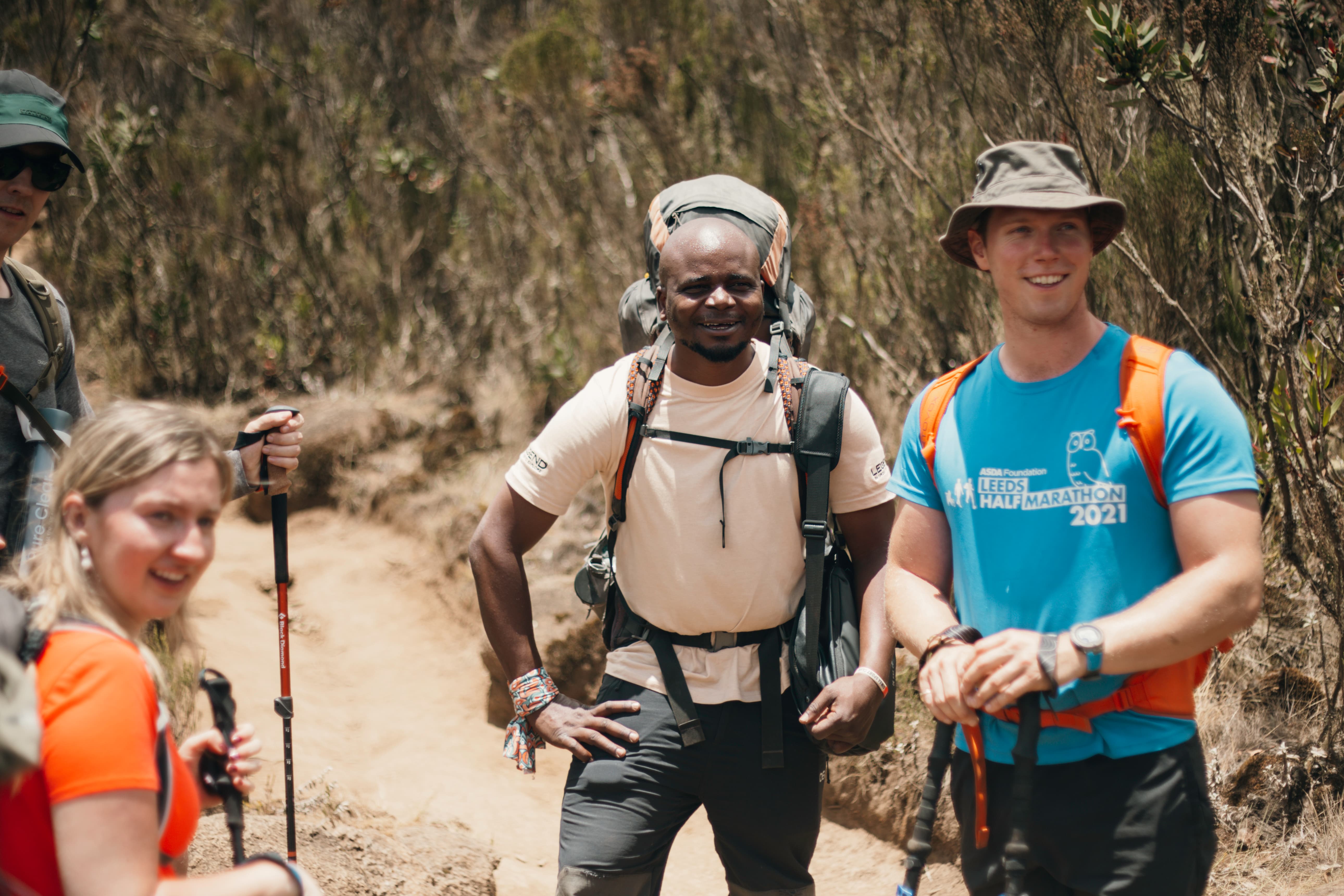
Ask whether they’re a KPAP partner and how they look after their porters: does the crew get enough food, and what are their sleeping arrangements? Nobody really talks about these details, but a well-looked-after team looks after you. Then make sure there are no hidden extras, such as single hotel rooms or airport pickups and drop-offs.
Beyond that it depends on what you want: the camping set-up, private toilets and showers, and the food, which matters more than most people realise.
One more, which I’ve noticed more and more over the last year. If you’re joining a group climb, triple-check you won’t be the only person on it. Some operators tell a solo booker that another group is joining them, and the climber only finds out the truth when they land. We still run group climbs with one person booked, and if it looks like you might be on your own, we tell you two months out and give you the option to switch dates or make other changes. There are more questions worth asking in our guide to choosing a Kilimanjaro company.
What does Legend do on the mountain that moves the number?
The team is the heart of it, backed by twice-daily health checks, medical support around the clock and camps built to help you sleep, eat and stay well. None of it is glamorous, and all of it adds up by summit night.

Our guides train with us every year as well as holding their WFR qualifications. They understand pacing, and they check your oxygen and pulse twice a day. You also fill in a short form every day covering how you feel, any headaches and any medication you’re taking. Endura Medical support us from Moshi, on call 24/7, and they review every climber’s medical information before the climb even starts.
Then there’s how you rest. Stand-up tents, raised camp beds with proper mattresses, and hot water bottles all help you sleep better at altitude. Hand-washing stations, private toilets and hot showers keep you clean and cut the chance of picking up a bug, and our big dome mess tents give you somewhere warm to relax even when the weather turns.
Food is the last piece. We resupply fresh food on day four or five, so you go into the summit push on proper meals rather than whatever’s left at the bottom of the bag.
The short answer
Legend’s 98.9% Kilimanjaro summit success rate is 90 of 91 climbers reaching Uhuru Peak in 2025, counted at the true summit and tracked climb by climb. Your own chances rise most with a longer route like the 8-day Lemosho, a dry-season date and a team trained to spot trouble before it starts.
If you’d like to talk through which route and month give you the best shot, book a call with me and I’ll give you a straight answer. Or have a look at our group climb dates and pick the one that suits you. I’d love to see you on Uhuru.
Frequently asked questions
What is the average summit success rate on Kilimanjaro?
It’s most often quoted at around 65% across all routes and operators, but there’s no official published dataset behind that figure. Longer routes with good acclimatisation do far better than five- and six-day climbs, so ask any operator for their own tracked figures and what they count as the summit.
Which Kilimanjaro route has the best summit success rate?
Longer routes give your body more time to acclimatise, which is the biggest single factor. In Legend’s experience the 8-day Lemosho gives the best chance; for shorter trips, the 7-day Machame and 6-day Marangu beat the 6-day Machame and 5-day Marangu.
Does Stella Point count as summiting Kilimanjaro?
You get a summit certificate at Stella Point (5,756m), Gilman’s Point (5,685m) or Uhuru Peak (5,895m), as all three are on the crater rim. Only Uhuru is the true summit, and it’s the point Legend counts for its 98.9% figure. From Stella Point it’s about another hour to Uhuru.
How long does summit night take on Kilimanjaro?
On a Legend climb, the wake-up call is around 11pm to 11:30pm at Barafu Camp. It usually takes seven to eight hours to Stella Point and another hour to Uhuru Peak, so eight to nine hours up before the descent.
What should I look for in an operator’s summit success record?
Check that it counts Uhuru Peak rather than Stella or Gilman’s Point, covers a defined period and a real number of climbers, and is updated every year. An operator that tracks every climb, including the turnarounds, and publishes the result is one you can trust.

