OVERVIEW
Kilimanjaro needs no climbing skills, but altitude, a 12 to 17 hour summit night and a 2,795-metre descent make it a real test. Here’s what’s actually hard, and how first-timers prepare to reach Uhuru Peak.
Published by
Jack Fleckney
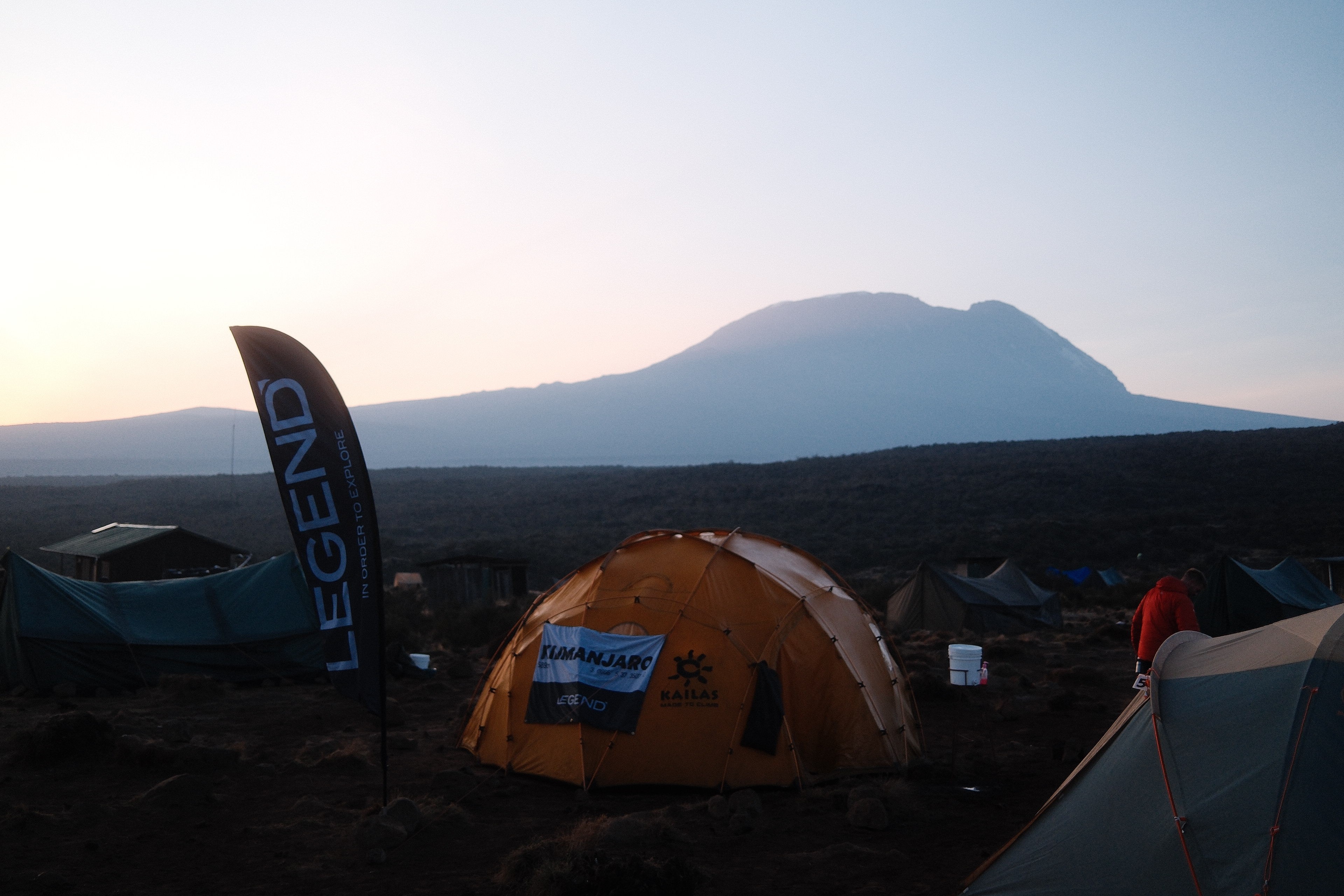
It’s just after midnight at Barafu Camp, 4,673 metres up Mount Kilimanjaro. Someone hands you a mug of sweet tea. You pull on every layer you own, switch on your head torch and join a slow line of lights zigzagging up into the dark, towards a summit you can’t see.
That night is what people really mean when they ask how hard it is to climb Kilimanjaro. The honest answer is that it’s hard, but not in the way most people expect. You need no climbing skills, and most days are 3 to 7 hours of steady walking. What makes it difficult is altitude, plus one 12 to 17 hour summit day that climbs 1,222 metres and then descends 2,795. If you can walk for 6 to 8 hours on back-to-back days, and you give your body 7 or 8 days to adjust, it is well within reach of a first-timer.
Most of the worry I hear on calls is aimed at the wrong things. People fret about the Barranco Wall, the camping, the toilets, or whether they’re “outdoorsy” enough. The things that actually decide your climb are quieter: how your body copes with thin air, how well you eat and sleep up there, and whether your legs are ready for what comes after the summit.
Do you need climbing experience to climb Kilimanjaro?
No. Every standard route up Kilimanjaro is a trek rather than a technical climb, and in normal conditions you won’t need ropes, a harness or crampons. If you’ve done a long day in the Lake District, Snowdonia or the Rockies, you already have most of the physical skills involved.
The one moment that feels like climbing is the Barranco Wall, a 257-metre rock step on day five of our 8-day Lemosho Route. You’ll use your hands, and there’s a narrow ledge where you hug the rock and shuffle round. It looks intimidating from Barranco Camp the evening before. In practice it takes an hour or two, our team knows every handhold, and most climbers reach the top grinning, because it’s the most fun section of the week.
The walking itself is gentler than people imagine. On Lemosho, the first six days cover between 4 and 10 kilometres each, usually 3 to 7 hours on foot with plenty of stops. The porters carry the camp ahead of you and have the tents up before you arrive. We’re a KPAP partner, and how they’re treated matters as much to us as how you are.

The difficulty you won’t see on an itinerary is cumulative. At altitude your appetite fades, sleep turns light and broken, and cold nights quietly drain energy you would normally recover. That’s why I care so much about the unglamorous details in camp: food you’ll actually want to eat, a hot wash, and raised camp beds that keep you off the cold ground. They aren’t luxuries. They’re how you reach Barafu with something left in the tank.
Why is altitude the hardest part of Kilimanjaro?
Because it affects everyone, and fitness doesn’t protect you from it. At Uhuru Peak, 5,895 metres above sea level, the air pressure is roughly half what it is at the coast, so every breath delivers about half the oxygen your body is used to.
Headaches, nausea, poor sleep and a vanishing appetite are the classic symptoms of acute mountain sickness (AMS), and on Kilimanjaro they are normal rather than unusual. In a study of 112 Finnish trekkers in the 2006–07 season, 75% met the clinical threshold for AMS and only 53% reached the crater rim or the summit. A 2010 study by the University of Edinburgh found that the only factor that significantly protected climbers against AMS was having already acclimatised to altitude before the trek.
That finding catches endurance athletes out. A marathon runner’s heart and lungs are a huge asset on the walking days, but they don’t change how quickly your blood adapts to thin air. The fittest people on a trip are often the ones who struggle, because they’re used to pushing through discomfort and want to walk faster than the mountain allows.
The biggest thing you control is time. Kilimanjaro National Park figures put the summit rate for 5-day climbs at 27%, against 85% for 8-day climbs. I go through the reasoning in how long it takes to climb Kilimanjaro, but in short, more nights at the right altitudes give your body the chance to catch up. It’s why our group climbs run for 8 days, and a big part of why our summit success rate sits at 98.9%. For symptoms, prevention and treatment, read our guide to altitude sickness on Kilimanjaro.
How hard is summit night on Kilimanjaro?
Summit night is the hardest part of the climb, and for many people the longest physical effort they’ve ever made. On the Lemosho Route you leave Barafu around midnight and climb 1,222 metres, usually reaching Stella Point on the crater rim six to eight hours later, then walking another 45 minutes to an hour along the rim to Uhuru Peak.

The gradient isn’t extreme, but it is relentless: loose scree, switchback after switchback, the same small step repeated in the dark. Temperatures near the top typically sit somewhere between 0°C and −20°C before wind chill, and water in an uninsulated bottle can freeze. Your world shrinks to the circle of your head torch and the boots of the person in front.
This is where our team earns its reputation. They’ll set a pace that feels absurdly slow, sing quietly in Swahili, and stop you every so often to drink and eat something, even when you insist you don’t want to. They’re also watching closely for the difference between ordinary exhaustion and something more serious. On our climbs there’s one member of our team beside every climber all night, so nobody is ever alone on that slope.

Rowing the Atlantic taught me that the hardest hours are rarely the dramatic ones. They’re the long, monotonous ones in the dark, when the only job is the next stroke. Summit night is the same. You don’t climb to Uhuru Peak. You take the next step, then the next, and eventually the sky behind Mawenzi starts to turn orange.
Why is the descent from Kilimanjaro harder than people expect?
Because summit day doesn’t end at the summit. After a short celebration at Uhuru Peak you walk back down to Barafu for food and a rest, then carry on to Mweka Camp at 3,100 metres. That’s around 15 kilometres in total, with 1,222 metres of ascent and 2,795 metres of descent, in a single push of 12 to 17 hours.
Read that descent figure again. It’s more than twice the height of Ben Nevis, walked downhill on legs that have just done the hardest climb of their lives. The next morning there’s another 1,460 metres down to Mweka Gate. Almost nobody trains for it, which is why so many climbers walk around Moshi the following day with trembling quads and sore knees.
Walking downhill loads your thigh muscles while they lengthen, which is far harder on unprepared legs than going up. The upper slopes are loose scree too, so you’re braking with every step. Trekking poles take a surprising amount of strain off your knees, and if you don’t own a good pair you can borrow them through our Kilimanjaro kit hire. The bigger fix happens at home, months before you fly.
How fit do you need to be to climb Kilimanjaro?
You need to be able to walk for 6 to 8 hours on consecutive days, carrying a daypack of 5 to 8 kilograms, and recover well enough overnight to do it again. You don’t need to be an athlete. Many of our climbers are first-timers who trained steadily for about three months.
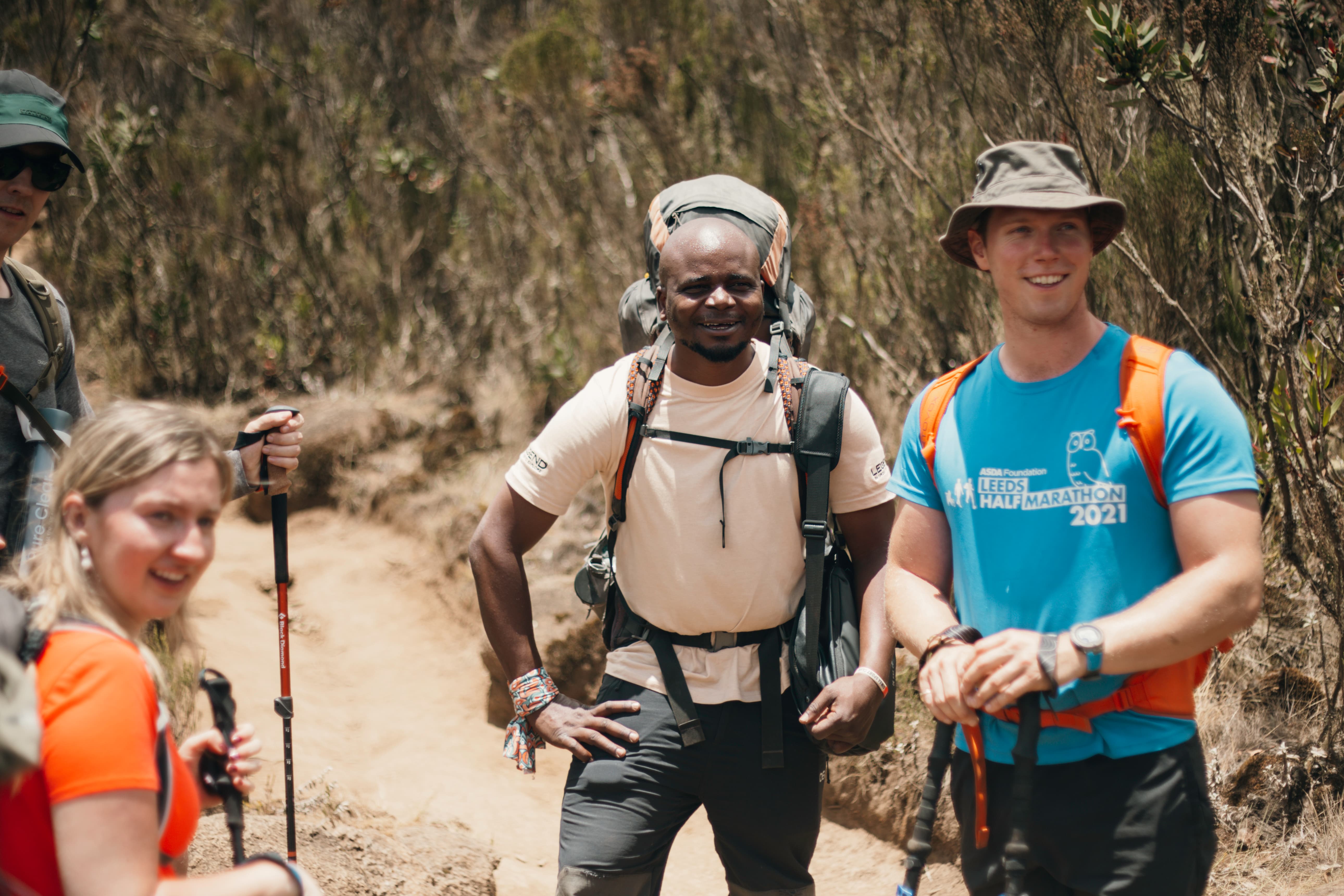
In the Royal Marines, preparation was treated as part of the job, not something you squeezed in beforehand. That’s how I’d approach Kilimanjaro. Our 12-week Kilimanjaro training plan builds up to back-to-back long walks with weight, and if you add only one thing to it, make it downhill work: walking down steep hills or flights of stairs, slowly and under control, every week. Your knees will thank you on the way to Mweka.
Here’s a simple test for about four weeks before you fly. Do two long hill days in a row, six hours or more each, with your daypack and the boots you’ll wear on the mountain. If you finish the second day tired but able to go again, you’re in good shape. If it flattens you, that’s useful information while there’s still time to act on it.
The final piece is your head: patience, eating when you aren’t hungry, and staying calm when you feel rough at 4,000 metres. Our piece on the right mindset for Kilimanjaro covers it in depth.
The short answer
Kilimanjaro is a hard trek, not a technical climb. The walking days are moderate; altitude, a midnight summit push and a 2,795-metre descent are what make it tough. Choose 7 or 8 days, train for three months with plenty of downhill work, and a first-timer has an excellent chance of standing on Uhuru Peak.
If you’re weighing up whether you can do it, book a call and I’ll talk it through with you honestly, including where your fitness is today. You can see our group climb dates, with the 8-day Lemosho from £3,295 ($4,400) all in, and make a start on our Kilimanjaro training this week. Plenty of climbers finish with a few days on safari after Kilimanjaro, or on the beach in Zanzibar, which is a very good reward for tired knees.
Frequently asked questions
Can a complete beginner climb Kilimanjaro?
Yes. Kilimanjaro needs no technical skills, and many people who reach the summit have never climbed a mountain before. What a beginner needs is an itinerary of 7 or 8 days, around 12 weeks of steady training, and an experienced team to manage the pace and watch for altitude sickness.
What is the hardest part of climbing Kilimanjaro?
For most people it is summit night: a midnight start from around 4,600 metres, six to eight hours of climbing in the cold and dark to the crater rim, then a long descent the same day. Underneath it all, the real challenge is altitude, which affects everyone regardless of fitness.
Is Kilimanjaro harder than Everest Base Camp?
They are hard in different ways. The Everest Base Camp trek is longer, typically 12 to 14 days, and you sleep higher, at around 5,164 metres in Gorak Shep, but you gain height more gradually. Kilimanjaro takes you from around 2,000 metres to 5,895 metres in about a week, with a colder and much longer summit day, so many people who have done both find Kilimanjaro’s summit day the tougher single effort.
Which Kilimanjaro route is the easiest?
The Marangu Route has the gentlest gradients and huts instead of tents, so it is often described as the easiest. It is also usually climbed in 5 or 6 days, though, and shorter climbs give your body less time to acclimatise, which is what actually decides whether you summit. For most first-timers, a longer route such as the 8-day Lemosho is easier on the body, even though it covers more ground.