CREATE YOUR LEGEND | 2026-2028 dates available | SECURE YOUR PLACE WITH JUST £100 DEPOSIT

Before You Fly to Tanzania
Visas, the new compulsory travel insurance, vaccinations, kit, money and what happens when you land. Everything to sort before your climb or safari, in the order you need to do it.
Your countdown to Tanzania.
Everything to sort, in the order to sort it. Tick things off as you go. Your progress is saved on this device.
Your visa and passport.
Most visitors need a tourist visa, including British, American, European, Canadian and Australian travellers. Apply online before you fly.
Most nationalities
Single-entry tourist visa, for stays of up to 90 days.
US citizens
US passport holders pay $100 for their tourist visa.
What you need
- A passport valid for at least 6 months after you arrive, with at least one blank page
- A digital passport photo and a scan of your passport
- Your return flight details
- A card to pay the fee online
When to apply
- 2 to 4 weeks before you fly. Approval can take up to 10 working days
- Print the approval email and carry it with your passport
- Visas on arrival are possible at Kilimanjaro Airport, but queues after long-haul flights can be long
You need two kinds of insurance.
Tanzania now requires every foreign visitor to buy the government's own travel insurance. It doesn't replace your own policy, so you need both.
Tanzania inbound travel insurance
- Emergency medical treatment, evacuation, repatriation and lost luggage
- Lasts up to 92 days, with multiple entries
- Without it you can be refused entry
- You only buy it once, for the place you land first
Landing at Kilimanjaro (JRO) or Dar es Salaam? Buy it from the National Insurance Corporation at inbound.nicinsurance.co.tz before you fly, or on arrival.
Your own travel insurance
The government policy is an entry requirement, not cover for a climb. Your own policy must include:
- Trekking to 6,000 metres (Kilimanjaro is 5,895 m)
- Helicopter evacuation and emergency medical treatment
- Repatriation
- Cancellation, so your trip cost is protected
You'll need to show proof before your climb starts.
On safari with us, we also arrange AMREF Flying Doctors evacuation cover for every guest.
Stay healthy out there.
Book a travel clinic appointment 6 to 8 weeks before you fly. Take this list with you.
Vaccinations
Commonly recommended: tetanus, typhoid, and hepatitis A and B. Rabies is optional. Your clinic will check what you already have.
Find a travel clinicMalaria
Moshi, Arusha and the safari parks are in malaria areas, so most travellers take antimalarial tablets. The mountain itself is too high and cold for mosquitoes.
Yellow fever
You only need a certificate if you arrive from, or transit through, a yellow fever risk country. Direct flights from the UK, Europe or North America don't count.
Altitude
Ask your doctor about Diamox before you travel. Our guides check every climber twice a day, and specialist altitude doctors are on call 24/7.
Altitude explainedTell us everything
Any medical condition, medication, allergy or diet. It stays private, and it means your guides and chefs are ready for you.
Message usHealth form
Every traveller fills in Tanzania's online Travellers Health Surveillance Form, before departure or on arrival.
Open the formGet fit and get kitted out.
Two things decide how much you enjoy the climb: how ready your legs are, and how warm and dry you stay.

Your free training plan
A week-by-week plan to get you summit-fit, built around your start point and climb date.
Get my plan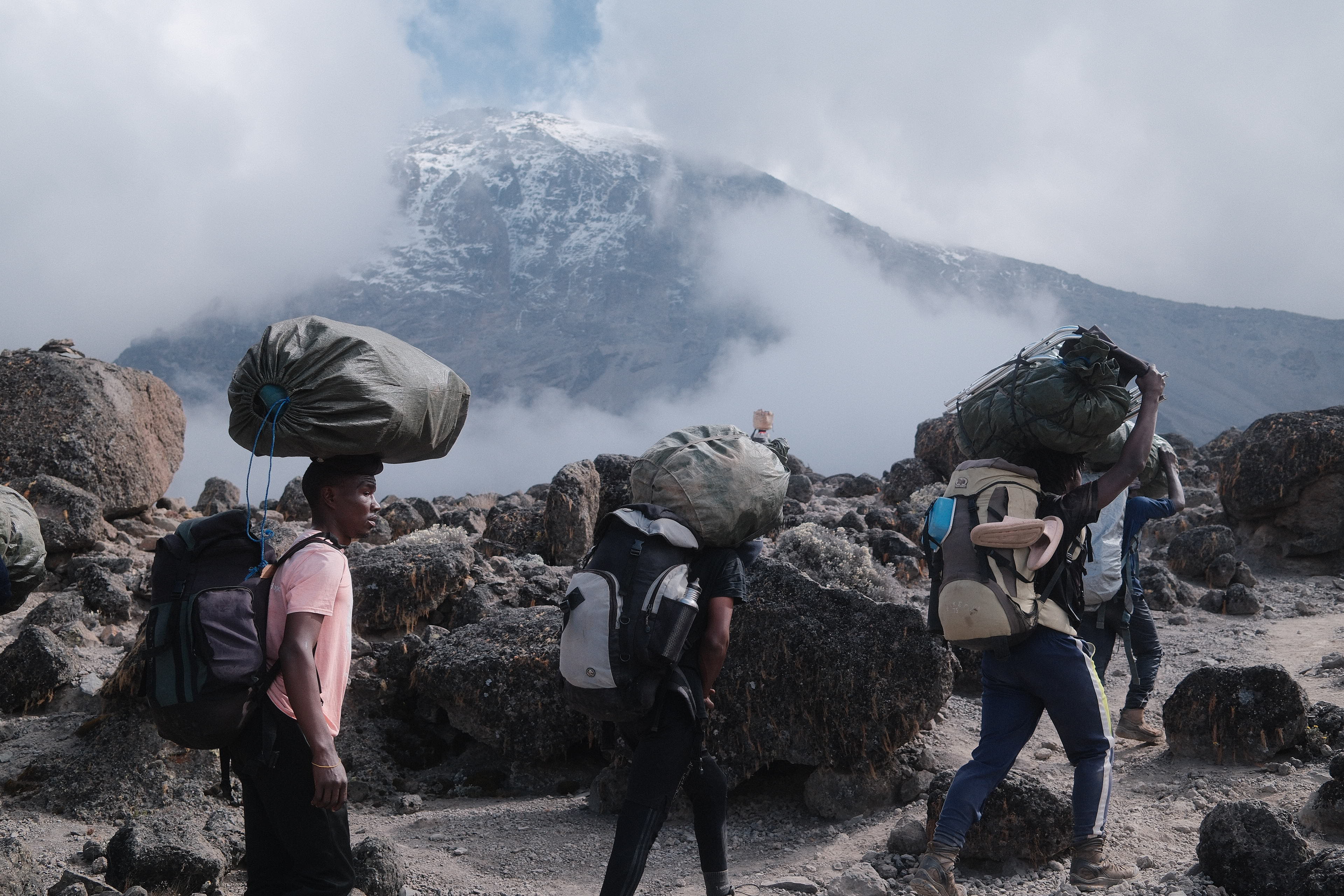
The packing list
The full kit list, layer by layer, with a printable checklist you can download.
See the packing listHire it in Moshi
Missing a sleeping bag, down jacket or poles? Hire it from our own kit store and we'll deliver it free to your hotel.
The gear guide
What's worth buying, what to borrow, and how to break in your boots before the climb.
Money and tipping.
US dollars are the easiest currency to bring. Cards work in most hotels and lodges.
How tipping works
Tips are given to the whole crew at the end of the climb. KPAP audits our tipping, so every dollar reaches the guides, chefs and porters who got you to the top.
What to bring
- Tip money in US dollars, in a mix of notes
- Some extra cash for markets, drinks and souvenirs
- A card for hotels and bigger purchases
- Tell your bank you're travelling
Phones, power and local rules.
Plugs
UK-style 3-pin plugs (Type G), 230V. There's no power on the mountain, so bring a 20,000 mAh power bank.
Phones
eSIMs work well, or buy a local Vodacom or Airtel SIM. Signal on the mountain comes and goes, but many camps have some.
No plastic bags
Tanzania has banned plastic carrier bags. Pack toiletries in clear reusable pouches, not plastic bags, as bags can be taken at the airport.
Water
Drink bottled or treated water only. On the mountain our crew filters and treats all drinking water.
Time
East Africa Time, GMT+3, with no daylight saving.
Language
Swahili and English. A few words of Swahili go a long way: jambo means hello, asante means thank you.
When you land.
Fly into Kilimanjaro International Airport (JRO). Send us your flight numbers and we'll take it from there.

The Legend Field Guide.
100 pages from our guides, free. Read it on the plane, or before you book.
- Choosing your route and when to go
- Training, kit and packing
- Altitude, and how we keep you safe
- Summit night, hour by hour
Quick answers.
Most visitors do, including British, American, European, Canadian and Australian travellers. Apply online before you travel at visa.immigration.go.tz, the official Tanzania Immigration site. It costs $50 for most nationalities and $100 for US citizens. You can also get a single-entry visa on arrival, but queues after long-haul flights can be long.
Yes. Since 1 October 2026, foreign visitors to mainland Tanzania must hold the government's inbound travel insurance, which costs $44 and lasts up to 92 days. Buy it online from the National Insurance Corporation before you fly, or on arrival. If you arrive in Zanzibar first, buy Zanzibar's own scheme instead. You can be refused entry without it.
Don't rely on it for your climb. It covers emergency medical treatment, evacuation, repatriation and lost luggage, and is a legal entry requirement, not a full travel policy. You also need your own travel insurance that covers trekking to 6,000 metres, helicopter evacuation and repatriation, and you'll need to show proof before your climb starts.
Only if you are arriving from, or have transited through, a country with a risk of yellow fever. Travellers flying from the UK, Europe or North America without a stop in a risk country don't need a certificate. Check your route with a travel clinic.
Moshi, Arusha and the safari parks are in malaria areas, so most travellers are advised to take antimalarials. The mountain itself is too high and cold for mosquitoes. Ask a travel clinic 6 to 8 weeks before you go.
US dollars are the easiest. Bring clean notes printed in 2009 or later, as older or torn notes are often refused. Cards work in most hotels and lodges, and there are cash machines in Moshi for Tanzanian shillings.
We recommend $300 per climber in total, given to the crew at the end of the climb. KPAP audits our tipping, so every dollar reaches the team.
Yes. We run our own kit store in Moshi. Order anything you're missing, from sleeping bags to down jackets, and we deliver it free to your hotel.
Still got a question?
Visa, insurance and health rules last checked October 2026. Rules can change, so always confirm on the official sites linked above: Tanzania Immigration, NIC inbound insurance and the UK government's Tanzania advice.