CREATE YOUR LEGEND | 2026-2028 dates available | SECURE YOUR PLACE WITH JUST £100 DEPOSIT
OVERVIEW
Of all the things on your Kilimanjaro packing list, travel insurance is the one most people get wrong. Not because they forget it, but because they assume the policy they already own will do the job. It almost never does.
Standard holiday cover is built for beaches and city breaks. Kilimanjaro is a 5,895 metre mountain, and the moment you climb above the altitude written into your policy, you are effectively uninsured for the part of the trip that carries the most risk. Every season, climbers arrive in Arusha, hand their documents to their operator, and discover their cover stops thousands of metres below the summit.
This guide explains exactly what your insurance needs to cover, how it works on the mountain, and the two insurers we use ourselves. Read it once, sort your cover properly, and you can forget about it.
Published by
Jack Fleckney
Why your normal travel insurance probably won't cover Kilimanjaro
Most travel policies quietly cap trekking somewhere between 3,000 and 4,000 metres. The exclusion is rarely on the front page. It sits in the policy wording under a line like "activities above 4,000m require additional cover" or "mountaineering is excluded."
The problem is obvious once you see it. Kilimanjaro's summit, Uhuru Peak, is 5,895 metres. If your policy caps at 4,000 metres, you are covered for the first day or two of walking and then completely exposed across the entire upper mountain, summit night included. That is the stretch where altitude sickness, falls and evacuations actually happen.
Climbing Kilimanjaro is not technical mountaineering. Every standard route such as Lemosho is a non-technical trek, and you will not touch a rope or an ice axe. But insurers price on altitude, not difficulty, so you need a policy that specifically allows high-altitude trekking to the height of the summit.
The one number that matters most
Before anything else, check the altitude limit, and confirm it in writing.
Your policy must cover high-altitude trekking to at least 5,895 metres. Cover to 6,000 metres gives a clean margin above the summit. Anything capped below 5,895 metres does not cover your summit attempt, no matter how comprehensive the rest of the policy looks.
This single number is the most common reason a Kilimanjaro insurance claim is refused. Get it right and most of the risk disappears.
What your Kilimanjaro insurance must cover
Once the altitude is sorted, here is the cover to look for:
High-altitude trekking to 6,000 metres. The non-negotiable, as above. Many insurers require you to select Kilimanjaro or your specific route as an activity when you buy, so do not skip that step on the quote page.
Emergency medical treatment. Treatment and hospital costs in Tanzania for anything from a chest infection to serious altitude illness. Look for a high medical limit, in the millions rather than the thousands.
Repatriation. The cost of getting you home for further treatment if you cannot recover in country.
Trip cancellation and interruption. A Kilimanjaro climb is a significant investment, and trek deposits and internal flights are usually non-refundable. This protects that money if illness, injury or a family emergency stops you travelling or cuts the trip short.
Baggage and personal gear. Your boots, down jacket, camera and the rest. Replacing specialist kit abroad is expensive and slow.
Pre-existing conditions. If you have any, declare them honestly when you buy. An undeclared condition is one of the fastest ways to void an otherwise valid policy.
Helicopter evacuation and mountain rescue
This deserves its own line, because on Kilimanjaro it is the cover that genuinely matters.
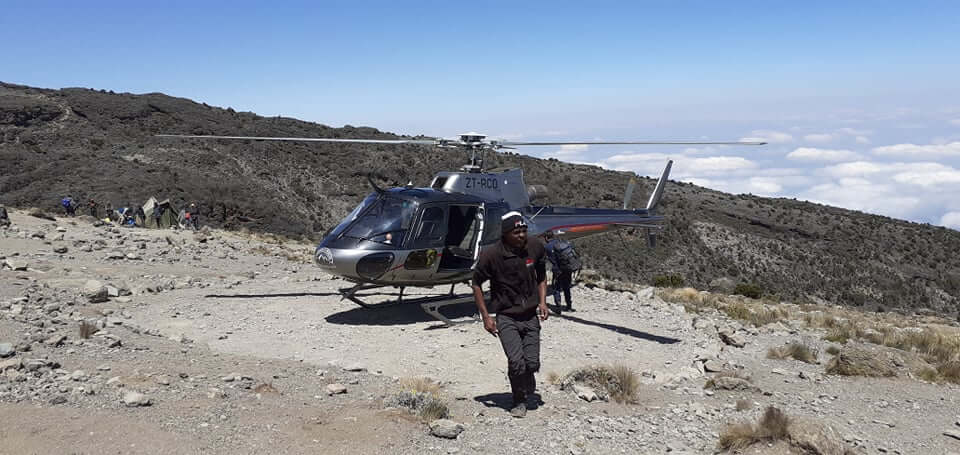
If a climber develops serious altitude sickness high on the mountain, the safest way down is often by helicopter. Your policy must include emergency evacuation and mountain rescue, and the limit needs to be meaningful. Many climbers look for at least £100,000 of evacuation and search and rescue cover.
Check that helicopter rescue is included as standard and that it is triggered when it is medically necessary and authorised by the insurer's emergency assistance team. That is the normal wording, and it is the wording you want to see.
How helicopter evacuation actually works on the mountain
Here is the part most guides do not tell you, and it is worth understanding before you climb.
A helicopter evacuation from Kilimanjaro typically costs somewhere between 5,000 and 20,000 US dollars depending on the situation. Crucially, the rescue is often arranged on an upfront payment basis. The helicopter company frequently wants a guarantee letter from your insurer before it flies, and obtaining that can take time. In practice this means the cost is often paid first and reimbursed afterwards by your insurer.
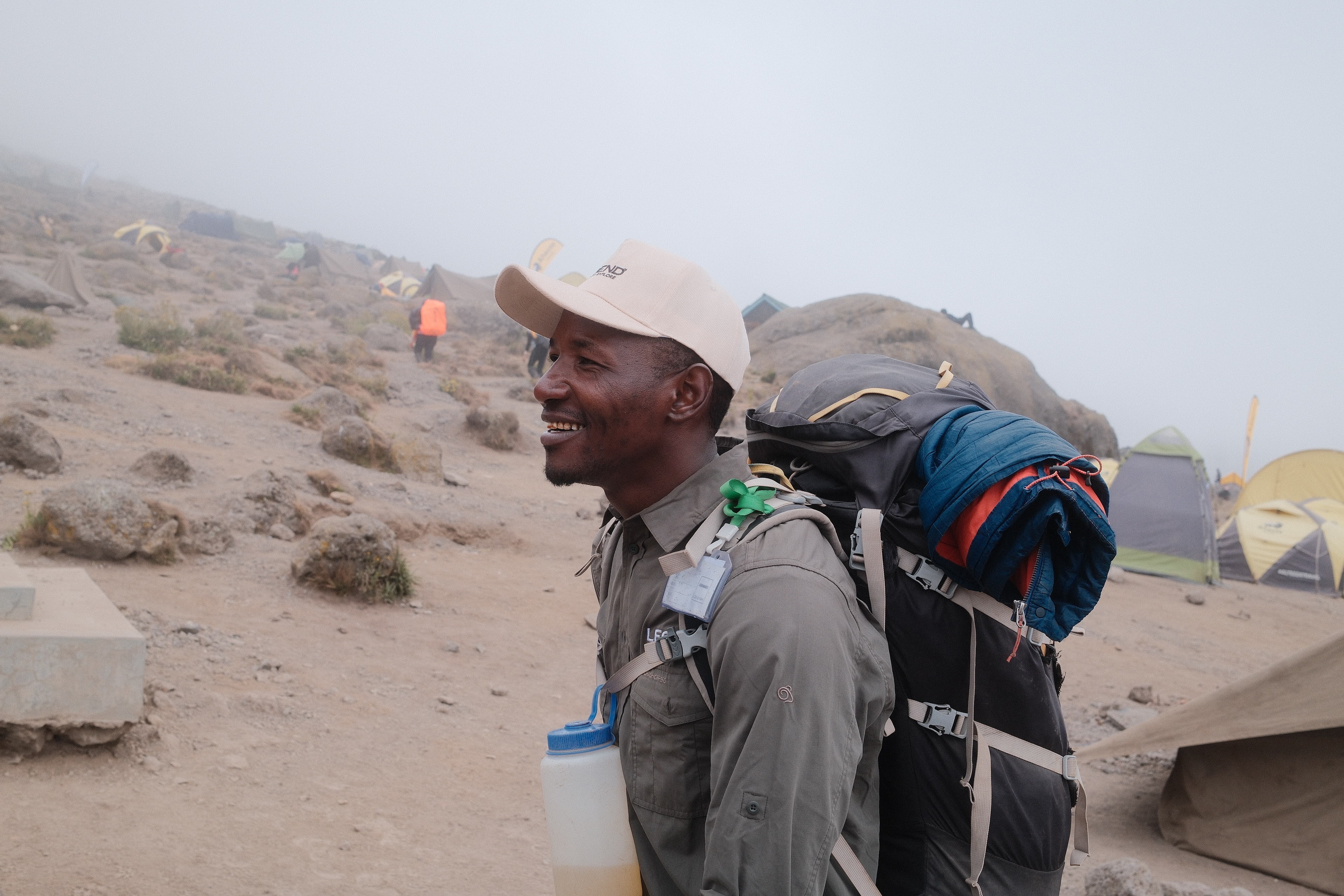
What this tells you is simple. You want a policy with a clear 24-hour emergency assistance line, a strong evacuation limit, and an insurer that handles mountain rescue regularly. When you arrive at camp on the first day, give your guide a copy of your policy and point out the emergency number. Our WFR-trained guides will know exactly what to do with it, but the cover has to be there in the first place.
How travel insurance works for your climb, in plain terms
A few practical points that catch people out:
Most policies operate on a reimbursement model. You pay for treatment or evacuation, keep every receipt and document, and claim the money back afterwards. Carry a card or two with sensible limits as a buffer, just in case.
Buy your insurance early, ideally as soon as you book. The cancellation cover only protects you from the day the policy starts, so leaving it until the week before departure throws away months of protection on your deposit.
You will need to show proof of insurance before you start the climb. It is a standard requirement, and on Kilimanjaro the right cover also keeps you eligible for the private medical and helicopter services that operate on the mountain. Bring a printed copy and a photo on your phone.
The insurers we use
Climbers ask us which insurance to use more than almost any other question. Below are the providers we use ourselves. All are specialist adventure insurers that can cover Kilimanjaro to the summit when you select the right options. Two are built for UK residents, True Traveller and JS Insurance. If you live outside the UK, Rise & Shield covers climbers worldwide. We have set out the facts on each so you can compare them and decide for yourself.
To be upfront: Legend Expeditions is an affiliate partner of the insurers below, so if you take out a policy through our links we earn a small commission, at no extra cost to you. It is enough to buy the team a coffee, and it helps us keep producing guides like this one. You pay exactly the same price either way, so if you find this guide useful, buying through the links is a quiet way to support us. One important note: we are not insurance brokers or advisers, and nothing here is personal advice or a recommendation about which policy suits you. This is general information only. Always read the policy wording in full and check the cover is right for your own trip and circumstances before you buy.
True Traveller
True Traveller is a specialist adventure and backpacker insurer, and a firm favourite among Kilimanjaro climbers. Their Extreme Adventure Pack covers trekking above 4,600 metres and names Kilimanjaro directly, with helicopter rescue included when it is medically necessary and authorised. Medical cover runs into the millions and the policy wording is some of the clearest in the market.
One thing to be aware of: the Extreme Adventure Pack is not available to travellers aged 66 or over, which means it cannot cover the summit for that age group. If that applies, the option below is worth comparing.
Get a True Traveller quote here
JS Insurance
JS Insurance, the trading name of FCA-regulated Jade Stanley Limited, covers trekking up to 6,000 metres and is a straightforward option for UK climbers. One important detail with JS: their general trekking cover does not automatically include Kilimanjaro. You must select Kilimanjaro specifically from the list of activities when you get your quote, otherwise the summit is not covered. Do that, and you are properly protected to 6,000 metres.
Rise & Shield
Rise & Shield is a specialist adventure insurer that covers travellers worldwide, which makes it the option for climbers who live outside the UK. Their Adventure Extreme add-on covers high-altitude trekking up to 6,500 metres, comfortably above Uhuru Peak, and names Kilimanjaro and its routes directly. Cover includes altitude illness (AMS, HAPE and HACE), repatriation, and 24-hour assistance from doctors who understand altitude. There is no altitude surcharge up to 6,500 metres, so the premium is fixed at the point of quote.
Two things to note. When you get your quote, select the Adventure Extreme add-on and your country of residence, as the summit is only covered with the right pack. And as with most insurers, helicopter rescue must be pre-approved by their emergency team and carries an excess, so keep their assistance number to hand on the mountain.
Get a Rise & Shield quote here
With any of these providers, the same general points apply. Confirm the altitude limit and the evacuation cover in writing before you pay, and declare any pre-existing conditions.
Frequently asked questions
Do I need travel insurance to climb Kilimanjaro? Yes. Insurance that covers high-altitude trekking is mandatory, and you will be asked to show proof before you start the climb. It also protects the significant money you have invested in deposits and flights.
What altitude does my travel insurance need to cover? At least 5,895 metres, the height of the summit, and ideally 6,000 metres for a safe margin. Many standard policies cap trekking at 3,000 to 4,000 metres and will not cover the upper mountain.
Does Kilimanjaro travel insurance include helicopter evacuation? It should, but you must check. Look for emergency evacuation and mountain rescue with a limit of at least £100,000, triggered when medically necessary and authorised by the insurer's assistance team.
Does standard travel insurance cover Kilimanjaro? Usually not. Most ordinary holiday policies exclude or cap high-altitude trekking, so you will need a specialist policy or an adventure upgrade that names Kilimanjaro.
How much does a helicopter evacuation from Kilimanjaro cost? Roughly 5,000 to 20,000 US dollars depending on the circumstances. It is often payable upfront and reclaimed from your insurer afterwards, which is why a strong evacuation limit and a 24-hour assistance line matter.
Sort your insurance properly and it becomes one less thing on your mind. Then you can focus on what you came for: standing on the Roof of Africa.
Have a question about your climb?
Insurance is just one piece of the puzzle. If you have a question about your route, your training, what to expect on the mountain, or anything else about planning your Kilimanjaro expedition, we would be glad to help.
Book a call with our founder, Jack, or drop us an email and we will get back to you personally. No pressure and no hard sell, just straight answers from people who climb this mountain for a living.
Book a call: https://calendar.app.google/7zU3Sx3yxxw8vhFy6
Email: jack@legendexpeditions.com


