CREATE YOUR LEGEND | 2026-2028 dates available | SECURE YOUR PLACE WITH JUST £100 DEPOSIT
OVERVIEW
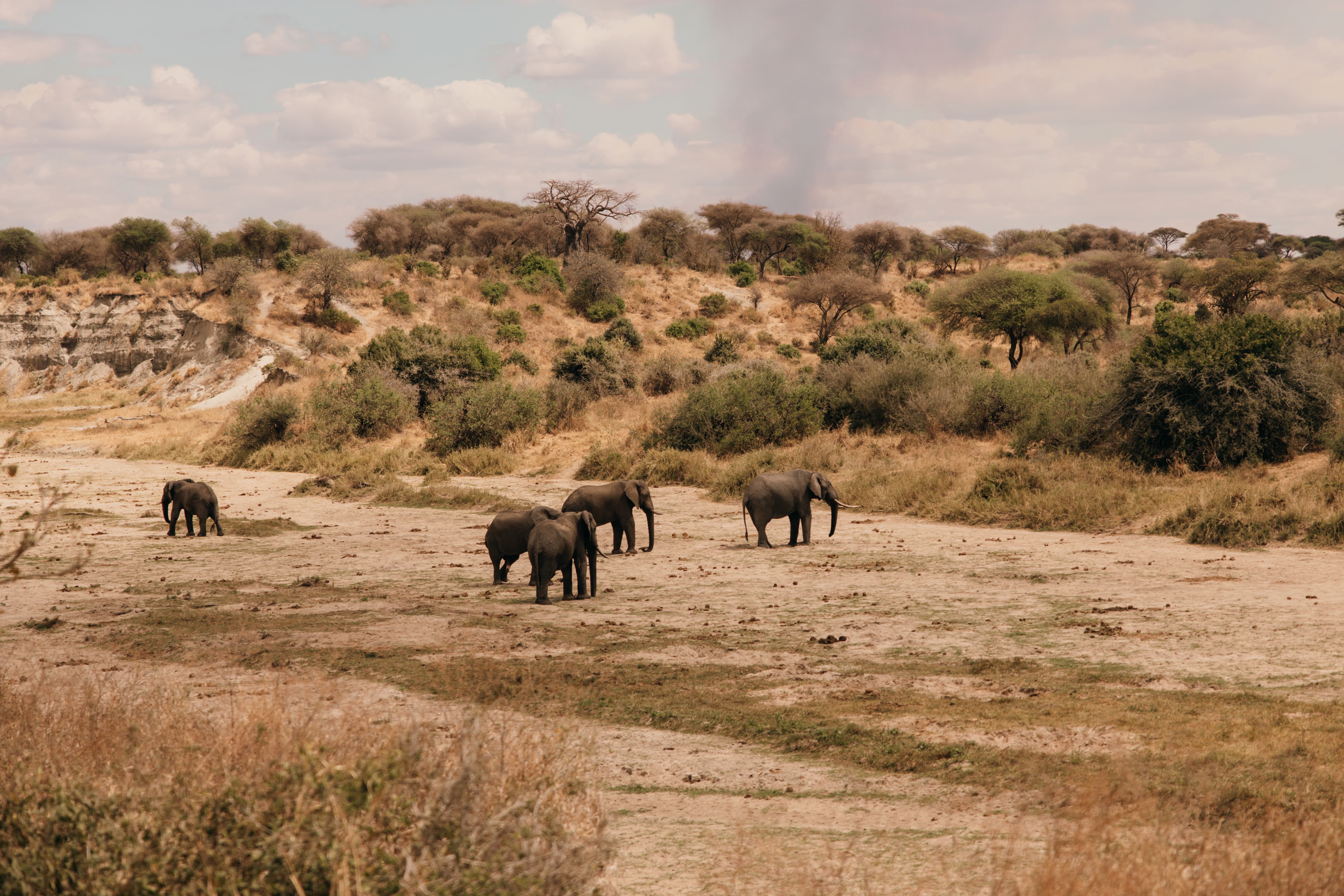
Tarangire is the park I most often use to open a Northern Circuit safari, and for elephant lovers it is hard to better. Huge dry-season herds gather along the Tarangire River, ancient baobabs stand over the grasslands, and the crowds sit well below those of Serengeti or Ngorongoro.
This Tarangire National Park safari guide covers where it is, the best time to visit, the wildlife you can realistically expect, and the lodges I send clients to. It is written for first-time safari-goers, families, photographers and anyone planning a safari after Kilimanjaro.
Published by
Jack Fleckney
Where Is Tarangire and What Is It Like?
Tarangire sits roughly two to three hours south of Arusha, in the Great Rift Valley of northern Tanzania. Most clients land at Kilimanjaro International Airport, spend a night near Arusha, then drive in by 4×4 the next morning. Light aircraft into the park's airstrips are possible from Arusha Airport if you would rather skip the road, though that lifts the cost.
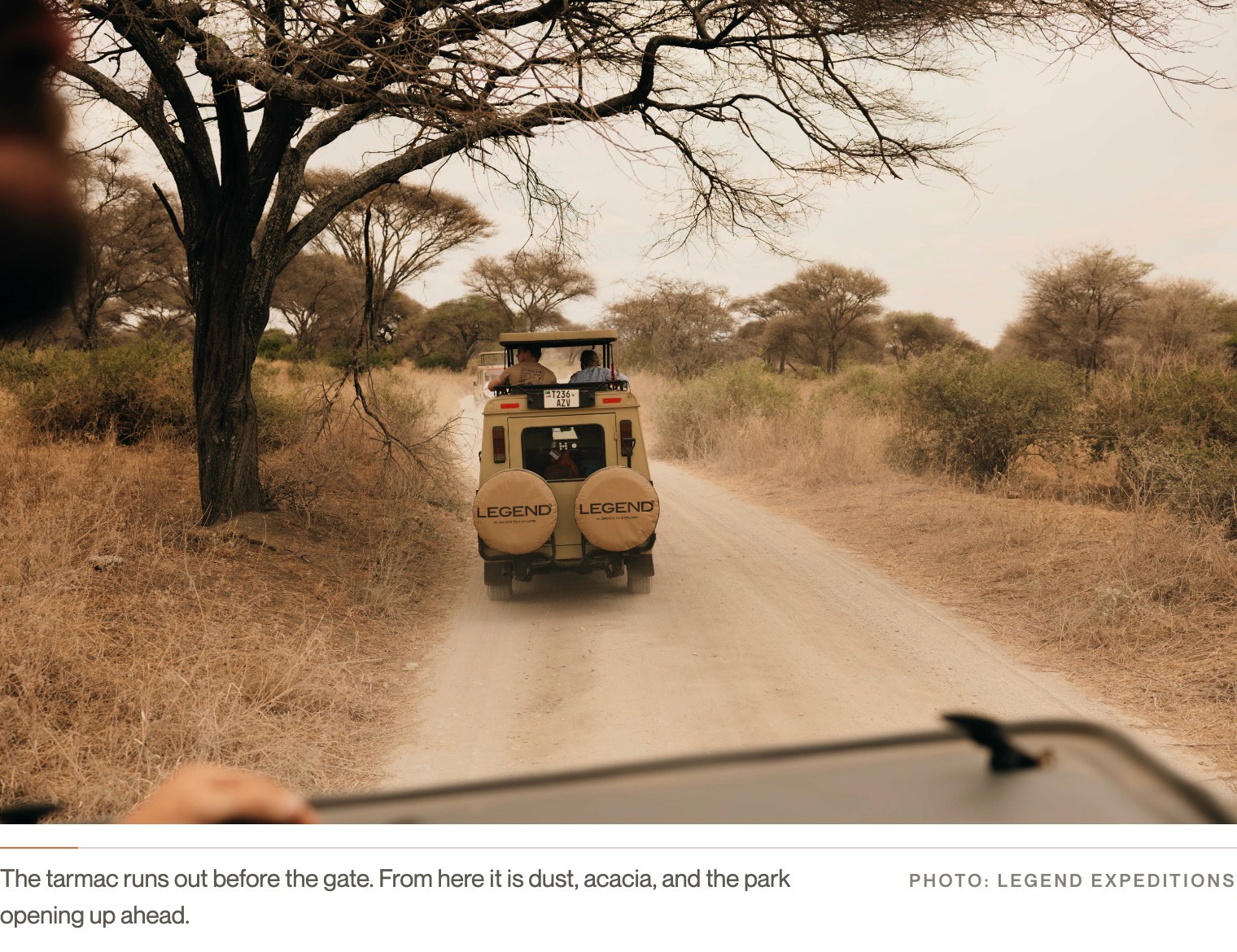
The drive itself sets the tone. Arusha gives way to open savannah, Maasai cattle herds and roadside baobabs, and a few minutes before the gate the tarmac turns to dirt. A towering baobab marks the entrance. Past it, the park opens into rolling grassland, the Tarangire River valley and seasonal wetlands such as Silale Swamp that pull animals in from the wider ecosystem through the dry months.
Most itineraries give Tarangire one or two nights at the start or end of a safari. If you want the full picture on routing and pricing, our Tarangire National Park page sits alongside this guide. For the park itself, the headline is simple: more elephants, fewer vehicles, and a strong sense of space.
Why Visit Tarangire National Park?
Elephants and Baobabs
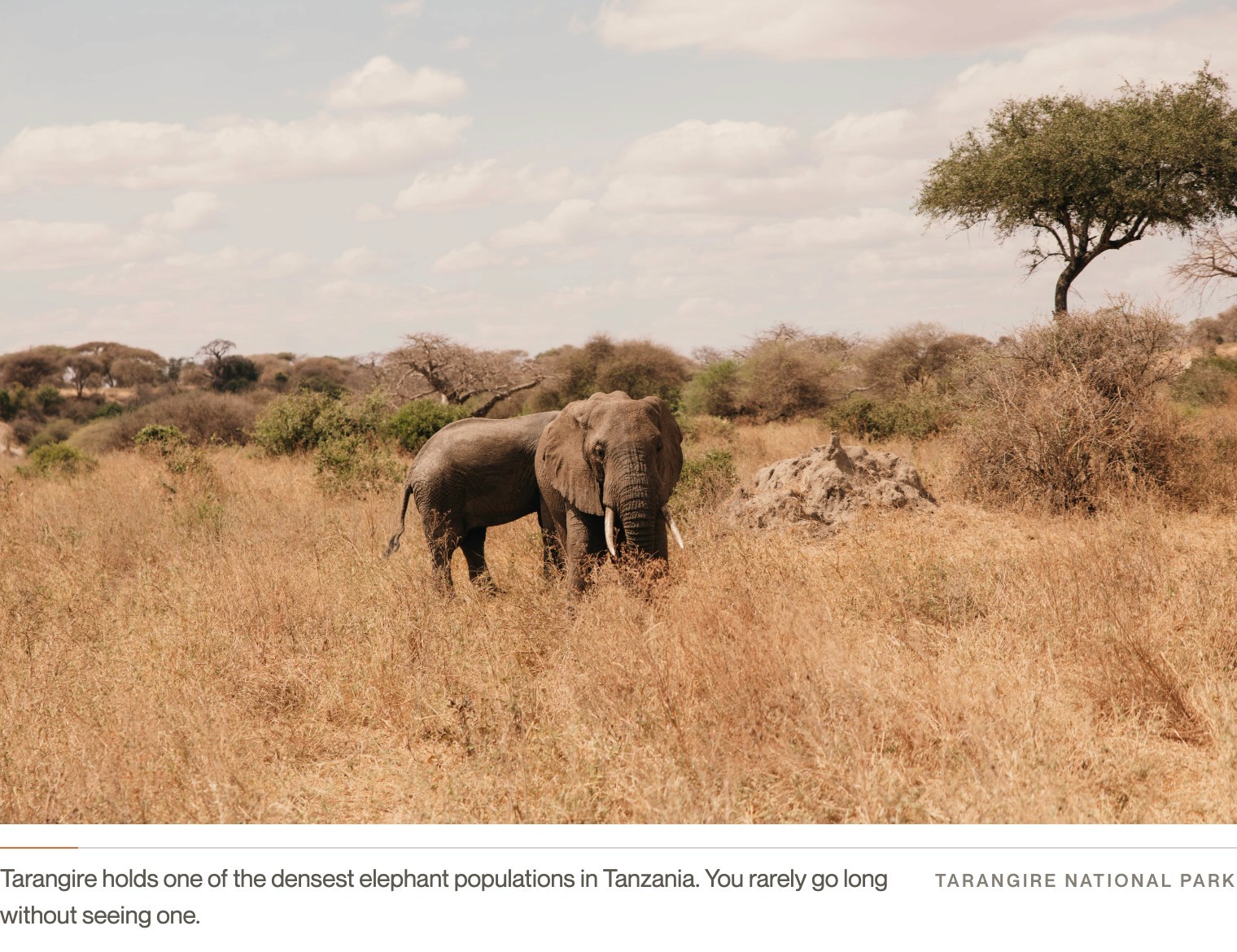
If you love elephants, this is the park. Tarangire holds one of the densest elephant populations in Tanzania, and in the dry season it is normal to see several family herds in a single day, sometimes a hundred or more animals strung along the river at once. Watching them move between baobabs that have stood for centuries is the image most people carry home. I have guided plenty of guests who came for the Big Five and left talking only about the elephants.
Quieter, More Personal Game Viewing
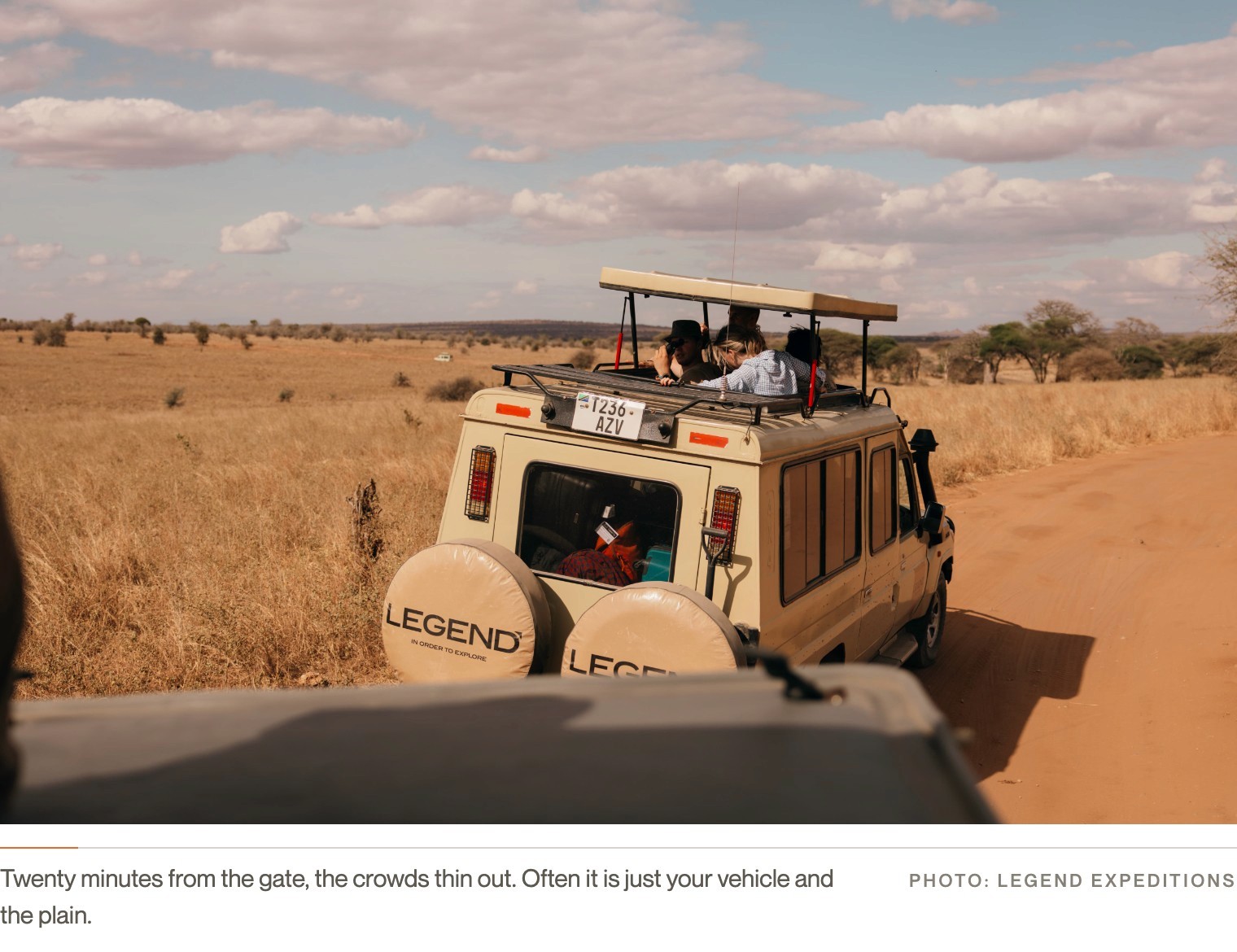
Compared with the busiest stretches of Serengeti and Ngorongoro, Tarangire usually feels calmer, particularly outside the absolute peak of July and August. A guide who knows the quieter loops can leave the cluster of vehicles near the main gate behind within twenty minutes. Sightings you find on your own, with no one else around, are the ones that stay with you.
Two Parks in One Year
The river and swamps make Tarangire feel like two different destinations depending on when you come. In the dry months they are lifelines, concentrating wildlife into tight, dramatic scenes. In the green months the same ground turns lush and bird-rich, with a softer mood and far fewer vehicles. Returning guests often tell me it barely felt like the same place.
Best Time to Visit Tarangire
The best time to visit Tarangire for reliable big game is the dry season, roughly June to October, when elephant and plains game gather along the river and the last permanent water. If this is your first safari and you want sightings without compromise, aim for June to September. That is the period I steer most first-timers towards.
The green season from November to March is the birder's window and the value window. Wildlife spreads out across fresh grazing, so big game takes more patience, but the birding is exceptional and the landscapes are at their best. The long rains of April and May are the quietest of all, with some camps closed and tracks heavier underfoot. Below is the quick version.
June to October: dry season
Wildlife concentrates around the Tarangire River, Silale Swamp and permanent waterholes, so sightings are frequent and often close.
Warm, dry days and clear light, with dust building later in the season.
The busiest and priciest window, but the most dependable for elephants and classic game viewing.
November to March: green season and birding
First rains bring fresh grass, blossom and migrant birds, with noticeably fewer vehicles.
Best stretch for birdlife, and young animals start appearing as the season goes on.
Game is more dispersed, so patience matters if you are used to dry-season density.
April to May: long rains
The quietest period, with some camps shut and tracks more demanding.
Suits repeat visitors, patient photographers and travellers who value solitude and price over guaranteed sightings.
Verdict: if you can only pick once, go in September. You get strong concentrations, manageable dust and slightly thinner crowds than the July to August peak.

Wildlife You Are Likely to See in Tarangire
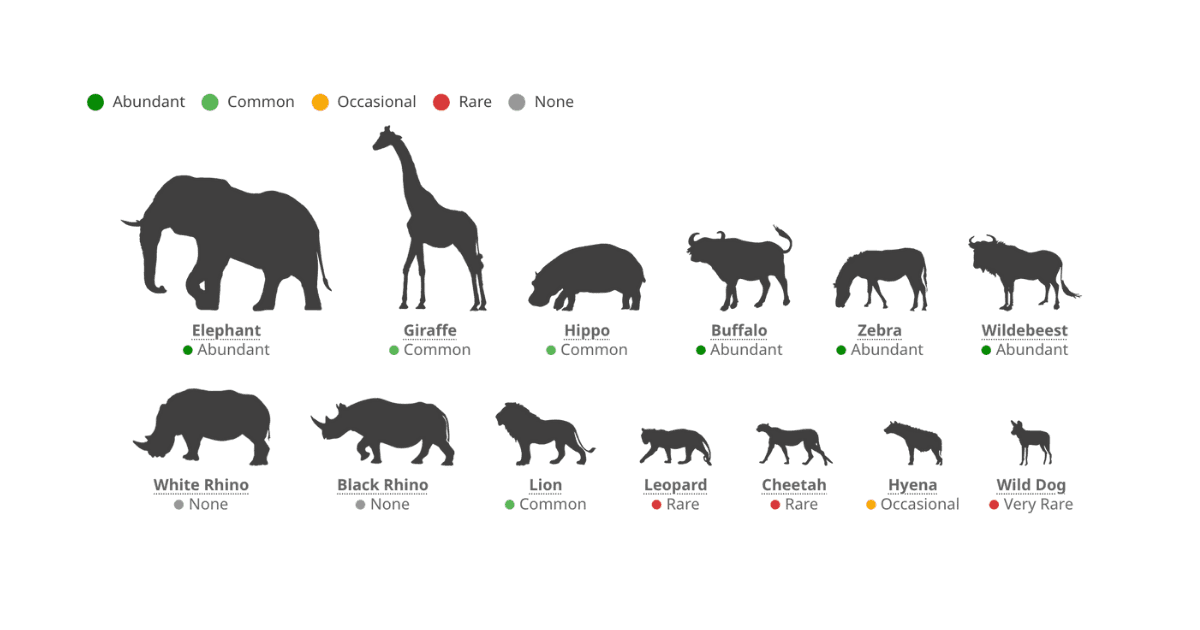
In the dry season Tarangire delivers the full cast: elephant, zebra, wildebeest, buffalo, giraffe and several antelope species clustered near water. Lion and leopard are resident and seen regularly, with cheetah and the occasional wild dog rewarding patience. You can read more on each of these in our Tanzania wildlife guide, which breaks down the animals across the Northern Circuit.
What sets Tarangire apart is its dry-country specials. This is one of the better places in northern Tanzania to find fringe-eared oryx, gerenuk standing on their hind legs to browse, and the shy lesser kudu. None are guaranteed, but a good guide knows where to look, and finding one feels like a genuine prize rather than a tick on a list.
Birdlife and Tarangire specials
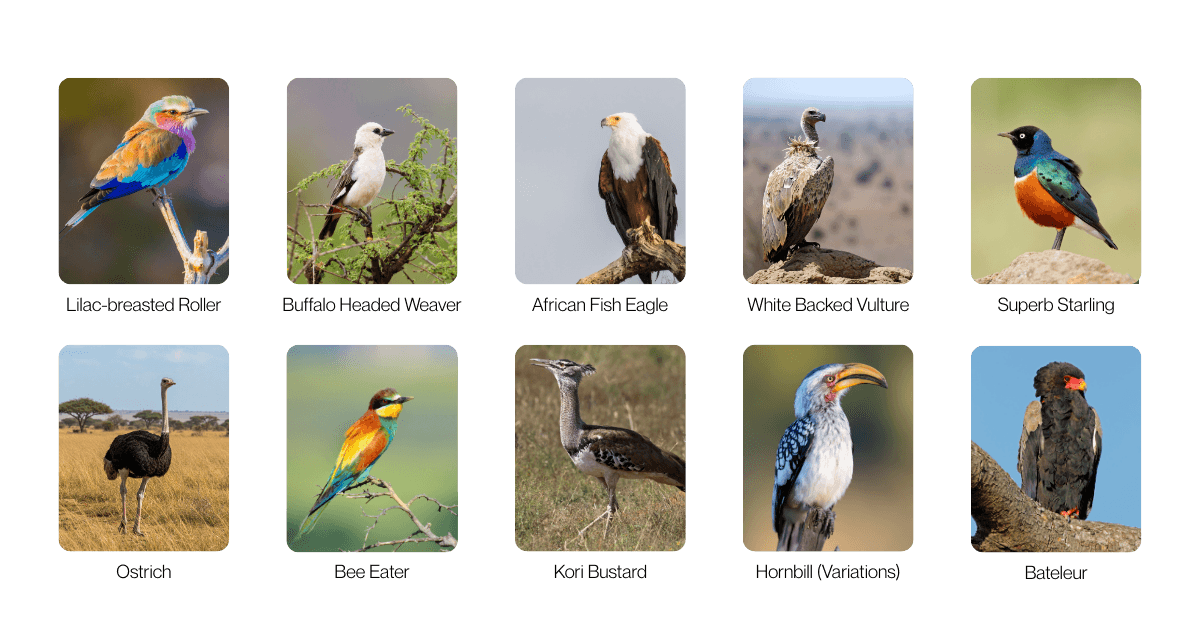
Tarangire is a serious birding park, with well over 500 recorded species. Around the swamps you will see bee-eaters, raptors, vultures and waterbirds, and the green months bring migrants and dramatic skies. Two near-endemics worth knowing are the ashy starling and the yellow-collared lovebird, both Tanzanian specialities that turn up here far more reliably than elsewhere on the circuit.
The swamps reward a slow approach. Silale in particular draws big buffalo and elephant congregations, pulls in predators behind them, and occasionally turns up a python basking at the edge. With realistic expectations and the right guide, Tarangire works very well as a first safari, balancing dependable sightings with enough searching to keep every find exciting.
Where to Stay in Tarangire: Lodges and Camps
Tarangire offers tented camps and lodges both inside the park and on the surrounding conservation land, and the right choice comes down to budget, pace and how close you want to be to the wildlife overnight. I focus on well-located, responsibly run properties that make the most of first light and last light in the best game areas. Here is how the three options compare in practice.
Inside the park: closest to the wildlife
Staying inside the boundary means you wake surrounded by it: elephants browsing past the tents, birds starting up before dawn, sometimes lions calling in the dark. The real advantage is time. You can roll out at 06:00, or before, with a flask of coffee and be parked quietly at a waterhole as the light comes up, rather than losing the best hour commuting from the gate.
The trade-off is cost. In-park properties carry higher operating costs and charge a concession or camping fee per person on top of standard park and conservation fees, and parts of the Tarangire–Burunge area add a local wildlife-management levy that supports community conservation. You are paying for access and immersion, and for most clients it is worth it.
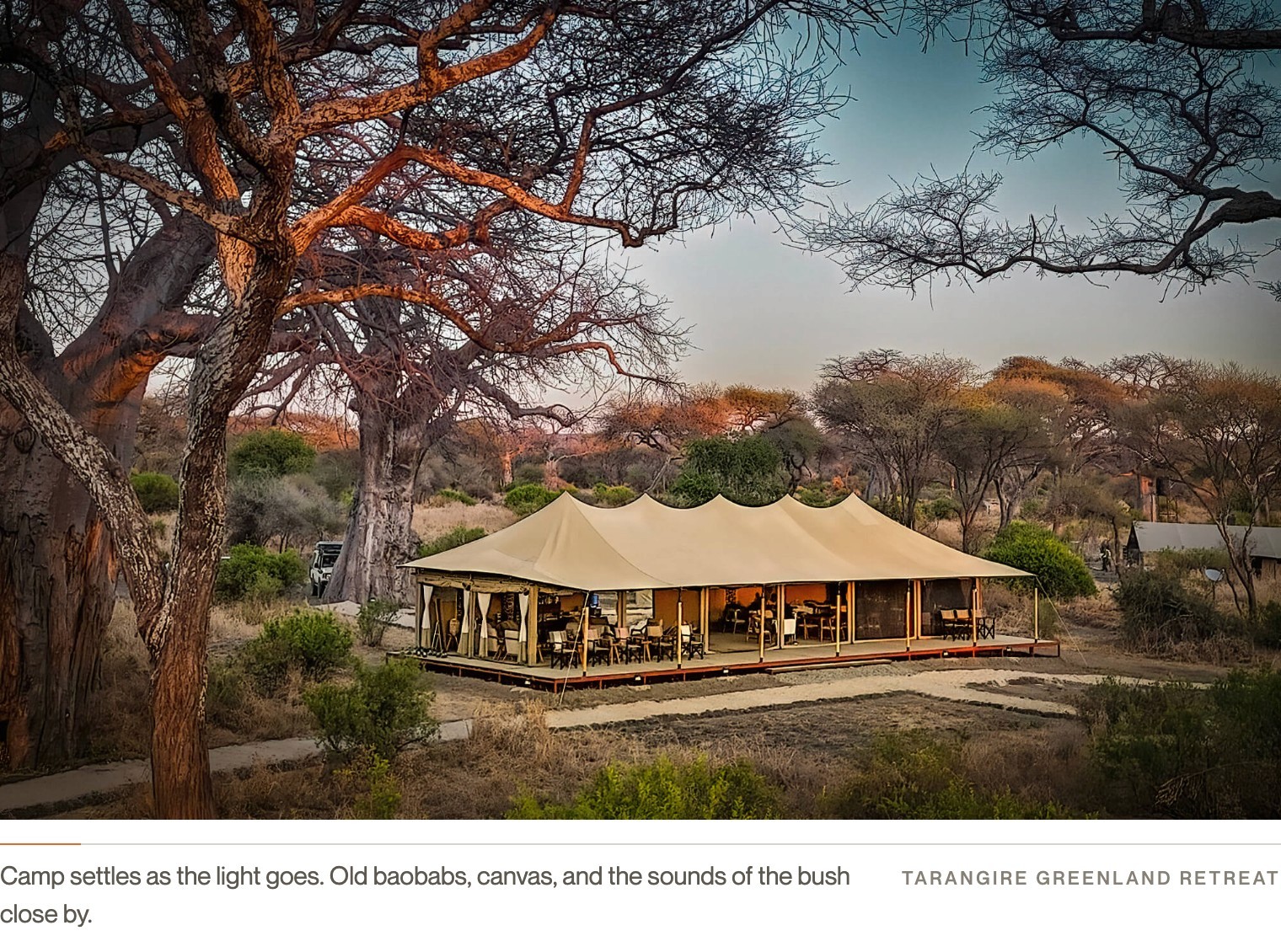
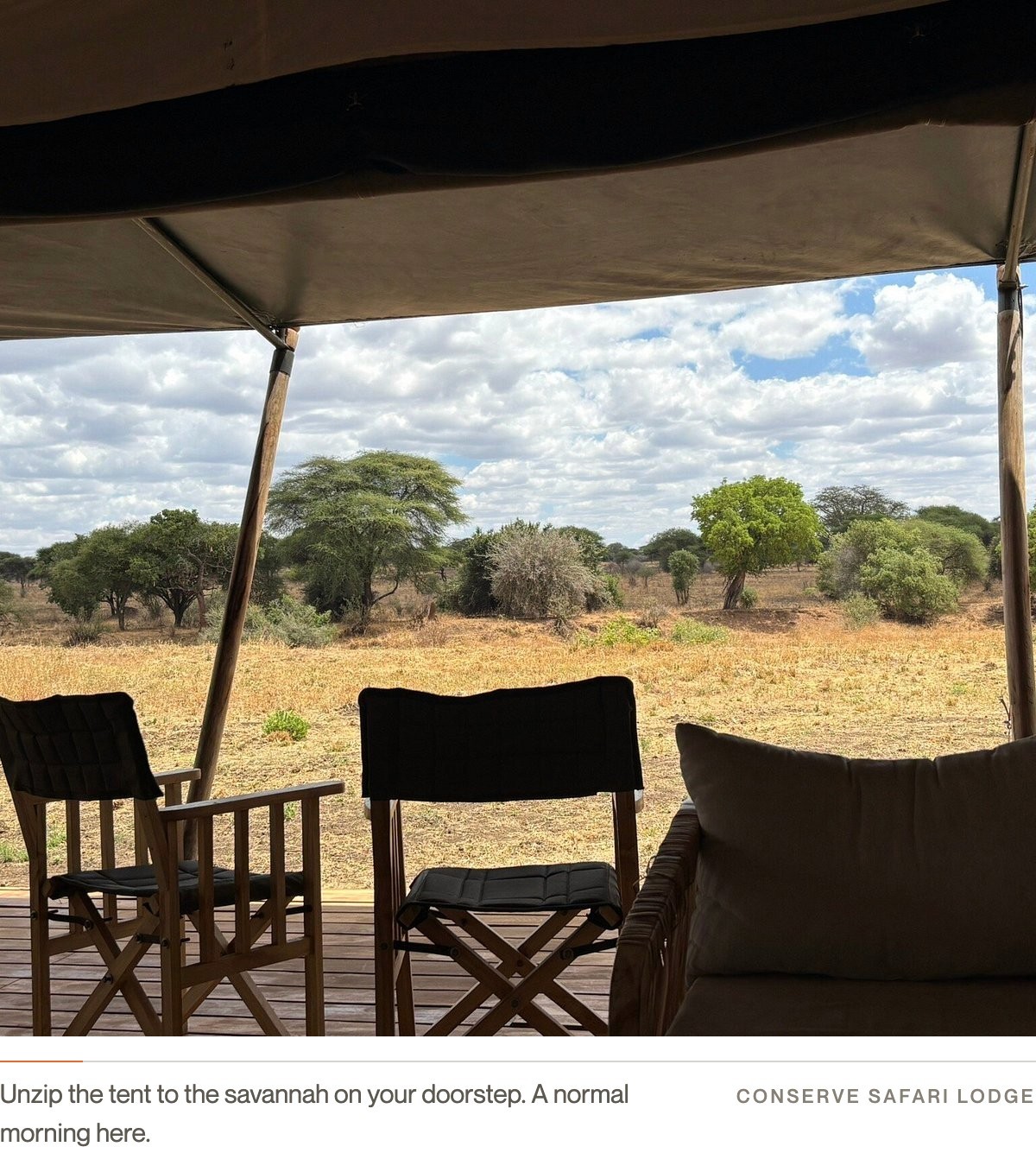
Legend partners with two new lodges set deep inside the park, well away from the busier camps: Tarangire Greenland Lodge and Conserve Safari Lodge. Both give you individual tents looking out over the savannah, framed by baobabs, with quick access to prime game areas. Unzipping the tent to find an elephant feeding nearby is a normal morning here, and it makes that first coffee on the veranda something you remember.
Near Silale Swamp: best for dry-season game
The Silale Swamp region is one of the most productive corners of Tarangire from roughly July to October, when animals come in to drink and graze the fresh growth. A camp in or near this area cuts drive times and keeps you close to the action for both sunrise and sunset drives. If your trip falls in the dry season and game viewing is the priority, this is the area I push hardest for.
Outside the gates: flexibility and value
Lodges just beyond the boundary suit travellers balancing cost and experience. You avoid the in-park concession fees and sit a short drive from the gate each morning. Many of these properties also run activities the core park does not permit, such as night drives and guided walks on private conservation land. You give up a little of the wake-up-in-the-bush feeling for that flexibility, which is a fair trade for some guests and the wrong one for others. Tell me your priorities and I will match the property to them.
Safari Activities in Tarangire
Game drives are the heart of any Tarangire stay, run either as shared outings from a camp vehicle or as private drives with your own guide and 4×4. We operate both private and small-group safaris. Group trips work especially well when you are planning a safari after Kilimanjaro, letting a summit team celebrate together while keeping costs below a fully private itinerary.
A typical group day after the mountain looks like this: arrive before lunch, game drive in, stop at a scenic picnic site, then work different loops through the afternoon. You reach the lodge before sunset to find the fire lit and dinner waiting, then head out early the next morning for a sunrise drive before breakfast. For safari-only travellers, we design private itineraries around your pace and priorities, planned in detail over a video call.
Depending on the lodge and location, you may also be able to add:
Guided bush walks with a specialist walking guide and ranger, which sharpen your eye for tracks, plants and the smaller details a vehicle flies past.
Night drives in selected areas, ideally using red filters or softer lights rather than bright white beams that affect animals' night vision.
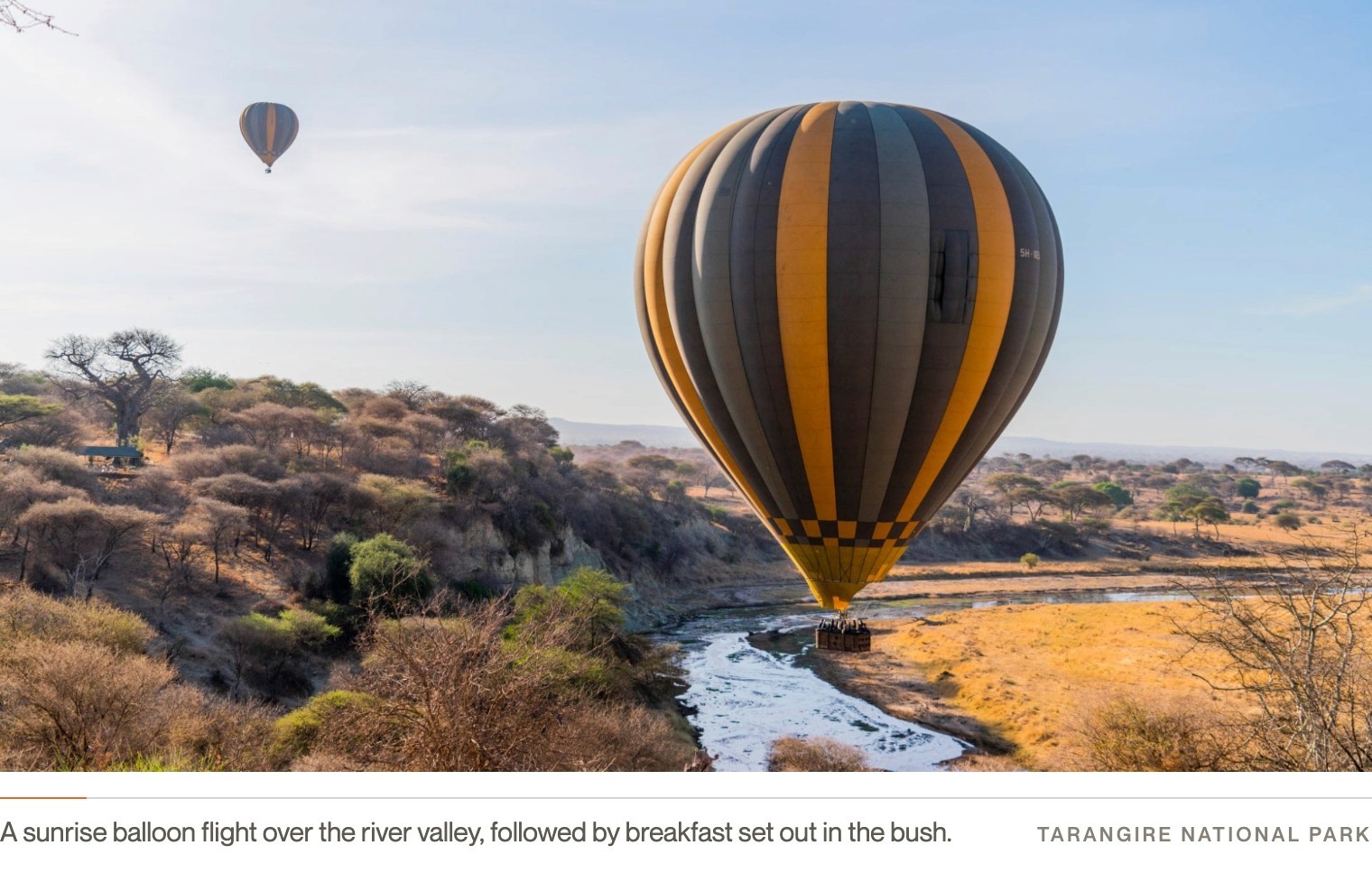
Hot air balloon safaris at sunrise, followed by a bush breakfast and a bird's-eye view of the river valleys.
Cultural visits to nearby Maasai communities, arranged sensitively and with genuine community benefit.
All activities sit within national park rules and guide judgement, with the emphasis on low-impact, respectful experiences.
How Many Nights in Tarangire and How It Fits Your Itinerary
One or two nights suits most travellers: long enough to settle in and run varied drives, without adding road time if you are also heading to Ngorongoro and Serengeti. Three nights works well if you want a slower, more reflective trip built around photography or birding. Tarangire usually slots in best at the very start or the very end of a Northern Circuit route.
7 to 9 days: Arusha, Tarangire, Ngorongoro, Serengeti.
10 to 12 days: Tarangire, Lake Manyara, Ngorongoro, Serengeti, Zanzibar.
Many guests fly in or out of the Serengeti airstrips to cut long transfers, taking Tarangire on the way through. If your absolute priority is the Great Migration and time is tight, it is reasonable to focus on Serengeti and treat Tarangire as optional. You can see sample routes and current pricing on our Tarangire-inclusive safari packages.
Frequently Asked Questions
Is Tarangire National Park worth it for a first safari?
Yes, it is one of the best first-safari parks in the country. Your odds of close elephant sightings are high, the landscapes are evocative, and there are generally fewer vehicles than in the headline parks. Night for night it also tends to cost less than the equivalent time in premium Serengeti camps, while still giving you the classic savannah experience.
Tarangire or Lake Manyara, which should I choose?
Lake Manyara is compact, with lake views, forest and the occasional tree-climbing lion, which makes it a good half-day or single-night stop. Tarangire gives you far more space, bigger elephant numbers and stronger general game viewing. If you can only do one and elephants matter to you, choose Tarangire. With more time, the two make a pleasing contrast.
Can I see the Big Five in Tarangire?
Not quite. Elephant and buffalo are common, lion and leopard are present, but there are no rhino in Tarangire, so it is not a Big Five park. Treat it as one of the finest elephant and general-game parks in the region, and add Ngorongoro Crater if completing the Big Five is important to you.
Is Tarangire good for families with children?
Very good. Drives stay productive even on shorter loops, and children tend to love the drama of close elephant encounters and the strange shapes of the baobabs. Several lodges offer family tents or interconnecting rooms, and a private vehicle lets you match drive times and breaks to your children's energy.
When is the best time to visit Tarangire for elephants?
The dry season, June to October, is when elephant numbers peak along the river and waterholes. September is my pick for the balance of strong concentrations, manageable dust and slightly thinner crowds than the July to August high point. Green-season elephants are still around, just more spread out.
Is Tarangire crowded in peak season?
The main gate and a few central loops can get busy at the height of the dry season, especially around a good sighting. With an experienced guide, and ideally an in-park lodge in a quieter area such as near Silale Swamp, you can still find long stretches with no other vehicles in view.
Tarangire blends towering baobabs, a seasonal river valley and some of the best elephant viewing in northern Tanzania into a safari that feels cinematic and surprisingly relaxed. Whether you want to fold it into a longer journey or simply wake up in a tent with elephants outside, the next step is a conversation about dates, season and the right lodge for you.
If you would like to talk through Safari, Kilimanjaro or anything Tanzania, email me by clicking here, or book a call by clicking here.
Thanks,
Jack Fleckney


