CREATE YOUR LEGEND | 2026-2028 dates available | SECURE YOUR PLACE WITH JUST £100 DEPOSIT
OVERVIEW
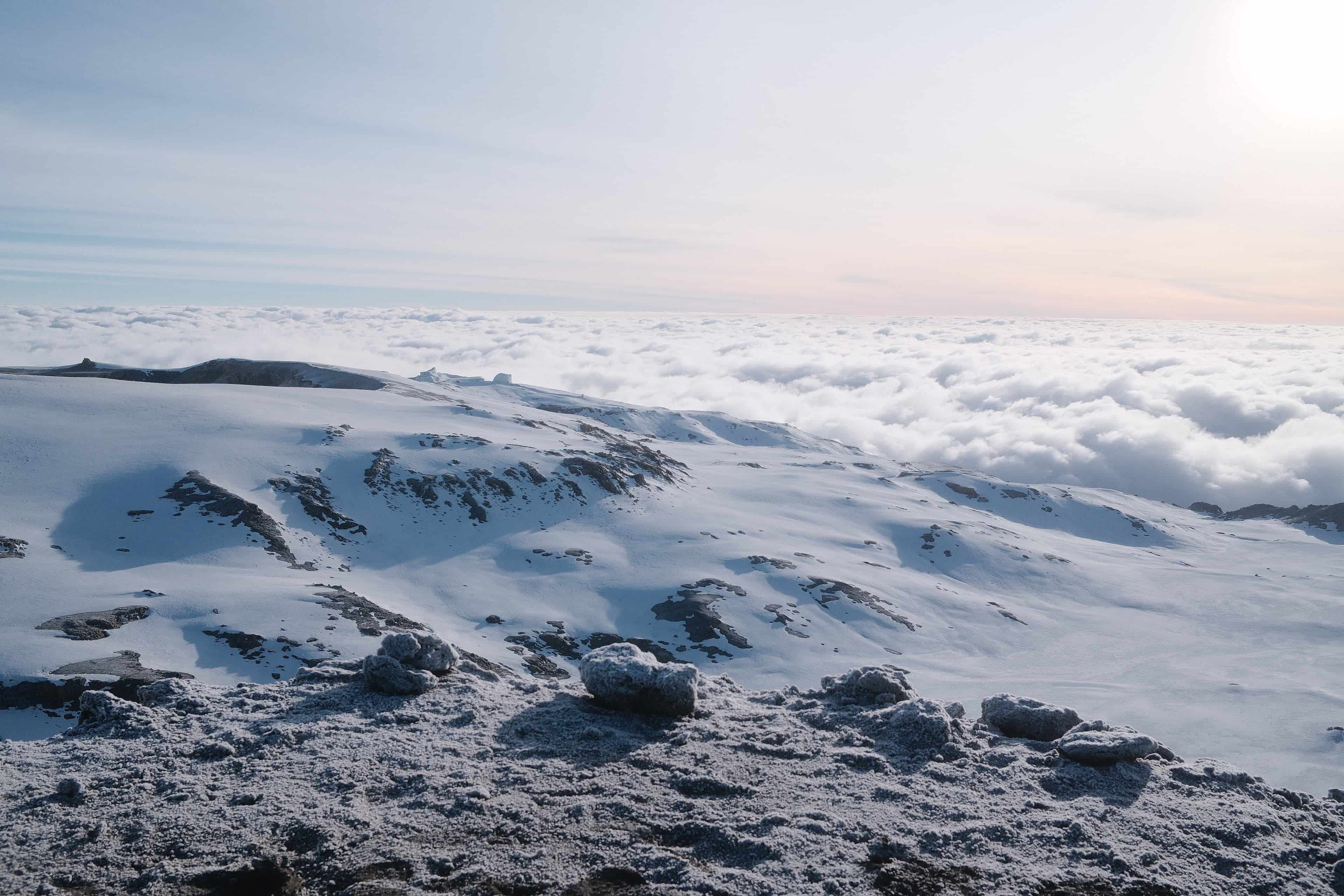
For years, the story of Kilimanjaro’s ice was a story of loss. Scientists warned it would be gone entirely by 2060. Tour operators marketed the mountain as something to see before it disappeared. That narrative is now wrong, and the data to prove it has just been published.
According to GIS analysis from Kilimanjaro National Park (KINAPA), the glacier coverage on Kilimanjaro has increased from 2.2 square kilometres in 2000 to 5.92 square kilometres - nearly a tripling of the ice that was there at the turn of the millennium. Park ecologist Swahib Massawe, who announced the findings at a press briefing at KINAPA’s headquarters in Marangu, called it a significant turnaround. That is, by the standards of conservation science, an understatement.
This is one of the most consequential environmental stories to come out of East Africa in a decade. And it has direct implications for anyone considering climbing Kilimanjaro in 2026.
Published by
Jack Fleckney
What Actually Happened to Kilimanjaro's Ice
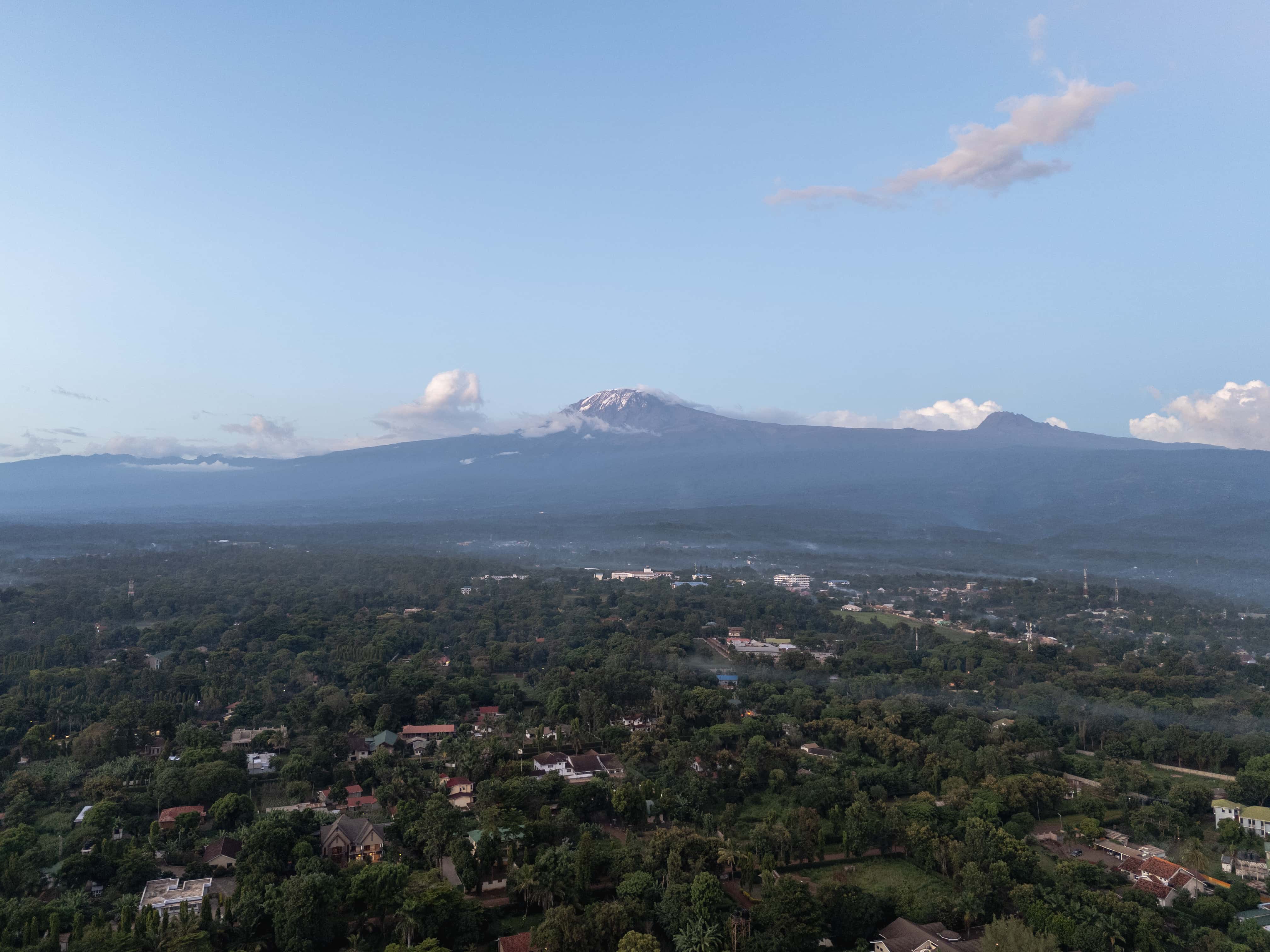
The mountain began losing its ice at pace in the 1980s. Deforestation around the lower slopes, for farming, charcoal production, and settlement, was stripping the mountain of the forest belt that had long regulated humidity and local rainfall patterns. Without that forest, moisture that once fed the glaciers was being lost from the system entirely.
The ice did not just melt from the top down. It was starved of the atmospheric moisture that sustains it. That distinction matters, because it means the problem was partly solvable. And it is being solved.
The recovery began around 2010, following concerted conservation efforts by TANAPA through KINAPA and various environmental stakeholders. These initiatives focused on large-scale reforestation and environmental protection measures designed to safeguard the mountain's delicate ecosystem. It took time to register in the data. By 2025, the results were impossible to ignore.
The Conservation Work That Turned It Around
Reforestation at Scale
The cornerstone of the recovery is tree planting. Not as a token gesture, but as a long-running, institutionally backed programme. TANAPA, through KINAPA and other environmental stakeholders, embarked on a programme of tree planting and general environmental conservation, and the results are now visible.
KINAPA's reforestation programme has focused on replanting native species, including Ocotea, Podocarpus, and Hagenia, on degraded slopes. These are the indigenous species that historically formed the dense montane forest belt between roughly 1,800 and 2,800 metres. That forest acts as a humidity engine for the mountain above it, drawing in moisture from the surrounding plains and releasing it gradually into the atmosphere. Restoring it was always the key.
The Tigo Green for Kili Tree Planting initiative, running in partnership with WWF Tanzania and KINAPA since 2021, aims to plant 22,500 tree seedlings in Mbahe-Marangu and Ungwasi-Rombo in the Kilimanjaro conservation area, with previous phases having already planted over 10,000 trees. These are not symbolic numbers. The programme has genuine scale.
Tree planting and environmental protection are now part of TANAPA's permanent agenda, aimed at securing the future of the mountain for generations to come. That permanence is what separates this from a one-off campaign.
Community Engagement and Waste Management
Reforestation only holds if the land around the mountain is protected from further degradation. The Kilimanjaro conservation programme extends beyond tree planting to encompass restoration of water catchments and engagement with regional and district administration, local communities, and the Pangani River Basin. Communities who live on the mountain's slopes are no longer peripheral to conservation. They are central to it.
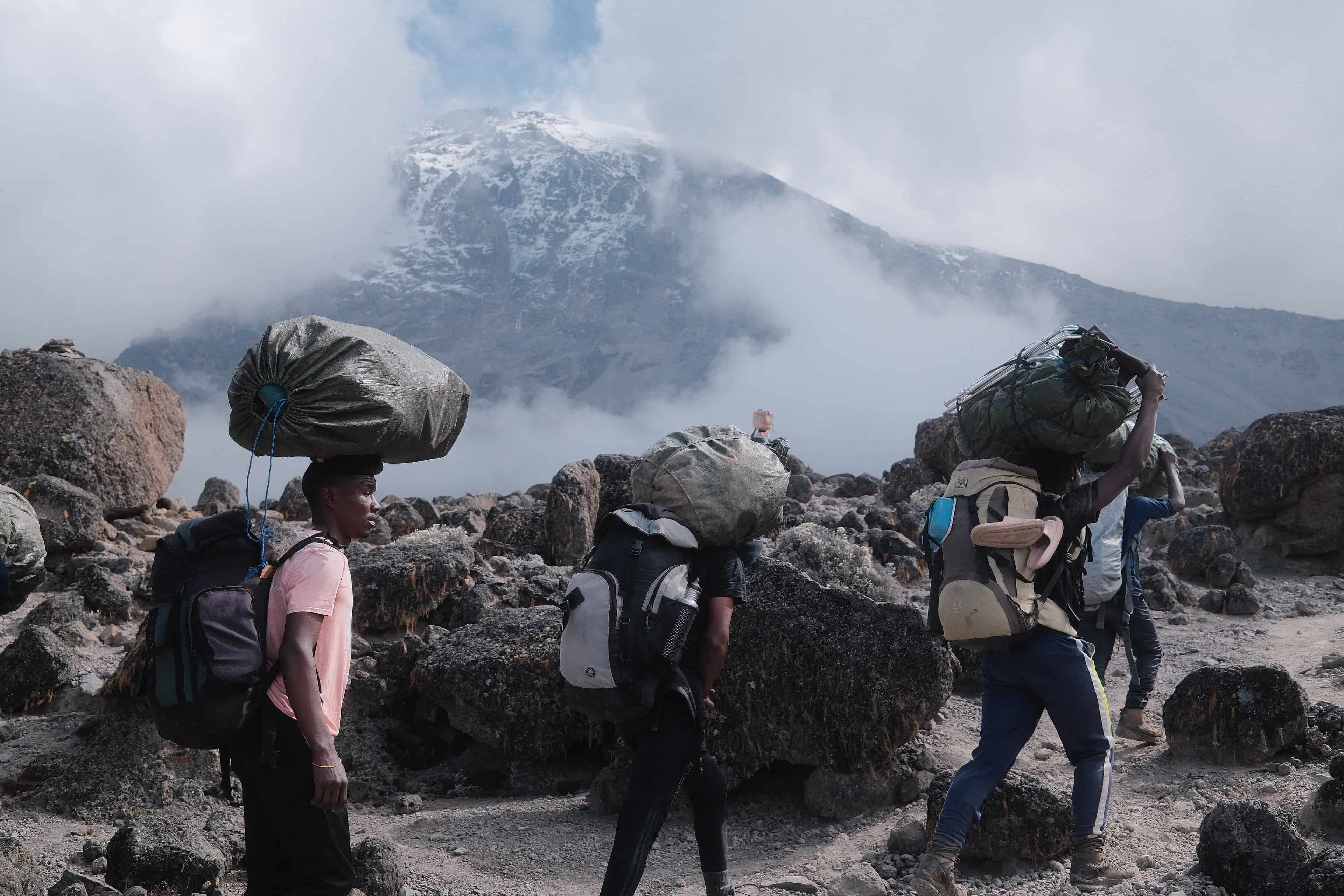
On the mountain itself, strict Leave No Trace and Carry In, Carry Out policies are in force. Certified operators are required to return all waste to park gates for inspection, and ongoing clean-up campaigns are led by local NGOs and volunteer climbers.
Growing Local Research Capacity
There is a subtler shift worth acknowledging. In earlier decades, 90 per cent of glacier studies on Kilimanjaro were conducted by foreign researchers. That balance is shifting, with local research capacity now playing a growing role. Tanzanian scientists and park ecologists are building the knowledge base to manage this recovery themselves. That is what makes it sustainable.
What This Means for Climbers in 2026
The practical impact of glacier growth at the summit is primarily symbolic. You are unlikely to change your kit list on account of it. But what is happening lower down the mountain, in the forest belt, is something you will feel.
A restored forest means richer biodiversity on the lower approaches. The colobus monkeys in the canopy above Machame Gate, the Hartlaub's Turaco calling from the tree ferns, the mist that rolls through the forest each afternoon. All of this is more intact today than it was twenty years ago. The mountain is in better condition. That matters for the experience, not just the ecology.
The mountain's resurgence challenges the long-held narrative that Kilimanjaro's ice cap was doomed to disappear completely. Kilimanjaro in 2026 is a mountain on the mend, and climbing it is an act of participation in something positive.
KINAPA Chief Conservator Angela Nyaki confirmed that climber numbers rose from more than 60,000 in the 2023/2024 season to over 69,000 in 2024/2025, with revenue rising from TZS 95 billion to over TZS 100 billion in the same period. More climbers generating more park revenue means more funding for the conservation work. Done well, tourism is part of the solution.
How Legend Expeditions Contributes to Kilimanjaro's Recovery
I want to be direct about this, because it matters to many of the clients I speak with and I think it should.
At Legend, we have always operated on the mountain as if we had an obligation to leave it better than we found it. That is not a marketing line. It is how Sam White and I built the company from the start, drawing on the discipline we learned in the military and the respect for the environment we developed leading expeditions across some of the world's most demanding terrain.
Leave No Trace, Taken Seriously
Every Legend expedition operates under a strict Leave No Trace policy. Our team does not simply instruct clients to pick up after themselves. We deploy a dedicated crew to collect waste along the route throughout the climb, carrying it off the mountain entirely. Nothing is buried, nothing is cached for later collection, nothing is left at camp. Everything comes down.
At the park gate on descent, all waste is accounted for and removed from the mountain ecosystem. This is what KINAPA requires of certified operators, and it is the minimum standard we hold ourselves to.
Tree Planting at the Foot of the Mountain
A portion of every climber's expedition fee is directed towards tree planting programmes around the base of Kilimanjaro. The forest belt is where the recovery begins, and we believe every commercial operator working on the mountain has a responsibility to invest in it.
The trees being planted are indigenous species, the same Ocotea and Podocarpus that KINAPA's reforestation programme prioritises. They grow slowly. They hold water. They restore the humidity cycle that ultimately feeds the glaciers above.
If you climb with Legend, you leave Kilimanjaro with a summit certificate and a tree in the ground. Both matter.
Choosing the Lemosho Route
Our recommended route is Lemosho, and part of the reason is environmental. KINAPA actively promotes lesser-used routes such as Lemosho and the Northern Circuit to reduce pressure on the heavily trafficked Marangu and Machame routes, using rotating campsite schedules to allow habitat recovery. Lemosho's eight-day itinerary also gives climbers the acclimatisation time they need, which is why our summit success rate on that route sits at 98.5%.
Route choice is not just a personal preference. It is an environmental decision. Spreading footfall across less-trafficked terrain reduces erosion, limits campsite degradation, and allows the mountain to recover between seasons.
FAQ: Kilimanjaro Glacier Growth and Conservation
Are Kilimanjaro's glaciers really growing again? Yes. According to GIS data published by KINAPA in April 2026, glacier coverage has increased from 2.2 square kilometres in 2000 to 5.92 square kilometres, nearly tripling over 25 years. The recovery is attributed to sustained reforestation and conservation efforts led by TANAPA and partner organisations. This is verified data from Tanzania's national park authority, not a projection or a model.
What caused the glaciers to shrink in the first place? Climate change was a factor, but deforestation around Kilimanjaro's lower slopes played a significant role. The forest belt regulates moisture and humidity on the mountain. When it was degraded, the atmospheric conditions that sustain the glaciers were disrupted. Restoring the forest has helped restore the local microclimate.
Does this mean Kilimanjaro is no longer at risk? The recovery is real, but it is fragile. The conservation programmes driving it require continued investment, political will, and the support of the tourism industry. The glaciers are not out of danger. They are recovering. That recovery needs to be maintained.
How does choosing a responsible expedition company help conservation? Park fees contribute directly to KINAPA's conservation budget. Beyond that, certified operators are required to implement Leave No Trace policies and return all waste from the mountain. Companies that go further, through tree planting donations, responsible route selection, and community engagement, add to the cumulative impact. Ask your operator directly what they do beyond the minimum requirement.
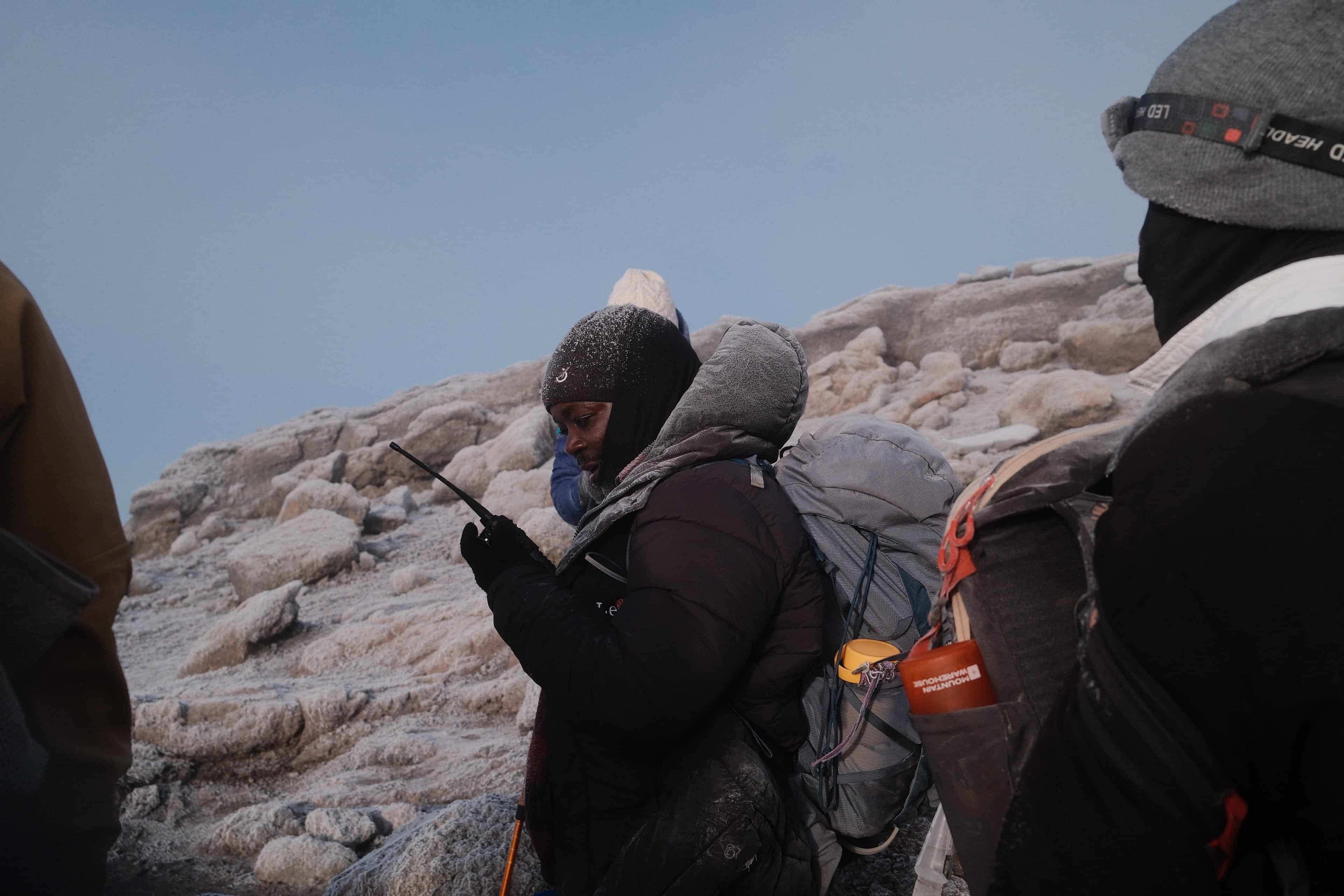
Is the summit still covered in snow and ice? Yes. The summit plateau at Uhuru Peak (5,895m) retains its iconic ice formations. The Southern Icefield and the Furtwängler Glacier are still present and visible on approach. What has changed is the total area and the trajectory. Both are now moving in a positive direction.
What is the best time to climb Kilimanjaro in 2026? The two primary climbing seasons are January to mid-March and late June to October. Both offer the clearest summit conditions. The long rains fall between March and May, the short rains in November and December. I generally recommend January or September for the best combination of stable weather and manageable crowds.
A Final Word
I have been on this mountain dozens of times. I have stood at Stella Point in the dark at 5,800 metres with ice formations to my right and the lights of Moshi far below. I have watched the sun come up over the Saddle and seen the southern icefields turn orange for about forty seconds before the moment passes. It is a serious, beautiful, demanding mountain.
The news that its glaciers are recovering is genuinely good news, for Tanzania, for conservation science, and for everyone who takes the trouble to climb it. But recovery is not a passive process. It requires the mountain to be treated well, consistently, by everyone who works on it.
That is what we try to do at Legend Expeditions, and it is what I would encourage you to look for in any operator you choose.
If you are considering Kilimanjaro in 2026 and want to speak directly, you can reach me at jack@legendexpeditions.com or book a call via the link below. I am happy to answer questions about the route, the logistics, or anything covered in this article.
Thanks for spending the time to read the blog and learn about something I am so passionate about. If you'd like to chat more, feel free to book a call with me by clicking the link below.
Thanks,
Jack Fleckney


