CREATE YOUR LEGEND IN 2026 | SECURE YOUR PLACE WITH JUST £100 DEPOSIT | PAYMENT PLANS AVAILABLE

Vervet Monkey
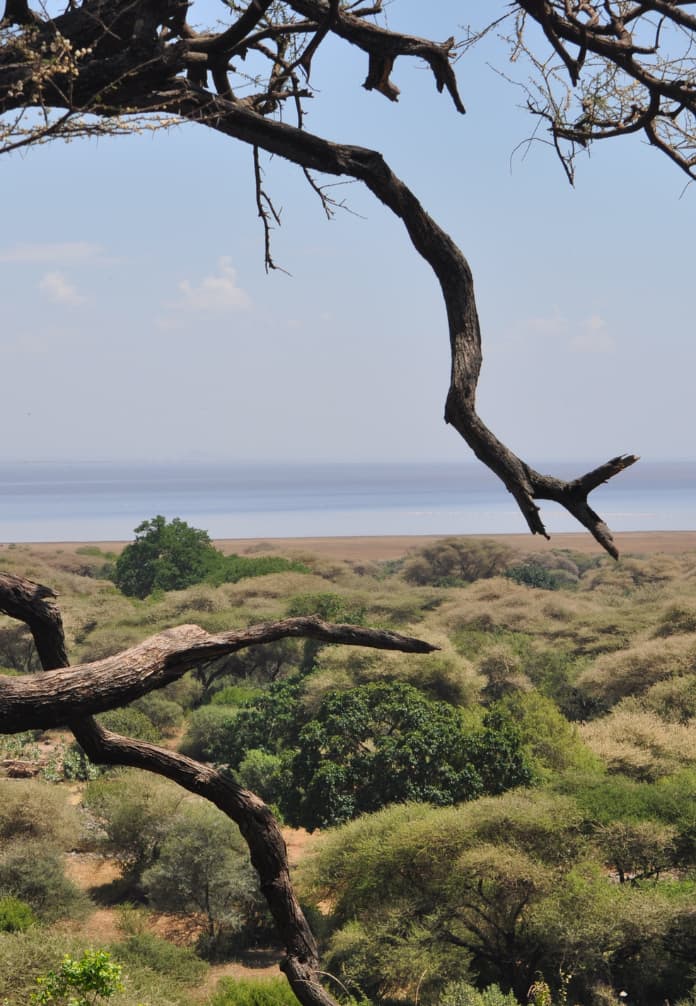
Riverine woodland, acacia forest and savannah edges
Habitat
Year round
Best Viewing Season
Least Concern
Conservation Status
Introduction
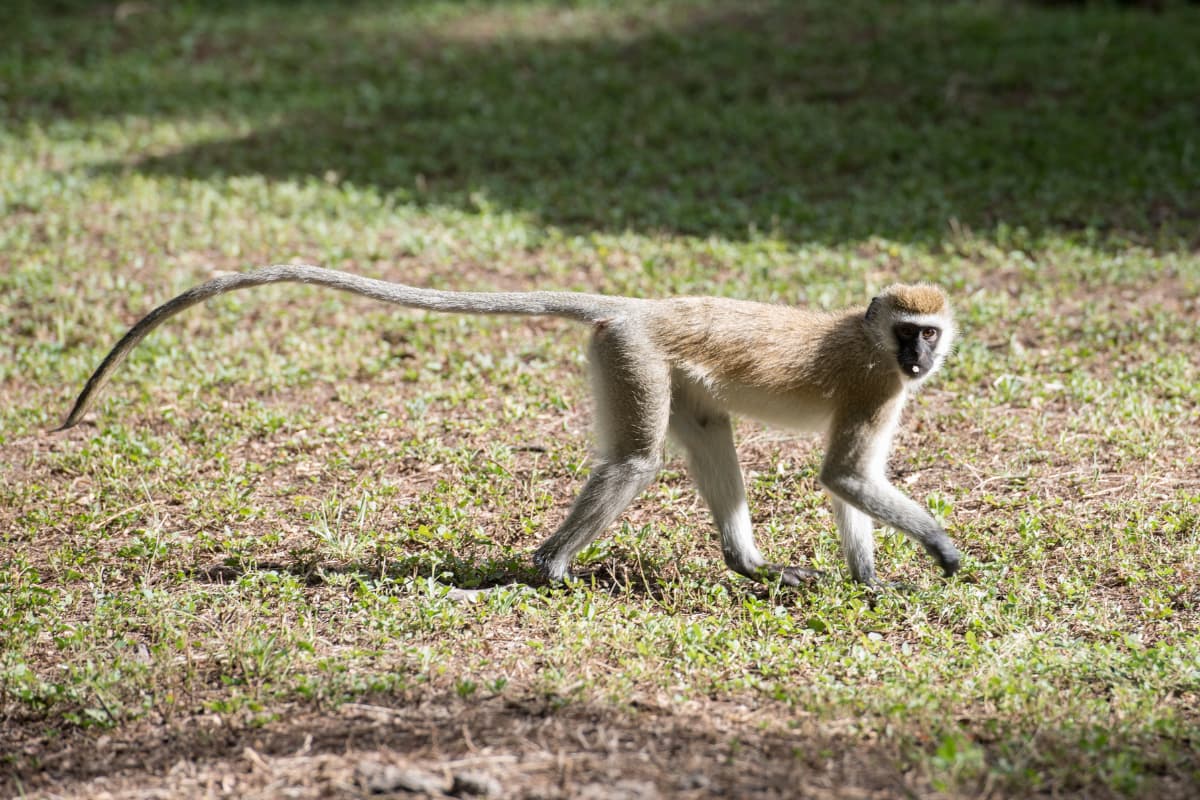
Intelligent and highly social, vervet monkeys navigate Tanzania's parks in multi-generational troops with complex hierarchies. Their striking turquoise and red facial markings set them apart from all other primates on the continent. Watch them forage, interact and communicate across the northern circuit parks year-round.
Behaviour & Facts
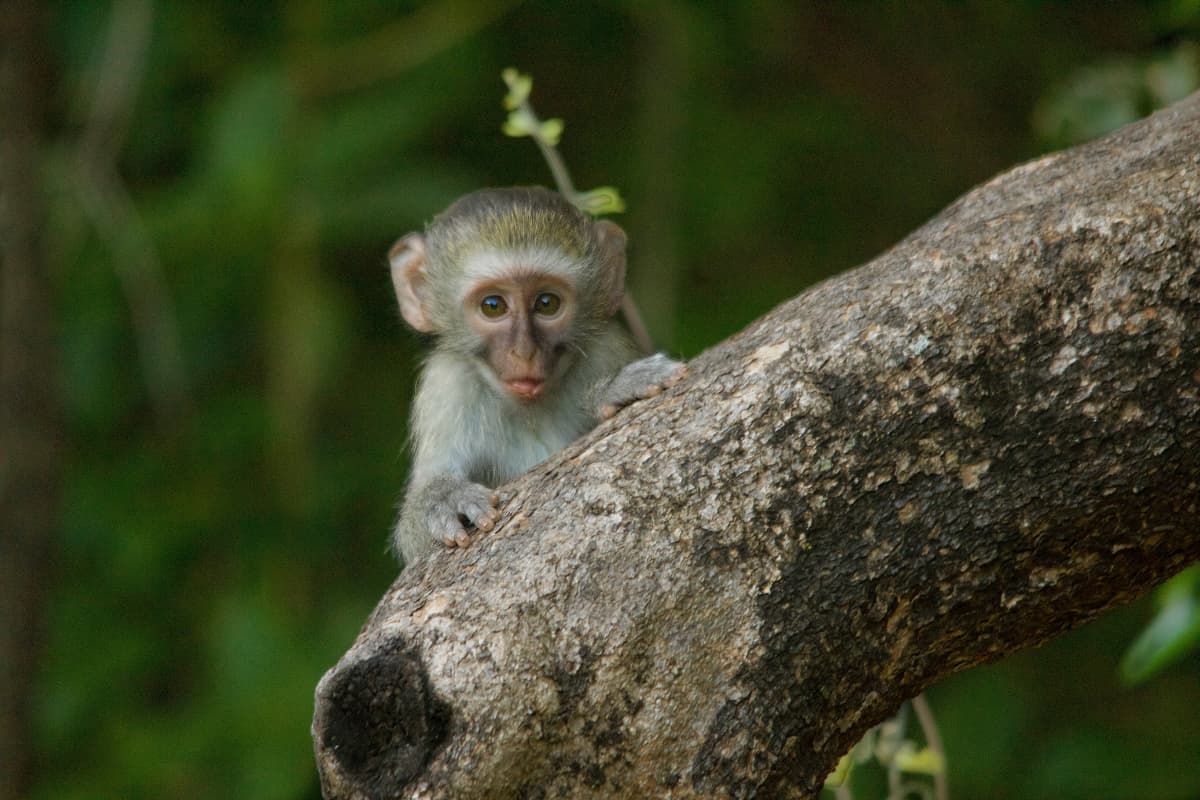
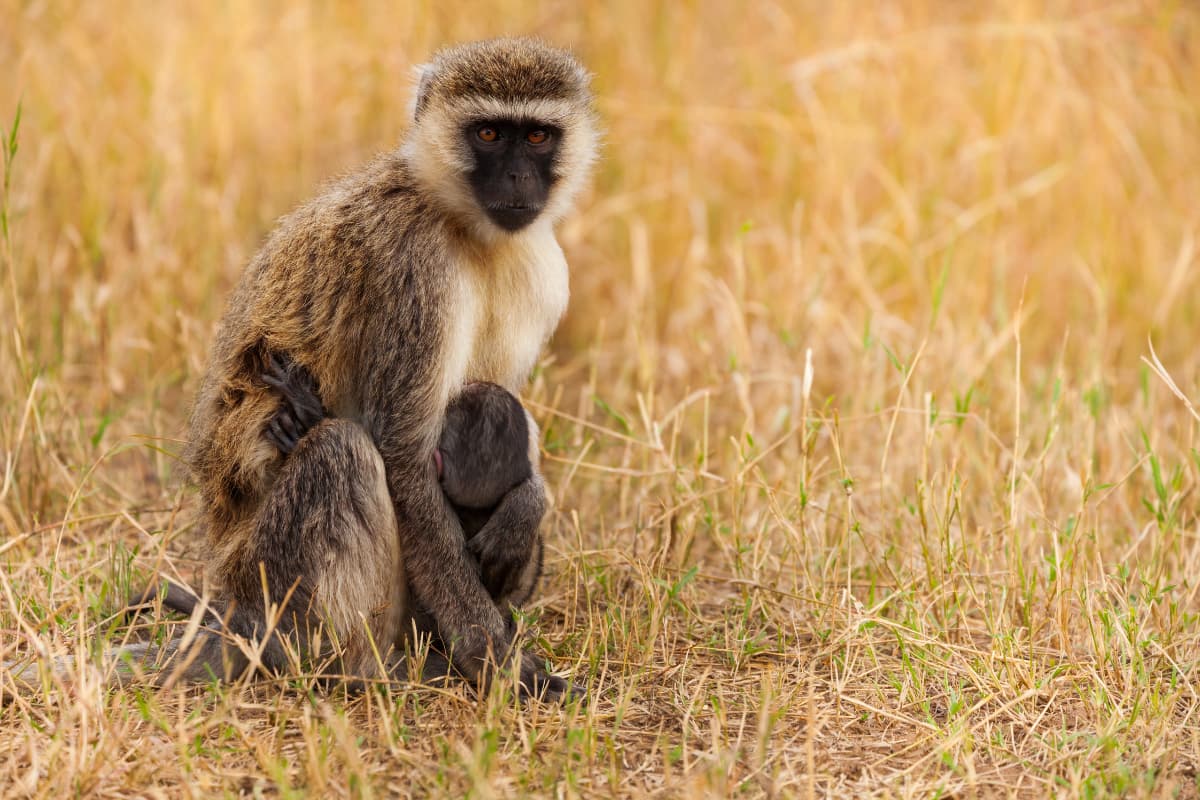
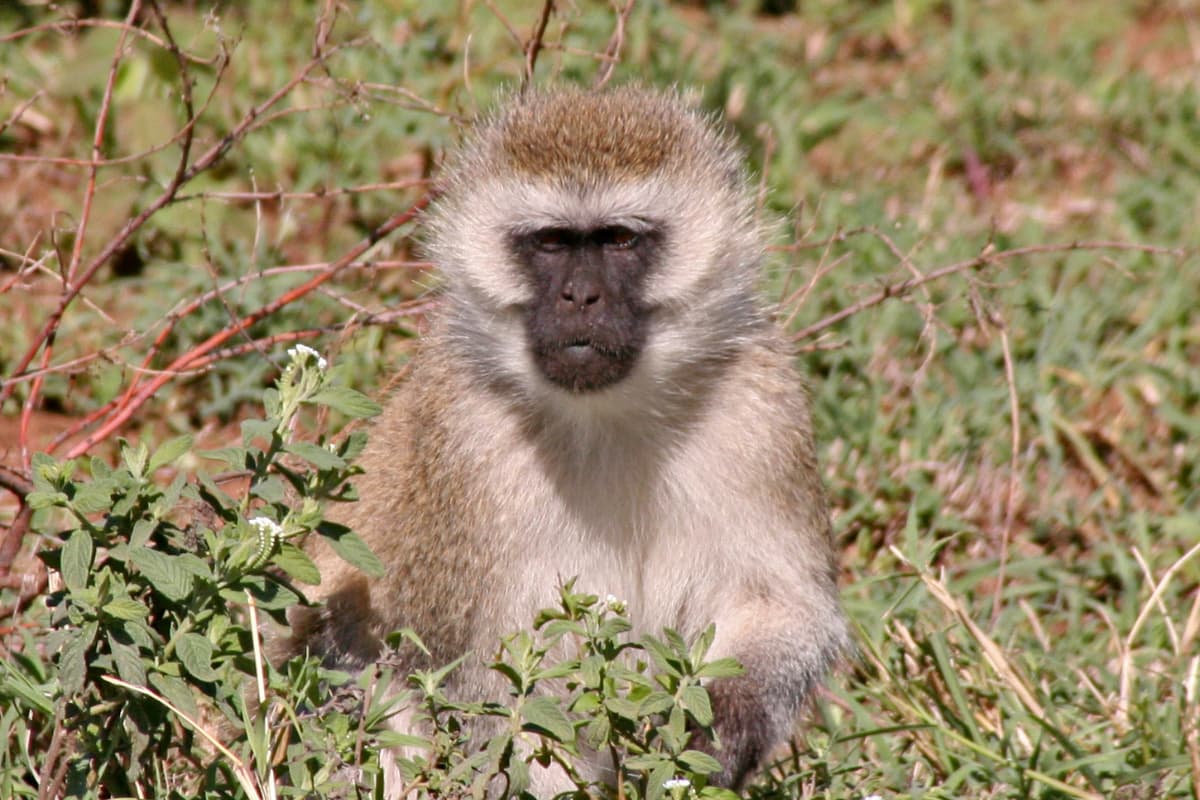
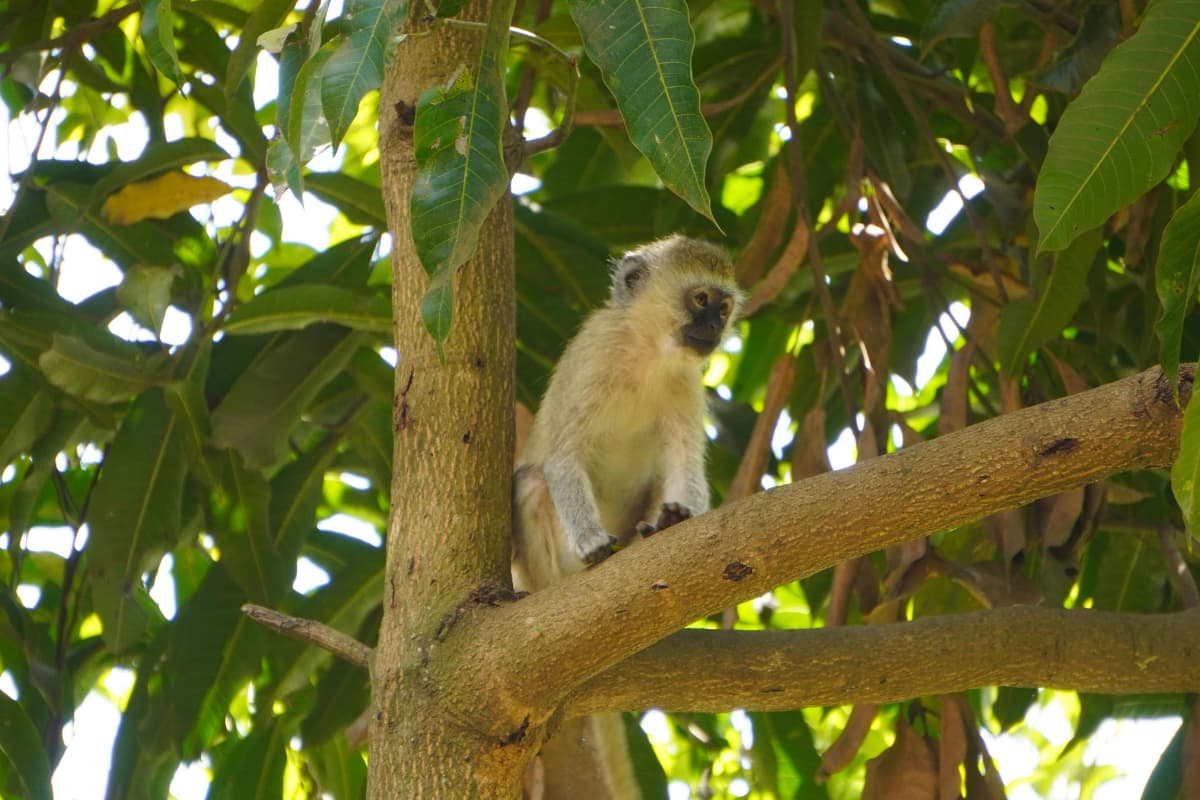
A vervet monkey sits on the branch of a fever tree watching you unpack your sandwiches, and her expression tells you she has worked out the entire situation in under a second. Vervets are the small grey monkeys you will see at almost every lodge and rest camp in Tanzania, and they are far more interesting than the endless picnic raids suggest. Vervets are medium sized guenons, weighing three to six kilograms, with pale grey coats, black faces and long balancing tails. Adult males carry a striking turquoise and red colour pattern that is one of the most distinctive sights in African primates, and it plays a role in dominance and social signalling within the troop. Troops range from about a dozen to fifty animals and defend small core territories around permanent water or fruiting trees. Their social intelligence is remarkable for such a small primate. Females stay in the troop they were born in and form tight matrilineal hierarchies, while males disperse to new troops at adolescence. Vervets recognise each other by voice alone, and long term studies in Kenya and Tanzania have shown that they remember individual calls and faces for years. Troop cohesion is maintained through grooming, low contact calls, and a constant awareness of where every other member happens to be.
Jack Fleckney - Legend Head Guide
Vervets were the species that proved non human primates have something like a vocabulary. Classic field experiments by Dorothy Cheney and Robert Seyfarth in the 1980s demonstrated that vervets use distinct alarm calls for different predators: one call for leopards (which sends the troop up into the trees), a different call for eagles (which sends them down into the bushes), and a third for snakes (which makes them stand upright to scan the ground). These are not just emotional noises, they are referential signals with specific meanings. Their diet is opportunistic and shifts with the season. Fruit, leaves, seeds, flowers, insects, small lizards and bird eggs are all on the menu. Vervets are notorious raiders of camps and farms at the edges of protected areas, and their ability to open zips, unwrap packets and recognise which tent belongs to which traveller has been documented by generations of exasperated guides. Hide your biscuits. Tanzania's vervet populations are healthy and widespread, and they are one of the easiest primates to watch because they are habituated to vehicles and lodges. Lake Manyara, Tarangire and the riverine woodlands of the Serengeti all hold strong troops. They are often the first and last wildlife you see each day, lounging in the branches over your morning coffee and returning to their sleeping trees at dusk.
Where to see
Vervet Monkey
in Tanzania
Where to see vervet monkeys in Tanzania?
Lake Manyara National Park has some of the densest and most visible vervet troops in northern Tanzania, particularly in the groundwater forest near the park entrance. Tarangire and the Serengeti also hold strong troops along the rivers. You will see vervets on every day of a northern circuit Legend Expeditions safari.
Are vervet monkeys dangerous?
Vervets are not dangerous to people, but they are clever thieves. Around lodges they will steal food, sunglasses, phones and anything portable from an open tent or table. Follow your camp's food storage rules and never feed a vervet under any circumstances, because it trains them to associate people with food and creates real problems.
Do vervet monkeys really have language?
Vervets have referential alarm calls, which is the closest thing to language documented in a wild monkey. They use distinct calls for leopards, eagles and snakes, and troop members respond appropriately to each call. This was proven through playback experiments in the 1980s and remains one of the landmark findings in primate cognition research.
Why are male vervets blue and red?
Adult male vervets have bright turquoise scrotums and red penises, which function as social signals of dominance and reproductive status within the troop. The colours are unusually vivid for a small primate and seem to play a role in displays between rival males. Females respond to brighter coloured males as higher ranking.
What do vervet monkeys eat?
Vervets are opportunistic omnivores. They eat fruit, leaves, flowers, seeds, insects, lizards, birds' eggs and nestlings. Around lodges and farms they also raid human food and crops, which is why they are sometimes considered pests at the edges of protected areas. Inside the national parks their natural diet is varied and seasonal.
How big do vervet troops get?
Vervet troops typically hold 10 to 50 individuals, with the largest stable troops reaching 70 or more in prey and fruit rich areas like Lake Manyara. The core is always related females and their offspring, with a smaller number of adult males who moved in from other troops. Troop size tends to track food availability.