CREATE YOUR LEGEND | 2026-2028 dates available | SECURE YOUR PLACE WITH JUST £100 DEPOSIT
Tanzania Wildlife
Superb Starling
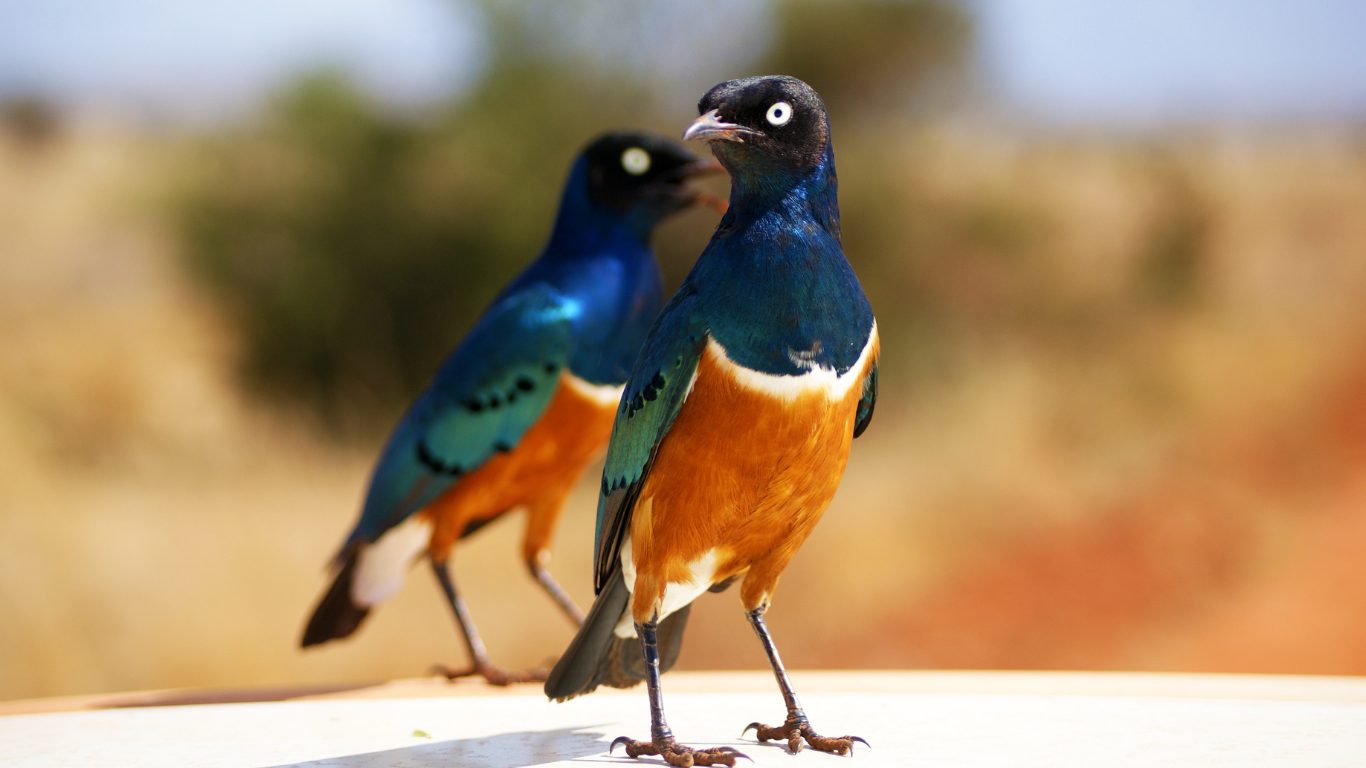
The superb starling is the iridescent jewel you will see at every camp and lodge in Tanzania. Bold, noisy, and impossibly colourful, it is the perfect warm-up subject for your safari photography.
Behaviour & Facts
Life in the Wild
Iridescent Camp Resident
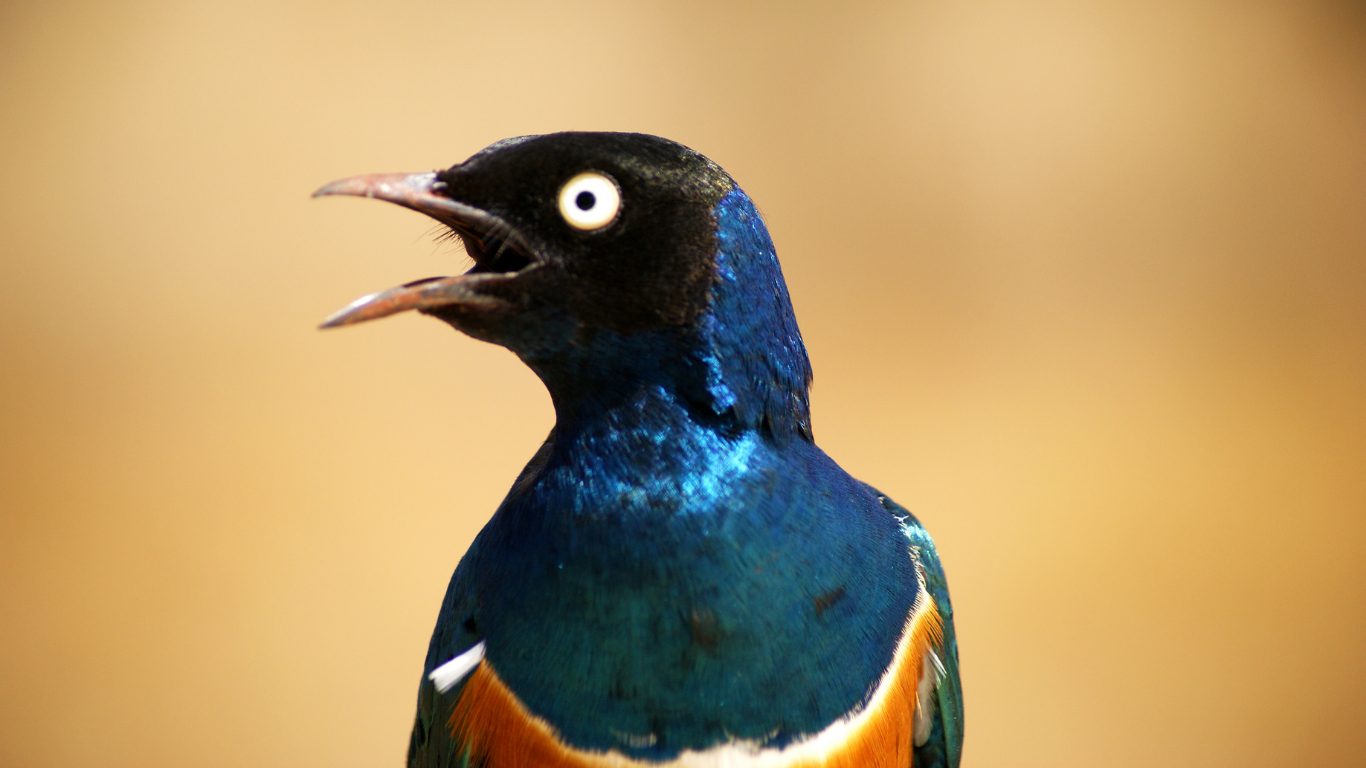
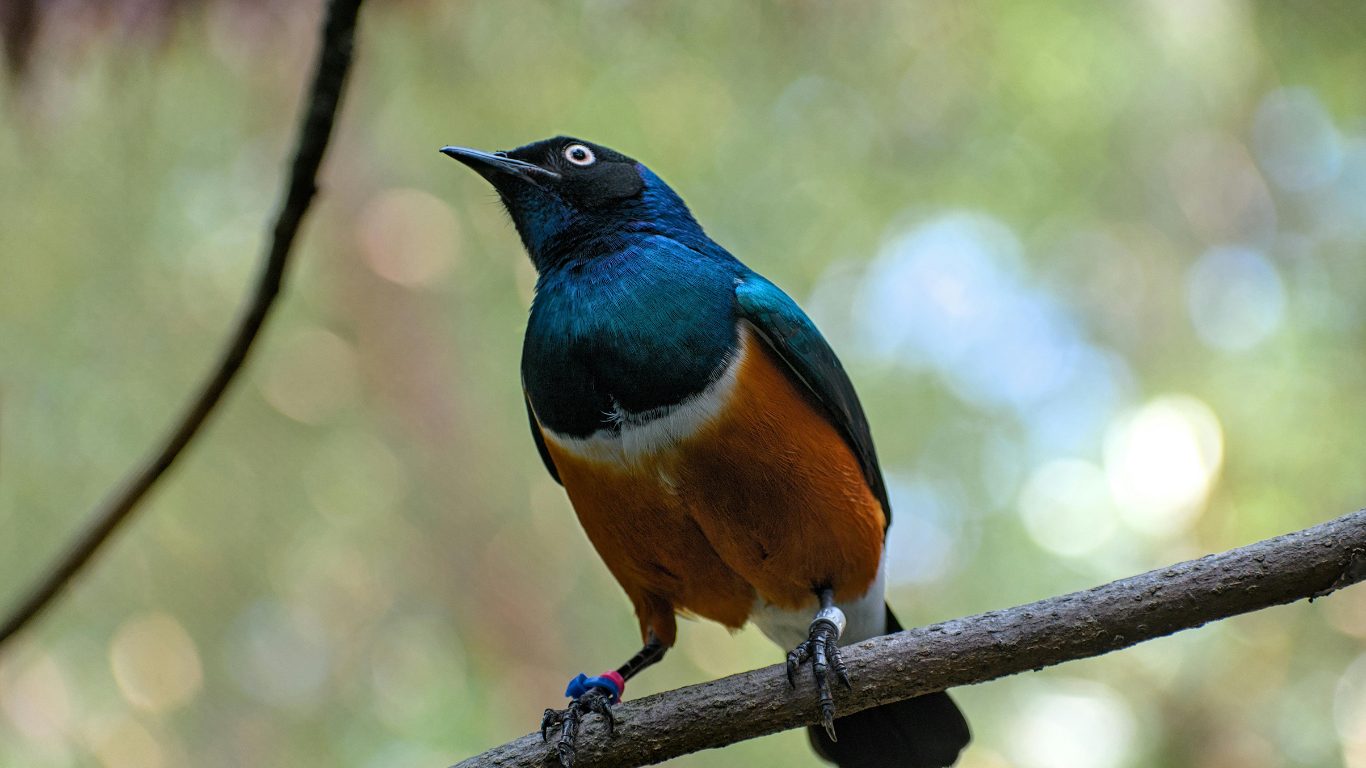
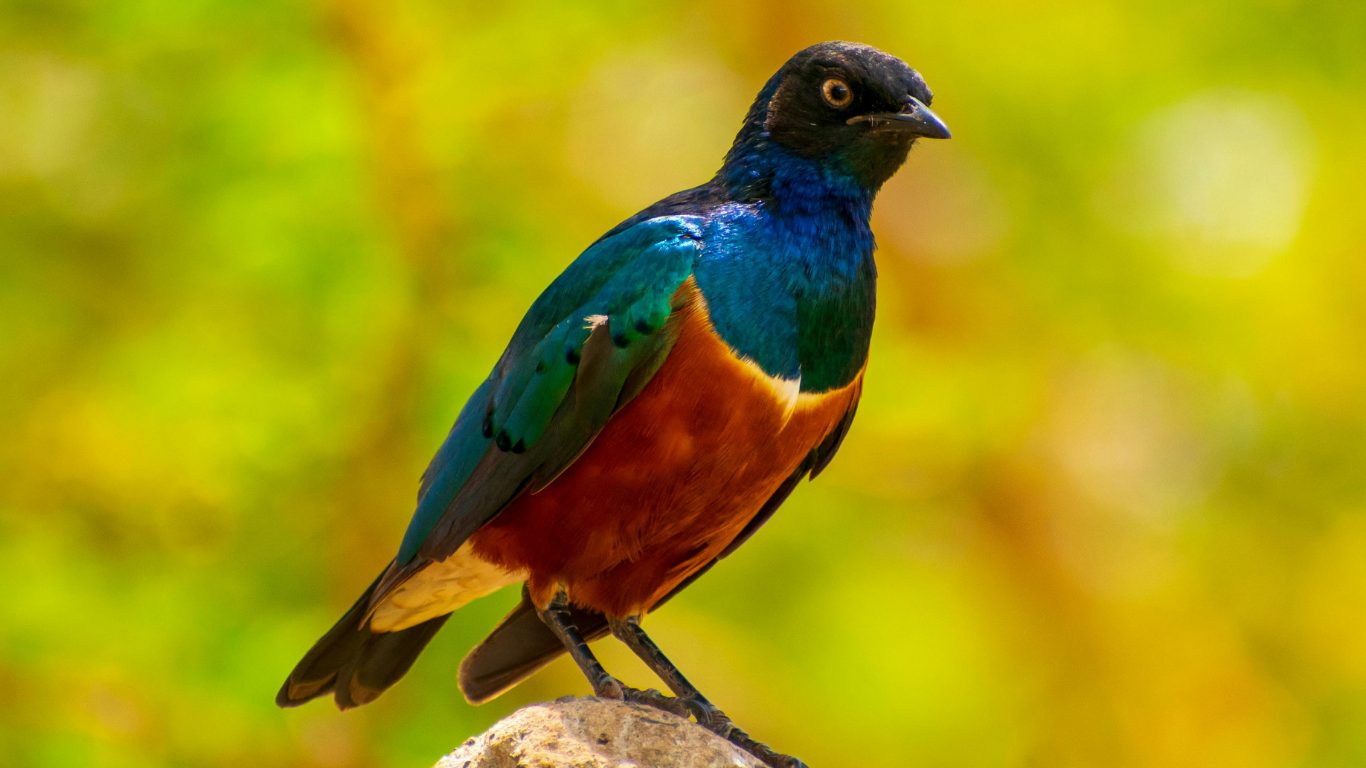
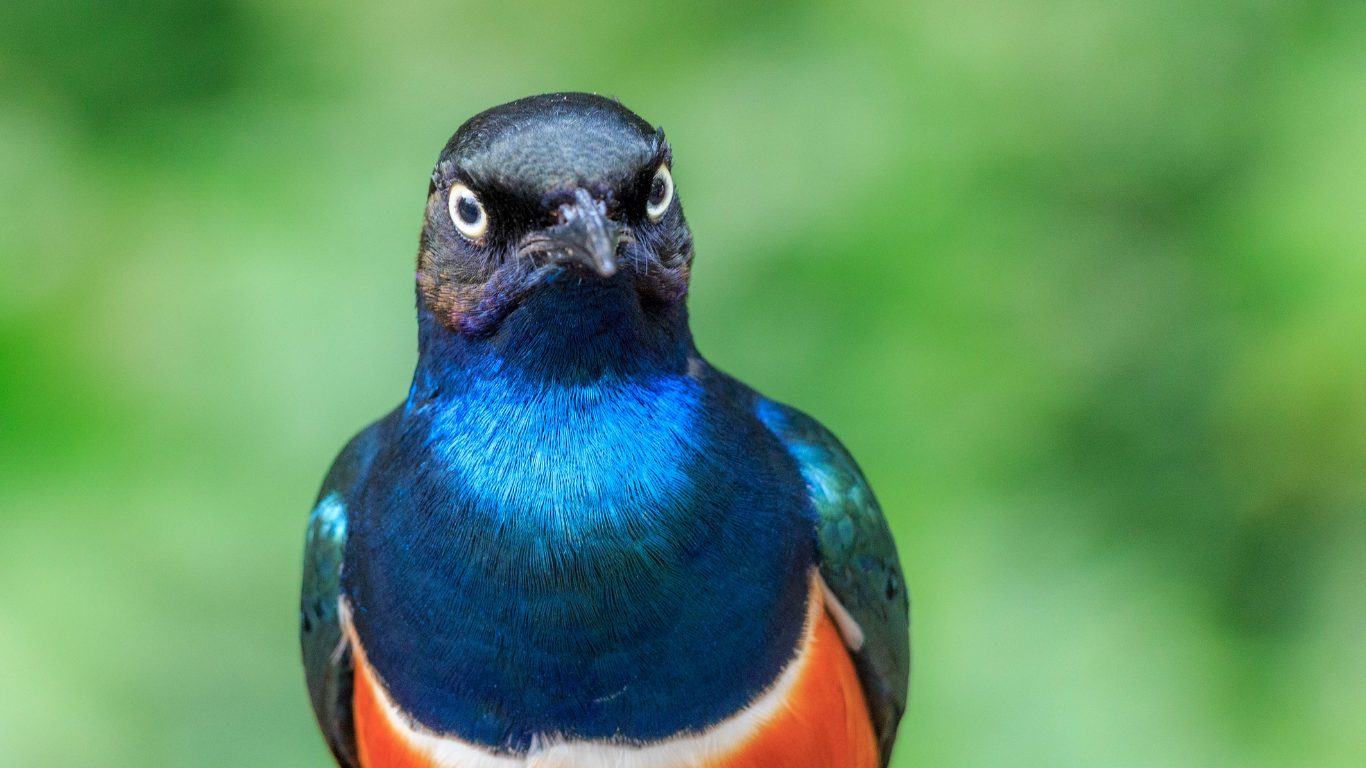
Superb starlings are the signature bird of the Tanzania safari experience. Their metallic blue-green back, vivid orange underparts, and thin white breast band make them one of the most photogenic small birds in Africa. They thrive in open savanna, woodland edges, and anywhere humans gather, making them a constant companion at lodges and camps. Their bold nature means they often land within a metre of guests at breakfast tables. This fearlessness makes them ideal subjects for photography practice. Many guests underestimate them on day one, but by the end of a safari, most people have a favourite starling portrait in their camera roll.
Feeding and Flocking
Superb starlings are cooperative breeders with a complex social structure. A dominant breeding pair is assisted by several non-breeding helpers who defend the territory, feed the chicks, and mob predators near the nest. Groups of up to 40 birds forage together, working through short grass for beetles, caterpillars, and grass seeds. They have an advanced alarm call system. Research has shown they use distinct calls for aerial predators versus ground-based threats, allowing flock members to respond appropriately. This level of vocal complexity is rare among passerines and makes them a genuinely interesting species beyond their looks.
Breeding and Nesting
Breeding occurs during both rainy seasons in Tanzania. The domed nest is built inside thorny shrubs for protection, using dry grass, rootlets, and feathers for insulation. A typical clutch is 3-4 pale blue eggs, incubated for about 12 days. Both parents and helpers feed the chicks after hatching. Fledging takes roughly 18 days, after which juveniles remain with the group. Young birds lack the full iridescence of adults, appearing duller brown on the back until their first moult. Watching the colour develop over successive sightings is a quiet reward for repeat visitors.
Where to See
Superb Starling in Tanzania
Common Questions
Frequently Asked
In the Field
Photography Tips
Shoot with the sun behind you to maximize the iridescent colour. Backlit starlings look dark and lose their signature shimmer.
Use breakfast time at your lodge for close-up portraits. A 70-200mm lens at a dining table gives frame-filling results without disturbing the bird.
Take a burst as the bird turns its head. You will capture the plumage shifting from blue to green in a single sequence.
Get low when they forage on the ground. A low angle isolates the bird against a clean background and shows off the orange belly.
From Our Guests