CREATE YOUR LEGEND | 2026-2028 dates available | SECURE YOUR PLACE WITH JUST £100 DEPOSIT
Tanzania Wildlife
Ostrich
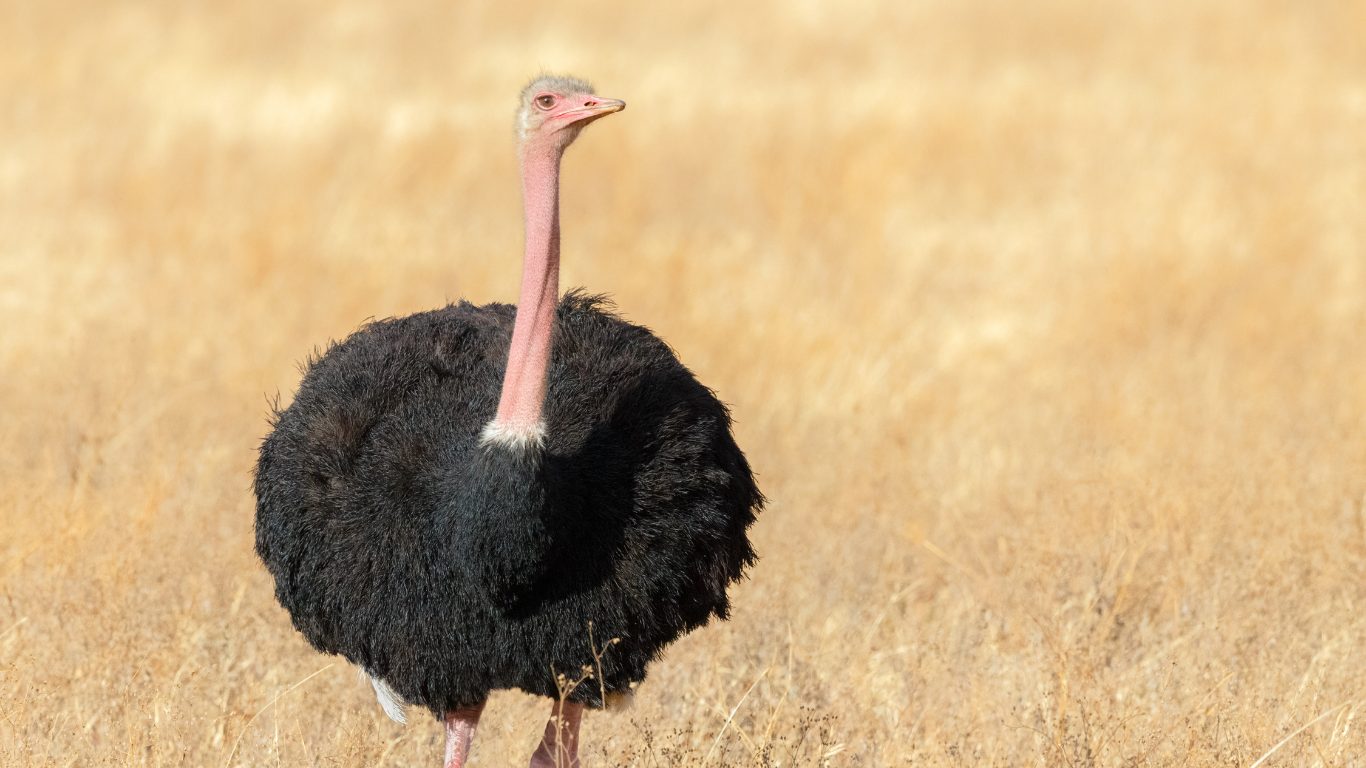
The ostrich traded flight for raw ground speed and became the fastest bird on two legs. At 2.7 meters tall and 145 kg, it is also the largest living bird. Nothing else in the bush runs, kicks, or stares you down quite like an ostrich.
Behaviour & Facts
Life in the Wild
Fastest Legs in Africa
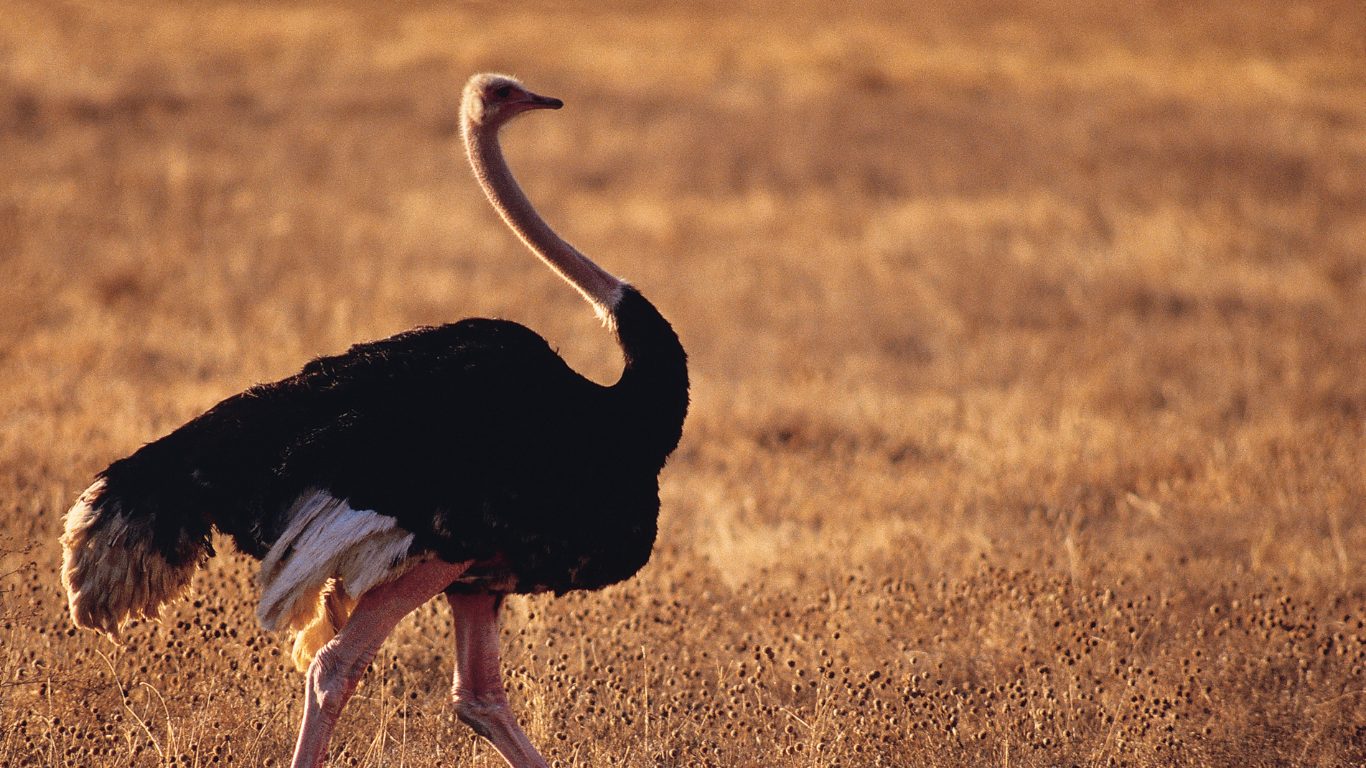
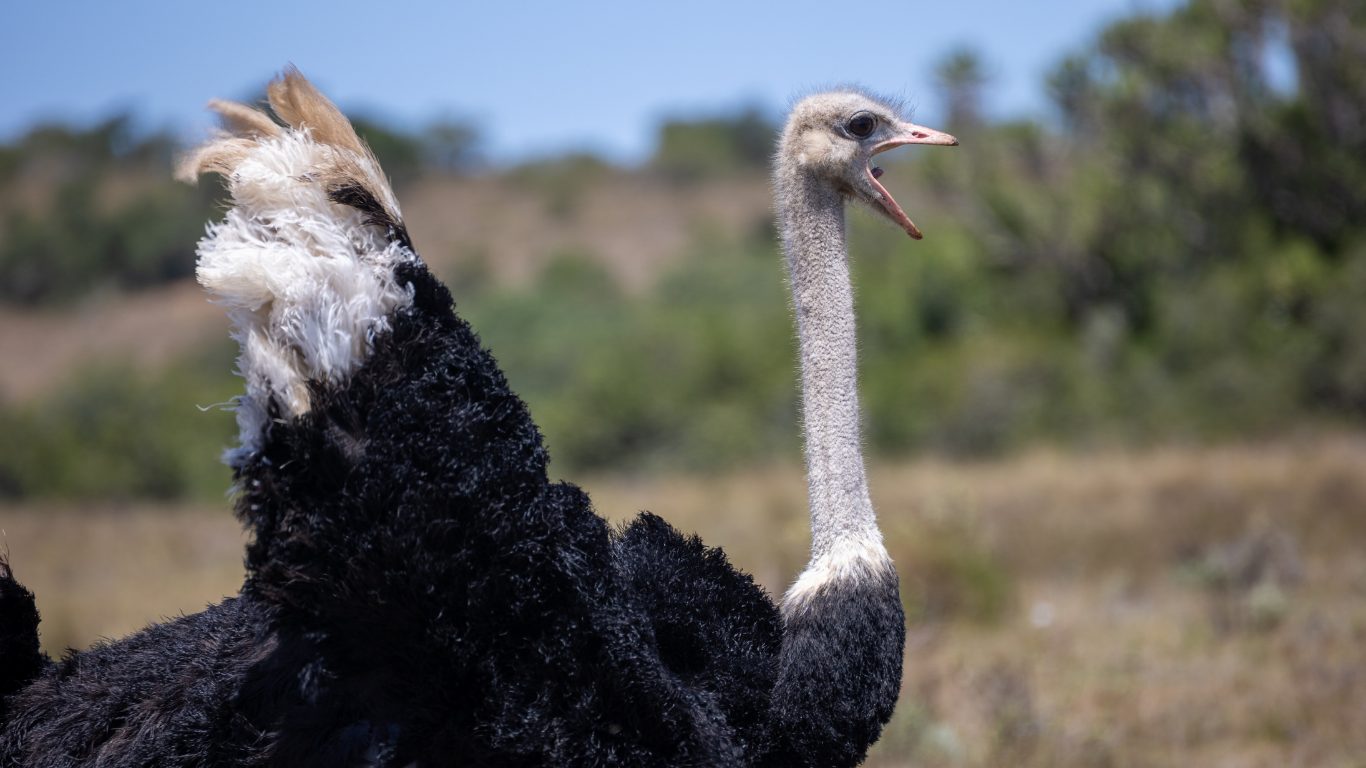
The ostrich is a bird of extremes. It is the tallest, heaviest, and fastest-running bird alive. Males stand up to 2.7 meters tall with black-and-white plumage, while the slightly smaller females wear dusty brown feathers that serve as better camouflage during nesting. Despite being flightless, the ostrich retains vestigial wings that serve real functions. They act as stabilizers during high-speed running, provide shade for chicks, and play a central role in courtship displays. The wing feathers are soft and symmetrical, lacking the interlocking barbs that enable flight in other birds.
Flightless Giant
Ostriches are built for speed from the ground up. Their two-toed feet are unique among birds and engineered for efficient running. The powerful leg muscles generate enough force to cover 5 meters in a single stride, and the bird can change direction quickly despite its size. At full sprint, an ostrich can outrun most predators. The kick is equally formidable. An ostrich kicks forward with its powerful legs, and the large claw on the inner toe can inflict fatal injuries on predators including lions and hyenas. This defensive capability, combined with excellent eyesight and the height advantage, makes the adult ostrich a surprisingly difficult target.
Communal Nesting
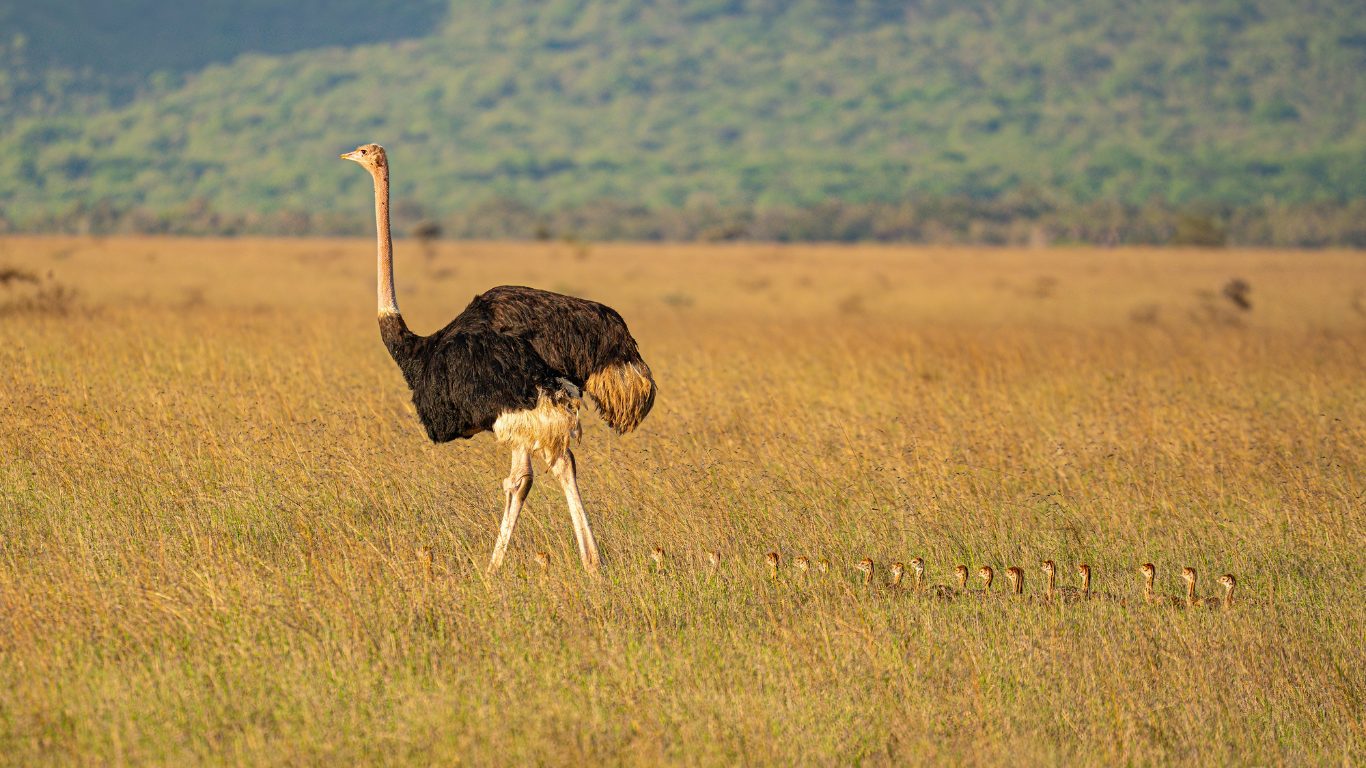
Ostrich nesting is a communal affair. A dominant male pairs with a major hen, who lays her eggs in a scrape on the ground. Several minor hens may also lay eggs in the same nest, resulting in clutches of up to 40 eggs. The major hen can recognize her own eggs and positions them centrally for the best incubation. The male incubates at night -- his black plumage absorbs heat and is less visible to nocturnal predators -- while the female takes day shifts, her brown feathers blending with the dry ground. Chicks from multiple nests often combine into large creches guarded by one or two adults, providing safety in numbers as they grow.
Where to See
Ostrich in Tanzania
Common Questions
Frequently Asked
In the Field
Photography Tips
A running ostrich at full stride is dramatic. Use 1/2000s minimum shutter speed and continuous autofocus. Position yourself along the probable run path rather than chasing from behind.
The wing-swaying courtship display is a strong behavioral shot. Males perform it in the open. Shoot from distance with a long lens to avoid disturbing the display.
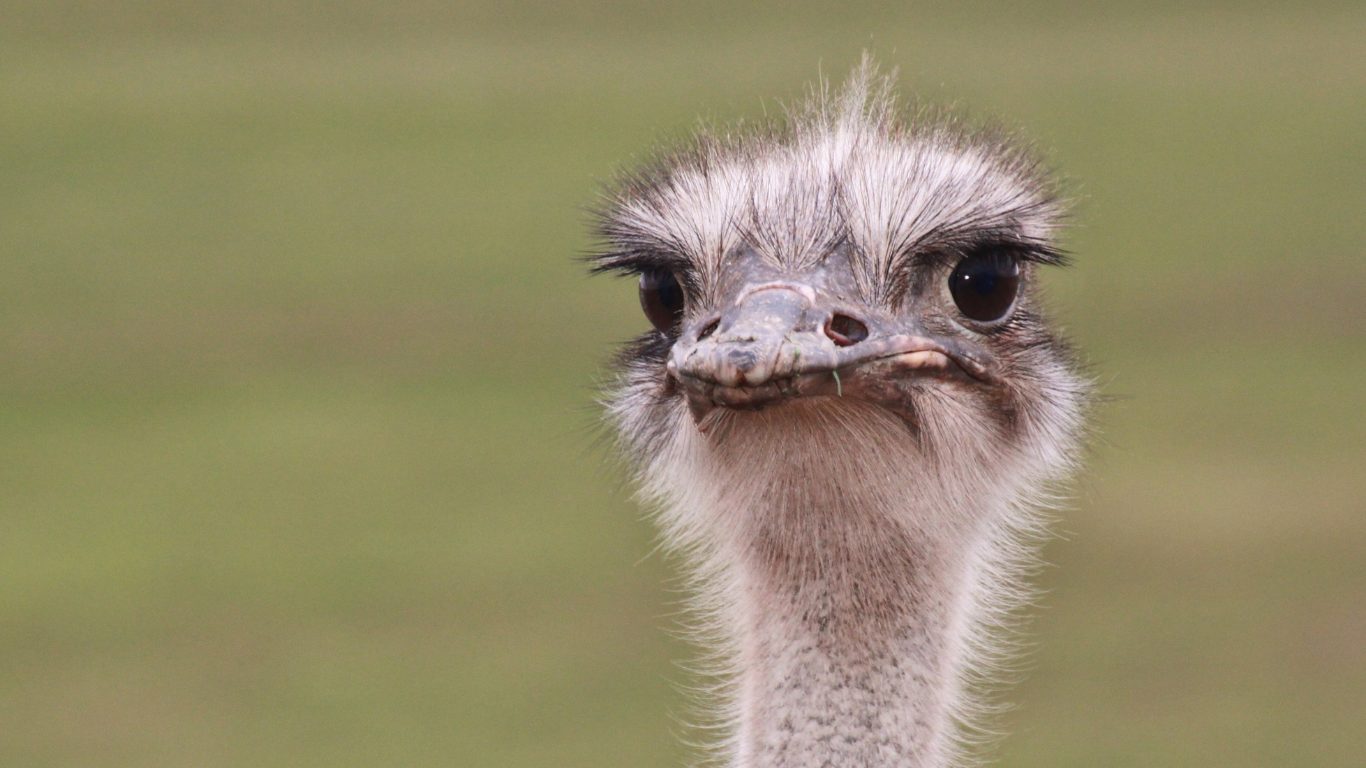
Getting eye-level with an ostrich requires distance and a long lens due to their height. A vehicle on slightly elevated ground helps. The large eye and long lashes make for compelling close-up portraits.
Ostrich families with chicks are a safari highlight. The size contrast between adults and tiny striped chicks tells a great story. Use a medium zoom to include the full group.
From Our Guests