CREATE YOUR LEGEND | 2026-2028 dates available | SECURE YOUR PLACE WITH JUST £100 DEPOSIT
Tanzania Wildlife
Lilac-breasted Roller
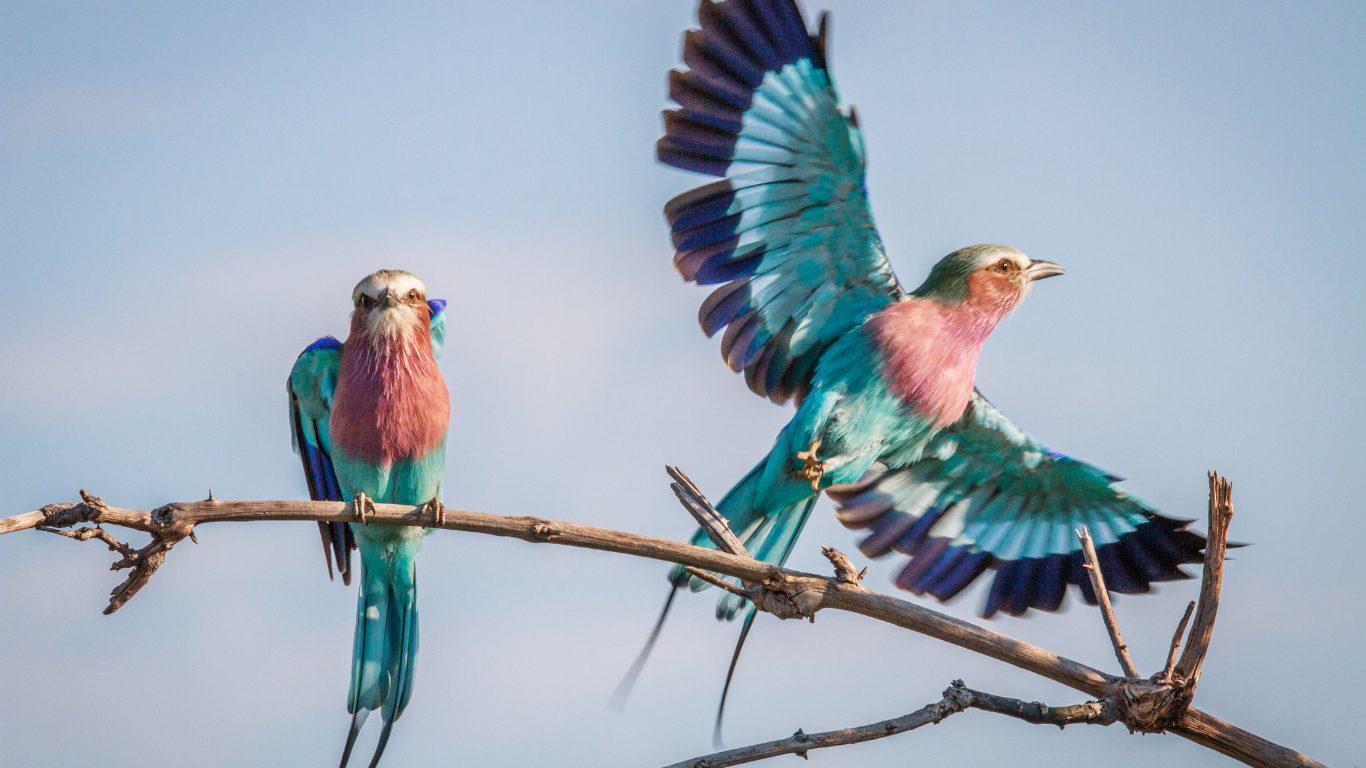
The lilac-breasted roller packs eight colors into one small bird and puts on an aerial show that stops safari vehicles in their tracks. It is the most photographed bird in East Africa for good reason.
Behaviour & Facts
Life in the Wild
Africa's Flying Rainbow
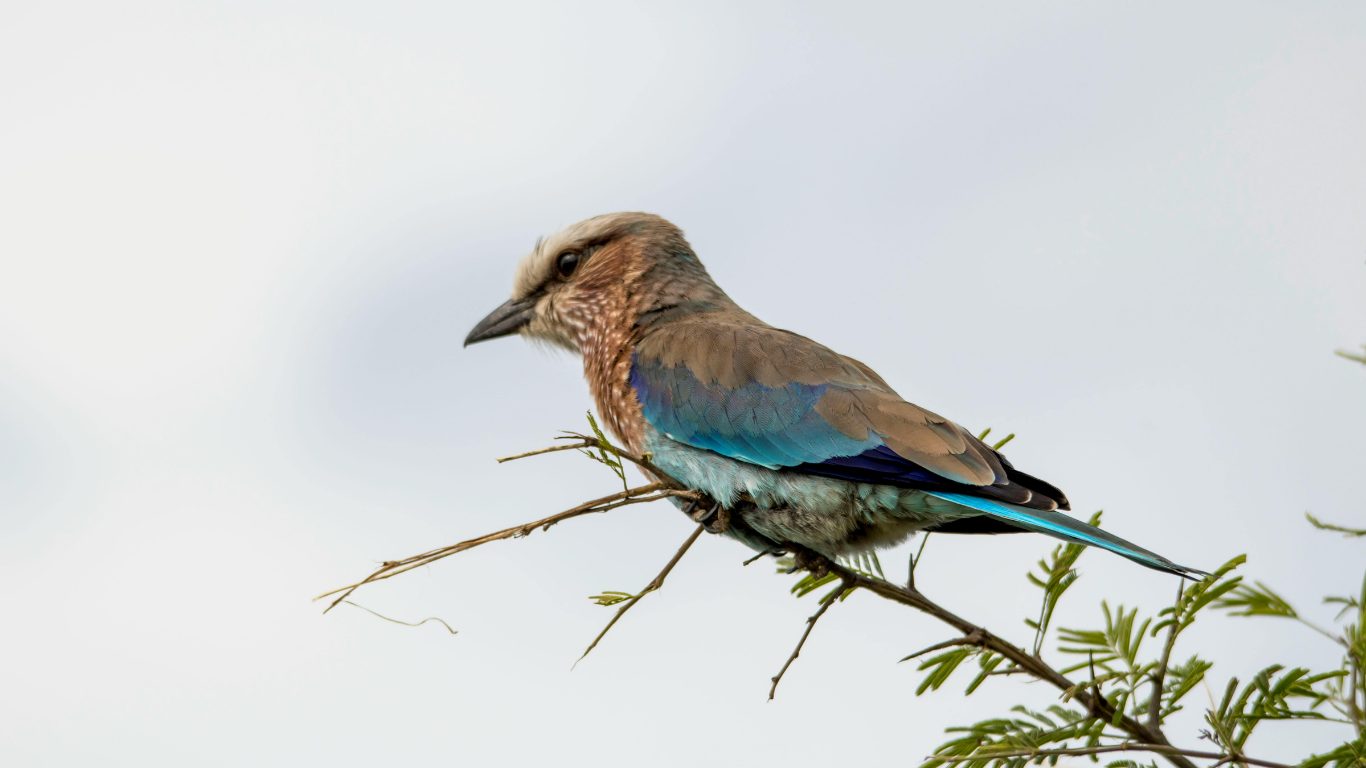
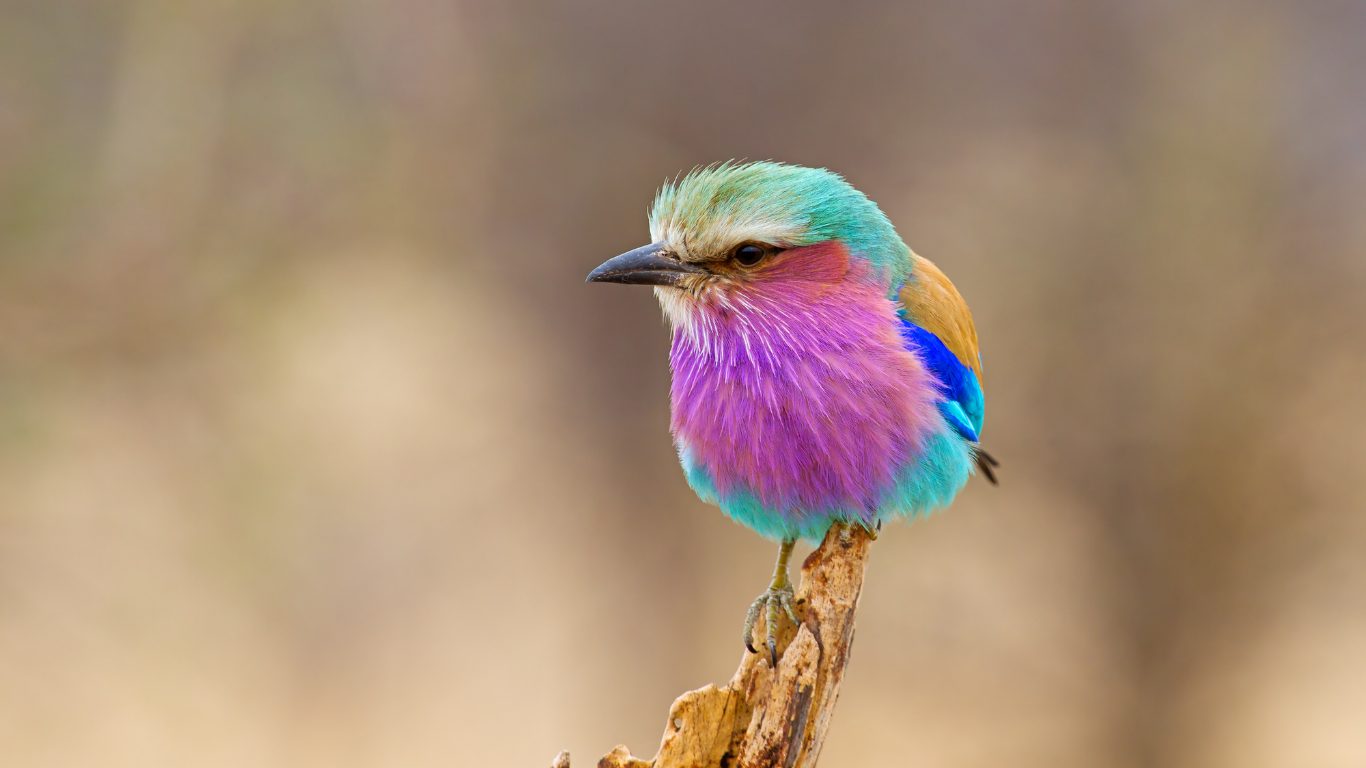
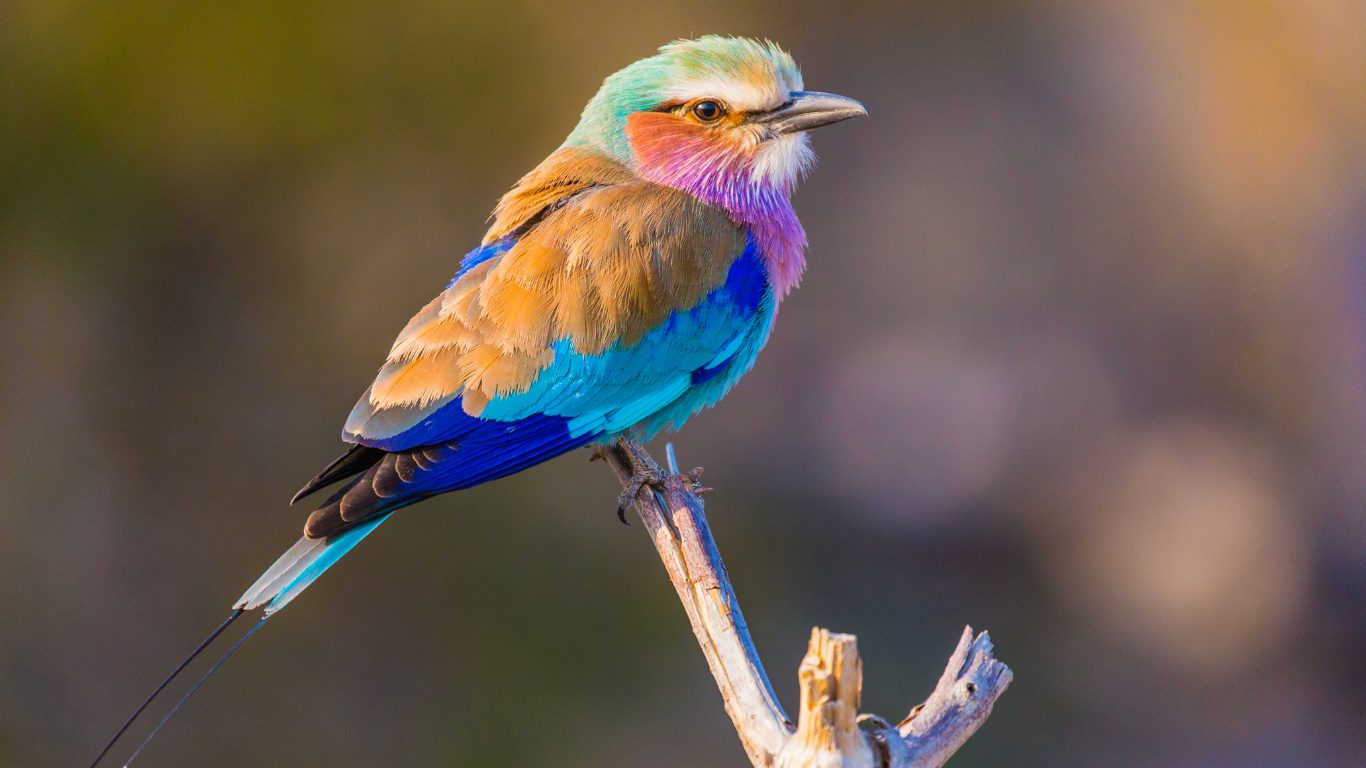
The lilac-breasted roller is a member of the Coraciidae family and one of roughly a dozen roller species found worldwide. In East Africa, it is the most commonly encountered and by far the most colorful. Its plumage includes lilac on the breast, turquoise on the wings and tail, a green crown, and a tawny back. Despite its vivid appearance, the roller is a capable predator. It hunts with precision from exposed perches, using its excellent eyesight to spot movement on the ground below. Once prey is detected, the bird drops fast and strikes with its strong, slightly hooked bill.
Aerial Acrobat
The courtship display is the highlight of roller behavior. Males climb to 10 meters or more before diving in a series of side-to-side rolls, calling loudly throughout. The display reveals the full spread of wing colors and signals fitness to potential mates. Pairs that form are monogamous for the breeding season. Nesting takes place in tree cavities where the female lays 2-4 eggs on a bare surface without added nesting material. Both parents incubate and both feed the chicks after hatching. The young fledge after about 19 days and remain dependent on the adults for several weeks.
Perch-and-Pounce Hunter
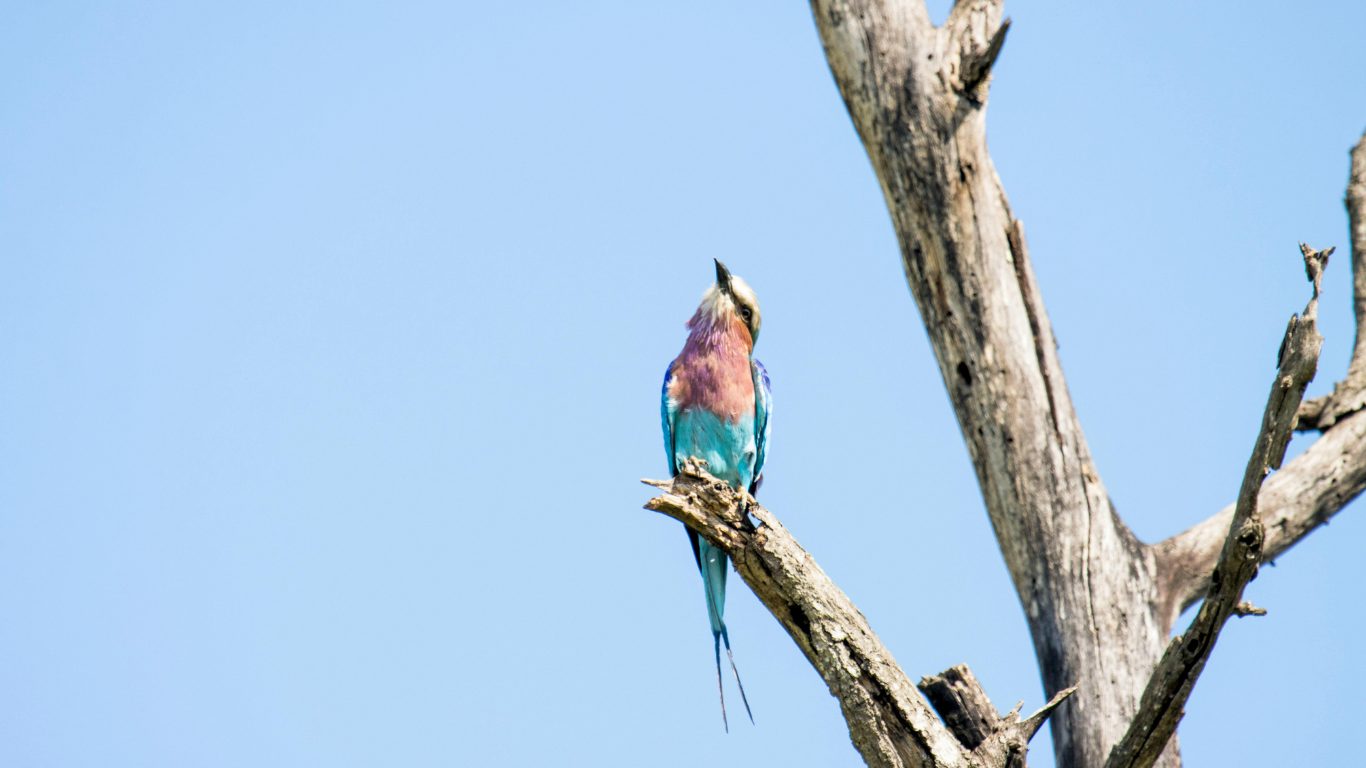
Rollers are highly territorial and will aggressively mob larger birds, including eagles and hawks, that enter their territory. This boldness is especially pronounced during the nesting period when both adults patrol the area around the nest cavity. In Tanzania, the best places to find lilac-breasted rollers are the open savannas of the Serengeti and Tarangire. They favor areas with scattered trees or dead snags that provide hunting perches. Power lines and fence posts along park roads are also reliable spots to check.
Where to See
Lilac-breasted Roller in Tanzania



Common Questions
Frequently Asked
In the Field
Photography Tips
Scout for rollers on isolated dead branches or fence posts where the background is uncluttered sky or blurred savanna. The colors pop hardest against simple backgrounds.
During breeding season, watch for the male's rolling display flight. Set your camera to burst mode at 1/2000s or faster to freeze the mid-air tumble.
Position yourself so the sun hits the bird from the side. Side lighting reveals the full range of colors without washing out the lilac breast or turquoise wings.
Wait for the roller to catch a grasshopper or lizard. The moment it returns to its perch with prey makes a far more compelling image than a static portrait.
From Our Guests