CREATE YOUR LEGEND | 2026-2028 dates available | SECURE YOUR PLACE WITH JUST £100 DEPOSIT
Tanzania Wildlife
Leopard Tortoise
The leopard tortoise is East Africa's largest tortoise, carrying a beautifully patterned shell across the savanna at its own pace. These long-lived reptiles can exceed 80 years in the wild, making every individual a living piece of natural history.
Behaviour & Facts
Life in the Wild
East Africa's Giant Tortoise
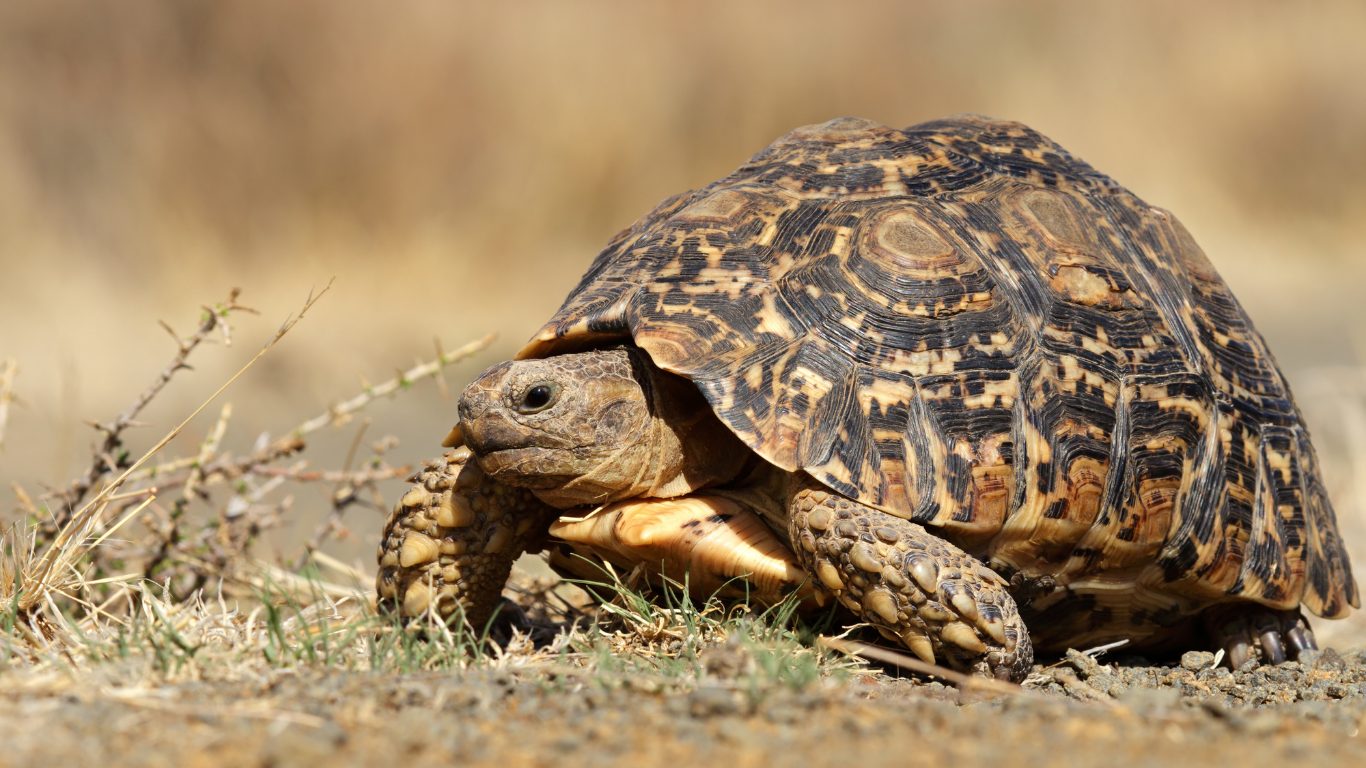
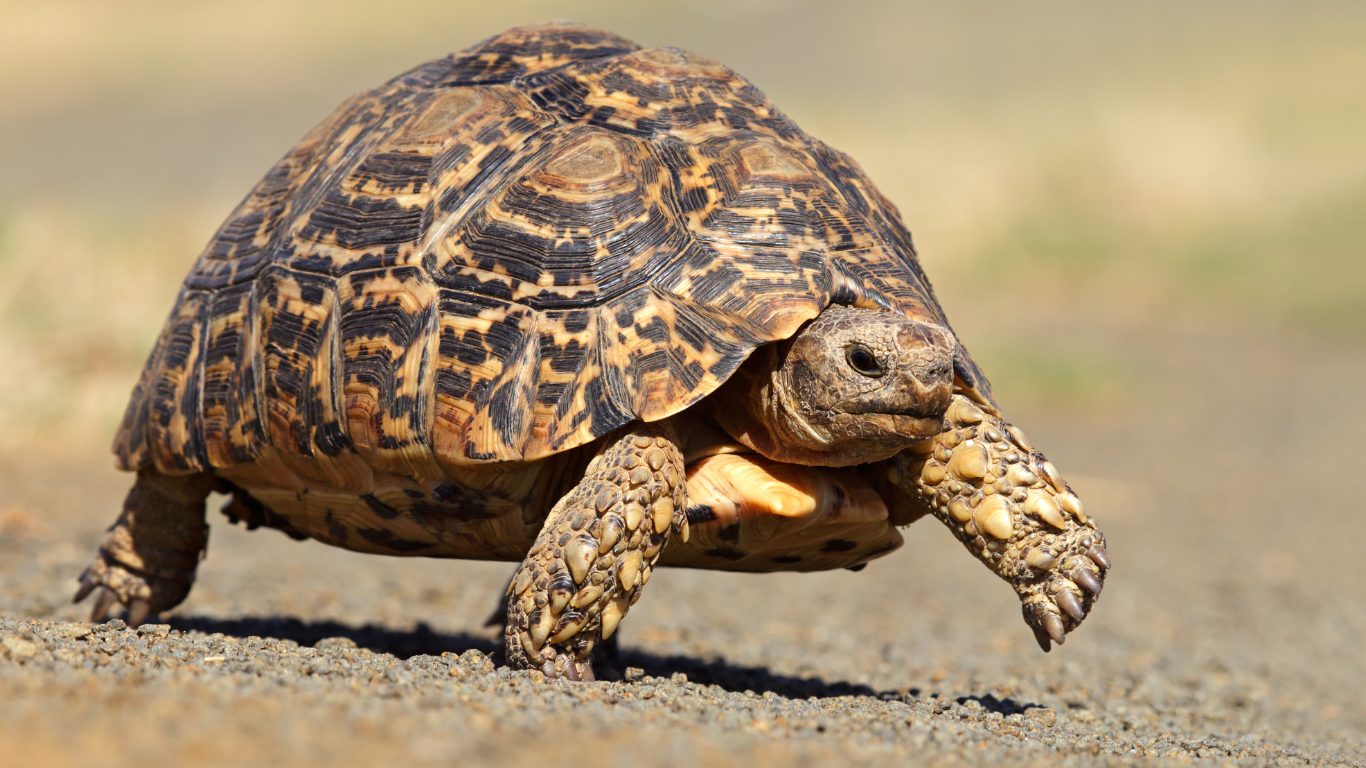
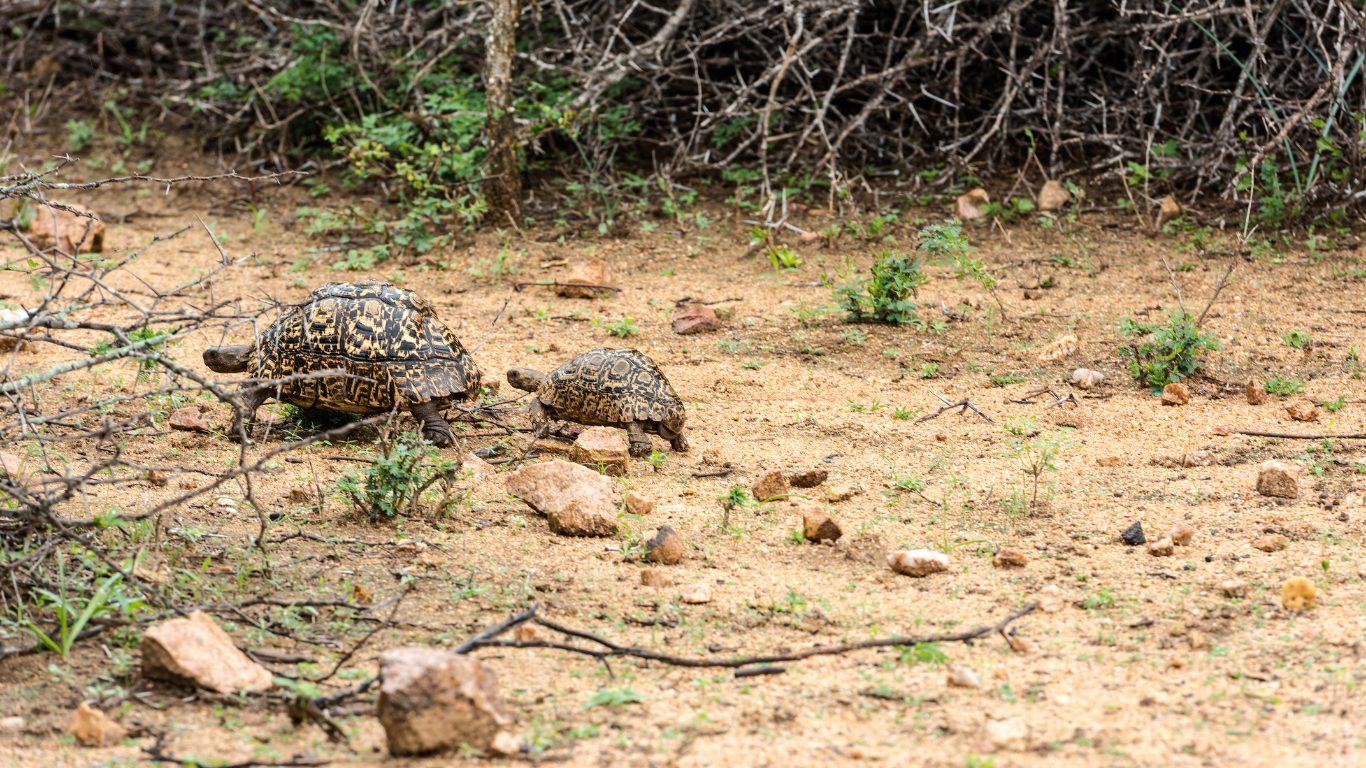
The leopard tortoise is a member of the 'Small Five' and one of the most charming reptile encounters on a Tanzania safari. Its high-domed shell, patterned with black and yellow markings, is immediately recognizable. Adults grow to 40 centimetres in carapace length, making them the fourth-largest tortoise species in the world and the largest in East Africa. They are widespread across Tanzania's northern circuit, favouring semi-arid savanna and grassland habitats. You are most likely to encounter them crossing roads, grazing on short grass in the open, or sheltering under shrubs during midday heat. They are solitary and slow-moving, which makes them easy to observe and photograph once spotted.
Grazing and Movement
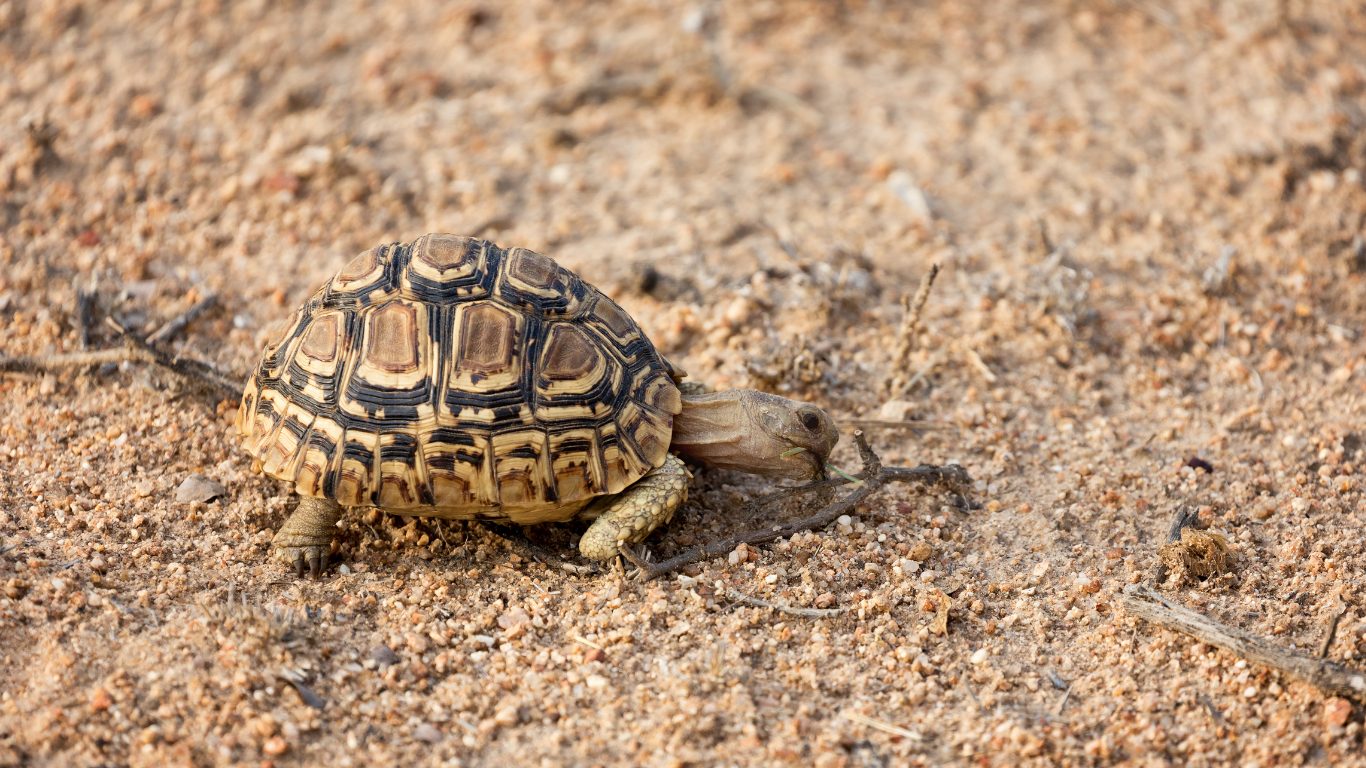
Leopard tortoises are dedicated grazers. They feed primarily on mixed grasses and will also eat thistles, prickly pear pads, and fallen fruit. An unusual dietary behaviour is their consumption of bone fragments and old hyena droppings, which provides the calcium they need for shell maintenance and egg production. They can go for extended periods without drinking, obtaining most of their moisture from food. Their movement patterns are governed by food and water availability. During the wet season, they range more widely as fresh grass is abundant everywhere. In the dry season, they contract their range and spend more time near remaining green patches and water sources. Despite their reputation for slowness, they cover considerable ground over the course of a day.
Shell and Longevity
The leopard tortoise's shell is a remarkable structure. It is composed of fused bone plates covered by keratin scutes, and it grows continuously throughout the animal's life. Growth rings on each scute can give a rough estimate of age in younger animals, though they become less distinct with time. The high dome shape makes it difficult for predators to get a grip, and adults have very few natural enemies. Longevity is one of the leopard tortoise's most notable traits. Individuals commonly live beyond 80 years, and centenarians are not out of the question. This means a large tortoise you see crossing a Serengeti track today could have been alive before Tanzania gained independence. They reach sexual maturity between 12 and 15 years, and females can produce clutches annually for decades.
Where to See
Leopard Tortoise in Tanzania
Common Questions
Frequently Asked
In the Field
Photography Tips
Drop to ground level or shoot from a low vehicle window. An eye-level perspective gives the tortoise presence and dignity in the frame.
Use a macro or close-focus telephoto to capture the intricate black-and-yellow mosaic on the shell. Each animal's pattern is unique.
When a tortoise crosses a track, position yourself ahead and let it walk toward you. This creates a natural leading-line composition with the road.
Pull back to show the tortoise in its savanna landscape. A small tortoise against a vast plain tells a powerful story about scale and endurance.
From Our Guests