CREATE YOUR LEGEND | 2026-2028 dates available | SECURE YOUR PLACE WITH JUST £100 DEPOSIT
Tanzania Wildlife
Honey Badger
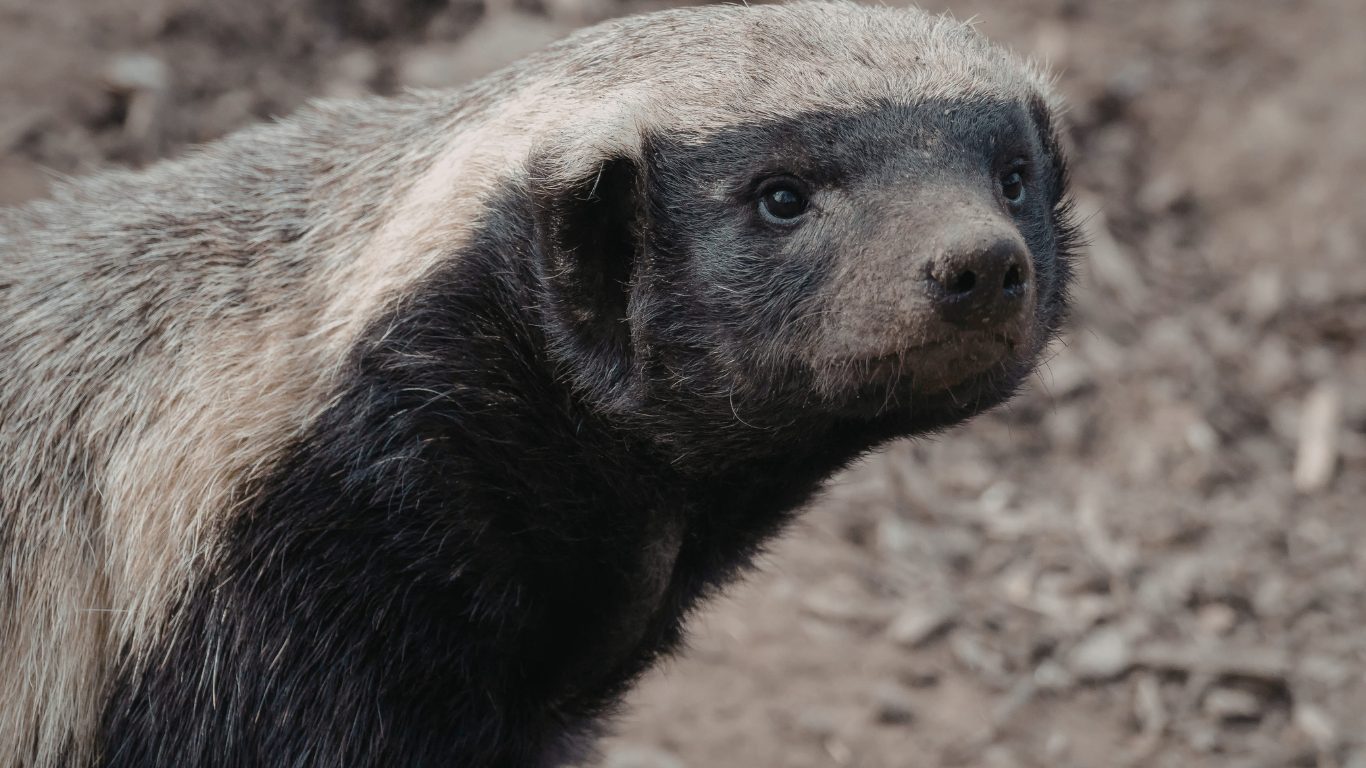
Pound for pound, the honey badger is the most fearless mammal in Africa. It eats cobras for breakfast, faces down lions, and shrugs off bee stings. Every sighting is earned - and worth the wait.
Behaviour & Facts
Life in the Wild
Fearless Foragers
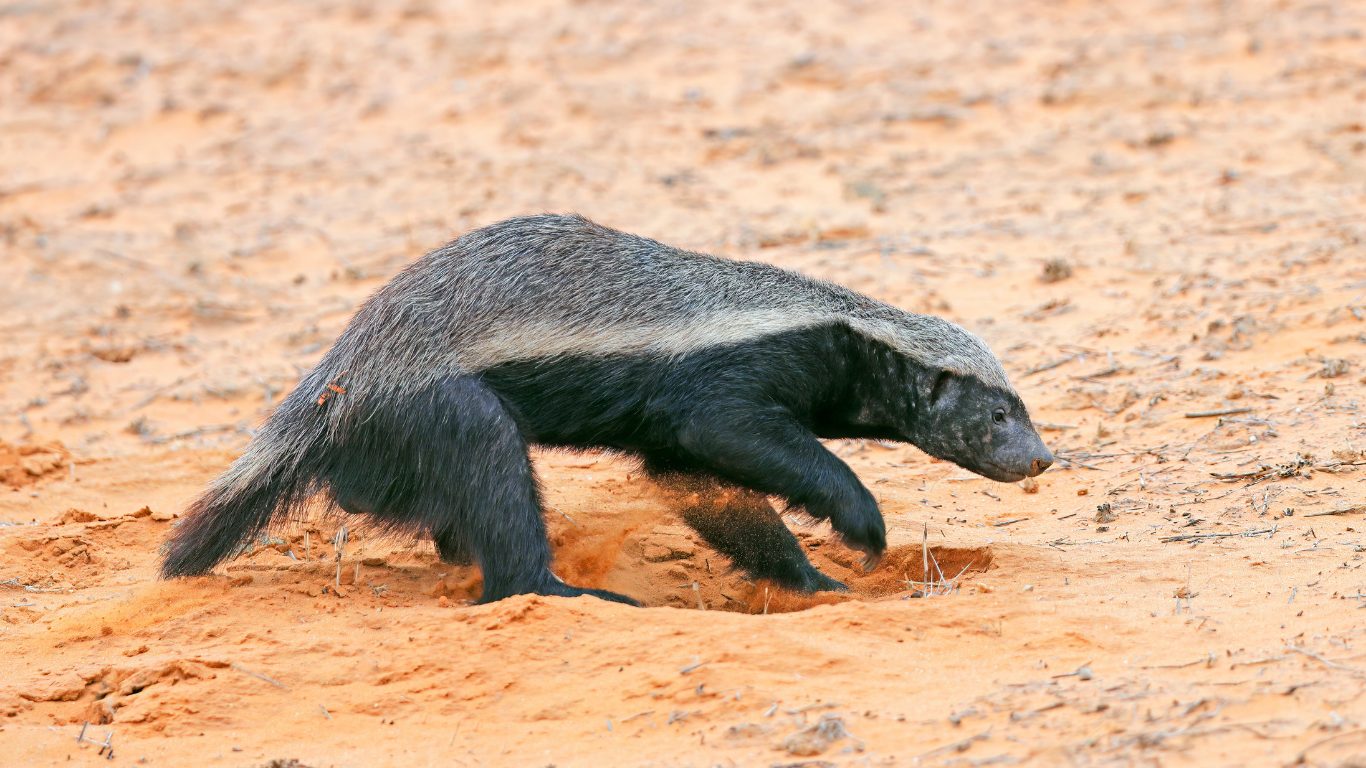
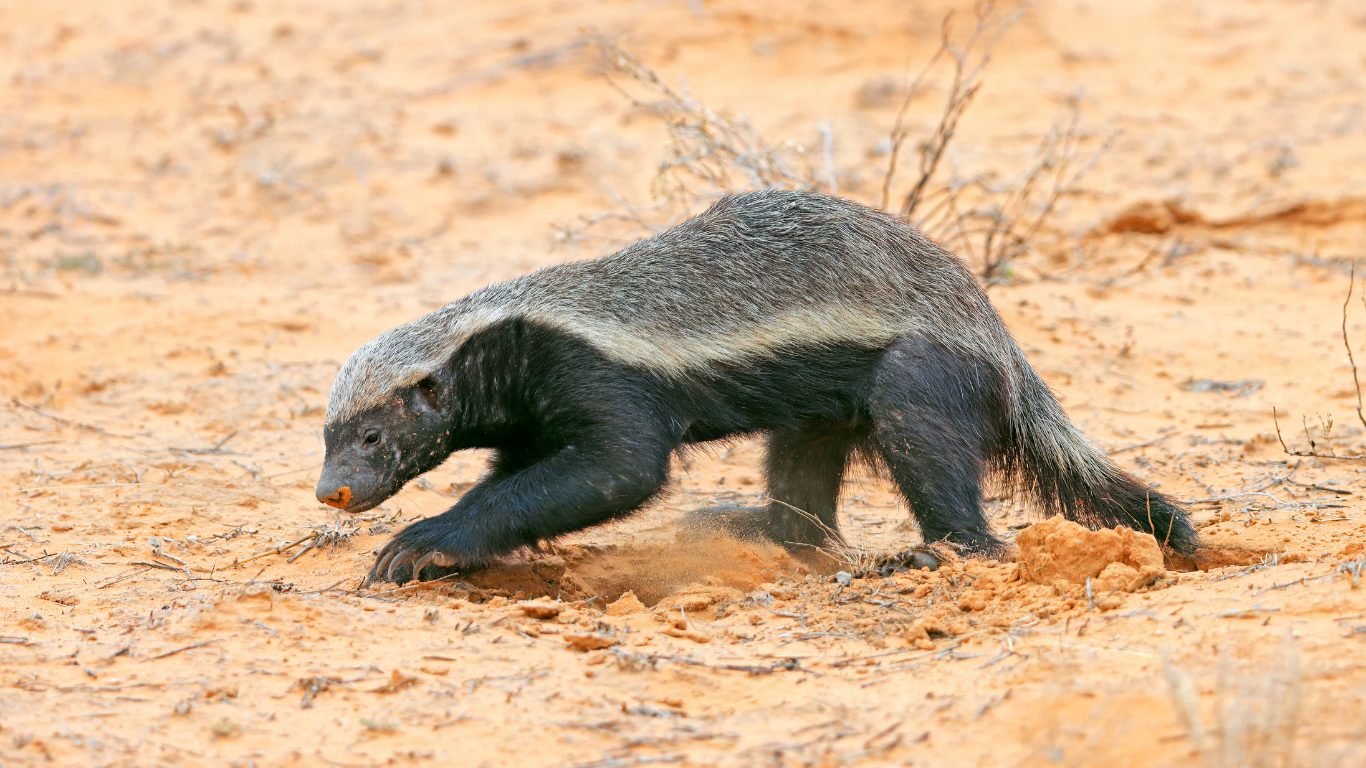
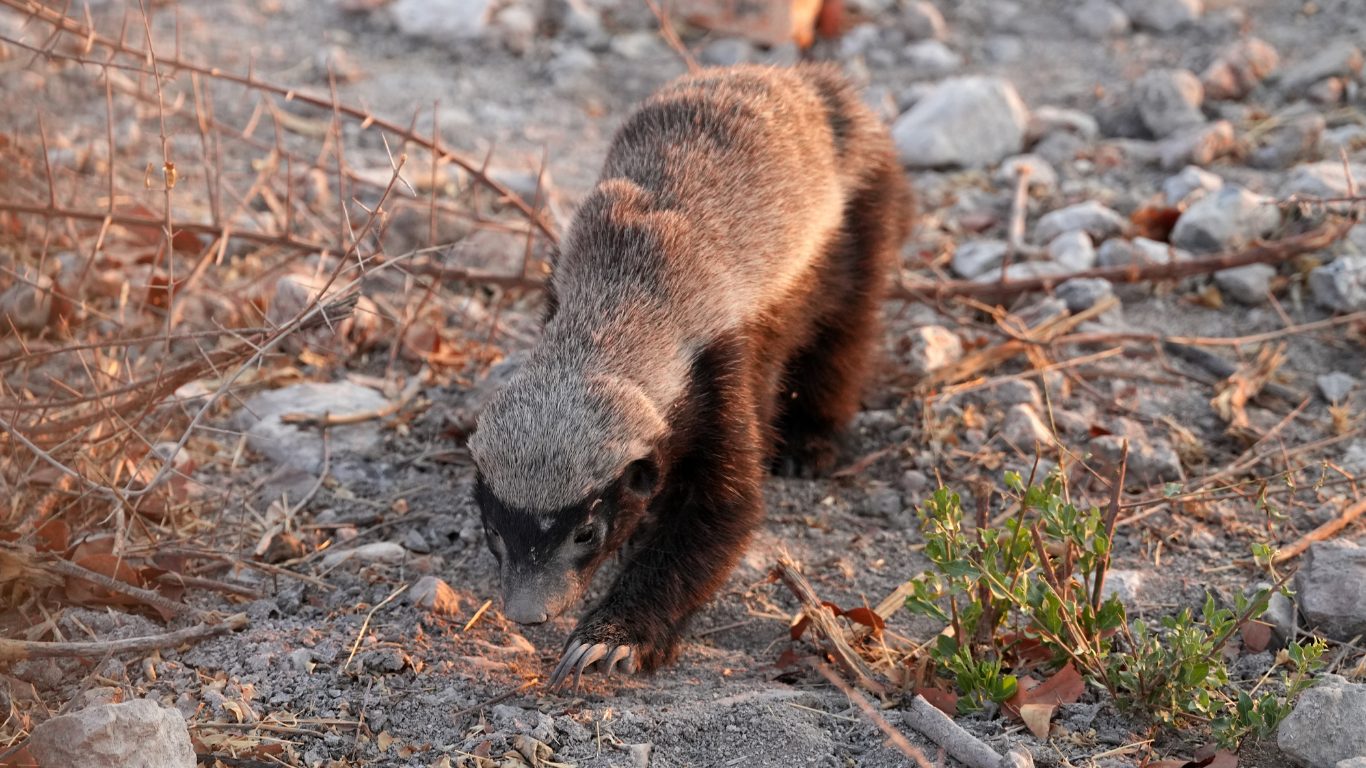
The honey badger's reputation is not exaggerated. This compact mustelid routinely takes on opponents that outweigh it by a factor of ten or more, and it usually comes out on top - or at least walks away intact. Its foraging style is relentless and indiscriminate. A honey badger on the move will investigate every burrow, overturn rocks, rip bark from trees, and dig out scorpion dens without pause. Nothing in its path is safe from investigation. This fearlessness is backed by genuine physical capability. Its jaws can crack tortoise shells. Its claws can dig through sun-baked earth. And its metabolism drives it to forage almost continuously, covering up to 35 kilometres in a single night. When you encounter a honey badger on safari, you are watching an animal that has evolved to be the most persistent, aggressive small predator on the continent.
Built for Combat
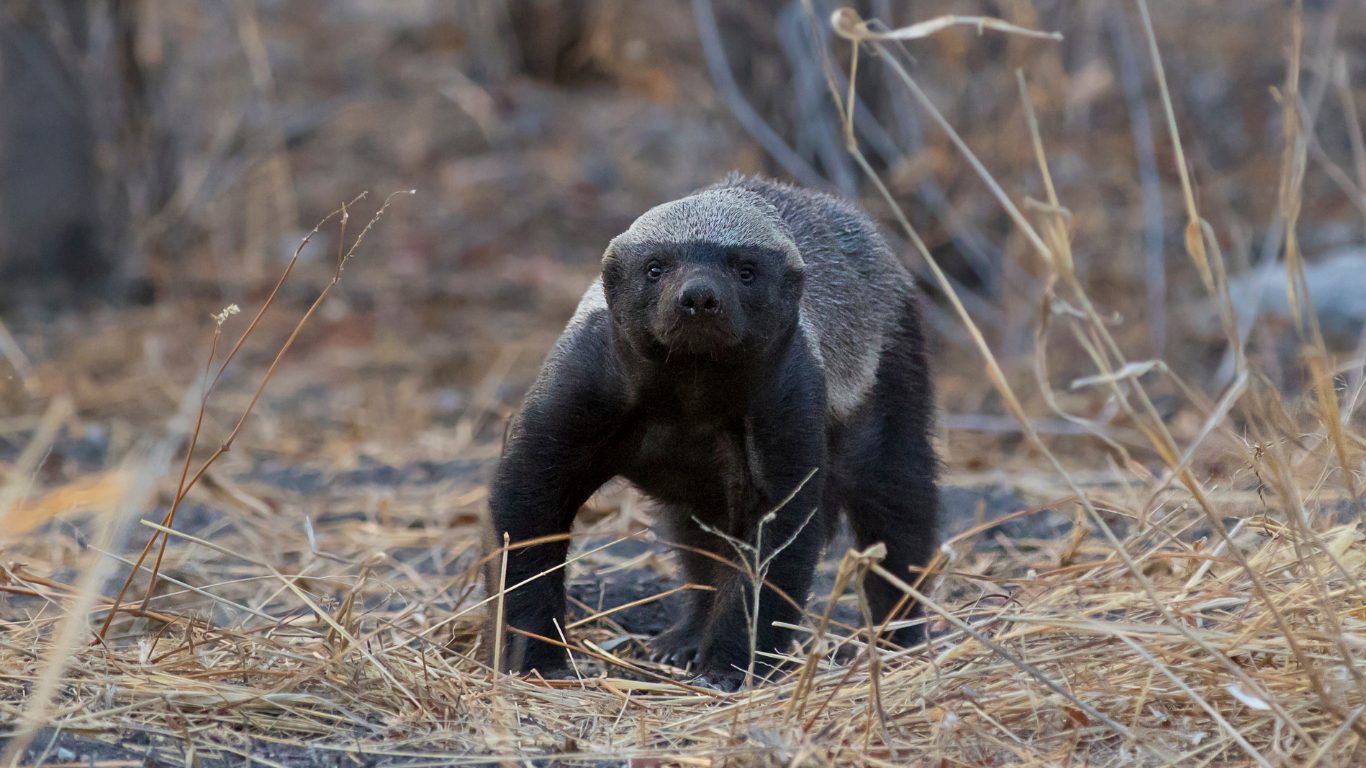
The honey badger's skin is its secret weapon. At up to 6 millimetres thick on the back and neck, it resists bites, stings, and even some snakebite penetration. Critically, the skin is extremely loose, allowing the animal to twist and turn within it. A leopard gripping a honey badger by the scruff will find the badger rotating inside its own skin to deliver a retaliatory bite - a disconcerting experience for any predator. Venom resistance adds another layer of defence. The molecular basis is not fully understood, but honey badgers possess mutations in nicotinic acetylcholine receptors similar to those found in other venom-resistant species. In practice, this means a honey badger can absorb a full cobra strike, collapse for a period, then wake up and eat the snake. This combination of tough skin, loose fit, venom resistance, and relentless aggression makes the honey badger genuinely dangerous to animals many times its size.
Honeyguide Partnership
The relationship between honey badgers and greater honeyguide birds is one of the most discussed interspecific partnerships in African ecology. The honeyguide locates bee nests but cannot access the wax and larvae it craves. It allegedly leads the honey badger to the nest with persistent chattering calls. The badger, with its thick skin protecting against stings and powerful claws for ripping open hives, does the hard work. The honeyguide then feeds on the exposed wax and bee grubs. Scientific verification of this mutualism remains incomplete. While the honeyguide demonstrably leads humans to bee nests - a behaviour well documented in rural East Africa - direct evidence of it guiding honey badgers is largely anecdotal. What is certain is that honey badgers are expert hive raiders regardless of any bird's assistance. They locate hives by smell, raid them at night when bees are less active, and consume everything - honey, wax, larvae, and adult bees alike.
Where to See
Honey Badger in Tanzania
Common Questions
Frequently Asked
In the Field
Photography Tips
Honey badgers are unpredictable and can be aggressive. Shoot from inside the vehicle with a 200-400mm lens. They often ignore vehicles entirely, giving you close approach opportunities.
If a honey badger is digging or hunting, shoot in continuous burst mode. The action is fast and unpredictable - you want a high frame rate to catch the key moments.
Many sightings occur at dawn, dusk, or on overcast days. Keep your ISO flexible and use image stabilisation. A honey badger moving through dappled woodland light is a challenging exposure situation.
If the honey badger encounters another predator, have your camera ready. The defensive posture - back arched, hair raised, teeth bared - is the defining image of this species.
From Our Guests