CREATE YOUR LEGEND | 2026-2028 dates available | SECURE YOUR PLACE WITH JUST £100 DEPOSIT
Tanzania Wildlife
Grey Crowned Crane
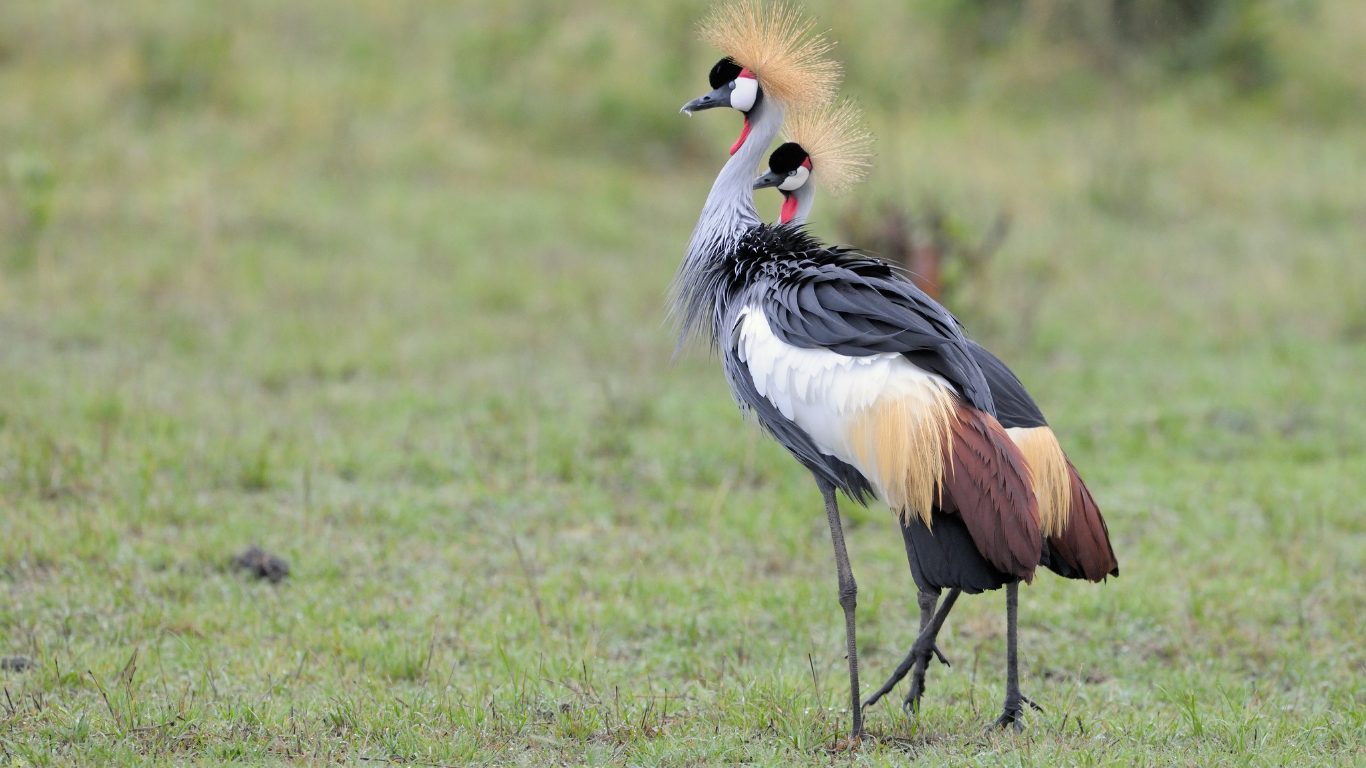
The grey crowned crane wears a golden crown, dances with its lifelong partner, and perches in trees like no other crane on Earth. It is also Endangered, making every sighting in Tanzania's wetlands something to value.
Behaviour & Facts
Life in the Wild
Golden Crown Dance
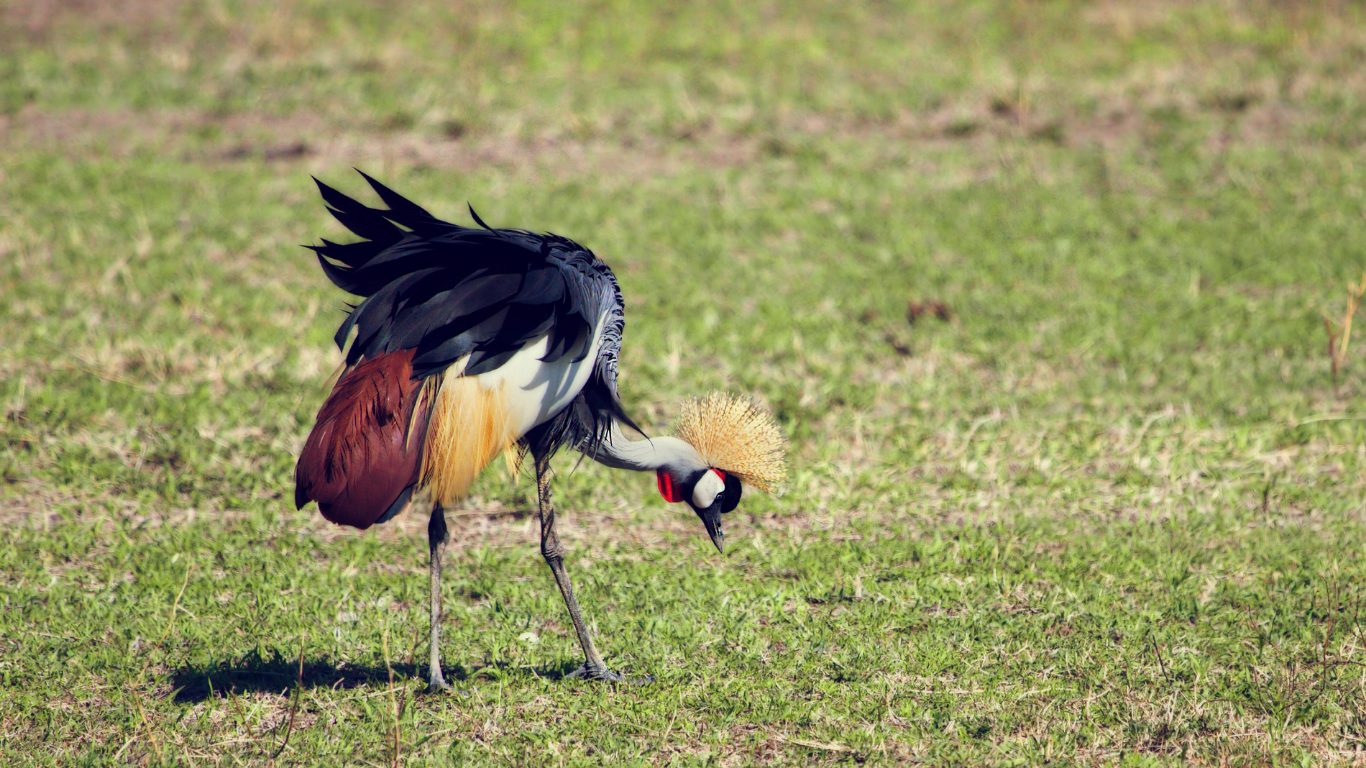
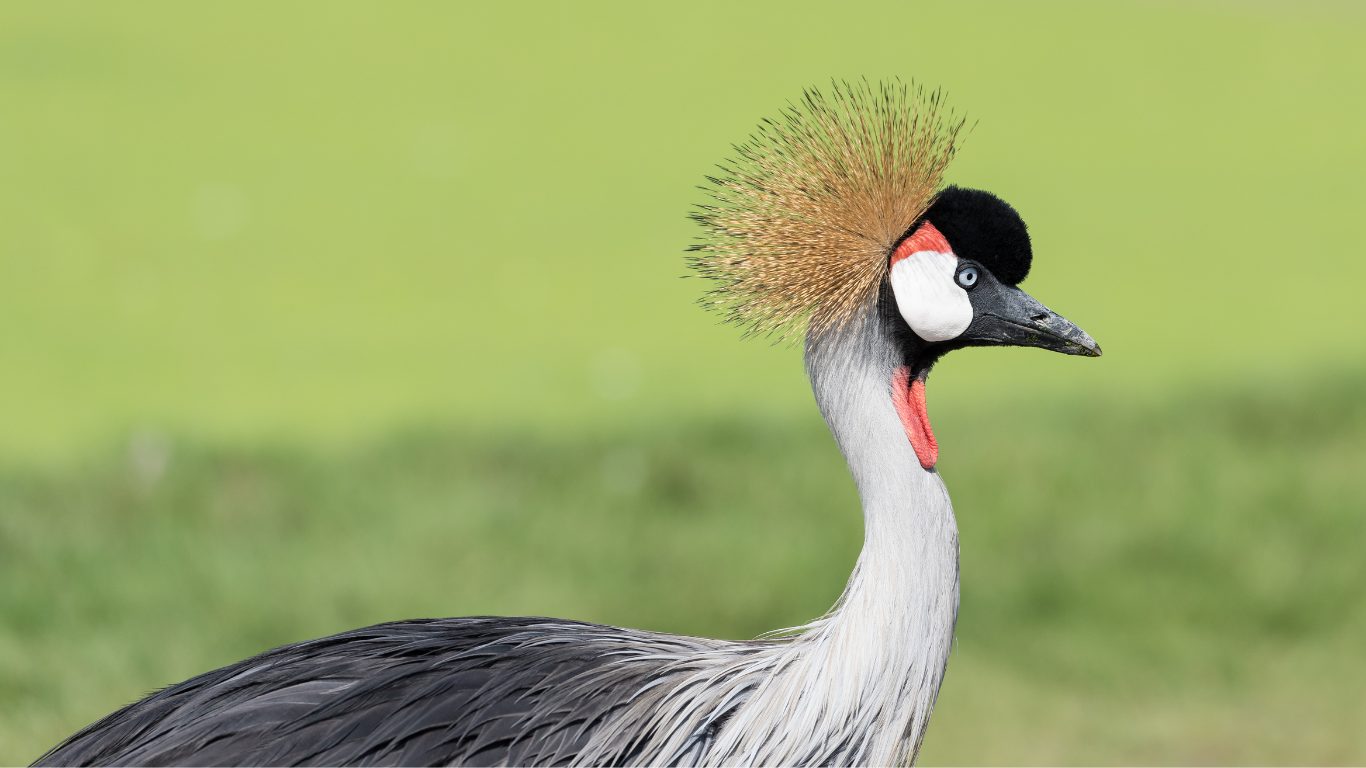
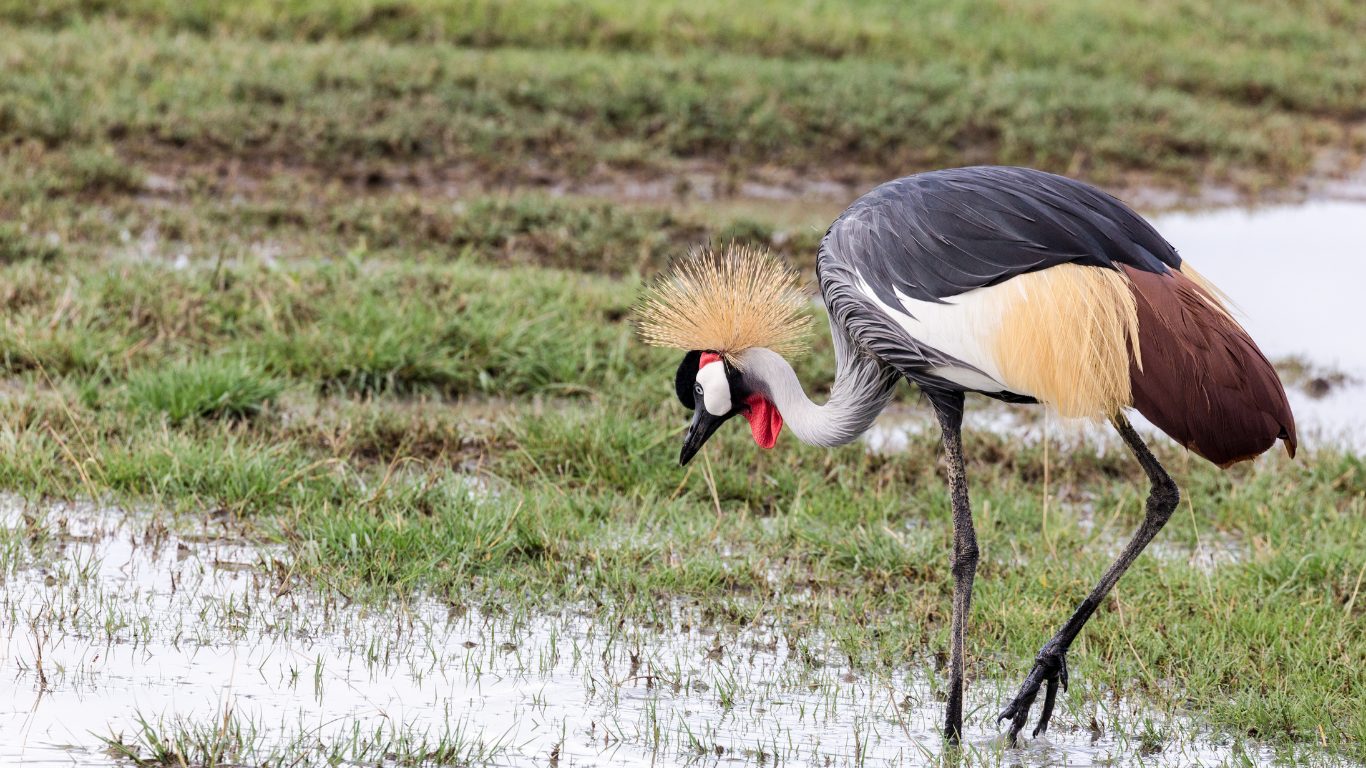
The grey crowned crane is one of Africa's most recognizable birds. The golden bristle crown, pale grey body, white and chestnut wings, and vivid red throat wattle combine to create a bird that demands attention. It stands about a meter tall and carries itself with an upright, alert posture. Unlike most crane species, the grey crowned crane has a prehensile hind toe that allows it to grip branches and roost in trees. This adaptation sets it apart from all other cranes and reflects its close association with wooded wetland habitats rather than open marshes alone.
Wetland Pairs for Life
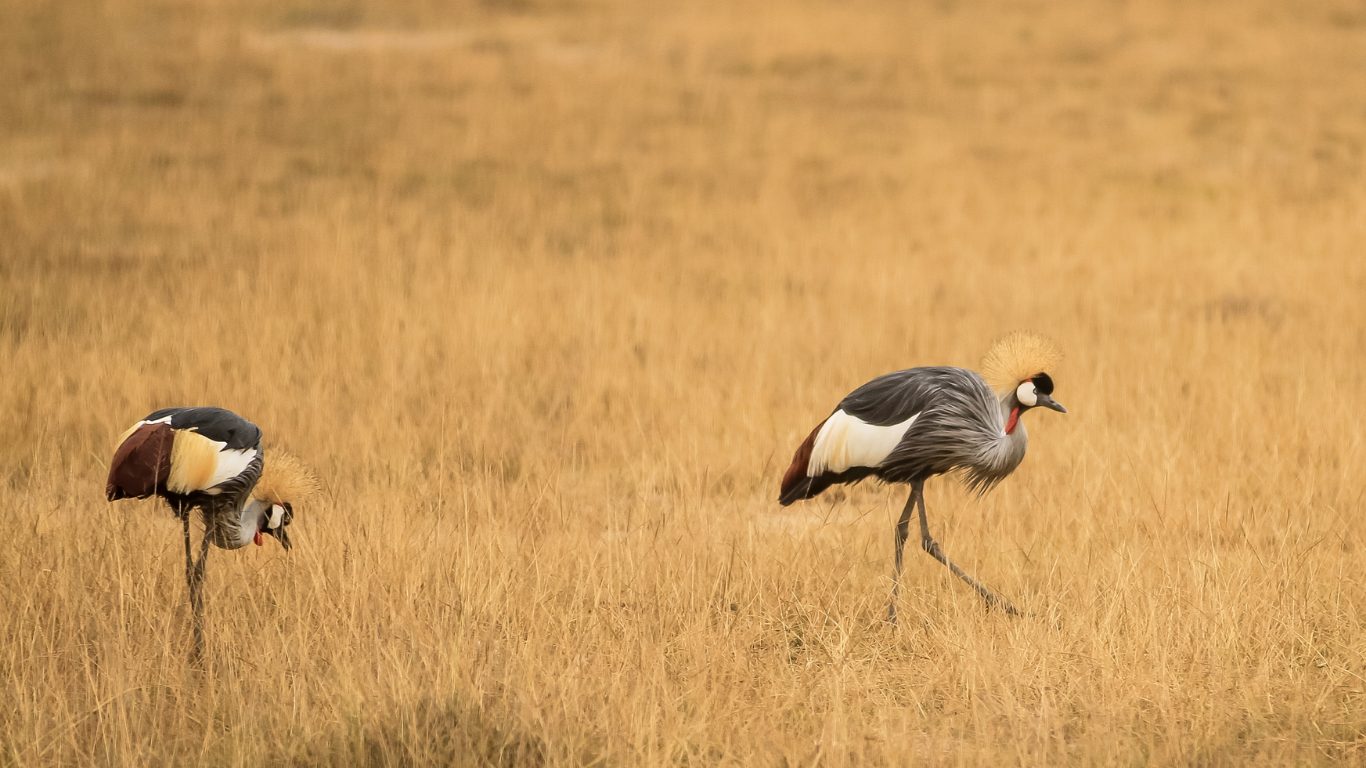
The dancing behavior of grey crowned cranes is central to their social life. Pairs engage in elaborate routines involving deep bows, vertical leaps of a meter or more, wing extensions, and the tossing of grass and sticks. These displays occur throughout the year, not only during courtship, and serve to reinforce the pair bond. Breeding pairs are territorial and aggressive around their nest site. The nest is a large platform of wetland vegetation built in or beside shallow water. Both parents incubate 2-4 eggs and both care for the chicks, which can follow the adults within a day of hatching.
Endangered Elegance
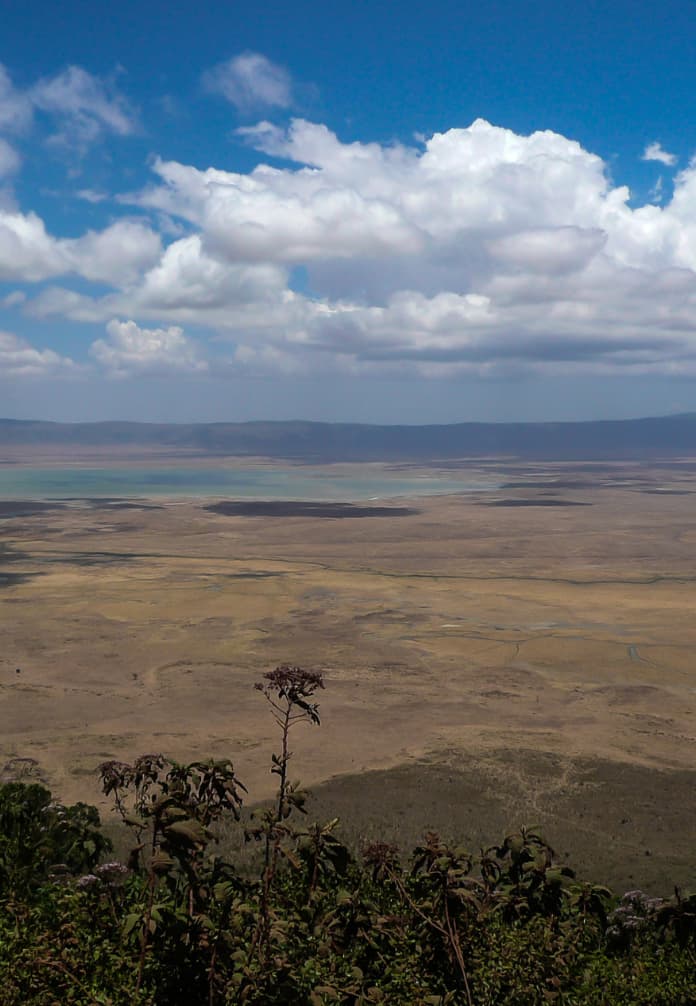
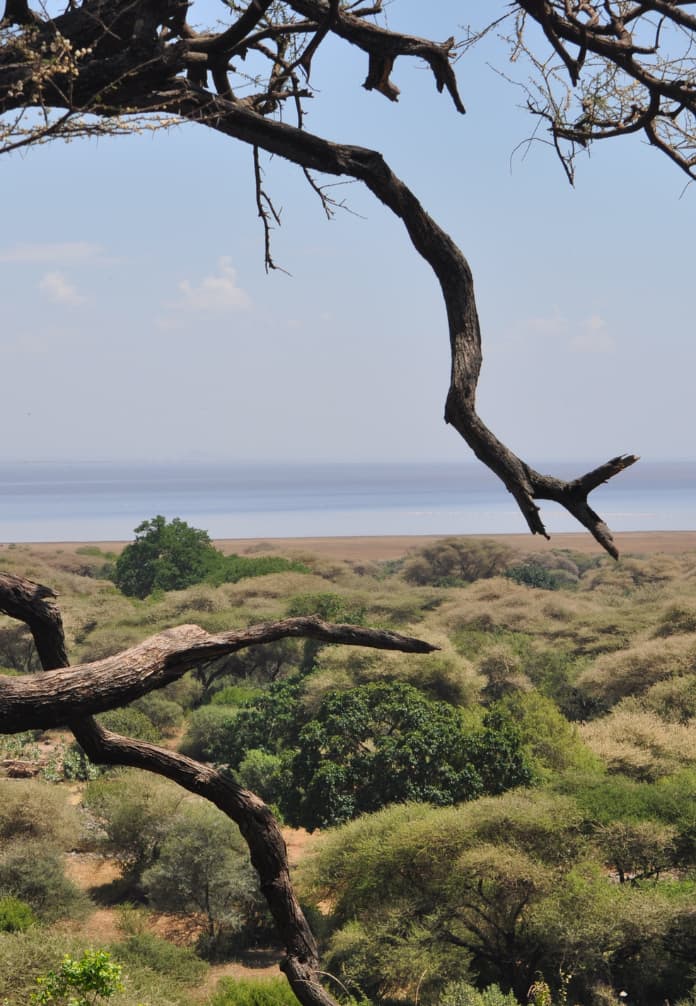
Grey crowned cranes are listed as Endangered, with populations declining across East and southern Africa. The main threats are wetland drainage for agriculture, pesticide contamination, and capture for the illegal pet trade. Their dependence on healthy wetland habitat makes them vulnerable to any degradation of these ecosystems. In Tanzania, the crater floor of Ngorongoro and the wetland margins of Lake Manyara and Tarangire provide protected habitat. Conservation efforts focus on wetland preservation and enforcement against illegal trade. Every sighting of this species in the wild is a reminder of what Tanzania's protected areas still safeguard.
Where to See
Grey Crowned Crane in Tanzania
Common Questions
Frequently Asked
In the Field
Photography Tips
The jumping display is the signature shot. Use burst mode at 1/1600s or faster to freeze the leap with wings outstretched. Anticipate by watching for the bowing movements that precede the jump.
Position yourself so the sun is behind the crane. Backlighting makes the golden crown glow like a halo and separates the bird from the background.
Shoot when the crane is standing in shallow water. The reflection doubles the visual impact and adds symmetry to the composition.
These cranes mate for life. Frame both birds together to tell the pair-bond story. Wait for synchronized movements like walking in step or mutual preening.
From Our Guests