CREATE YOUR LEGEND | 2026-2028 dates available | SECURE YOUR PLACE WITH JUST £100 DEPOSIT

VIEW DATES
Wildlife / Giraffe

Tanzania Wildlife

Giraffe

Habitat
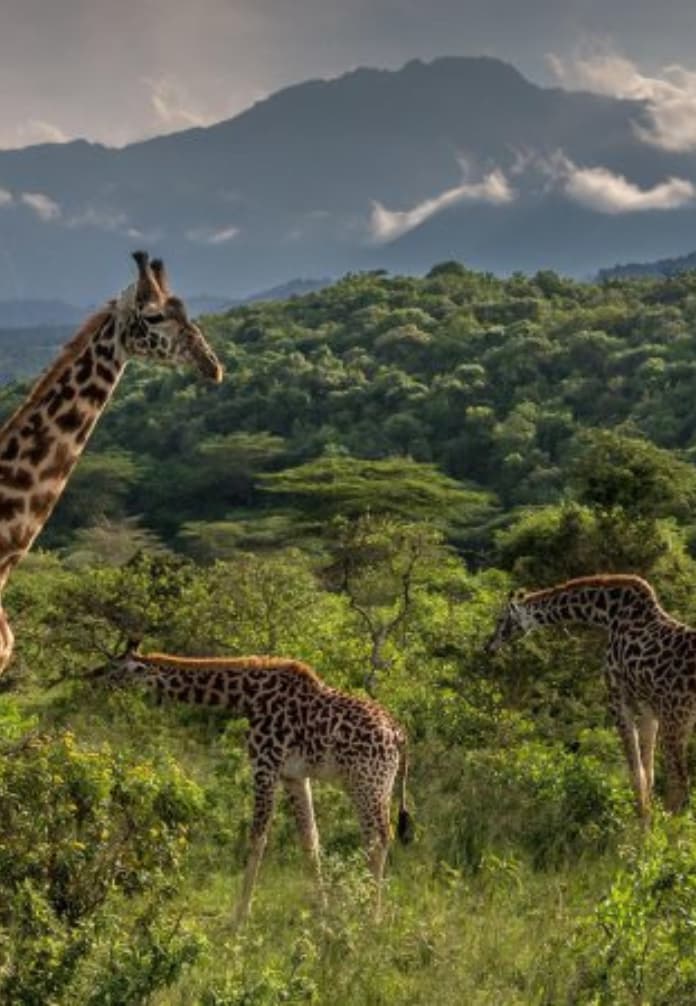
Acacia woodland, open savannah and bushveld
Best Season
Year round
Conservation Status
Vulnerable

The tallest animal on Earth has a heart the size of a basketball and sleeps roughly 30 minutes a day. Despite that long neck, giraffes have the same number of cervical vertebrae as you do. Males fight by swinging their necks like wrecking balls in bouts called necking.

Behaviour & Facts

Life in the Wild

Extreme Anatomy

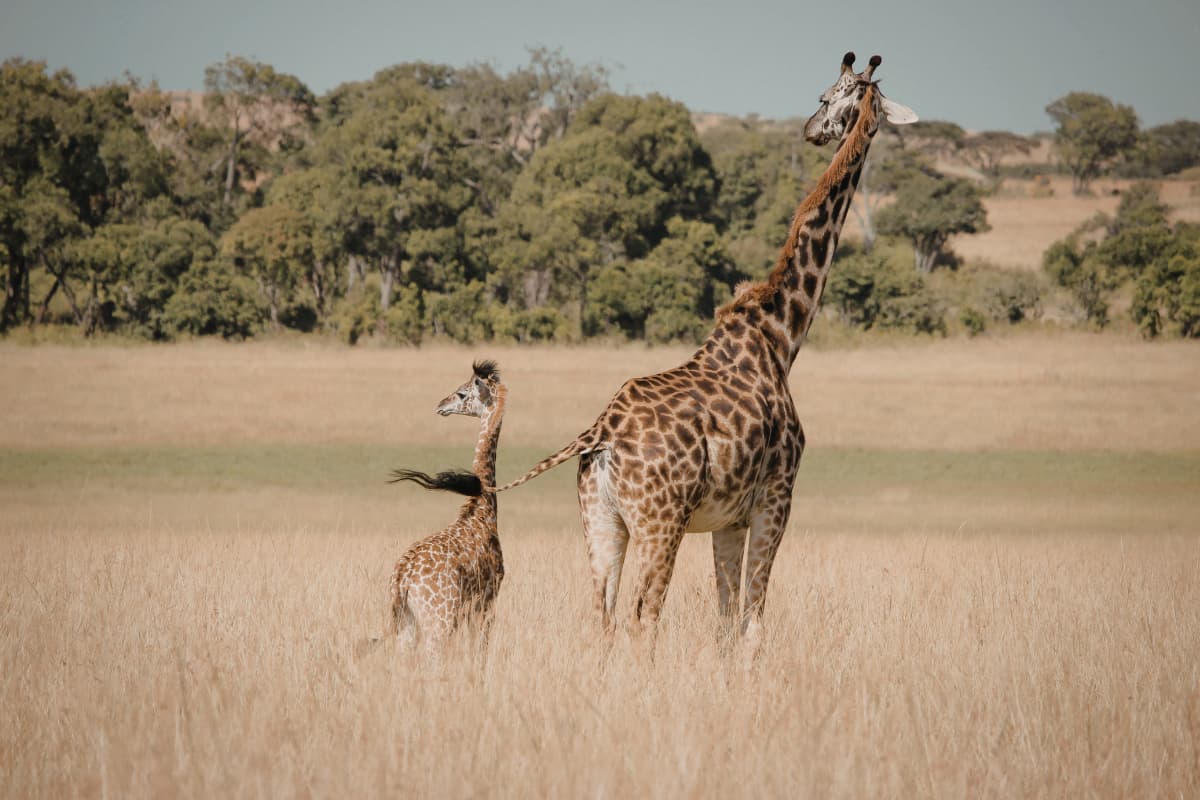
A giraffe stands 5.5 metres tall. Its heart is the size of a basketball and generates blood pressure twice that of a human, just to push blood up that neck to the brain. The neck contains only seven vertebrae, the same number as a human, but each one can be over 25 centimetres long. The tongue extends 45 centimetres and is black, a pigment adaptation that prevents sunburn during hours of feeding in direct light. Giraffe are built around a single engineering problem: how to be the tallest animal on earth and survive it.
Extreme Anatomy
5.5
metres tall (tallest land animal)
7
neck vertebrae (same as humans)
30
minutes of sleep per day
Necking Combat

Necking Combat

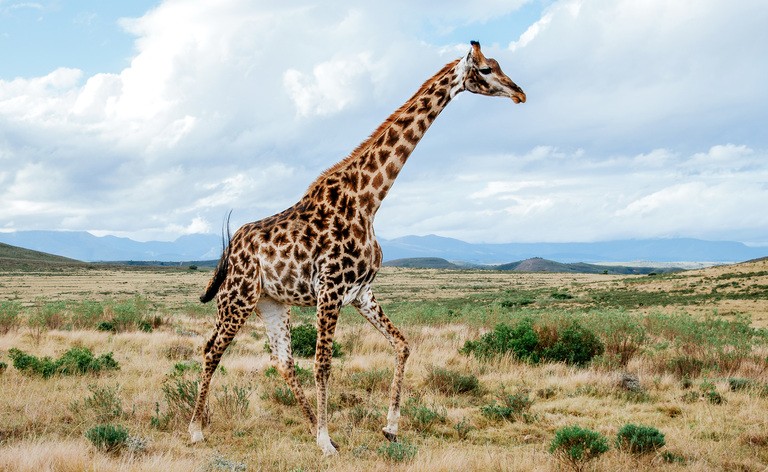
Male giraffe fight by swinging their necks like weighted hammers, slamming their ossicone-capped skulls into each other's bodies. The skull is reinforced with dense bone to absorb repeated impacts. A full-force strike can knock an opponent unconscious. These bouts, called necking, determine access to females. They can be brief or drawn out over hours. The loser typically leaves the area permanently. Older males often carry thickened skulls and heavily calcified ossicones from years of combat.

Sleep Deficit

Giraffe sleep as little as 30 minutes per day, taken in short bursts of a few minutes each. They often sleep standing up because lying down and getting back to their feet takes precious seconds, time a predator can exploit. Recent research has revealed a complex social system. Females form lifelong bonds with specific individuals, maintaining relationships across years and distances. Researchers have documented what appears to be mourning behaviour, with females returning to stand near deceased herd members. These are not simple animals living simple lives.
Sleep Deficit

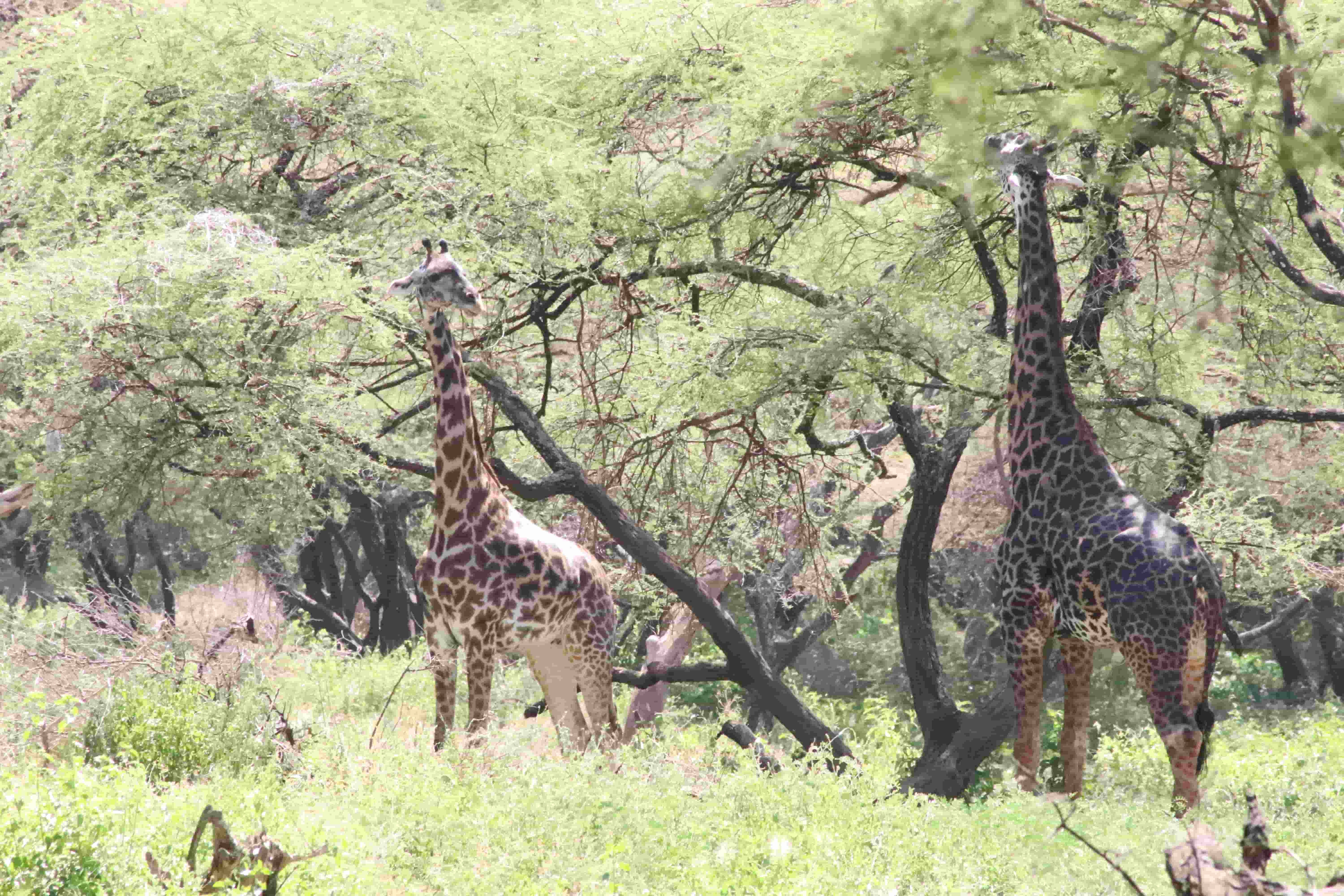
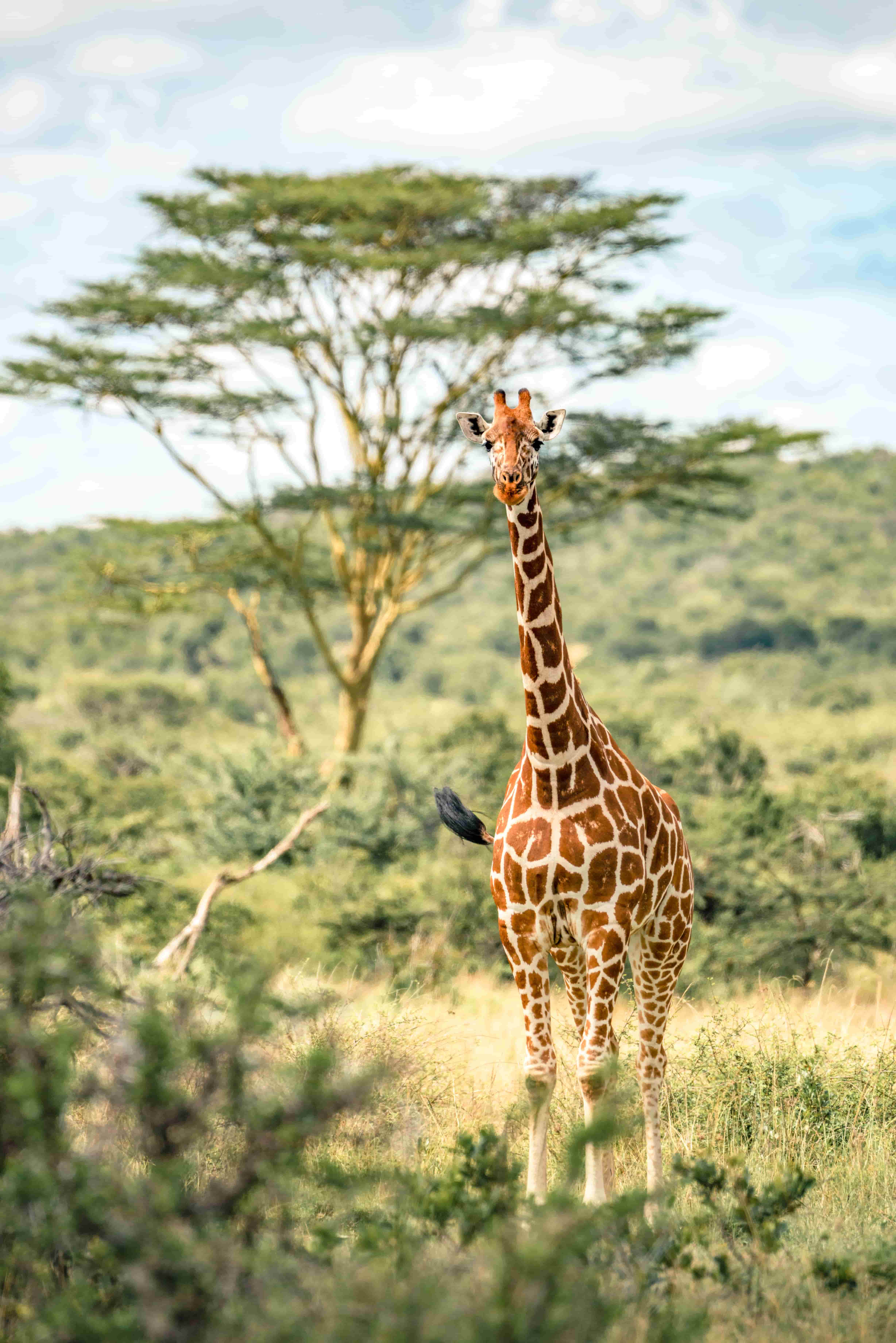
A giraffe's tongue is about 45 centimetres long and nearly black. The dark pigmentation is thought to prevent sunburn since the tongue is out gripping acacia branches for most of the day.

Jack Fleckney

Lead Guide

Where to See

Giraffe in Tanzania

Tarangire National Park

Find Out More

Serengeti National Park

Find Out More

Lake Manyara National Park

Find Out More

Common Questions

Frequently Asked

Tarangire National Park has the highest density of giraffes in northern Tanzania and is the best single park for reliable high quality sightings. The Serengeti and Lake Manyara also hold strong populations. Legend Expeditions includes Tarangire on most of our northern circuit itineraries for the consistency of giraffe and elephant viewing there.

Adult male giraffes in Tanzania stand up to 5.5 metres tall and can weigh more than 1,200 kilograms. Females are slightly smaller. They are by a clear margin the tallest land animals on Earth and easily double the height of a fully grown elephant.

Inside well protected parks populations are stable or growing, so they appear common to safari visitors. Across the rest of Africa, however, giraffe numbers have fallen sharply in three decades due to habitat loss and bushmeat poaching outside protected areas. The Masai subspecies found in Tanzania is among the most affected.

Yes, and only for short bursts totalling roughly 30 minutes in a 24 hour period. They take brief moments of deeper sleep lying down with the head tucked across the back. This is the lowest sleep requirement of any mammal. The reason is predator pressure: getting up takes several precious seconds they cannot afford.

Giraffes are not aggressive toward people or vehicles, but they can defend themselves with kicks powerful enough to kill a lion. The forelegs deliver a downward chop strong enough to break bone. The risk to you on safari is zero, because they never approach vehicles. You simply watch them from a respectful distance.

Wild giraffes in Tanzania typically live 20 to 25 years, with some individuals reaching the early thirties. In captivity they can live longer. Females tend to outlive males because males spend their prime years in dangerous necking combat and territorial disputes.

In the Field

Photography Tips

01
Pull Back Wide

Include the full body with an acacia tree for scale. Giraffe lose their impact when cropped tight - the long neck against a big African sky is the composition.

02
Find the Silhouette

A giraffe silhouette at sunset is one of the most recognisable shapes in wildlife photography. Position early and expose for the sky, not the animal.

03
Shoot from Below

When a giraffe walks close to the vehicle, shoot upward with a wide lens. The towering perspective with legs and neck stretching above you creates genuine impact.

04
Watch for Necking

Bulls swing their necks like wrecking balls when fighting. It looks slow but hits hard. Use a fast shutter and keep both animals in frame for the full arc of the swing.

From Our Guests
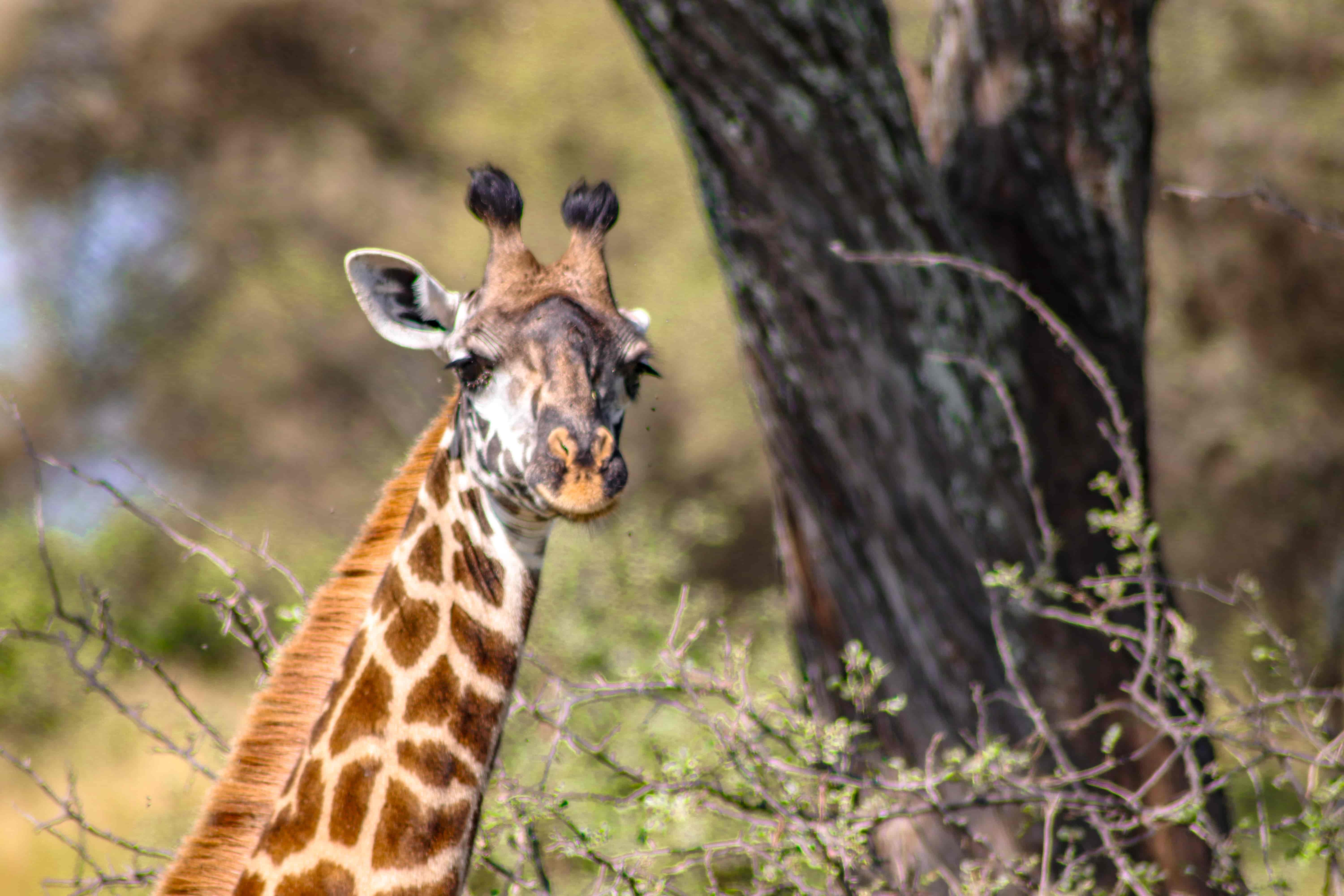
Guest Photography

Ready?

Start Planning Your Safari

Speak directly with a guide who has spent years guiding expeditions across Tanzania's northern circuit. No hard sell, just honest advice from someone who knows the ground.

Jack Fleckney

Lead Trip Designer

★★★★★5.0 on TripAdvisor