CREATE YOUR LEGEND | 2026-2028 dates available | SECURE YOUR PLACE WITH JUST £100 DEPOSIT
Tanzania Wildlife
Fringe-eared Oryx
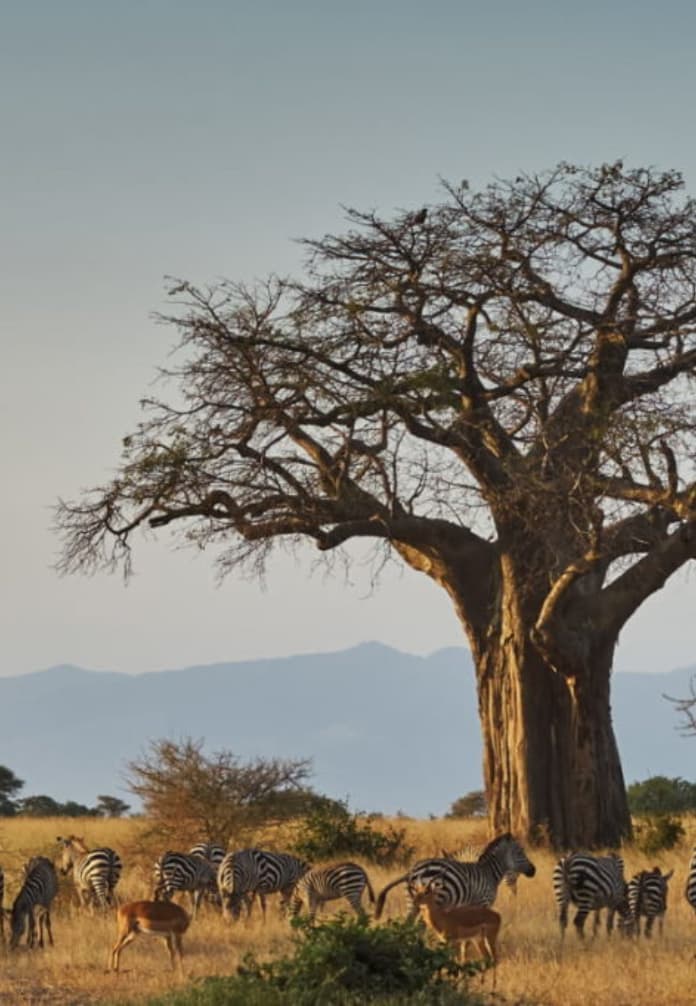
A dry-country specialist built for heat. The fringe-eared oryx can let its core body temperature climb well above what would kill most mammals, reducing water loss by avoiding the need to sweat. Tarangire's drier southern reaches are the most reliable spot on the northern circuit.
Behaviour & Facts
Life in the Wild
Arid Adaptation
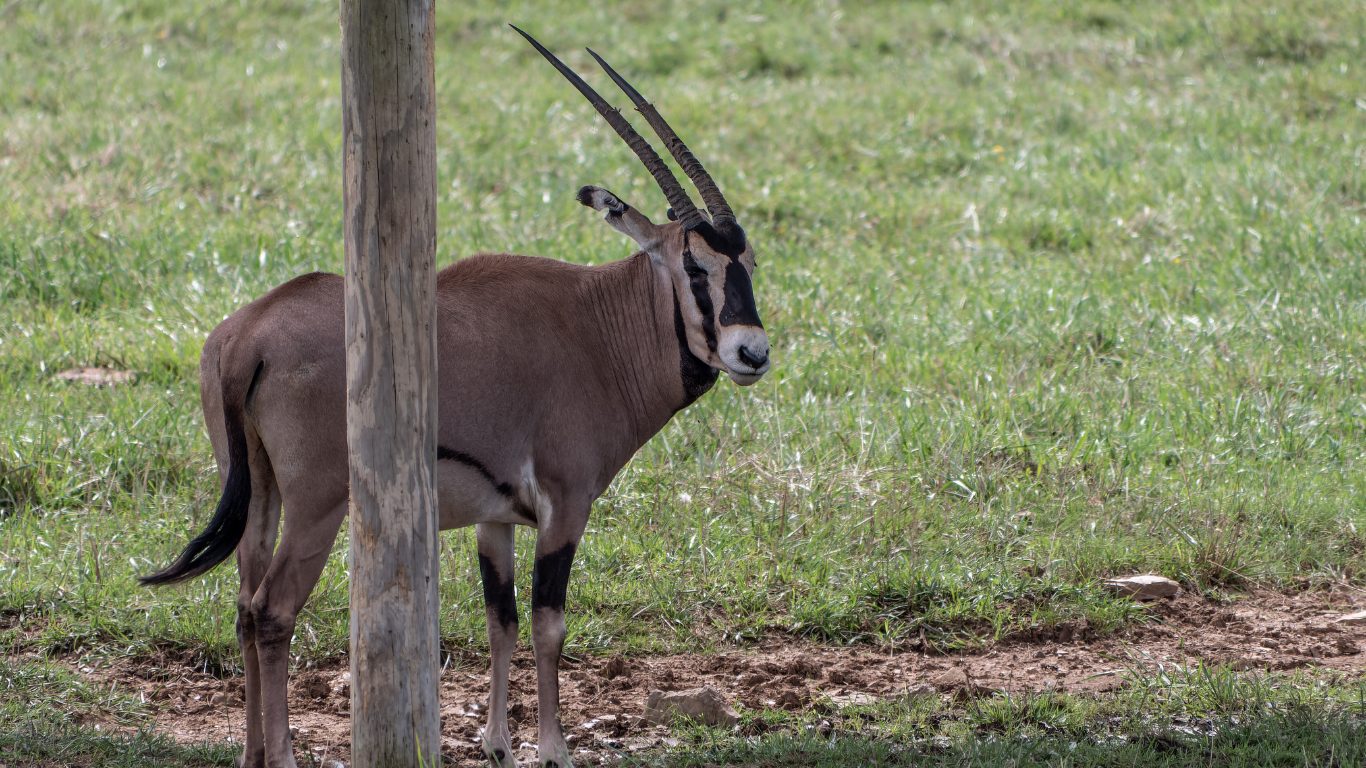
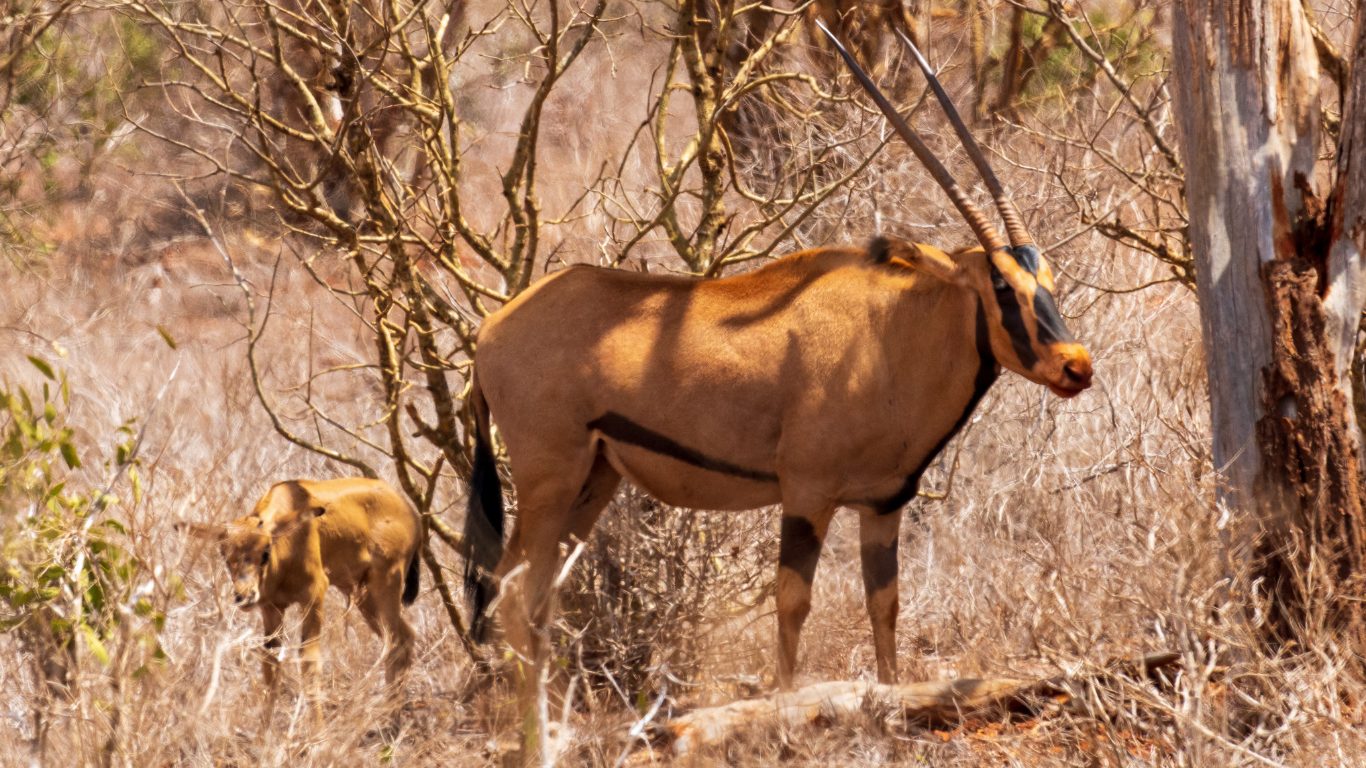
The fringe-eared oryx is a dry-country specialist built for survival in conditions that would kill most large mammals. It can go indefinitely without drinking, extracting all the moisture it needs from food. Long, straight horns reach up to one metre in length, and bold black facial and flank markings stand out against a tan body. Everything about this animal is adapted to arid environments. It moves efficiently, feeds on tough vegetation, and conserves water with an intensity that borders on the extreme.
Thermoregulation
When temperatures climb, the fringe-eared oryx allows its core body temperature to rise well above what would be dangerous for most mammals. By tolerating internal heat instead of sweating it away, the animal avoids catastrophic water loss. The brain stays cool through an incredible piece of anatomy called the carotid rete, a network of fine blood vessels in the nasal passages that cools arterial blood before it reaches the brain. The body overheats. The brain does not. It is one of the most effective thermoregulation systems in any large mammal.
Field Identification
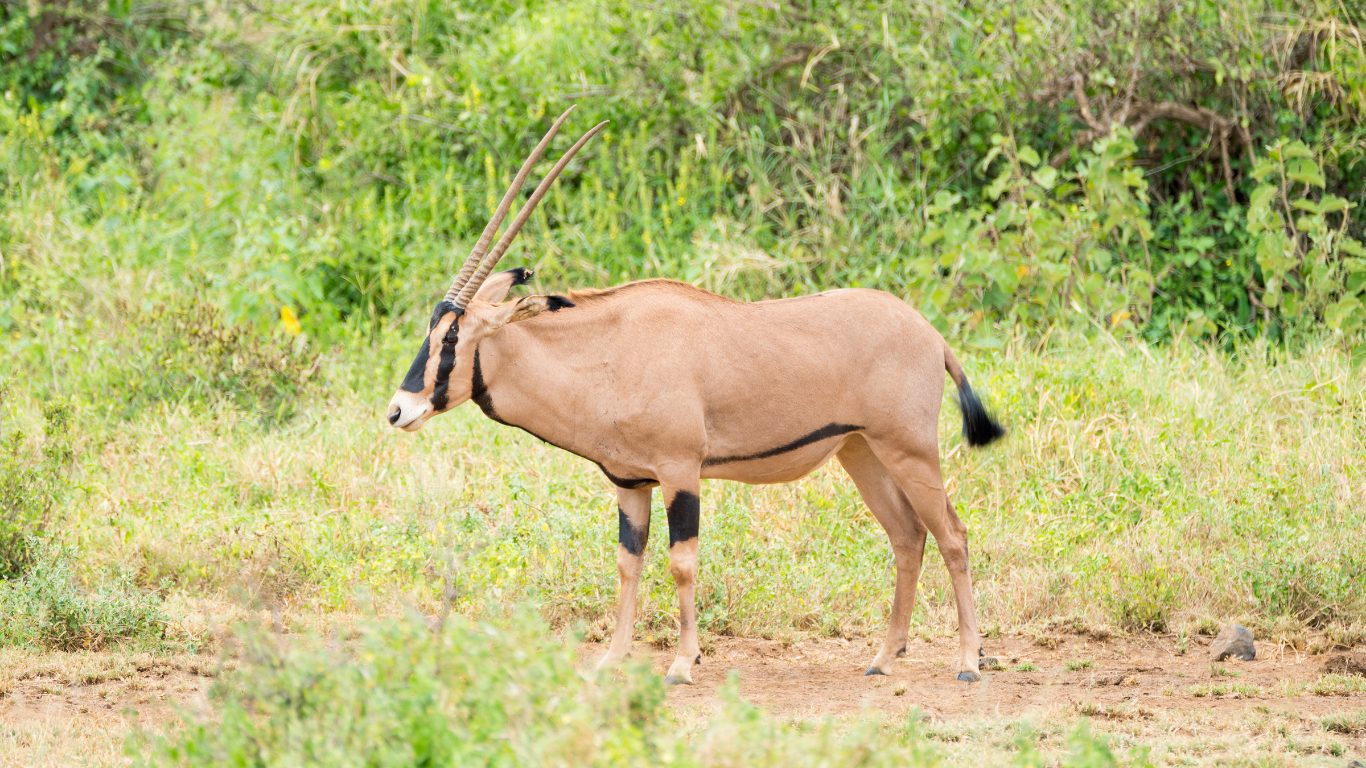
Look for the distinctive ear tufts that give this subspecies its name. Both sexes carry long, straight horns, and a black stripe runs down each flank. Adults weigh around 200 kilograms, making them a substantial animal even at a distance. The drier southern areas of Tarangire are the most reliable place to find them on the northern circuit. They occur in small herds or as solitary bulls. A sighting here is a reward for pushing beyond the main tourist loops into the park's quieter corners.
Where to See
Fringe-eared Oryx in Tanzania
Common Questions
Frequently Asked
In the Field
Photography Tips
Both males and females carry long, straight horns. Shoot in profile to show the full length against open sky, and include both ears so the distinctive fringed tufts are visible.
Oryx thrive in dry, hot landscapes where heat shimmer distorts the horizon. Use that haze deliberately - a herd wavering in the mirage gives a raw sense of the environment they live in.
The bold black-and-white facial pattern is graphic and striking. Get in close with a telephoto and expose carefully so the white patches do not blow out in harsh midday sun.
Frame the herd with parched earth and sparse scrub to tell the survival story. A wide shot at golden hour with long shadows stretching behind them adds depth and atmosphere.
From Our Guests