CREATE YOUR LEGEND IN 2026 | SECURE YOUR PLACE WITH JUST £100 DEPOSIT | PAYMENT PLANS AVAILABLE

VIEW DATES

Flamingo

Alkaline soda lakes and shallow saline wetlands

Habitat

Year round

Best Viewing Season

Near Threatened

Conservation Status

Introduction

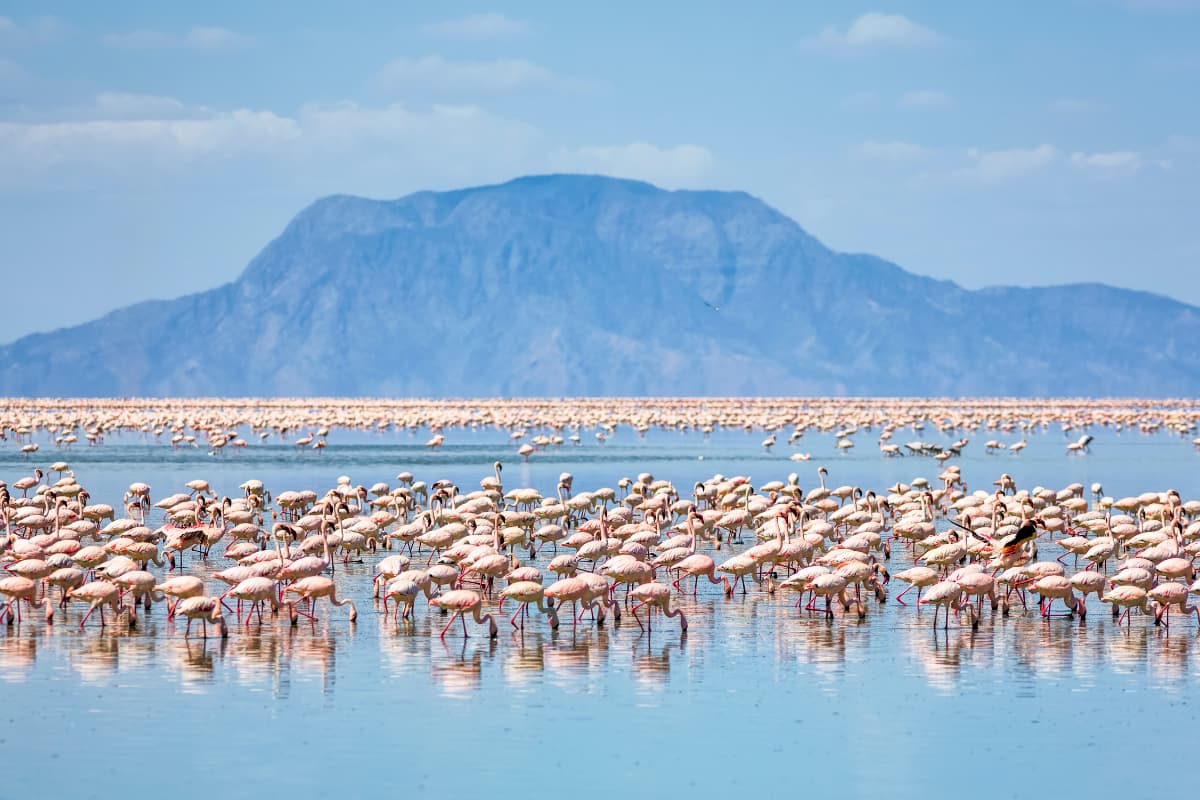
Millions of flamingos blanket Tanzania's soda lakes in waves of pink, filtering algae and small crustaceans in one of Africa's most extreme environments. Lake Manyara and the Momella Lakes offer reliable sightings of both greater and lesser flamingos. Their presence signals the unique chemistry of Tanzania's alkaline lake system.

Behaviour & Facts

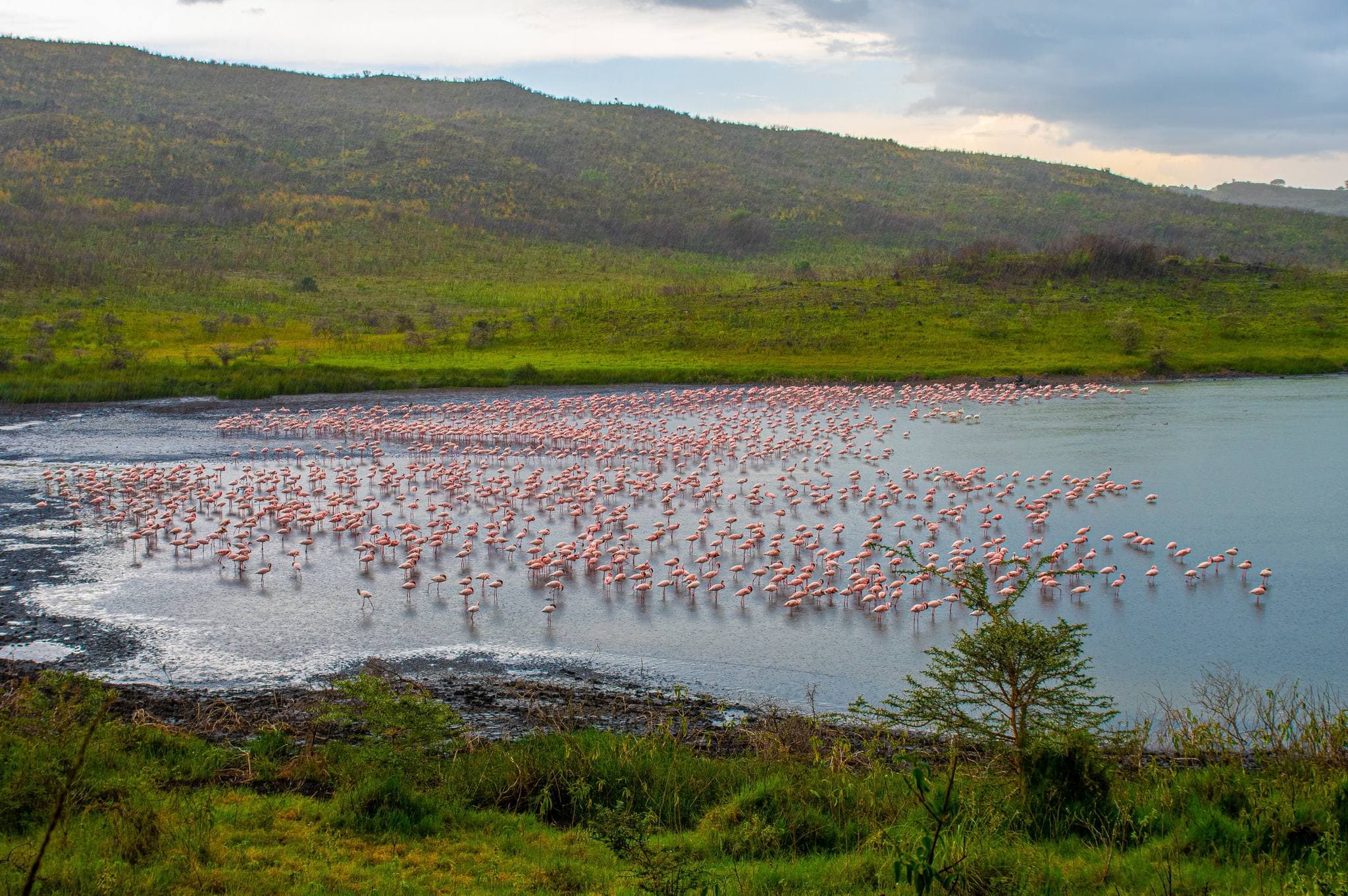
The first time you see a million flamingos on an East African soda lake, the colour is what catches you. A pink stain stretching for kilometres across a dead looking salt flat. Walk closer and the stain dissolves into individual birds, each one feeding head down in caustic water that would burn the skin off your hand. Few places on Earth produce a wildlife sight this strange. Lesser flamingos are the most numerous of the world's six flamingo species and the smaller of the two found in East Africa. Almost everything about them is built around a single life strategy: they live and breed on soda lakes that nothing else can tolerate. The waters can reach pH 10 to 12, caustic enough to strip the ink from a notebook. The temperature climbs above 40 degrees Celsius. On this almost uninhabitable surface, lesser flamingos form the largest single species bird colony in Africa. The reason is food. Soda lakes are the only places that grow large blooms of Spirulina, a microscopic blue green algae that lesser flamingos filter from the water with one of the most specialised feeding systems in the animal kingdom. The downturned beak holds a structure of plates and bristles called lamellae that traps algae from the water with extraordinary precision. The Spirulina contains pigments that turn the feathers pink. A flamingo on a low Spirulina diet would be white.

You step out of the vehicle and the only sound is the wind and twenty thousand birds feeding. It does not look real, and then you realise that is the real Africa.

You step out of the vehicle and the only sound is the wind and twenty thousand birds feeding. It does not look real, and then you realise that is the real Africa.

Jack Fleckney - Legend Head Guide

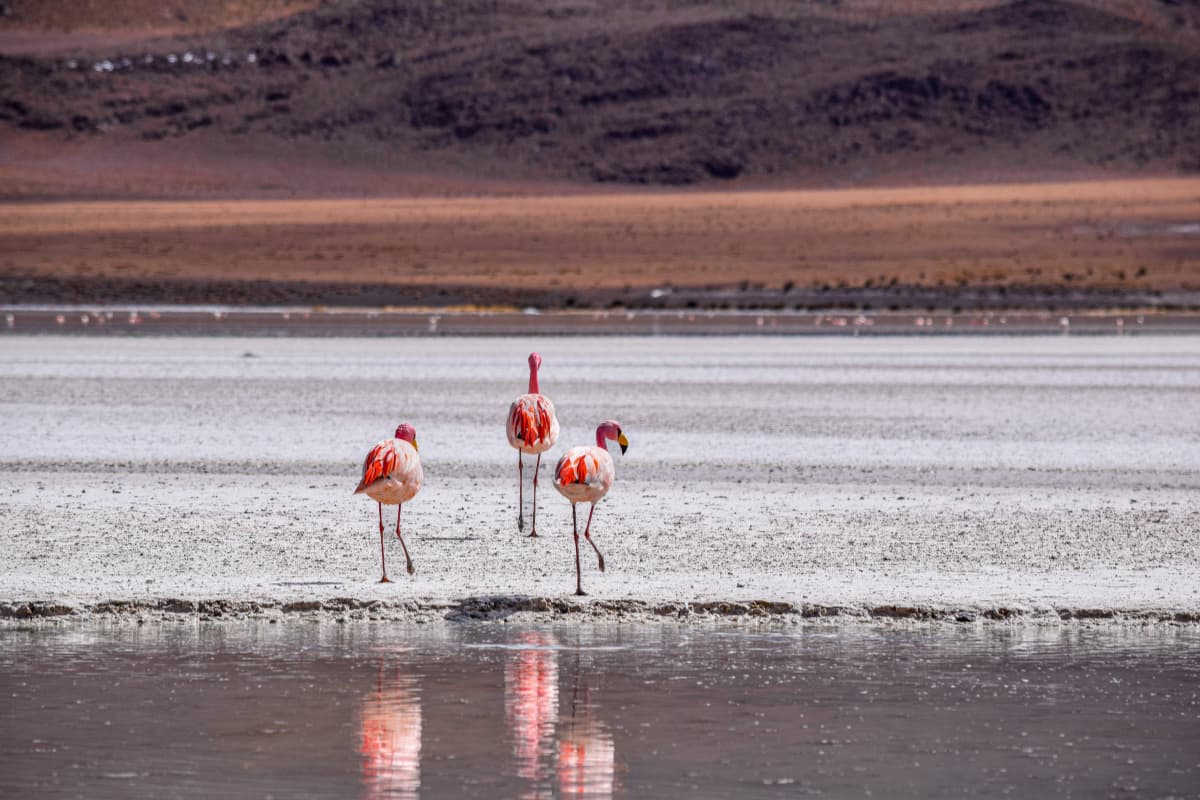
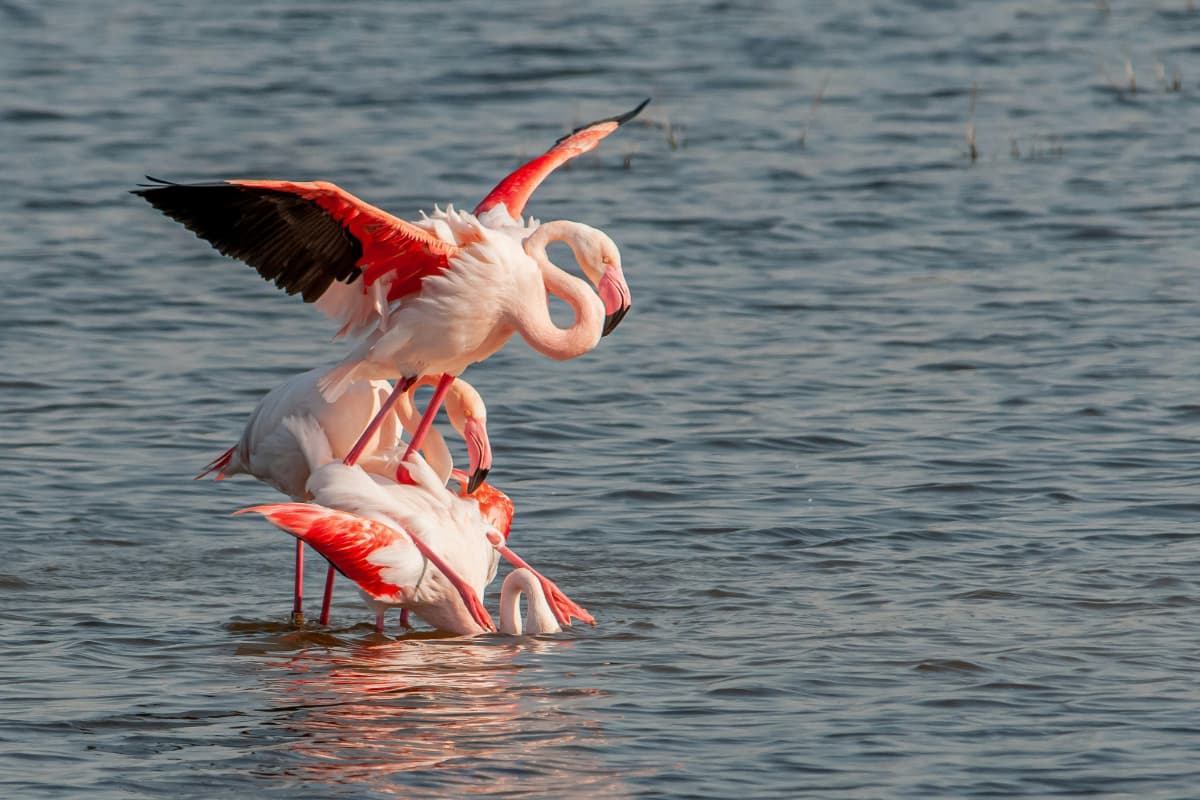
Their mass courtship displays are one of the great sights in African birding. Thousands of adults pack together on the shoreline and march in synchronised parades, heads stretched up, beaks pointed at the sky, wings briefly flashed open to reveal black flight feathers. The whole flock turns as one. The displays go on for hours and are how the colony synchronises its breeding cycle. A few facts that surprise most travellers. Flamingos sleep standing on one leg because it conserves heat, since the leg in the cold water loses far more body heat than the leg tucked into warm body feathers. Their knees do not actually bend backwards: what looks like a backwards knee is the ankle, and the true knee is hidden up inside the body. Lesser flamingos can drink water hot enough to scald a person, using a salt gland to excrete excess minerals through their nostrils. Tanzania holds the only regular breeding site for lesser flamingos in East Africa at Lake Natron, which makes the country one of the most important bird nations on the continent. Within the northern circuit parks, the alkaline shallows of Lake Manyara and the Momella Lakes of Arusha National Park offer consistent flocks year round, often with greater flamingos mixed in alongside the smaller lessers.

Where to see

Flamingo

in Tanzania

Lake Manyara National Park

Lake Manyara National Park

Lake Manyara National Park

Arusha National Park

Arusha National Park

Arusha National Park

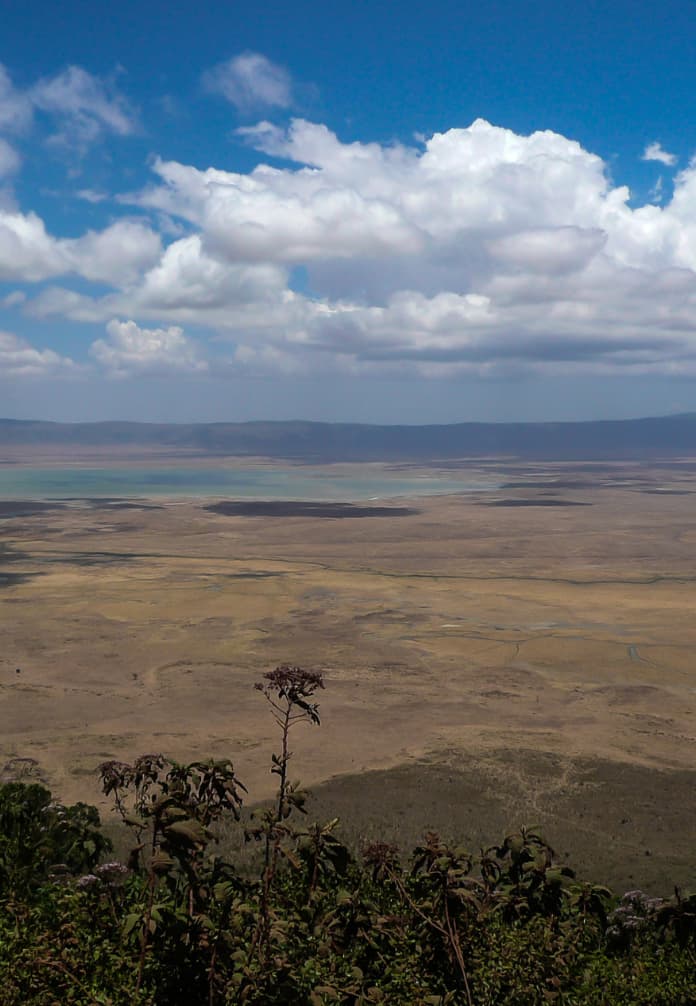
Ngorongoro Crater

Ngorongoro Crater

Ngorongoro Crater

Where to see flamingos in Tanzania?

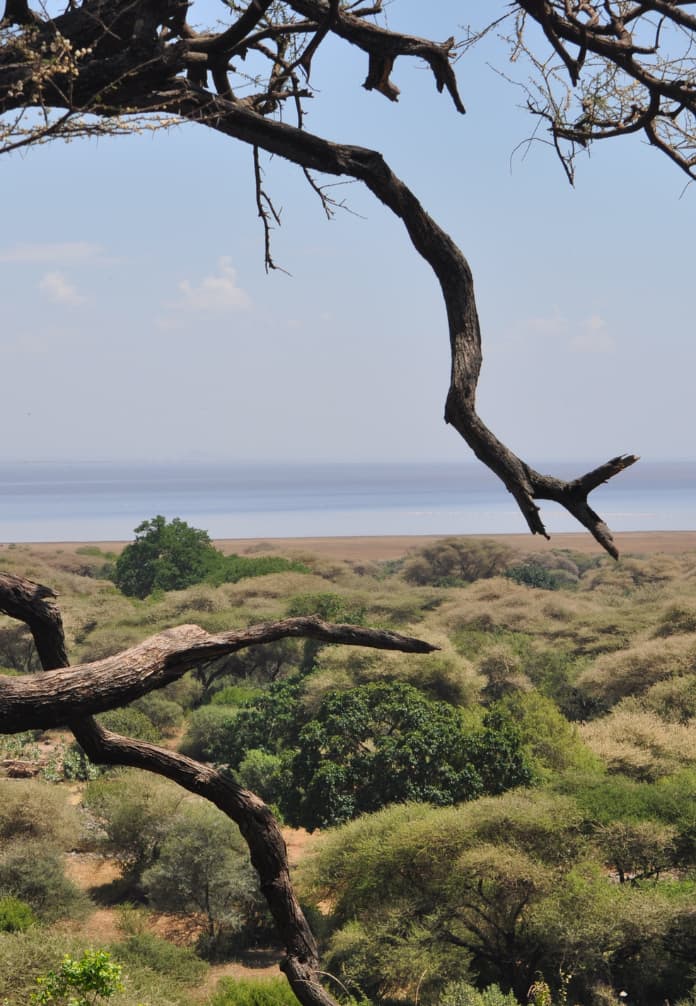
Lake Manyara National Park holds large shoreline feeding flocks and is the most accessible site on the northern circuit. Arusha National Park's Momella Lakes and the Magadi soda lake inside the Ngorongoro Crater also hold flamingos year round. Legend Expeditions includes these sites on northern circuit itineraries.

When is the best time for flamingos?

Lesser flamingos are present at Tanzania's alkaline lakes year round, but numbers shift with water levels and algal blooms. The dry season generally offers the best viewing conditions and easiest access. Lake Manyara is most reliable from June through October when water levels concentrate the birds near visible shorelines.

Why are flamingos pink?

Flamingo feathers are coloured by carotenoid pigments extracted from their diet of algae and tiny crustaceans. Lesser flamingos in Tanzania get their pink colour from the Spirulina algae they filter from soda lakes. A flamingo fed on a different diet would be white, because the colour is essentially edible chemistry processed through the liver.

Are there two types of flamingo?

Tanzania hosts both lesser and greater flamingos. The lesser flamingo is smaller, deeper pink, and filters algae; the greater flamingo is larger, paler, and feeds on small crustaceans and molluscs. You will often see mixed flocks of both species at Lake Manyara and the Momella Lakes in Arusha National Park.

How do flamingos tolerate soda lakes?

Flamingos have specialised salt glands that excrete excess minerals through the nostrils, tough scaled legs that resist the caustic water, and an oily feather coating that prevents skin damage. They are one of the very few vertebrates that can feed and breed on high pH soda lakes. This is why their ecology is so tightly tied to Tanzania's specific alkaline lake system.

How many flamingos live in Tanzania?

Tanzania hosts a large share of the East African lesser flamingo population, which numbers in the millions across the regional soda lakes. Lake Natron alone can host up to 2.5 million birds during breeding. Within the northern circuit parks you will routinely see flocks of thousands to tens of thousands.

Our clients

Our clients

Photos

Photos

Photography Tips

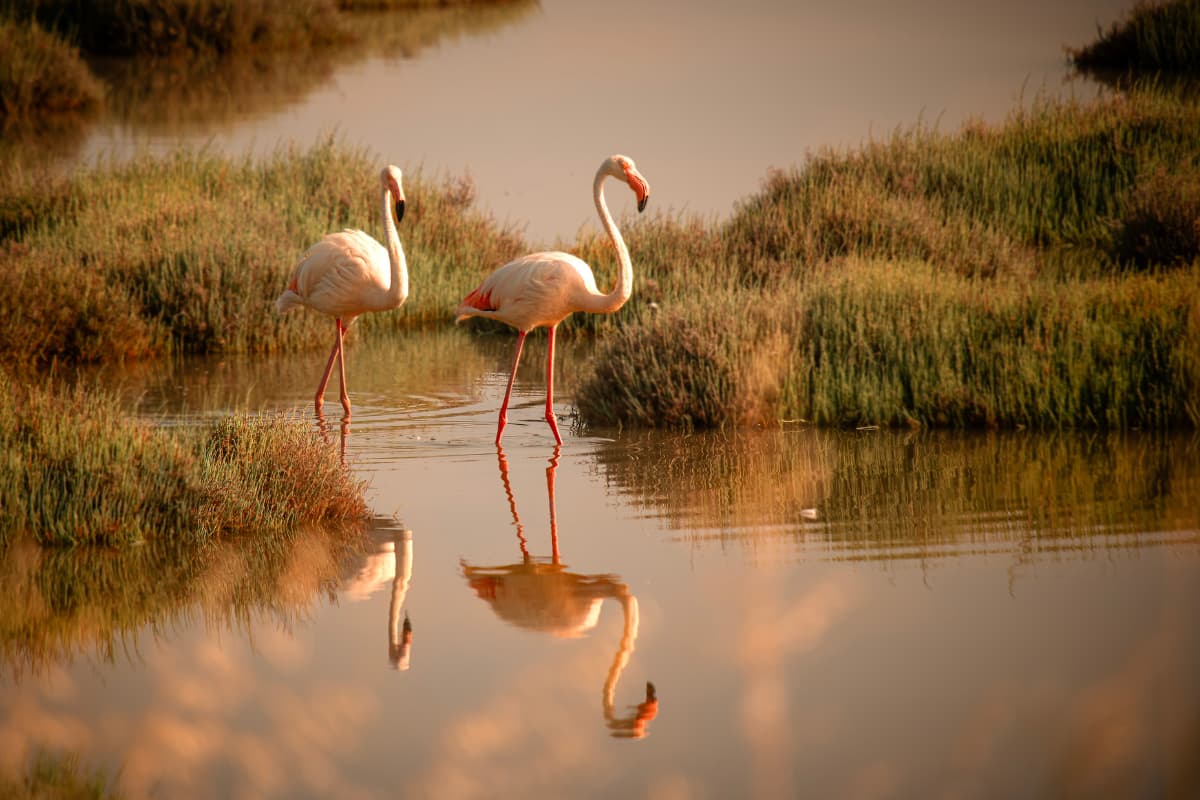
Shoot the colour from distance. The strongest flamingo image is rarely a portrait. It is the wide pink ribbon of birds against white salt and dark volcanic rock. Pull back wider than you think. Get there at dawn for the light. Soft morning light on an alkaline lake gives you the best contrast between pink birds, white shoreline and still water. By midday the haze flattens everything. Look for the flight. Flamingos taking off in lines, with their long necks extended and legs trailing behind, make some of the cleanest geometric images in African birding. Watch for the courtship marches. During display season, large groups march together in tight synchronised formations. Frame so the bodies and heads form repeating vertical lines. Unique to flamingos: photograph the reflection. Calm dawn water creates near perfect mirror reflections of the feeding birds. Get low so the camera is just above the water surface, and the flamingo and its reflection become one continuous shape.

Start planning your safari

We reply within 24 hours. No hard sell, ever.

I have spent years guiding expeditions across Tanzania and personally design every Legend safari itinerary.


If you have questions about what you will see, when to go, or how to make the most of your time in the field, just ask. No hard sell. Just honest advice from someone who loves this place.

Jack Fleckney

Head Guide & Founder

We reply within 24 hours. No hard sell, ever.

Start planning your safari