CREATE YOUR LEGEND | 2026-2028 dates available | SECURE YOUR PLACE WITH JUST £100 DEPOSIT
Tanzania Wildlife
Eland
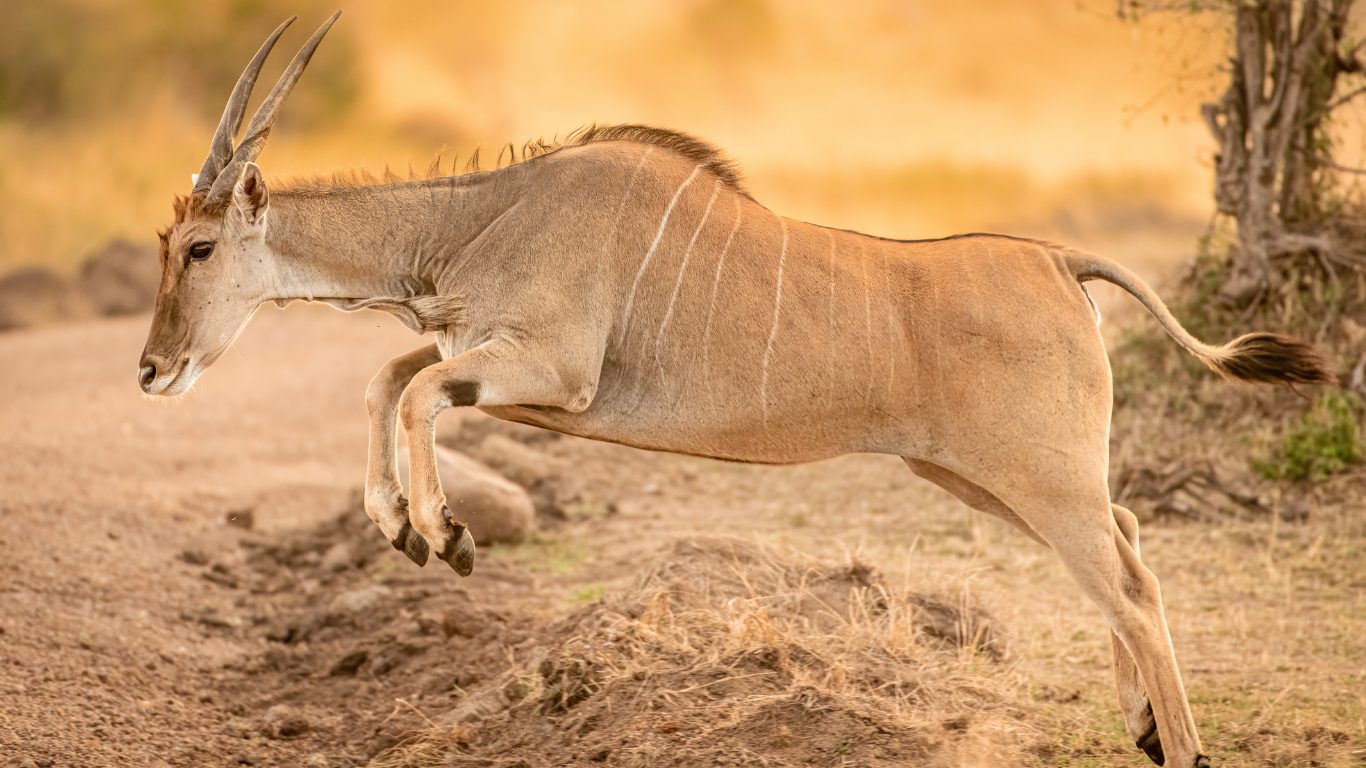
The eland is Africa's largest antelope -- a near-ton animal that can jump a two-metre fence without a run-up. Quiet, wary, and surprisingly agile, it is one of the most impressive sights on the Tanzania plains.
Behaviour & Facts
Life in the Wild
Africa's Largest Antelope
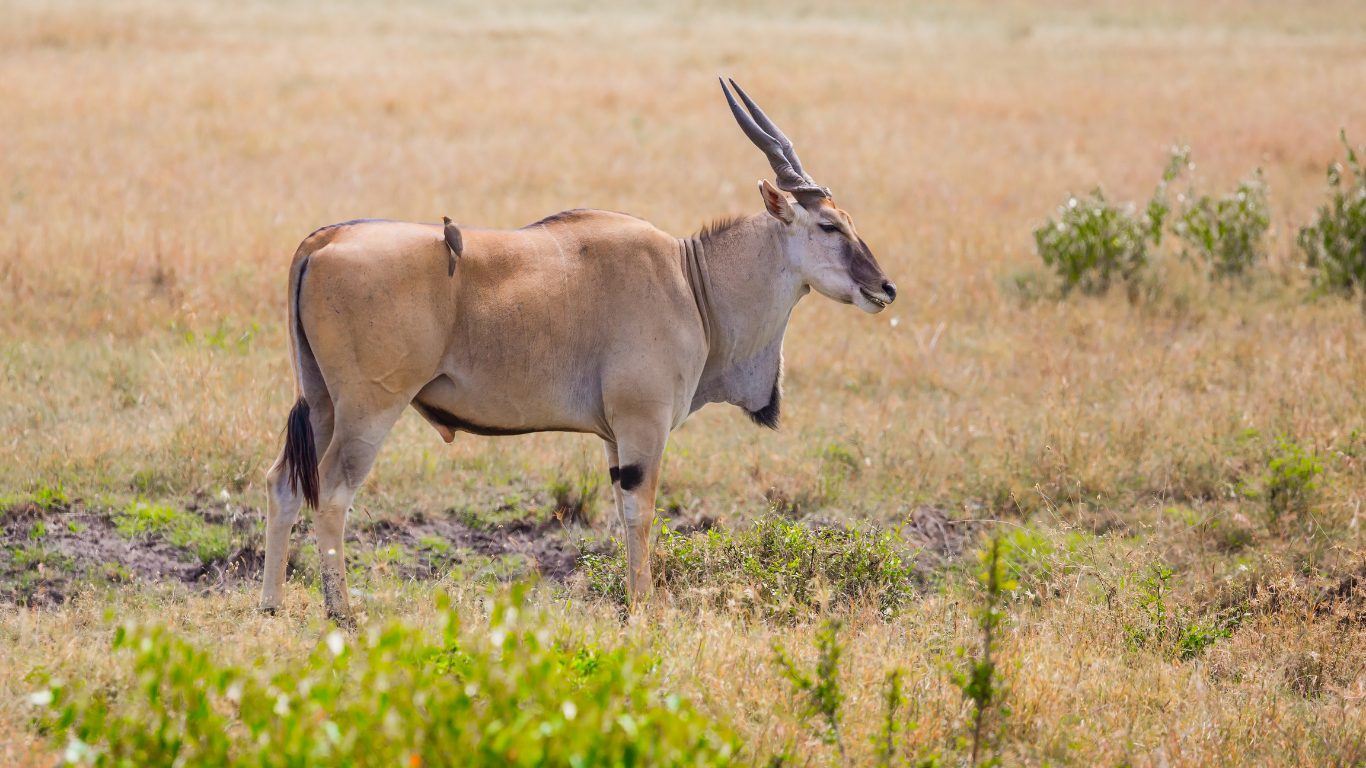
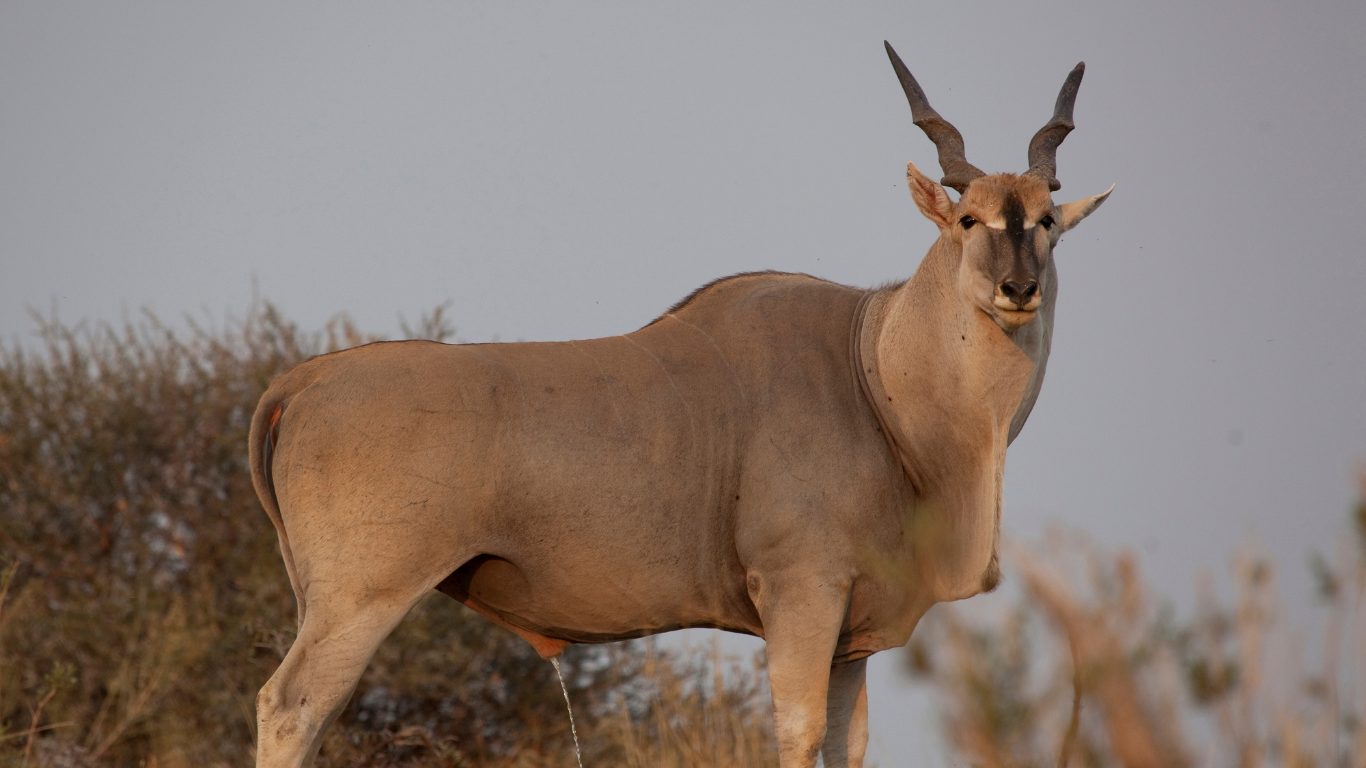
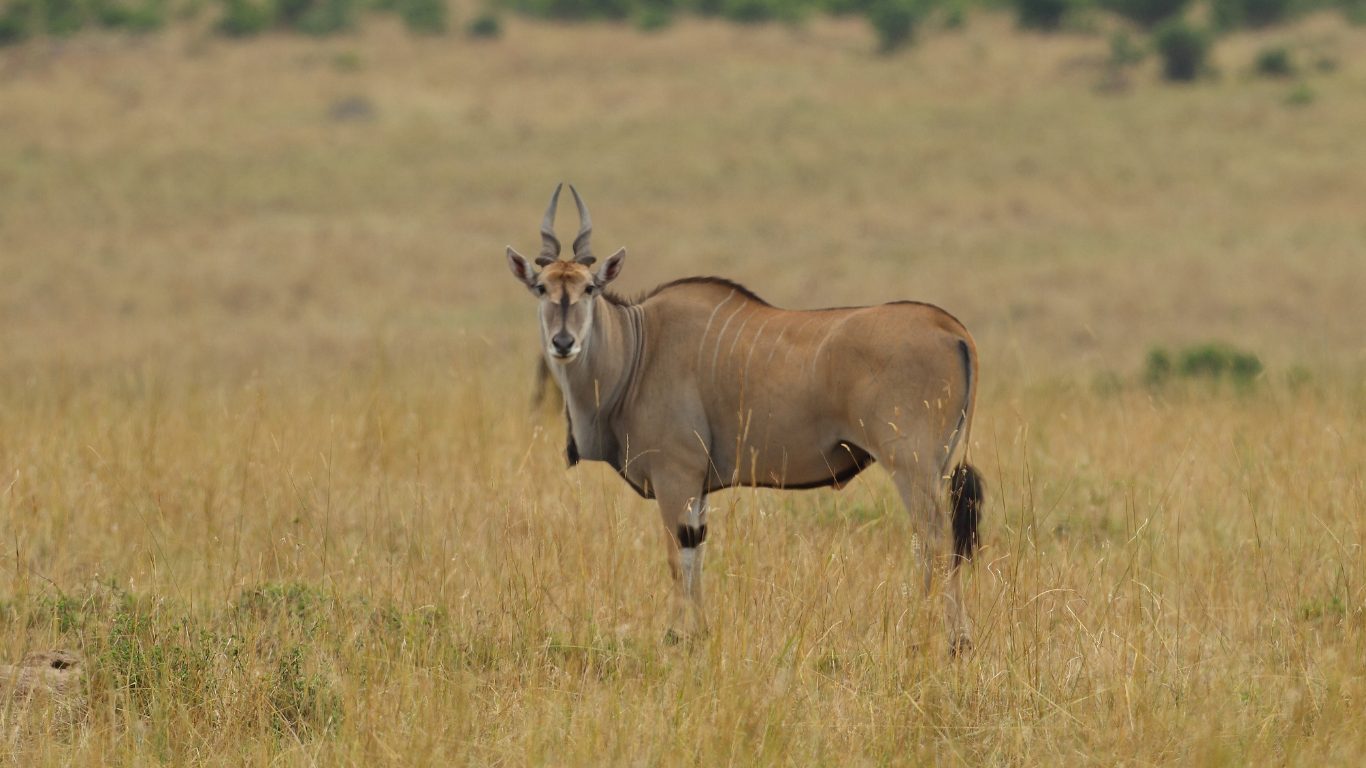
Nothing quite prepares you for the size of a mature eland bull. Standing 1.8 metres at the shoulder and weighing close to a ton, it is built like a draught horse but moves with the quiet precision of a much smaller animal. The spiral-ridged horns, heavy dewlap, and dark forehead tuft give old bulls an imposing, almost prehistoric appearance. Both sexes carry horns, though the female's are longer and thinner. Herds are fluid, with individuals joining and leaving groups freely. During the dry season, herds coalesce into larger aggregations that move together in search of remaining green vegetation. These gatherings can number several hundred animals and cover ground steadily at a walk.
Diet and Adaptations
The eland's dietary flexibility is central to its success. It is both a grazer and a browser, shifting emphasis with the seasons. After the rains it feeds primarily on fresh grass; as the dry season progresses it turns to leaves, bark, seed pods, and even wild fruit. This ability to switch food sources means eland are rarely limited by seasonal changes in vegetation. Physiologically, eland are built for endurance rather than speed. They can maintain a trot of 40 km/h for considerable distances, and their large body mass helps buffer against temperature extremes. The famous tendon-clicking provides a constant acoustic signal within the herd, allowing animals to track each other's position without visual contact -- an advantage in the dense bush they sometimes inhabit.
Where to See Eland
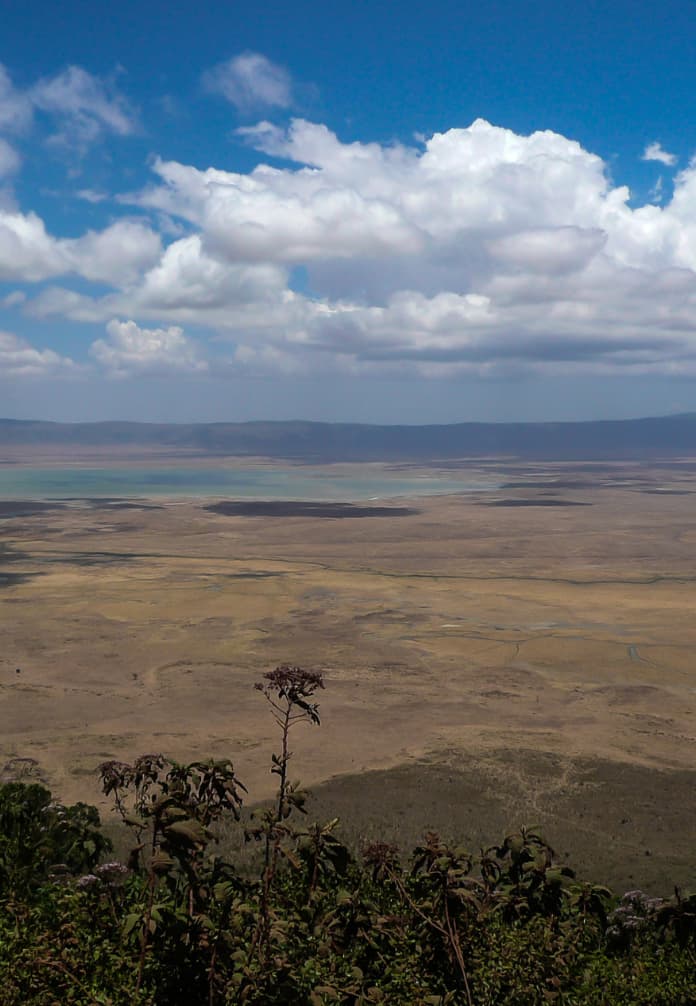
The Serengeti's Lobo and Kleins areas in the north support good eland numbers, particularly during the dry season when herds descend from the higher ground to the east. The open woodland here gives eland the mix of grass and browse they prefer, and sightings are more reliable than in the heavily visited central Serengeti. Ngorongoro Crater's rim forests and the highland slopes nearby are excellent eland habitat, though the animals are often seen from a distance. Arusha National Park, on the slopes of Mount Meru, offers some of the closest eland encounters in Tanzania. The park's small size and well-maintained tracks mean you can follow herds through montane grassland at surprisingly close range.
Where to See
Eland in Tanzania
Common Questions
Frequently Asked
In the Field
Photography Tips
Include other antelopes or a vehicle in the frame to convey the eland's enormous size. Without a reference point, photos fail to communicate how large these animals really are.
Mature bulls with heavy dewlaps and dark forehead mats make powerful portraits. Use a 400mm lens to fill the frame with the head and shoulders from a respectful distance.
If the herd is moving toward a fence line, be ready. Eland jump with little warning. A fast shutter speed of 1/2500s and continuous autofocus give you the best chance at this rare action shot.
Eland on a green hillside against a stormy sky is a classic East African image. Use a wide to medium telephoto and expose for the highlights to retain cloud drama.
From Our Guests