CREATE YOUR LEGEND | 2026-2028 dates available | SECURE YOUR PLACE WITH JUST £100 DEPOSIT
Tanzania Wildlife
Black Rhino
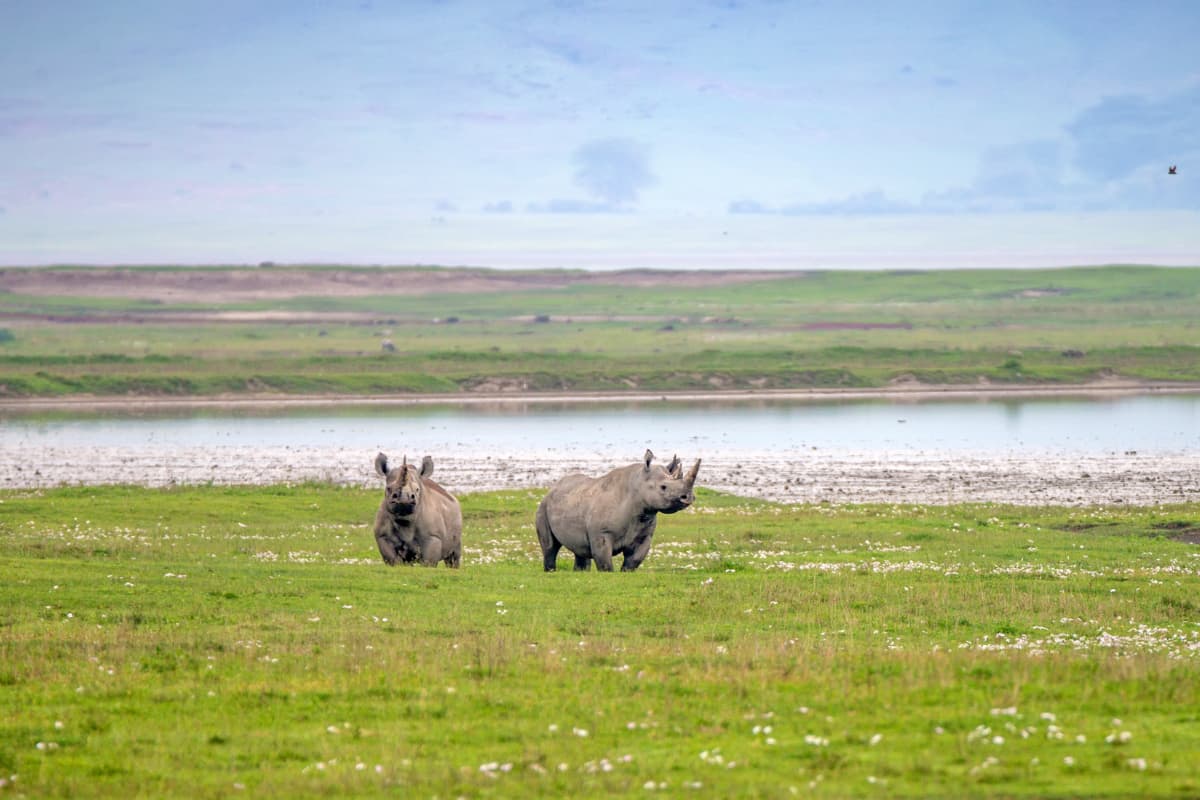
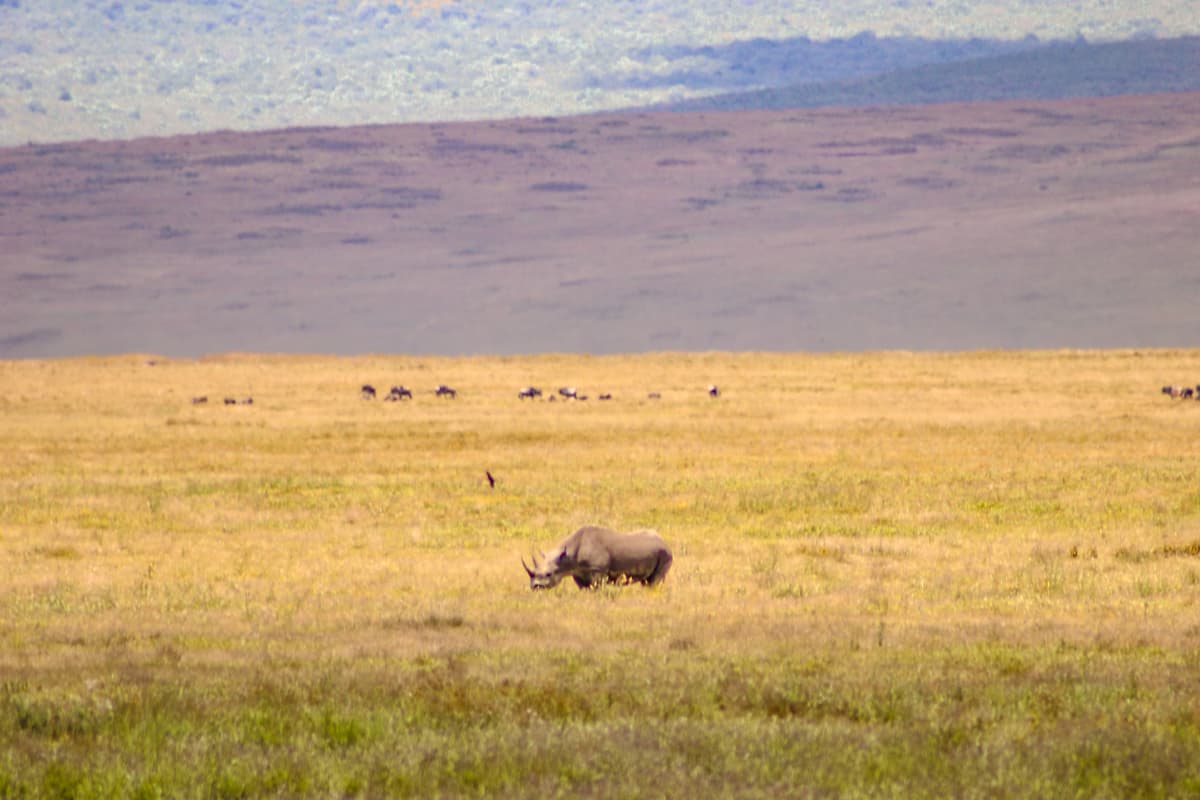
Critically endangered and built like a tank. The black rhino uses its hooked upper lip to browse shrubs and branches, not grass. In the Ngorongoro Crater, a small population has been rebuilt from near-zero through decades of intensive protection. Every individual is named and monitored.
Behaviour & Facts
Life in the Wild
Browser Not Grazer
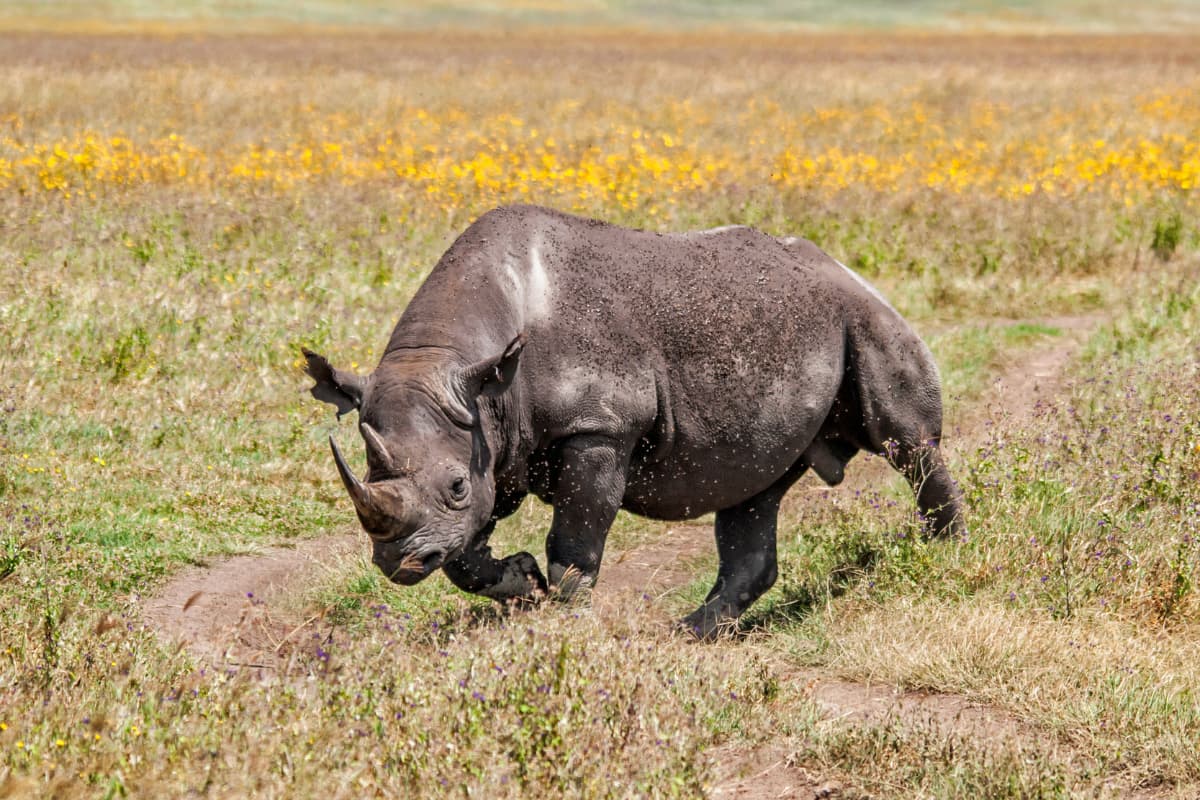
The black rhino is a browser, not a grazer. Its hooked, prehensile upper lip is built to strip leaves and twigs from acacia bushes and low scrub. This is the key difference from the white rhino, which has a wide, square lip designed for cropping grass. Despite the name, black rhinos are not black. They are a dusty grey, often tinted by the colour of the local soil they roll in. The browser/grazer distinction matters more than colour. It determines where each species feeds, how it moves and what habitat it needs.
Individual Tracking
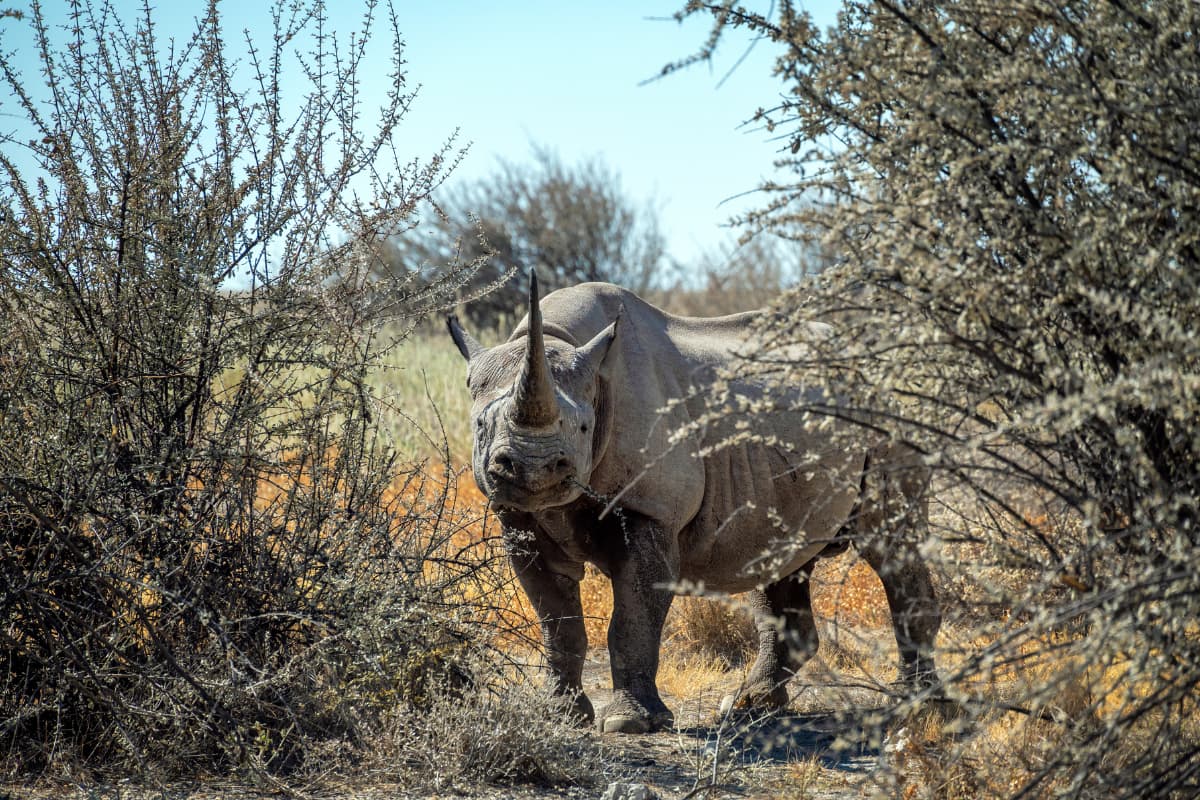
Every black rhino in Tanzania's protected areas is individually named and tracked daily by dedicated ranger teams. Their eyesight is poor, but their hearing and sense of smell are extraordinary. Their ears swivel independently like satellite dishes, picking up sounds from every direction. A horn can reach 60 centimetres or more. It is made entirely of keratin, the same protein as human fingernails. There is no bone core, no ivory, no medicinal value. Despite this, the horn drives the poaching crisis that has brought the species to the edge.
Crater Recovery
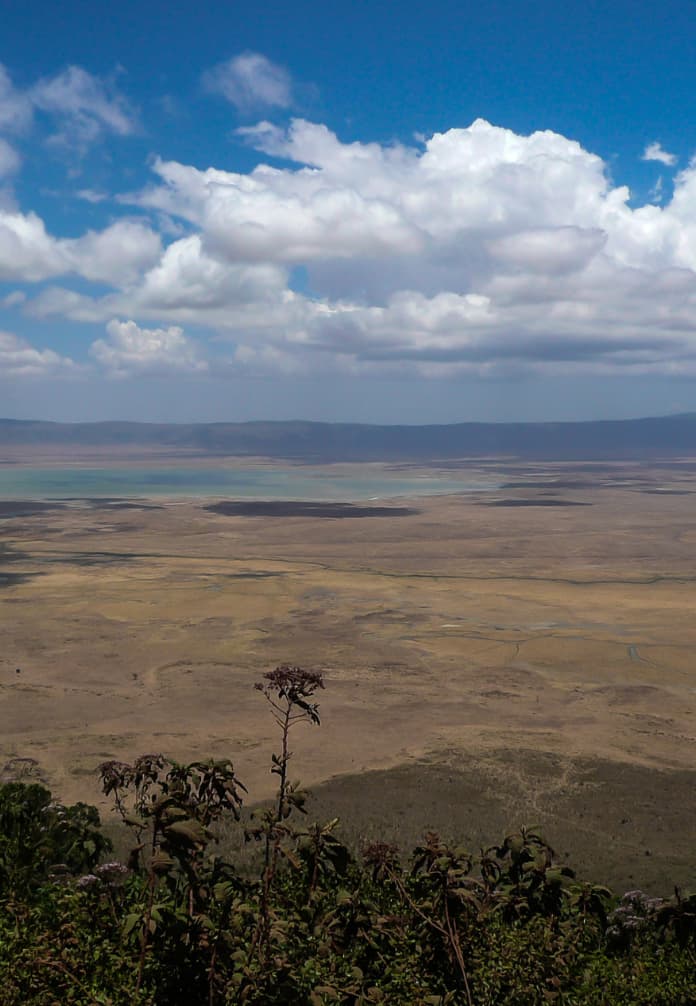
Ngorongoro Crater's black rhino population was reduced to a handful of individuals by the mid-1990s. Poaching had pushed the species to the brink across East Africa. What followed was one of Tanzania's most intensive conservation operations. Round-the-clock ranger patrols, supported by NGOs and international funding, provided constant protection. The population has slowly rebuilt. Seeing a black rhino in the crater today is not just a wildlife sighting. It is evidence of an active, ongoing conservation effort that continues every day.
Where to See
Black Rhino in Tanzania
Common Questions
Frequently Asked
In the Field
Photography Tips
Black rhino are skittish and you will not get close. A 400mm lens is the minimum - 600mm is better. Be ready to shoot fast because sightings are often brief.
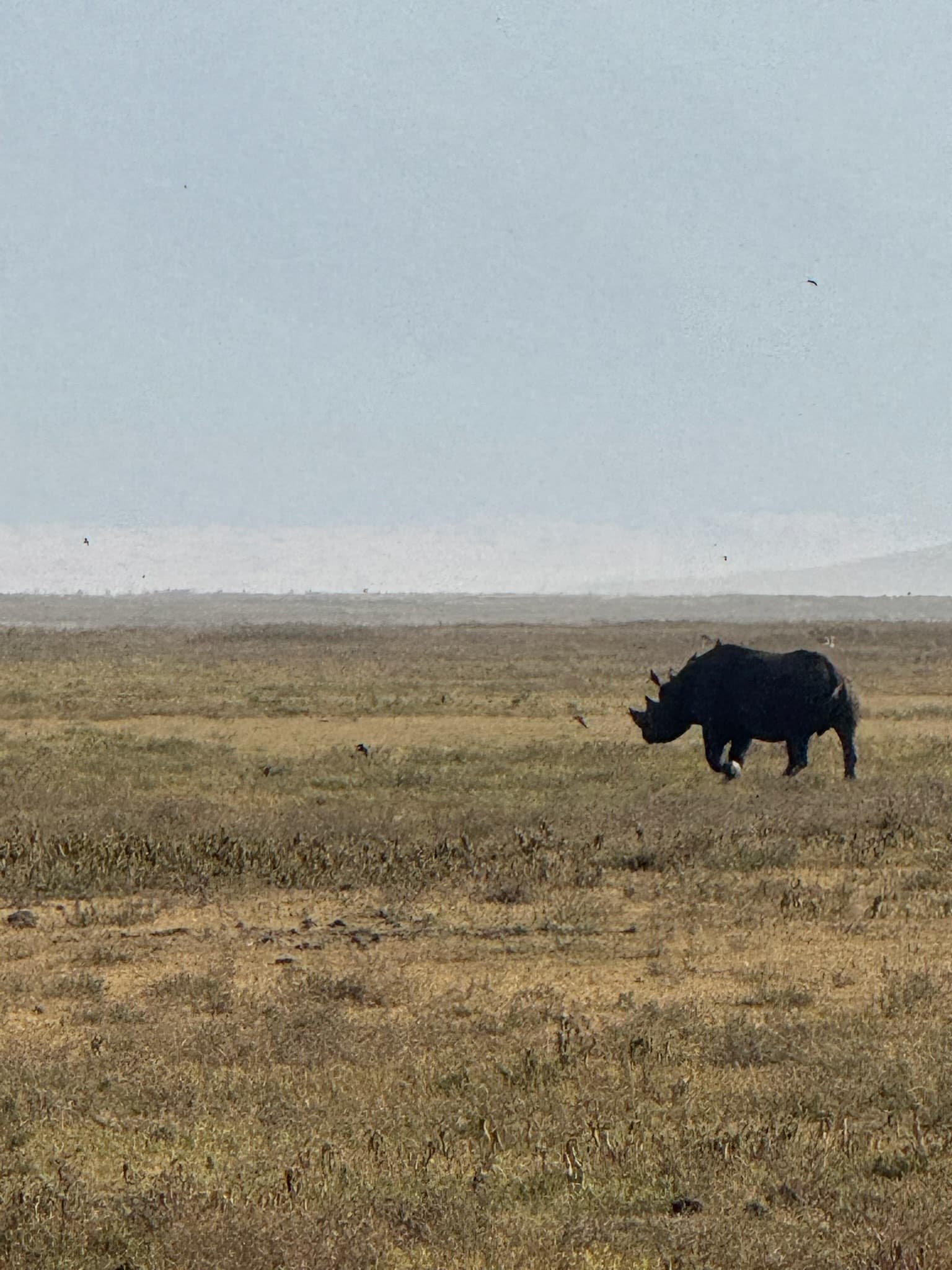
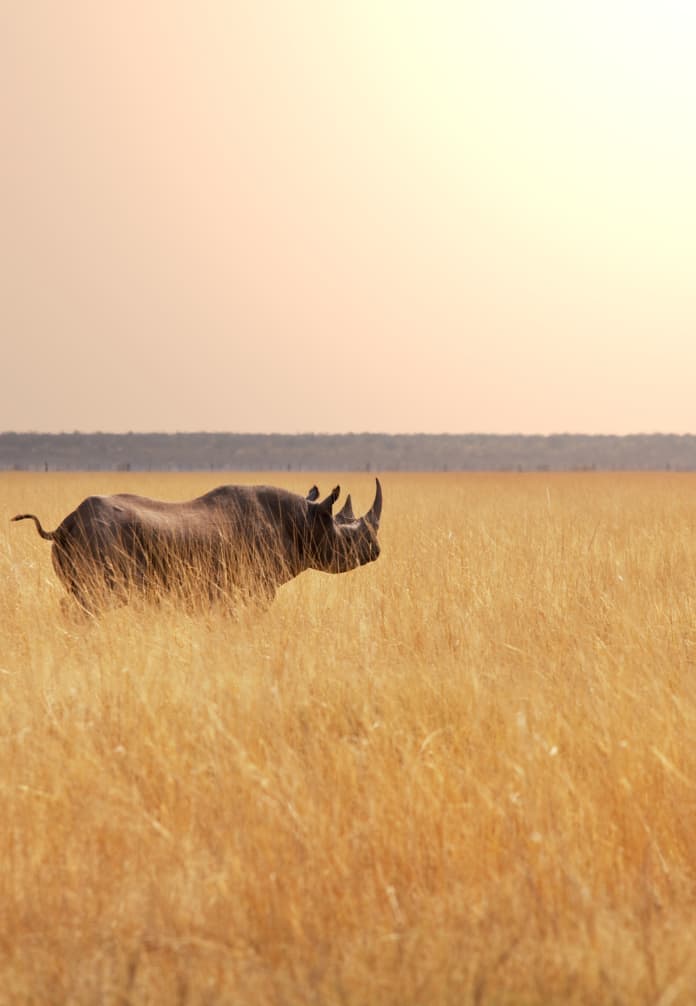
Position for a silhouette against the dawn or dusk sky. The horn profile in black against orange is instantly recognisable and deeply striking.
The hooked upper lip is what separates black rhino from white. Get a three-quarter angle on the face to clearly show this defining feature.
Compose so the horn breaks cleanly against the sky or a simple background. A cluttered backdrop behind the horn loses the shape that makes this animal iconic.
From Our Guests