CREATE YOUR LEGEND | 2026-2028 dates available | SECURE YOUR PLACE WITH JUST £100 DEPOSIT
Tanzania Wildlife
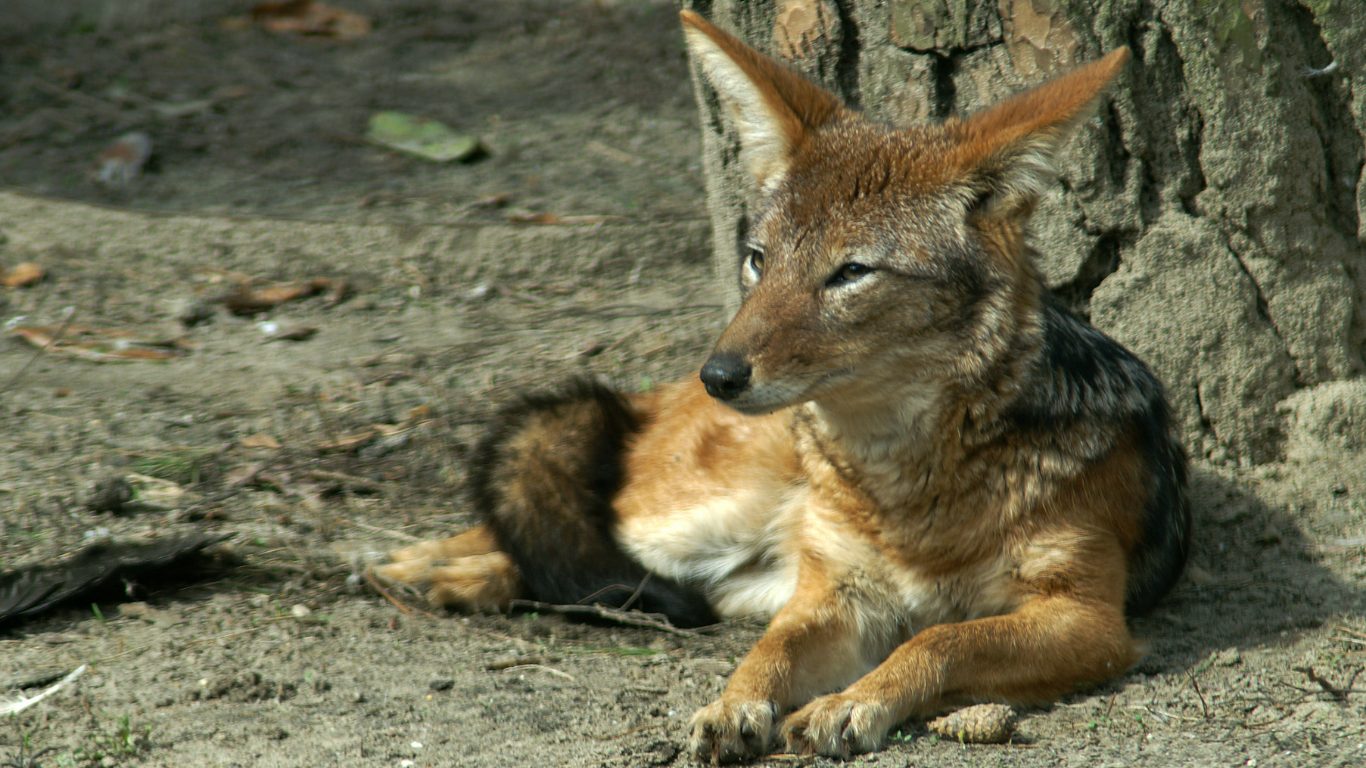
Black-backed Jackal
Black-backed jackals pair for life and defend their territory as a unit year-round. Older siblings stay on to help raise the next generation, making them one of the few carnivores with a true cooperative breeding system. You will find them in every park on the northern circuit.
Behaviour & Facts
Life in the Wild
Pair Bonding
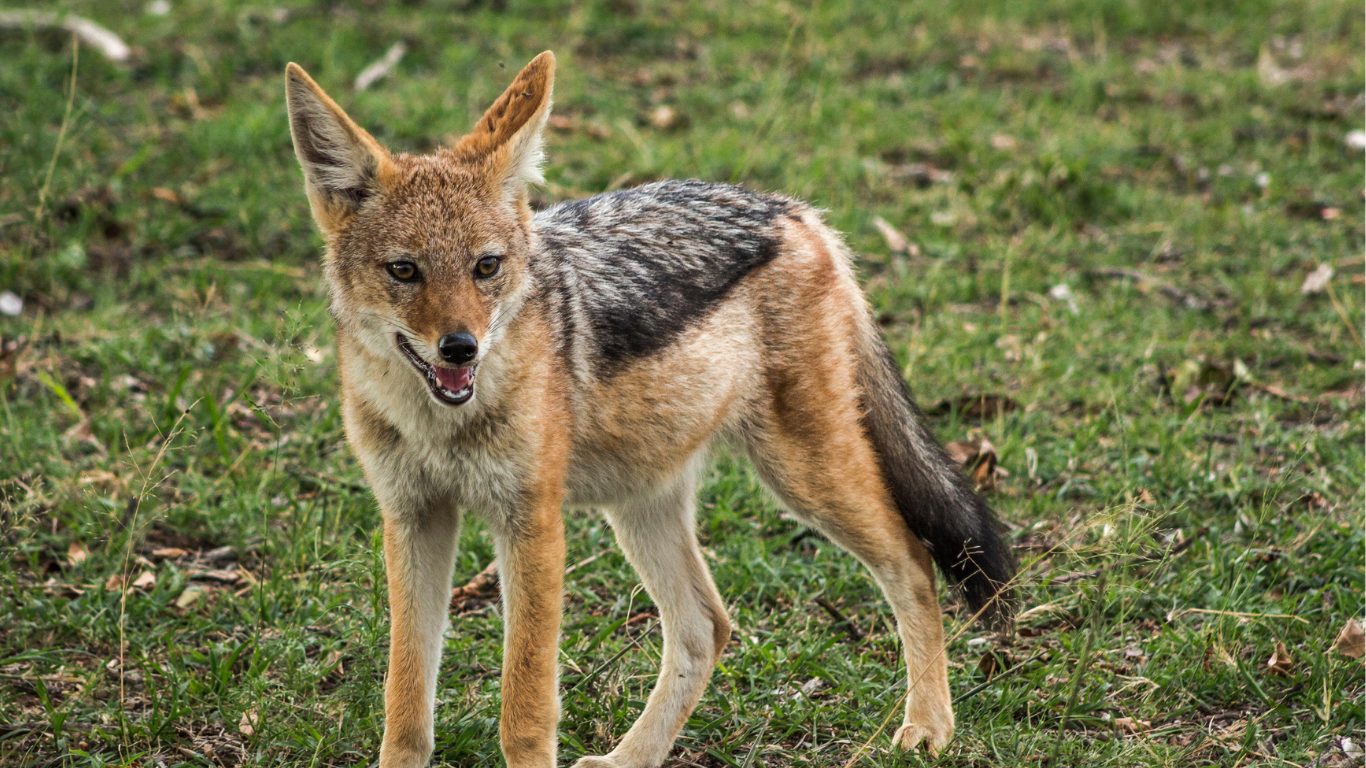
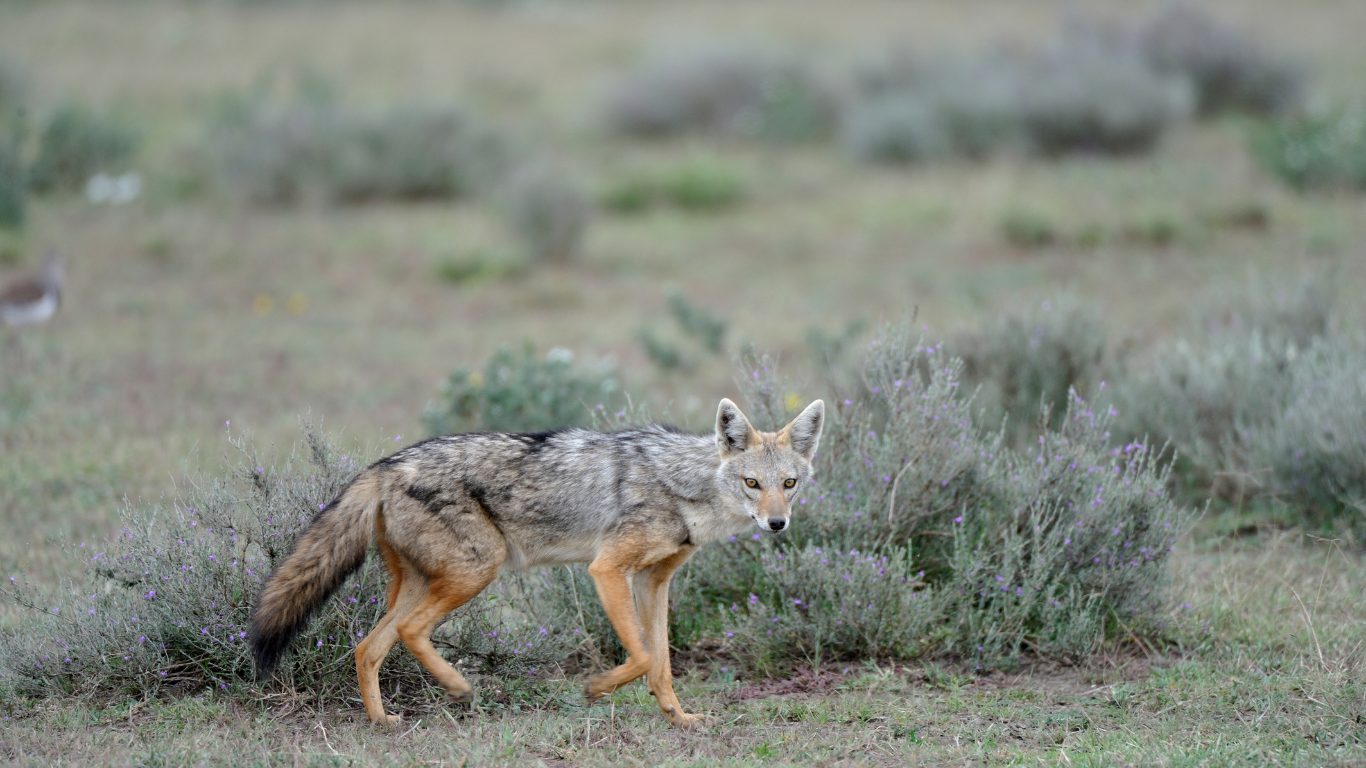
Black-backed jackals mate for life. A bonded pair defends their territory as a unit year-round, patrolling boundaries and marking scent posts together. The distinctive dark saddle running from neck to tail makes them easy to identify in the field. You will find them in every park on Tanzania's northern circuit. They are bold, visible, and active during daylight hours, which makes them one of the more reliable small carnivore sightings on any safari.
Cooperative Rearing
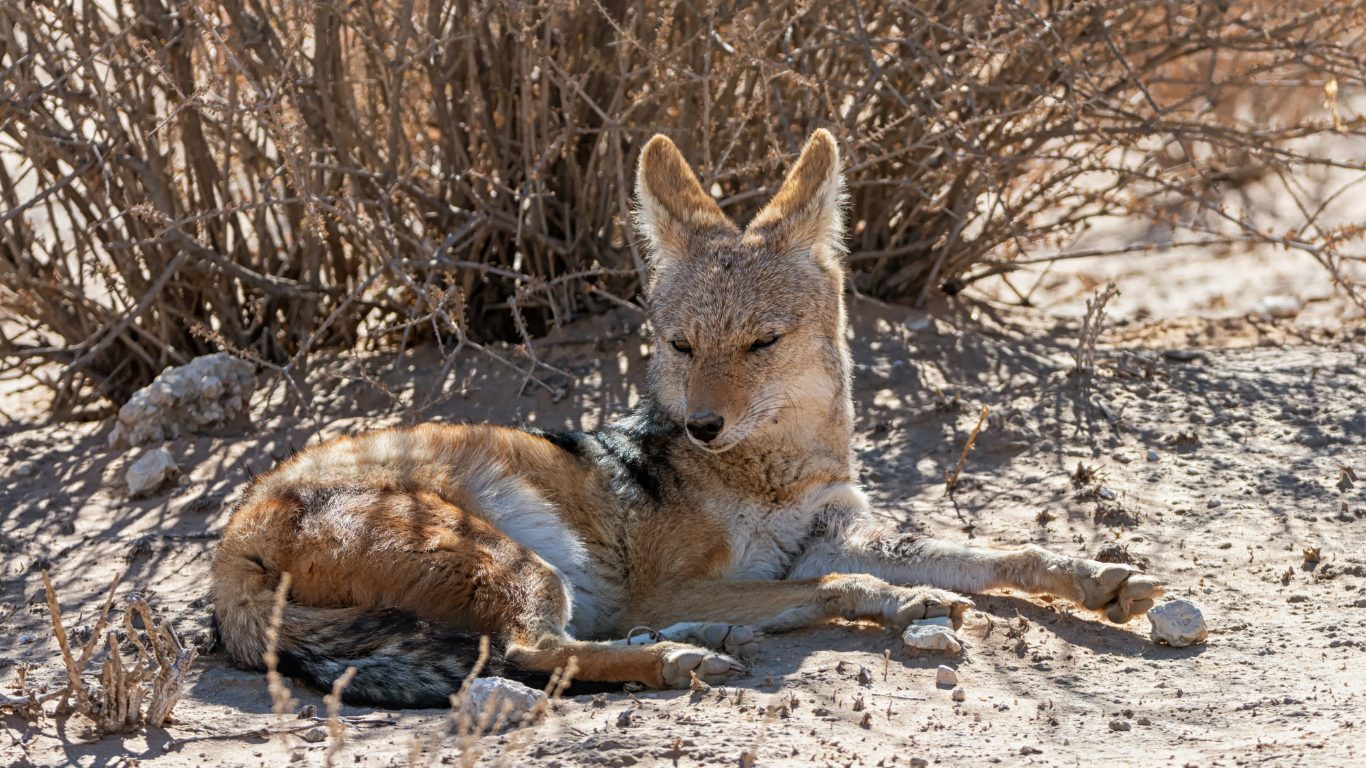
Older siblings from the previous year's litter stay at the den to help raise new pups. These helpers bring food, stand guard while parents hunt, and chase off smaller predators that approach the den. The impact is measurable. Pup survival roughly doubles when helpers are present compared to pairs raising young alone. This cooperative breeding system keeps family groups tight and gives young jackals valuable experience before they establish territories of their own.
Diet Range
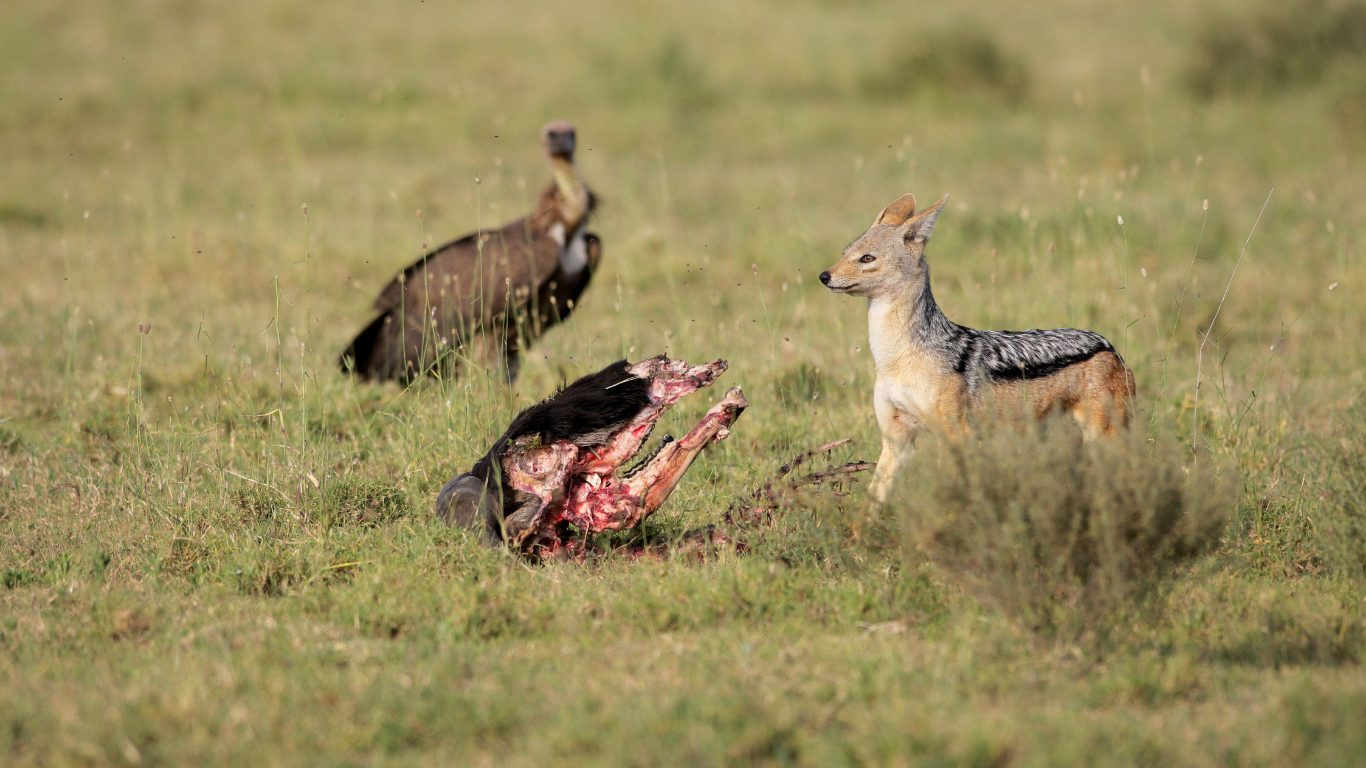
Black-backed jackals eat almost anything. Insects, rodents, birds, fruit, and carrion all feature in the diet. They scavenge regularly at lion and hyena kills, darting in to grab scraps with quick, calculated timing. This dietary range makes them one of Africa's most adaptable small carnivores. They thrive in grassland, woodland, and semi-arid scrub, adjusting their strategy to whatever food source is most available. Where specialists struggle during lean seasons, jackals simply switch to something else.
Where to See
Black-backed Jackal in Tanzania
Common Questions
Frequently Asked
In the Field
Photography Tips
Jackals are small, so drop to ground level or shoot from a low vehicle window. Eye-level perspective gives them presence and turns scrubby foreground into a smooth wash of colour.
Den entrances are predictable spots. Set up at a comfortable distance, pre-focus on the hole, and wait for pups to pop out. Their curiosity keeps them coming back to look around.
A trotting jackal against a sunset is a clean, graphic image. Expose for the sky, let the jackal go dark, and time the shot when all four legs are spread in stride.
At a kill site, jackals dart in and out between larger predators. Use continuous focus and a fast shutter to freeze them mid-snatch - the tension in their body tells the whole story.
From Our Guests