CREATE YOUR LEGEND | 2026-2028 dates available | SECURE YOUR PLACE WITH JUST £100 DEPOSIT
Tanzania Wildlife
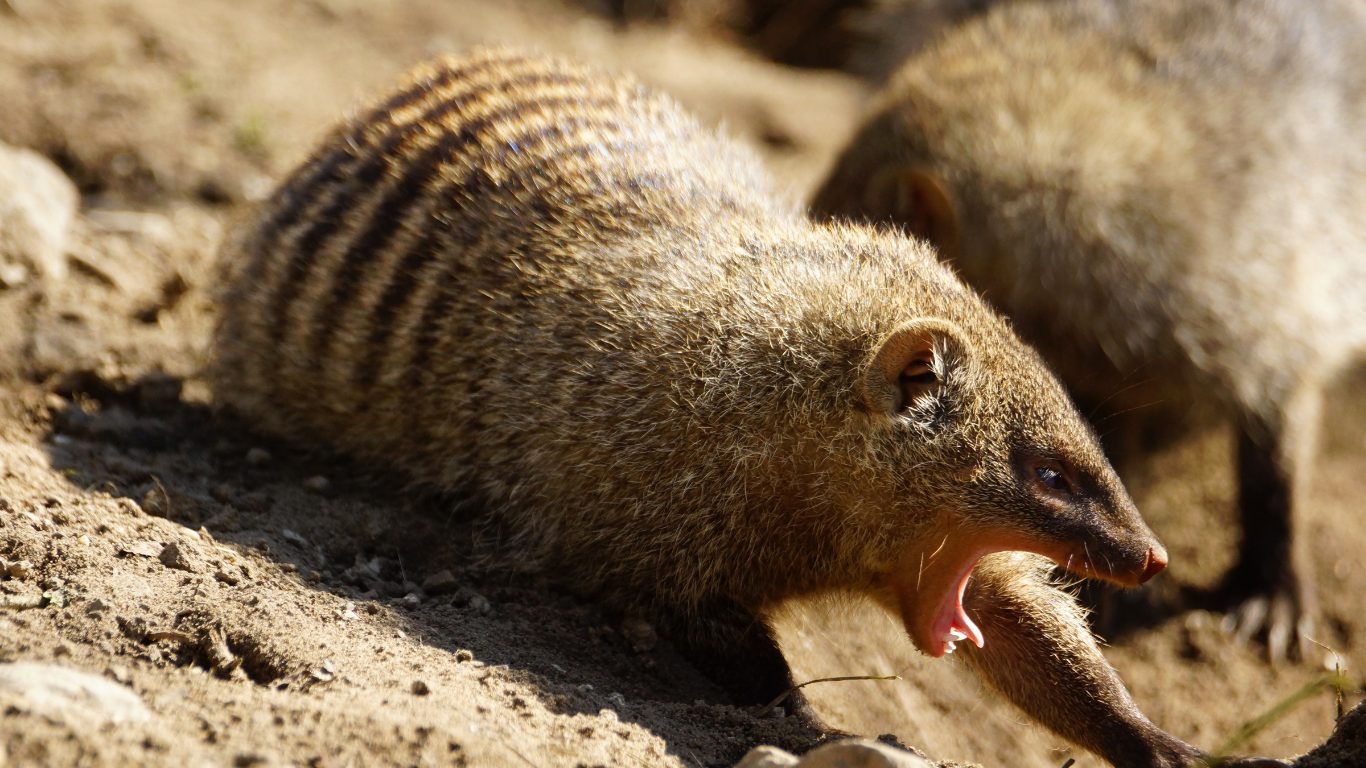
Banded Mongoose
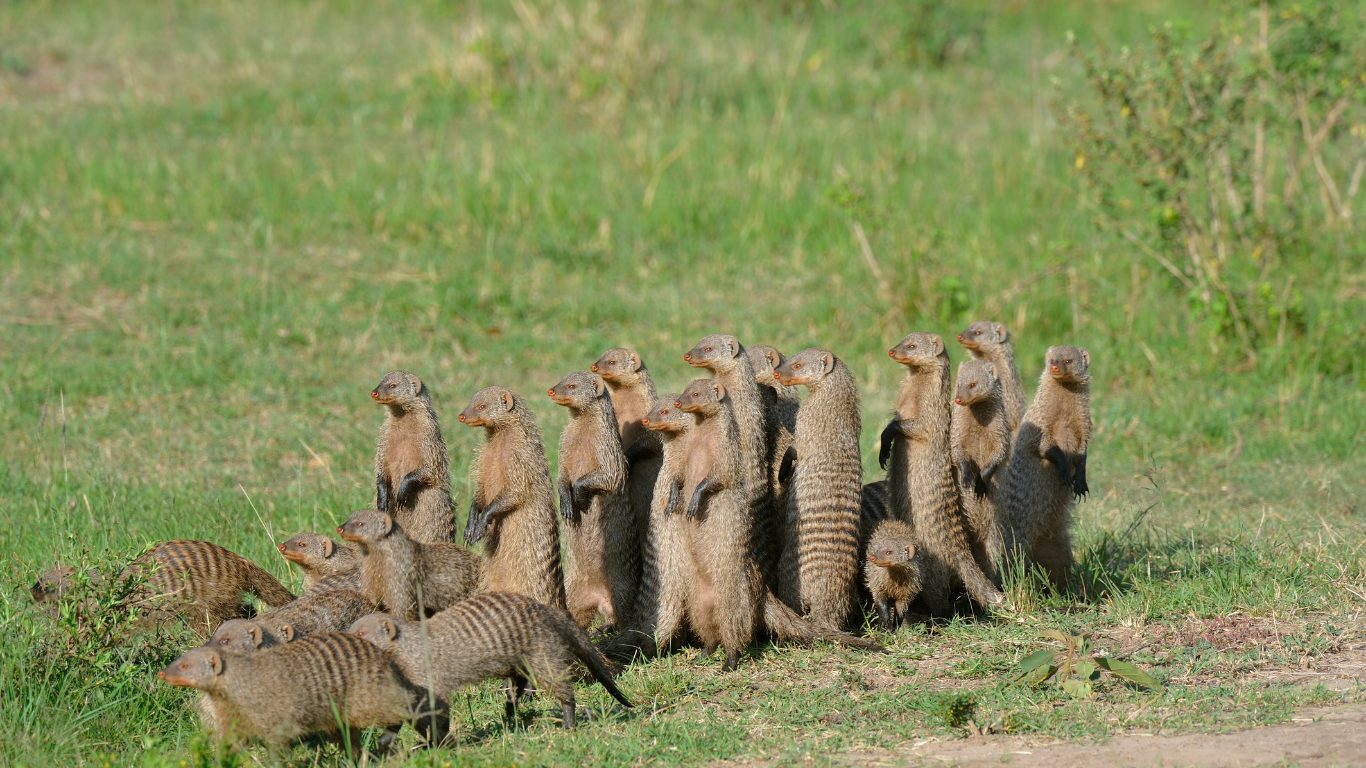
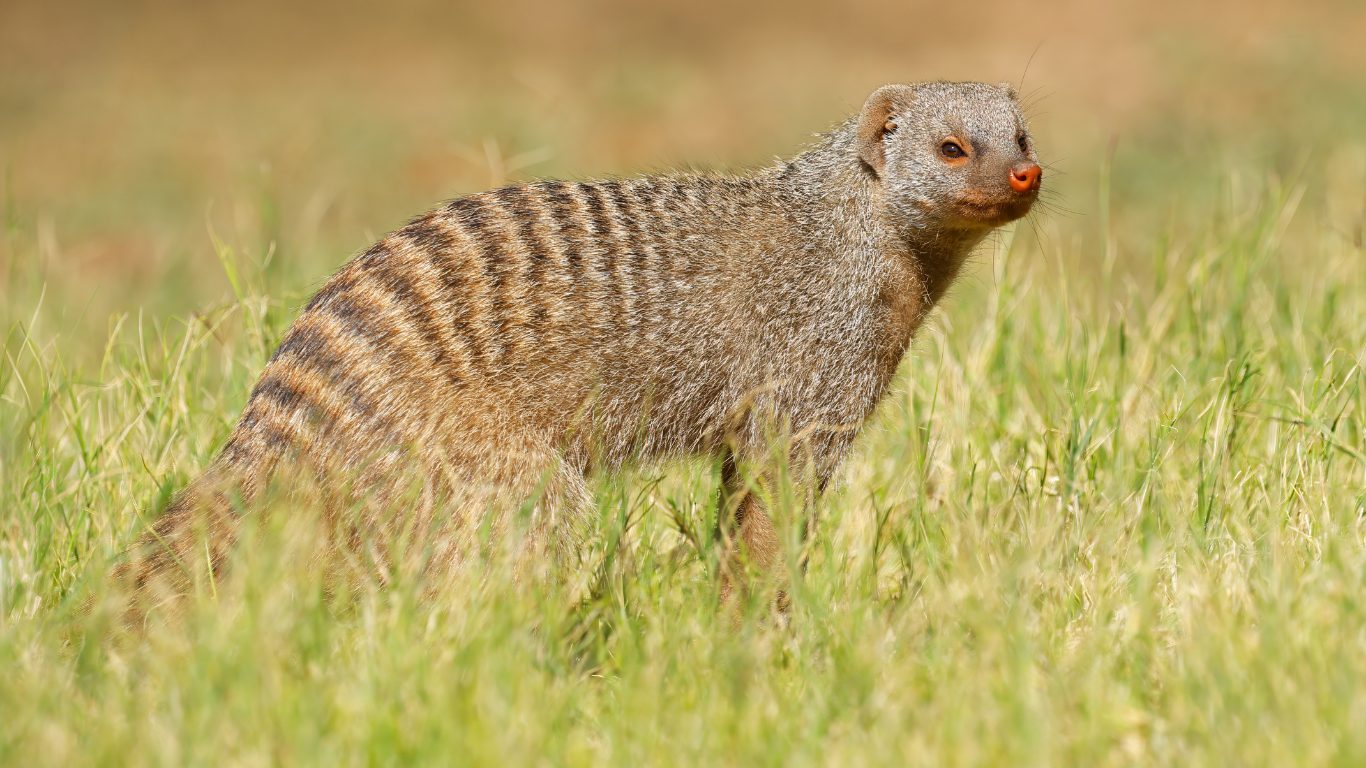
A troop of banded mongooses crossing open ground is controlled chaos - 20 or more animals foraging, fighting, and calling in constant motion. They mob cobras, raise pups communally, and ignore your vehicle entirely.
Behaviour & Facts
Life in the Wild
Mob Mentality
Banded mongooses operate on a simple principle: there is safety and efficiency in numbers. A troop of 20 or more animals moving through the bush flushes far more prey than any individual could manage alone. They sweep through grass, leaf litter, and dung with relentless energy, turning over every stone and log in their path. When one animal finds a rich food source, the churring calls intensify and the group converges. This mob foraging strategy also provides collective defence. When a predator appears - a martial eagle overhead or a jackal on the ground - multiple sentinels raise the alarm simultaneously. The troop can either scatter into cover or, if the threat is manageable, turn and confront it as a unified wall of teeth and aggression. Few predators will commit to attacking a bristling, hissing mass of 30 mongooses.
Communal Pup Rearing
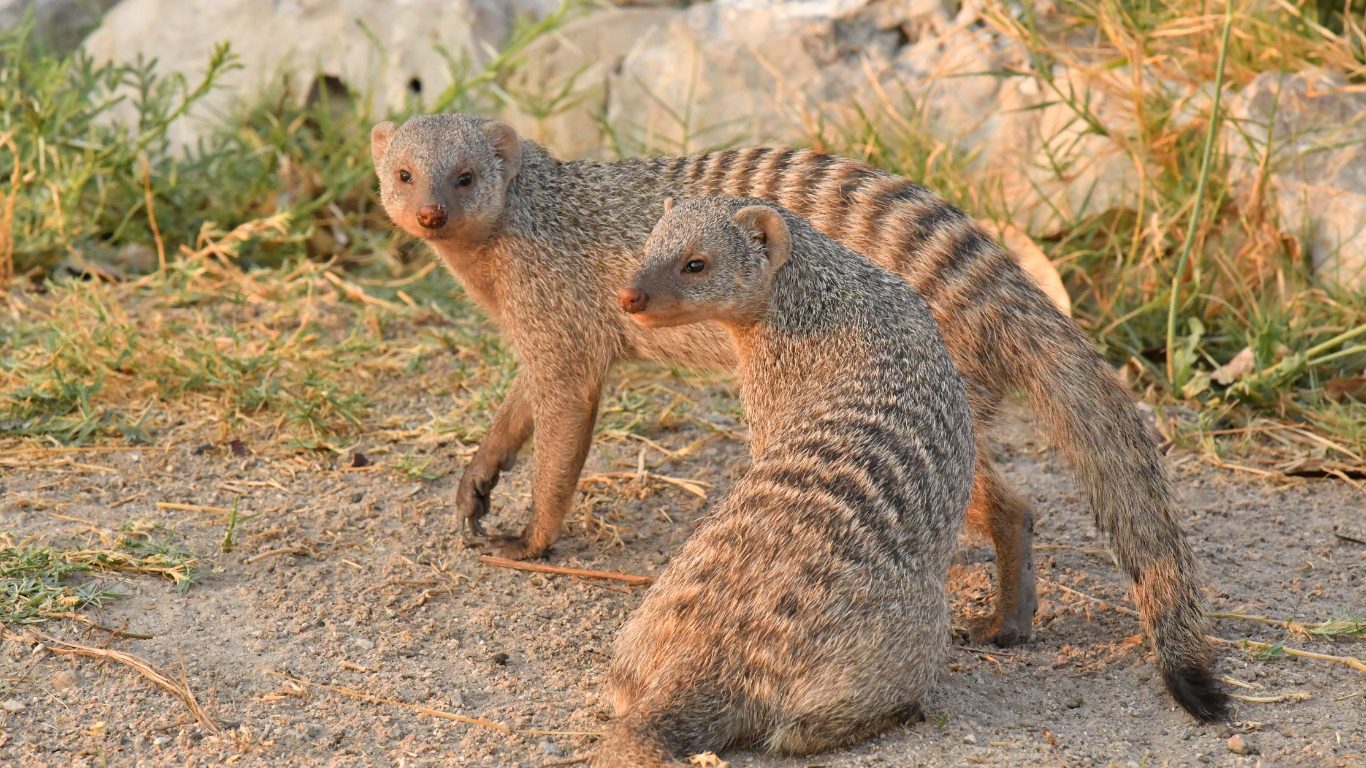
The communal breeding system of banded mongooses is one of the most cooperative in the mammal world. Dominant and subordinate females within a troop synchronise their births, delivering pups within days of each other. This synchrony prevents dominant females from selectively killing subordinate offspring, as they cannot distinguish their own pups from others in the creche. It is an evolutionary arms race playing out within the troop. Each pup is assigned a dedicated escort - typically a male or non-breeding female - who stays with it for the first two to three months. The escort teaches the pup where and how to forage, shares food, and physically defends it from threats. This one-on-one mentorship is rare among social mammals and gives young mongooses a significant survival advantage compared to species where pups must compete for parental attention.
Snake Fighters
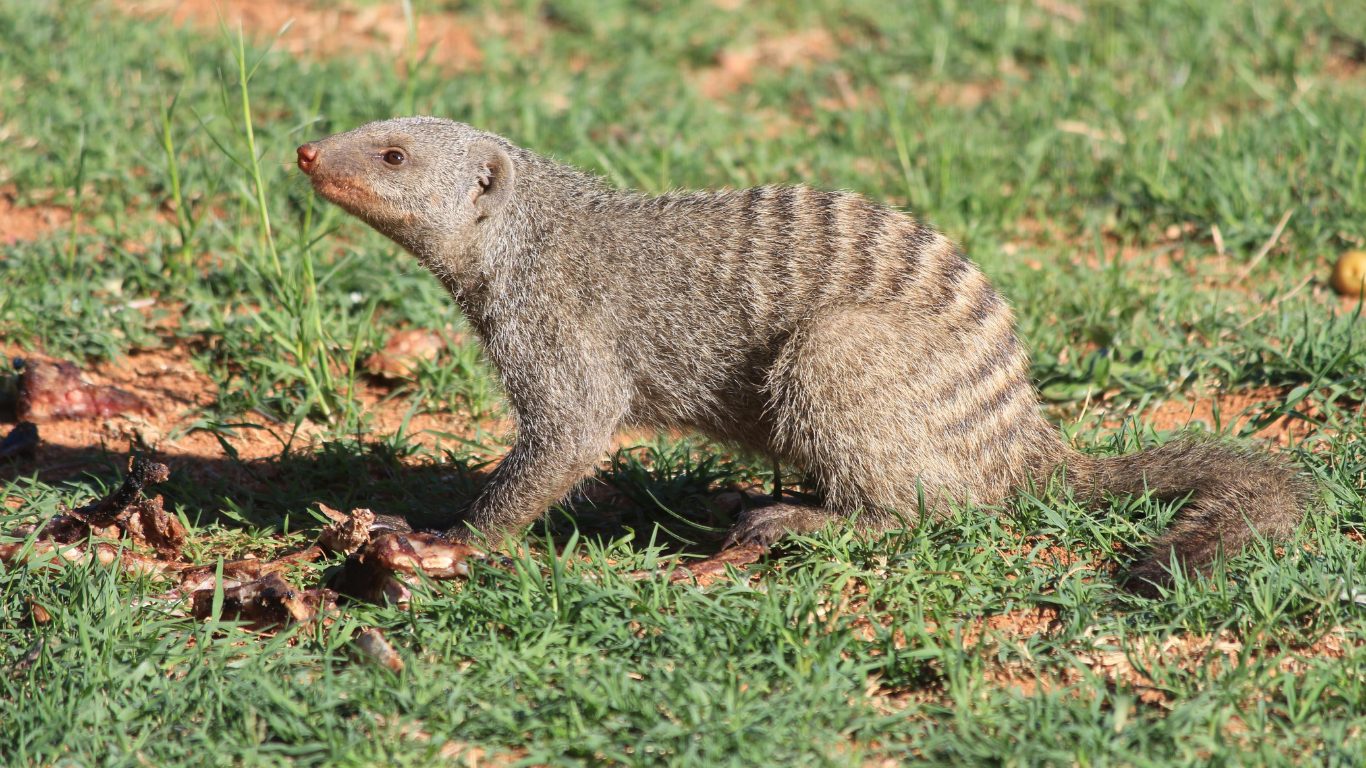
The banded mongoose's willingness to take on venomous snakes is not reckless bravado but a calculated group strategy. When a cobra or puff adder is detected, the troop fans out in a semicircle, individuals darting forward to bite and retreating before the snake can strike accurately. The constant movement from multiple angles overwhelms the snake's target-tracking ability. Strikes that do land often hit the mongoose's coarse, loose-fitting skin, which provides some protection. Banded mongooses also possess a degree of physiological resistance to certain venoms, though a direct bite from a large cobra can still be fatal. The key to their success is speed, coordination, and the willingness of multiple individuals to take turns absorbing risk. After a successful kill, the snake is shared among the troop. This cooperative hunting behaviour reinforces social bonds and ensures even subordinate members get high-protein meals.
Where to See
Banded Mongoose in Tanzania
Common Questions
Frequently Asked
In the Field
Photography Tips
Position your vehicle where the troop will cross open ground. Use a fast shutter speed of at least 1/1000s to freeze the chaotic movement of multiple animals.
Watch for individuals standing upright on termite mounds scanning for threats. These sentinels hold their pose for several seconds, giving you time for a clean portrait.
Mongooses dig with intense focus. A tight crop on the face during active foraging captures dirt flying and the determined expression that defines these animals.
During breeding season, watch for adults escorting individual pups. Each pup has a dedicated escort - these pairs make compelling images showing the communal care system.
From Our Guests