CREATE YOUR LEGEND | 2026-2028 dates available | SECURE YOUR PLACE WITH JUST £100 DEPOSIT
Tanzania Wildlife
African Porcupine
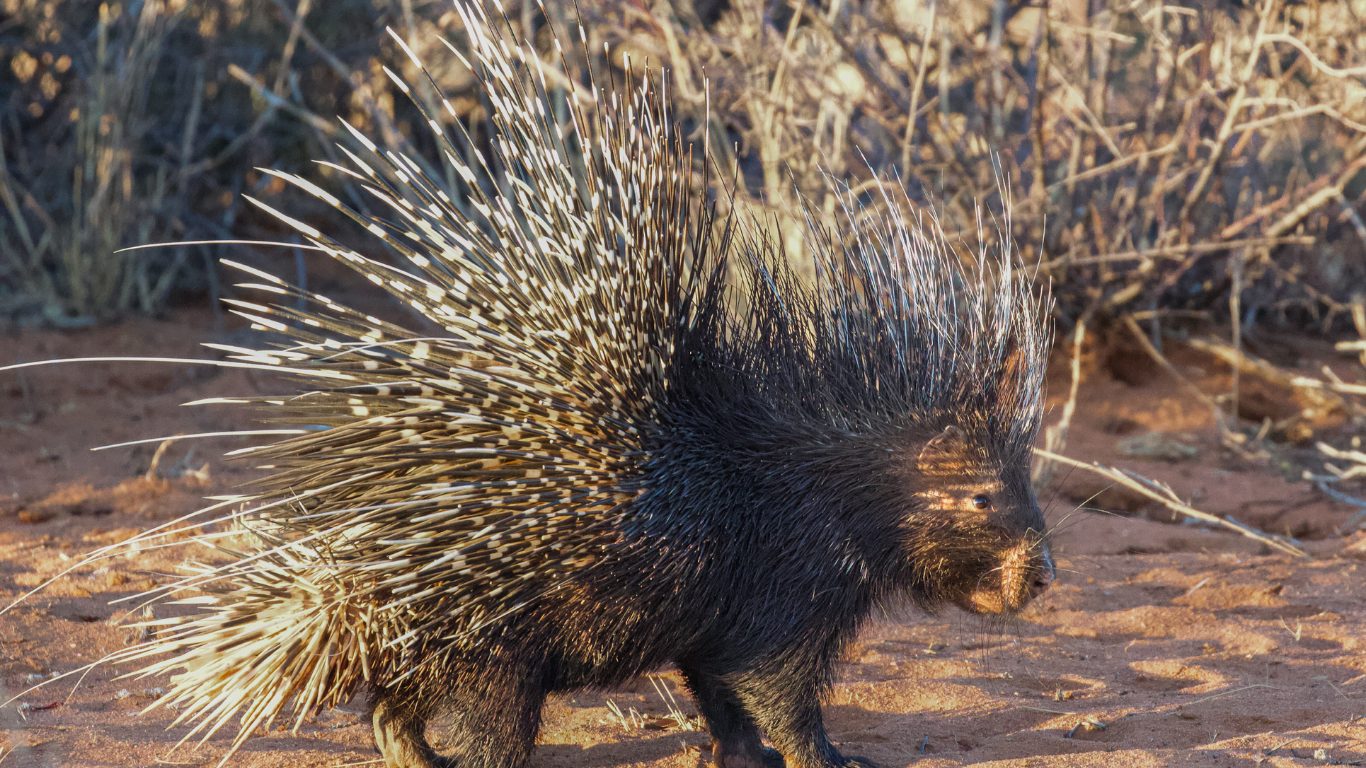
Africa's largest rodent carries 30,000 barbed quills and the confidence to face down a leopard. Strictly nocturnal, porcupines are the prize sighting on any Tanzania night drive - listen for the rattle of hollow tail quills in the dark.
Behaviour & Facts
Life in the Wild
Night Wanderers
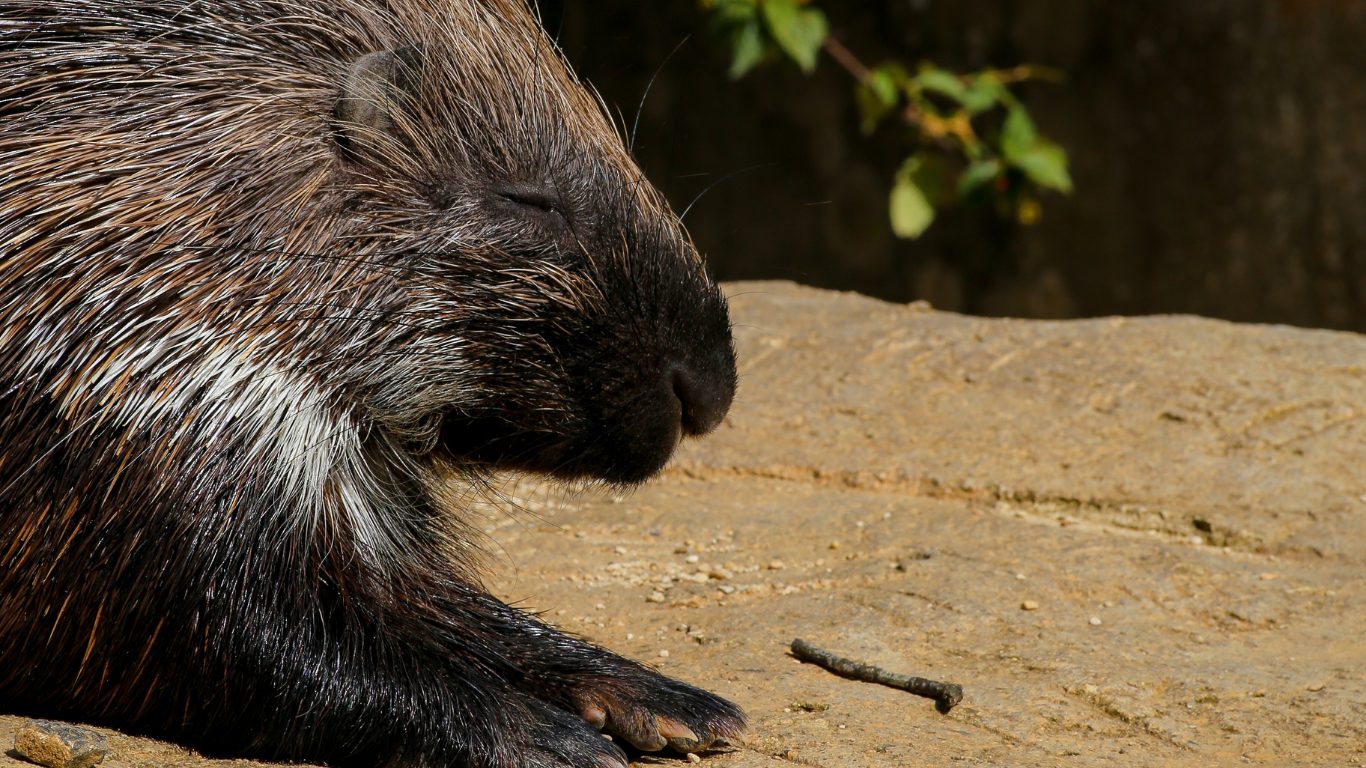
The African crested porcupine is a creature of darkness. It spends the daylight hours deep inside burrow systems or wedged into rock crevices, emerging only after sunset to follow established foraging trails. These trails are often visible during the day as narrow, well-worn paths with scattered quill fragments marking the route. A single porcupine may cover three to five kilometres in a night, methodically digging for roots and tubers. Their nocturnal habits mean most safari visitors never see one. Night drives change that equation entirely. During the dry season, when vegetation is sparse and porcupines must range further to find food, spotlight-equipped vehicles regularly encounter them on roads and tracks. The key is listening - the distinctive rattle of hollow tail quills carries a surprising distance in the still night air.
Quill Defence System
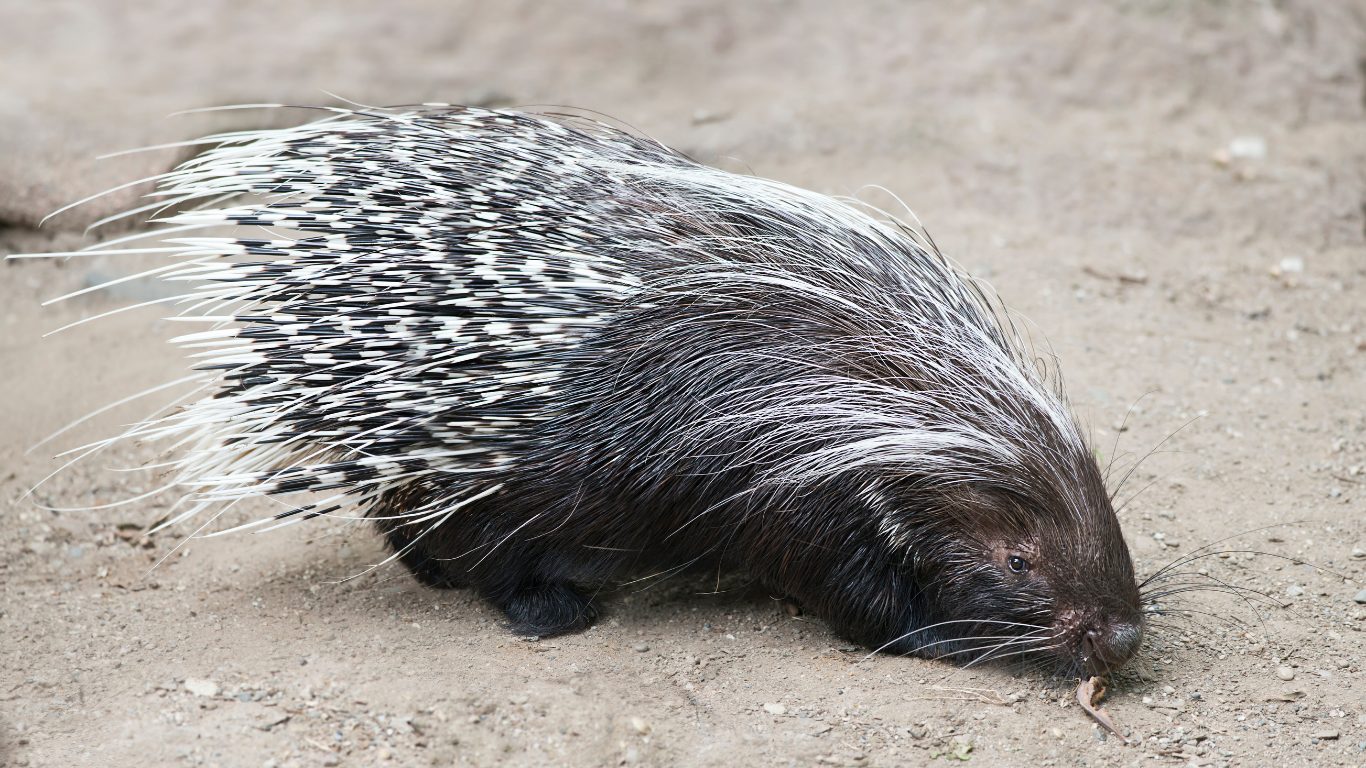
A porcupine's quill defence is one of the most effective in the animal kingdom. The body carries roughly 30,000 quills of varying lengths, from short, dense underquills to the long crest quills that can reach 30 centimetres. Each quill has backward-facing barbs near the tip that grip muscle tissue on entry, making removal painful and difficult. The quills are not venomous, but the puncture wounds they create are highly prone to bacterial infection. The defensive sequence is predictable. First, the porcupine stamps its feet and raises the crest. Then it rattles the specialised hollow quills on its tail - a sound designed to warn without requiring physical contact. If the threat continues, the porcupine reverses at speed, driving the sharp quill tips into the attacker. This strategy is remarkably effective. Veterinary studies have documented fatal quill injuries in lions, leopards, hyenas, and even African wild dogs.
Camp Visitors
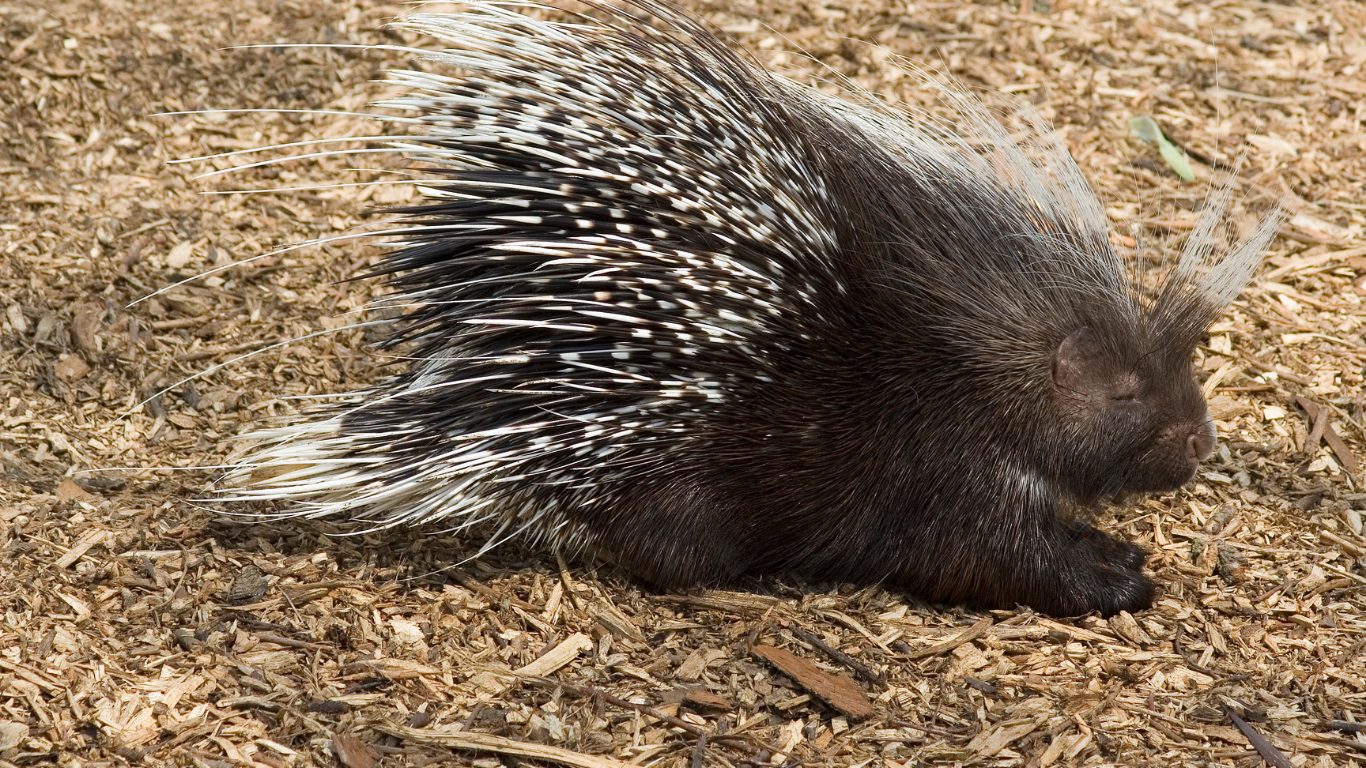
Safari camps across Tanzania have an uneasy relationship with resident porcupines. These animals quickly learn that human habitation means accessible food scraps, garden vegetables, and mineral-rich materials like bone handles and leather. A porcupine's gnawing power is considerable - they can chew through wooden structures and have been known to damage vehicle tyres left on the ground overnight. For guests, however, a camp porcupine is a highlight. Many lodges leave subtle feeding stations near viewing areas, and habituated individuals will forage within metres of a quiet observer. The sight of a fully crested porcupine waddling through a torch beam, quills swaying with each step, is one of those genuine safari moments that stays with you. Photographing them in this controlled setting is far easier than during a moving night drive.
Where to See
African Porcupine in Tanzania
Common Questions
Frequently Asked
In the Field
Photography Tips
Use a red-filtered spotlight to locate porcupines without disturbing them. Switch to white light briefly for the photograph, using a high ISO of 3200 or above with a fast lens.
If the porcupine raises its quills, that is your shot. Capture the full crest from a side angle to show the dramatic scale of the defence display against the dark background.
Many safari camps have resident porcupines that visit at night. Set up a camera with a remote trigger near a known feeding area for controlled, high-quality images.
Place a trail camera along well-worn porcupine paths near burrow entrances. These trails are obvious - look for quill fragments and digging marks at the trailside.
From Our Guests