CREATE YOUR LEGEND | 2026-2028 dates available | SECURE YOUR PLACE WITH JUST £100 DEPOSIT
Tanzania Wildlife
Aardwolf
The aardwolf is a termite-eating member of the hyena family that most safari visitors have never heard of. Strictly nocturnal and solitary, finding one on a night drive is a prized sighting that separates a standard safari from an exceptional one.
Behaviour & Facts
Life in the Wild
The Termite Hyena
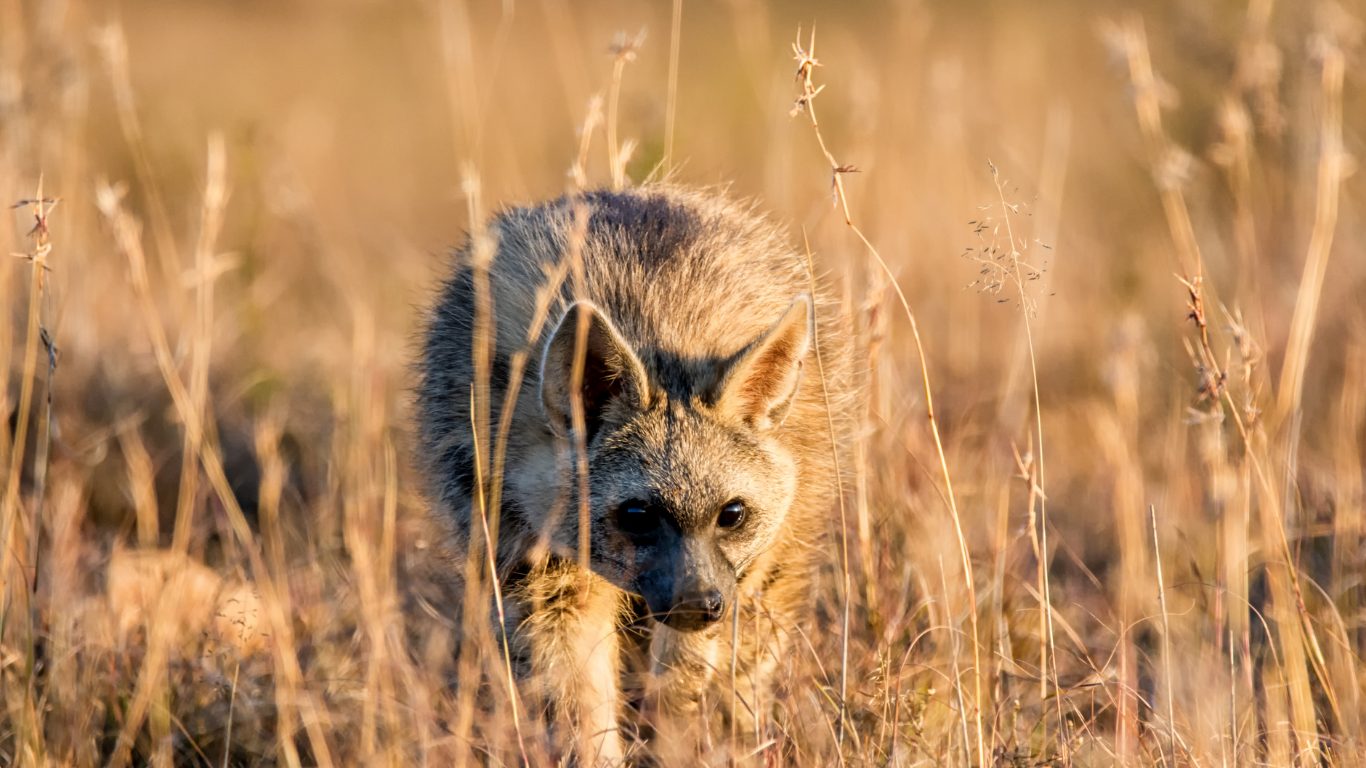
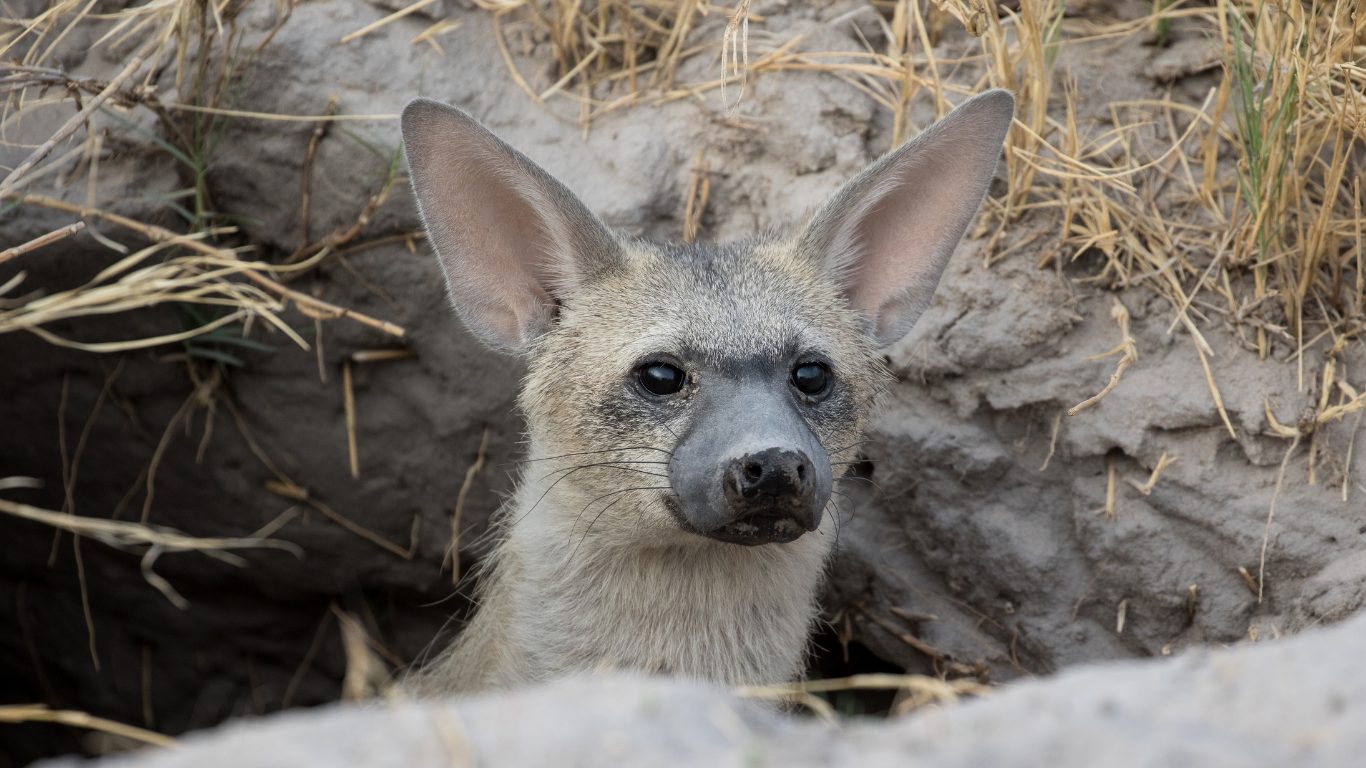
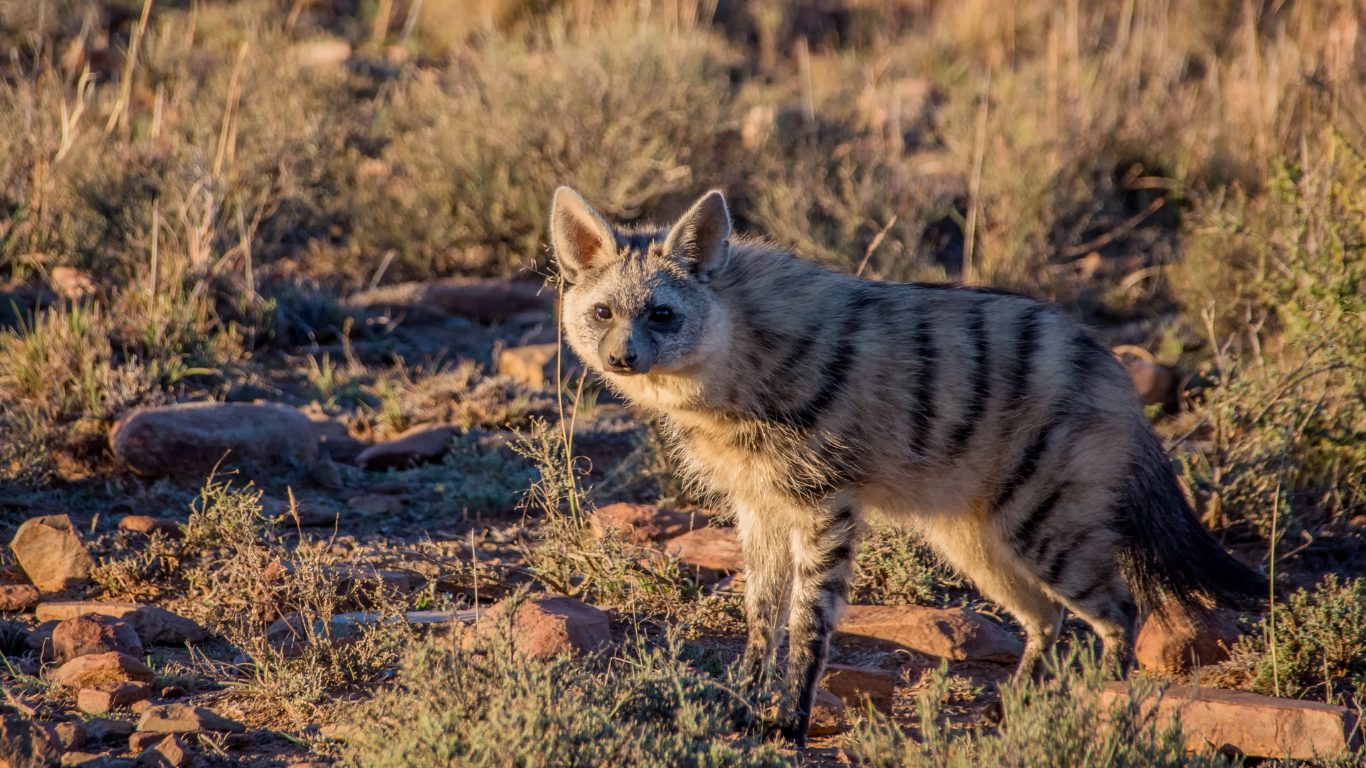
The aardwolf is the odd one out in the hyena family. While its relatives, the spotted, striped, and brown hyenas, are known for powerful jaws and carnivorous diets, the aardwolf evolved in the opposite direction. It abandoned meat entirely and specialised in termites. Its jaws are weak, its teeth are small and widely spaced, and its build is slight. At 7 to 10 kilograms, it weighs less than a tenth of a large spotted hyena. Despite the size difference, the family resemblance is visible in the sloping back, the rounded ears, and the overall body shape. The aardwolf's pale buff coat with vertical black stripes gives it a distinct appearance, and when it raises the long dorsal mane along its back, it looks considerably larger than it actually is. This mane display is a bluff to deter predators.
Feeding Specialisation
The aardwolf's feeding strategy is remarkably precise. It targets harvester termites of the genus Trinervitermes, which forage in dense columns on the soil surface at night. The aardwolf walks slowly through grassland, listening and smelling for active columns, then laps up the termites with rapid tongue movements. It does not dig into mounds or destroy colonies. Instead, it feeds from the surface and moves on. This restraint is deliberate. Aardwolves memorise the locations of termite patches within their territory and rotate between them on a roughly weekly cycle. By not over-harvesting any single colony, they ensure a sustainable food supply. Research has shown that an aardwolf's territory contains enough termite patches to support continuous feeding throughout the year, including the cooler months when termite surface activity decreases.
A Coveted Night Sighting
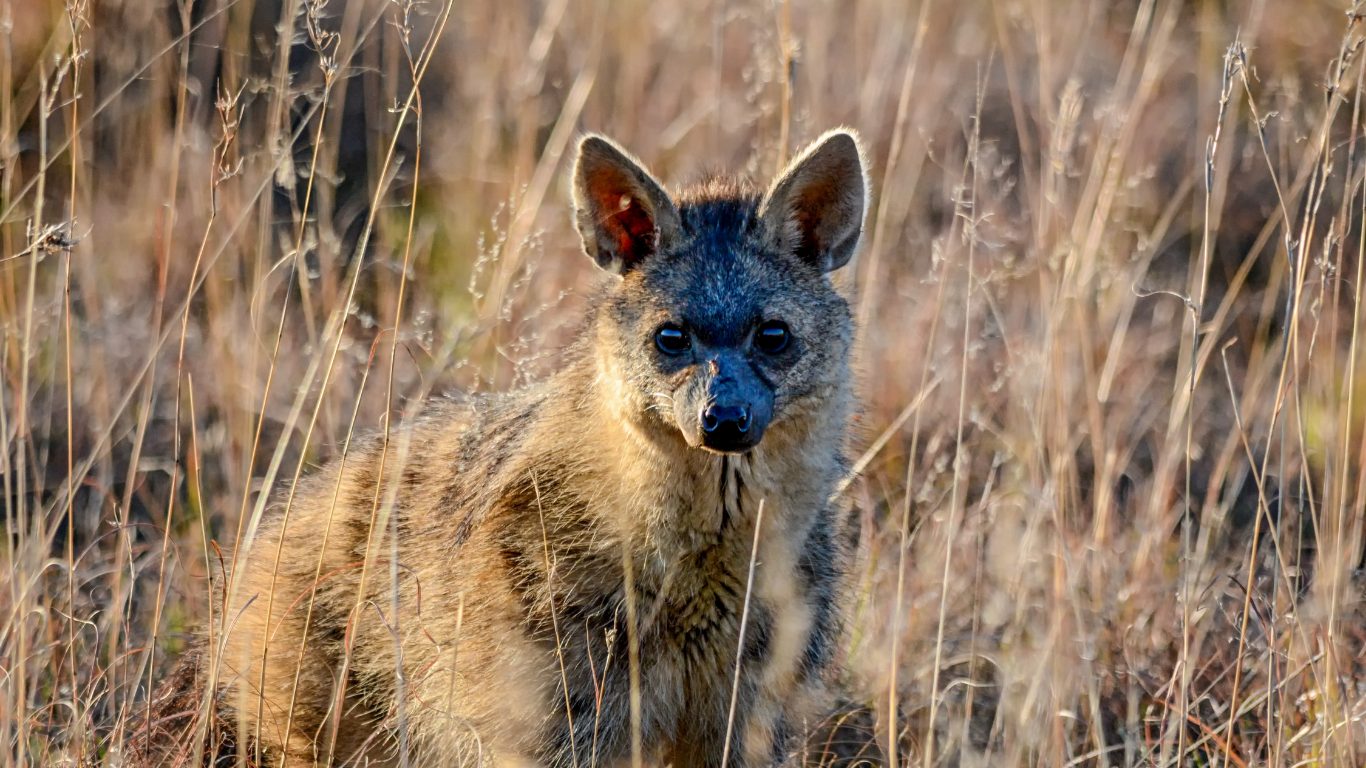
For safari operators and guides, the aardwolf represents a tier of wildlife knowledge that goes beyond the Big Five. Guests who ask about aardwolves have done their research. They know this animal exists, they know it is hard to find, and they want a guide and itinerary capable of delivering the opportunity. Meeting that expectation builds credibility and repeat business. Night drives on the open Serengeti plains and the short-grass areas of Ngorongoro are the best approach. The aardwolf's pale coat is visible in spotlight from a reasonable distance, and experienced guides learn to recognise the distinctive silhouette moving low through the grass. Even when a sighting lasts only 30 seconds before the animal moves away, it leaves a lasting impression. The aardwolf is proof that the most rewarding safari sightings are often the ones you have to work hardest to earn.
Where to See
Aardwolf in Tanzania
Common Questions
Frequently Asked
In the Field
Photography Tips
A dim red-filtered light prevents the aardwolf from bolting. They are skittish animals and white light often sends them running into the darkness immediately.
Use ISO 6400 or above and a shutter speed of at least 1/500s. Aardwolves move quickly between termite patches and do not hold still for long.
When an aardwolf raises its dorsal mane in alarm, the silhouette is striking. Anticipate this moment and capture the raised crest against the night sky.
The vertical black stripes on the pale body are the key identification feature. Angle your light to bring out the stripe pattern clearly against the coat.
From Our Guests