CREATE YOUR LEGEND | 2026-2028 dates available | SECURE YOUR PLACE WITH JUST £100 DEPOSIT
Tanzania Wildlife
Aardvark
The aardvark is one of Africa's most elusive mammals, a nocturnal termite-eating machine that most safari visitors never see. Strictly active after dark and underground by dawn, an aardvark sighting is a genuine rarity that even experienced guides celebrate.
Behaviour & Facts
Life in the Wild
Africa's Hidden Excavator
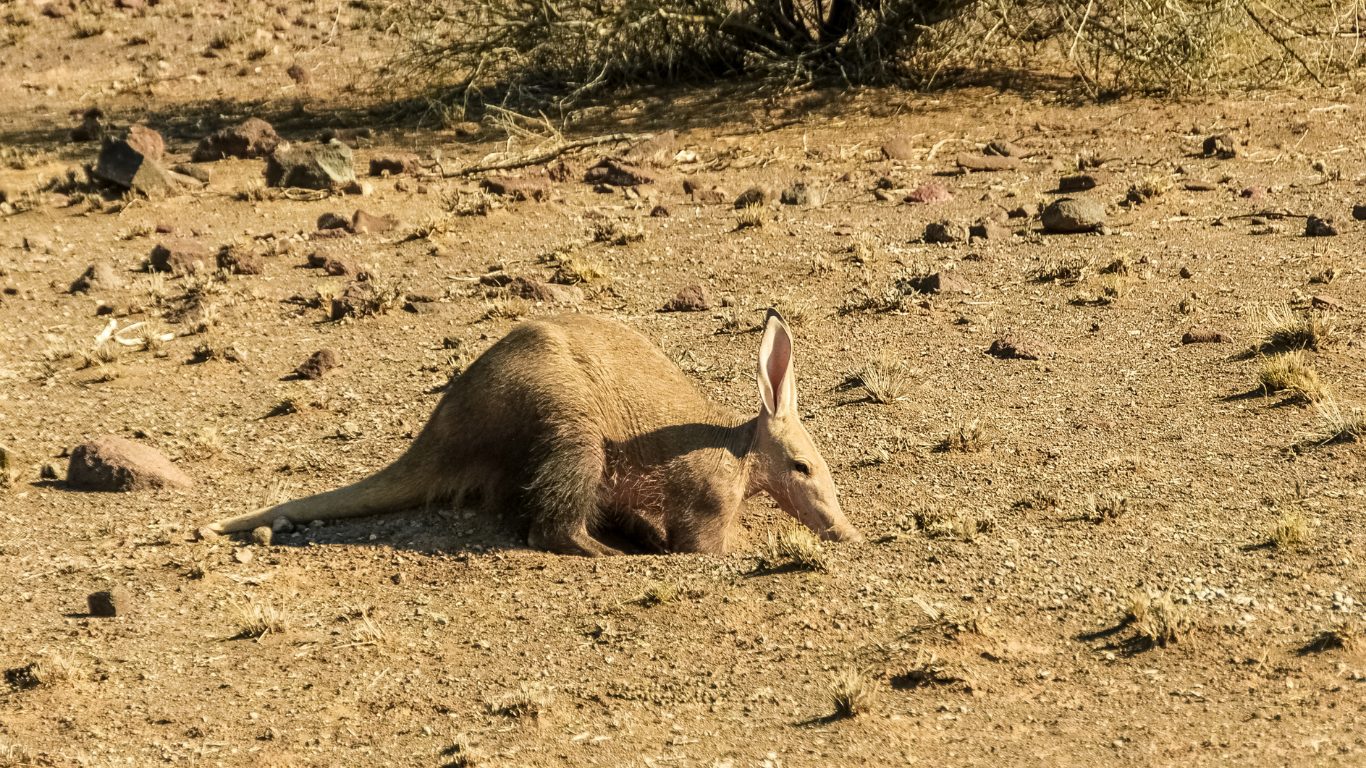
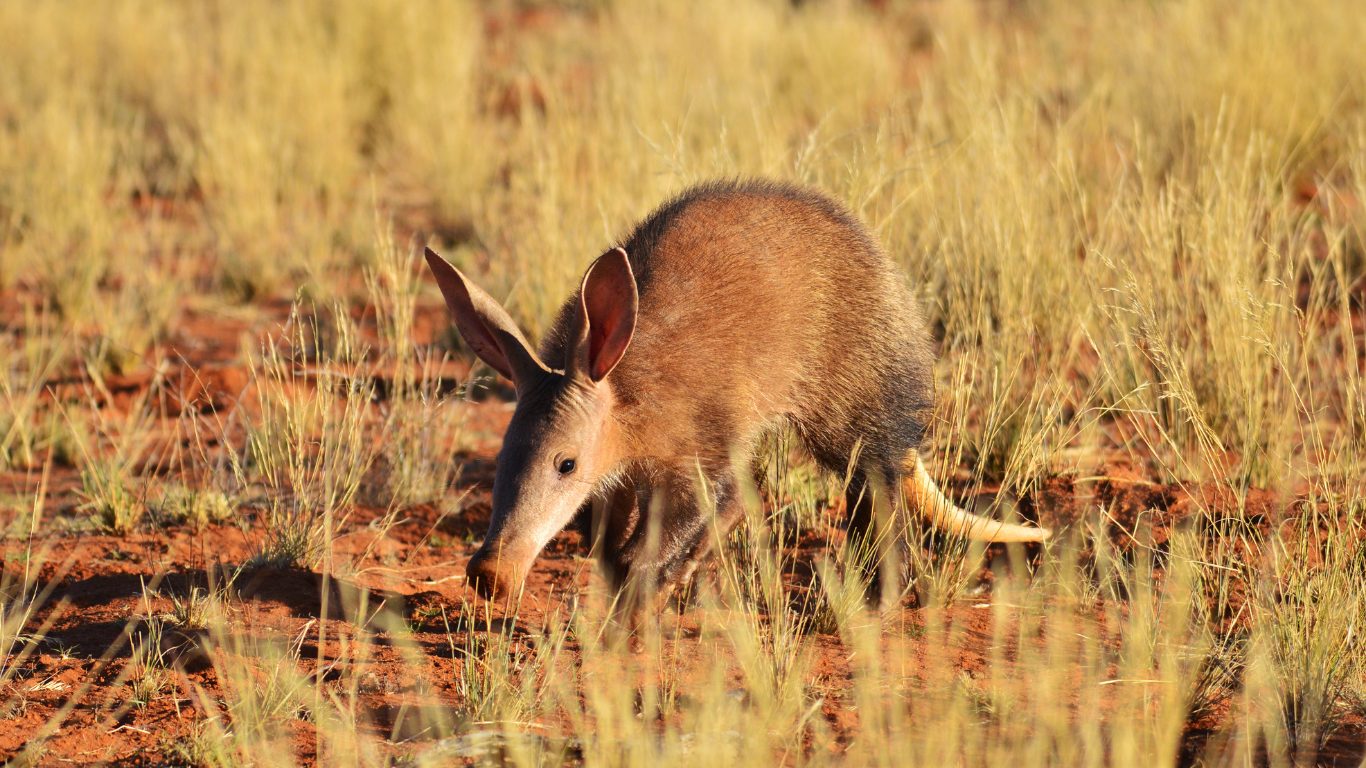
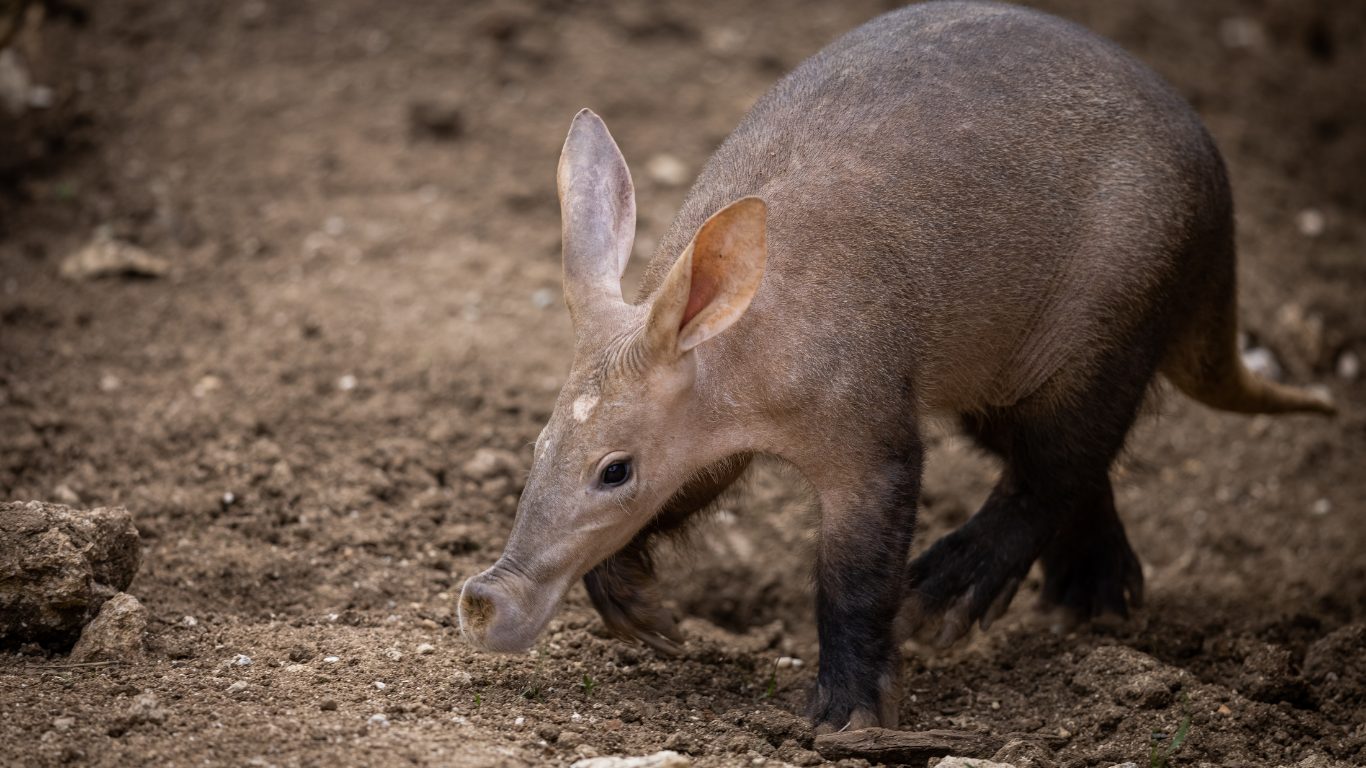
The aardvark occupies a unique branch on the mammalian family tree. It is the sole surviving species in the order Tubulidentata, which means it has no close living relatives anywhere on earth. Its name, Afrikaans for 'earth pig,' is apt: it has a pig-like snout, rabbit-like ears, a kangaroo-like tail, and powerful clawed feet built for excavation. No other African mammal looks quite like it. Despite being widespread across sub-Saharan Africa, the aardvark is one of the continent's least-seen large mammals. It is strictly nocturnal and spends every daylight hour sealed inside a deep underground burrow of its own construction. This combination of nocturnal habits and subterranean living makes it a genuine prize for any safari visitor lucky enough to encounter one.
Nocturnal Termite Hunter
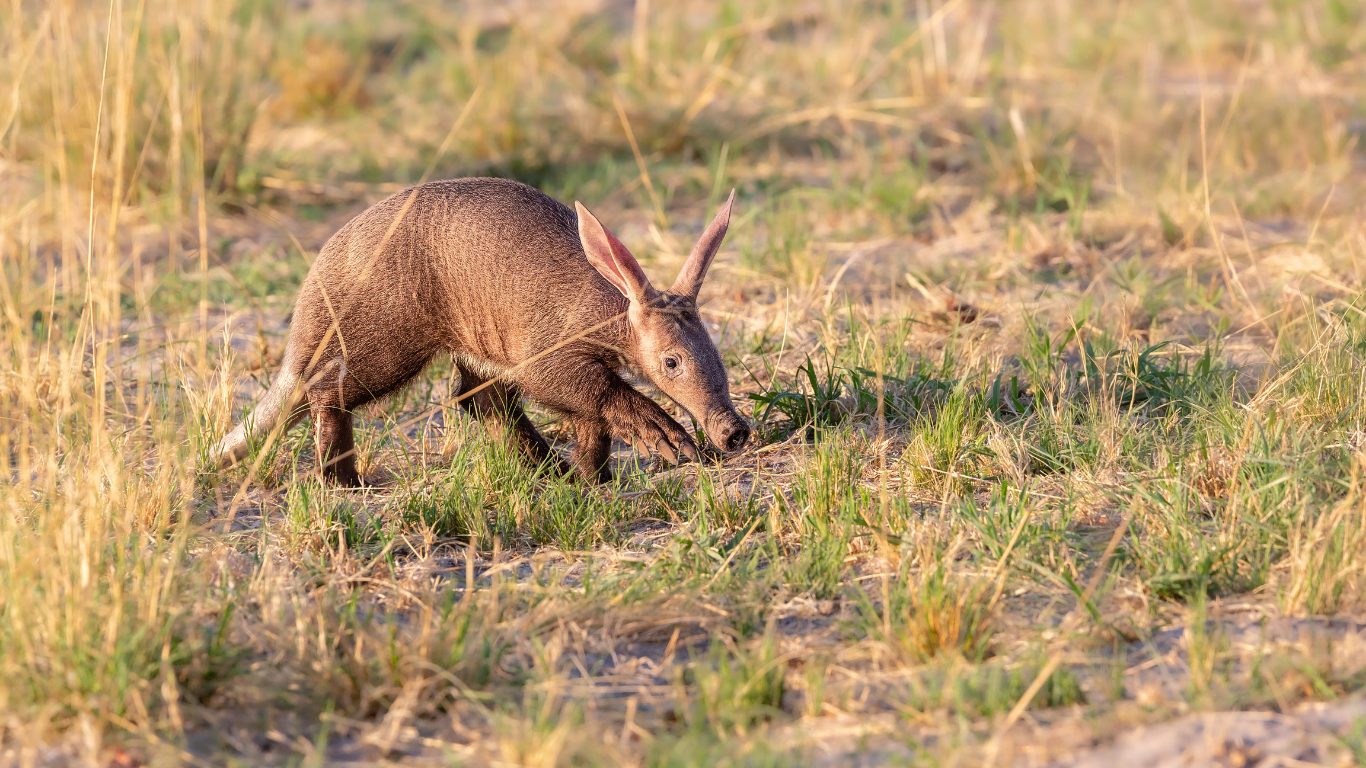
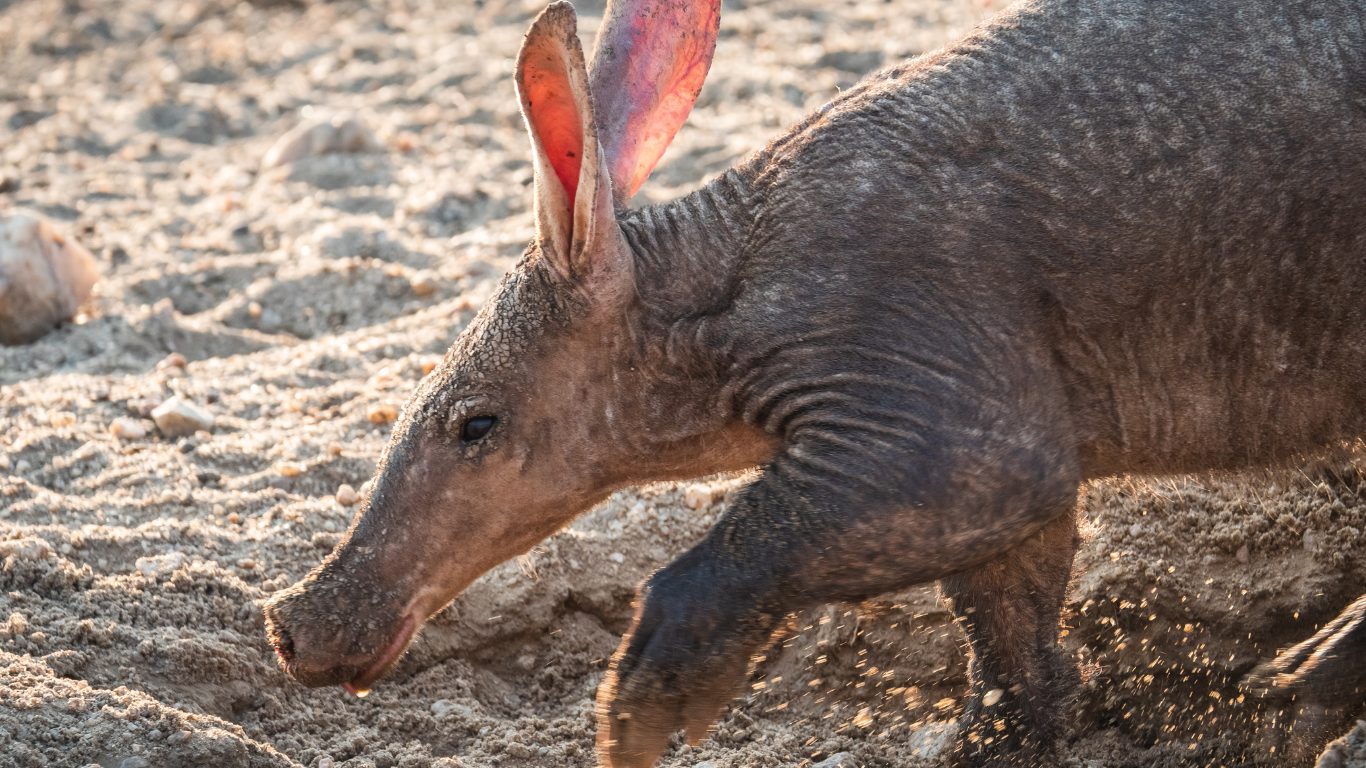
Aardvarks are specialist insectivores. They feed almost exclusively on termites and ants, locating colonies by scent using their highly developed sense of smell. Once a mound is found, the aardvark tears it open with powerful foreclaws and inserts its long, sticky tongue to extract the insects. The tongue can extend up to 30 centimetres and is covered in thick, sticky saliva that traps termites by the thousand. A single aardvark may visit several termite mounds and ant nests in one night, consuming up to 50,000 insects before returning to its burrow at dawn. Their thick skin and ability to seal their nostrils protect them from the defensive bites and chemical sprays of soldier termites. This feeding specialisation makes them a keystone species, as their excavation of termite mounds and creation of burrows benefits dozens of other animals.
Why So Rarely Seen
The rarity of aardvark sightings is precisely what makes them so coveted among serious safari travellers. Night drives in Tanzania's northern circuit parks offer the best odds, but even dedicated nocturnal outings produce sightings only a handful of times per year at most lodges. Guides who have worked the bush for decades may have fewer than ten aardvark encounters in their entire career. This rarity matters because it separates a good safari operation from a great one. Lodges and guides that know the local aardvark burrow locations, understand their seasonal patterns, and run well-managed night drives are the ones that occasionally deliver this sighting. For the guest, seeing an aardvark is proof that they chose the right operator and spent time in the right places. It is the kind of encounter that defines a safari as truly comprehensive.
Where to See
Aardvark in Tanzania
Common Questions
Frequently Asked
In the Field
Photography Tips
Use a red-filtered spotlight to avoid startling the animal. Aardvarks tolerate red light better than white, giving you more time to compose your shot.
Push your ISO to 6400 or higher. Night sightings demand fast shutter speeds to freeze movement, and there is no ambient light to work with.
The elongated tubular snout is the defining feature. Lock focus on the nose and let the ears fall slightly soft for a portrait that captures the animal's unique profile.
If the aardvark is excavating a termite mound, shoot a burst to capture soil flying. The action of those powerful claws tearing through earth is the money shot.
From Our Guests